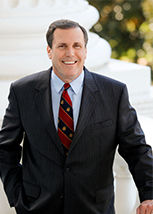
Photo of Scott Wilk
R California Senate · District 21 · Former member

Sen. Scott Wilk

Contact Email
Compare
Total votes
25,318
all sessions
Attendance
96%
859 missed
Near the chamber average
With party
95%
of cast votes
Lower than 98% of chamber peers
Bipartisan score
3%
crosses aisle rarely
Higher than 95% of chamber peers
Sponsored
1,250
bills & resolutions
Near the chamber average
Committees
0
assignments
1,250 bills and resolutions

Sponsored bills

Total
1,250
Primary
196
Co-sponsor
1,054
This page
1,250
matching current filters
Co-sponsor AJR 3
Signed into law · California Assembly · Co-sponsor
Relative to the Armenian Genocide.

This measure would, among other things, designate the year of 2017 as "State of California Year of Commemoration of the Anniversary of the Armenian Genocide of 1915–1923," would designate April 24, 2017, as "State of California Day of Commemoration of the 102nd Anniversary of the Armenian Genocide of 1915–1923," and would call upon the President of the United States and the United States Congress to formally and consistently reaffirm the historical truth that the atrocities committed against the Armenian people constituted genocide.

Signed into law May 19, 2017 1 co-sponsor
Co-sponsor AB 1326
In committee · California Assembly · Co-sponsor
Petty theft: subsequent convictions.

Existing law establishes the penalty for petty theft as a fine not exceeding $1,000, or by imprisonment in the county jail not exceeding 6 months, or by both that fine and imprisonment. Existing law, the Safe Neighborhoods and Schools Act, enacted as an initiative statute by Proposition 47, as approved by the electors at the November 4, 2014, statewide general election, provides that a registered sex offender or a person with a prior conviction for certain serious or violent felonies, such as a sexually violent offense, who commits petty theft, is subject to imprisonment in the county jail for up to one year or in the state prison for 16 months, or 2 or 3 years. This bill would expand those enhanced petty theft penalties to a person who has a prior conviction for any serious or violent felony, and to any person who as 3 or more prior convictions for crimes such as petty theft, grand theft, and burglary. The bill would also authorize the court, when it is in the interests of justice, to order a person convicted of a felony violation under those provisions to complete a licensed drug rehabilitation program in lieu of part or all of any term of imprisonment. The bill would provide that as a condition of that sentence, the court may require the offender to pay all or a portion of the drug rehabilitation program, as specified. The bill would make additional conforming changes. The California Constitution authorizes the Legislature to amend an initiative statute by another statute that becomes effective only when approved by the electors. This bill would provide that it would become effective only upon approval of the voters, and would provide for the submission of this measure to the voters for approval at the statewide general election.

In committee Apr 19, 2017 1 co-sponsor
Co-sponsor SCR 17
Signed into law · California Senate · Co-sponsor
Relative to California Girls and Women in Sports Week.

This measure would recognize female athletes, coaches, officials, and sports administrators for their important contributions in promoting the value of sports in the achievement of full human potential and would proclaim January 30, 2017, to February 5, 2017, inclusive, as California Girls and Women in Sports Week.

Signed into law Feb 23, 2017 1 co-sponsor
Co-sponsor ACR 20
Introduced · California Assembly · Co-sponsor
Relative to human trafficking.

This resolution would recognize the month of January 2017 as Human Trafficking Prevention Month in California.

Introduced Feb 9, 2017 1 co-sponsor
Co-sponsor SB 438
Signed into law · California Senate · Co-sponsor
Earthquake safety: statewide earthquake early warning program and system.

(1) The California Emergency Services Act requires the Office of Emergency Services, among other things, to develop in collaboration with specified entities a comprehensive statewide earthquake early warning system in California through a public-private partnership, as specified. The act requires the office to identify funding for the system through single or multiple sources of revenue, and requires those sources to exclude the General Fund and to be limited to federal funds, funds from revenue bonds, local funds, and funds from private sources. Under the act, the requirement that the office develop the system is not operative until funding is identified, and is repealed if funding is not identified by July 1, 2016. The act establishes the California Earthquake Safety Fund in the State Treasury to be used, upon appropriation by the Legislature, for seismic safety and earthquake-related programs, including the statewide earthquake early warning system. This bill would discontinue the requirement that the funding sources for the system exclude the General Fund and be limited to federal funds, funds from revenue bonds, local funds, and funds from private sources. The bill would delete the provisions providing for the repeal and the contingent operation of the requirement that the office develop the system. This bill would establish, within the office, the California Earthquake Early Warning Program and the California Earthquake Early Warning Advisory Board to support the development of the statewide earthquake early warning system, as specified. The bill would require the board to include 7 voting members, as specified, and the Chancellor of the California State University, or his or her designee, who would serve as a nonvoting member. The bill would authorize the President of the University of California, or his or her designee, to serve as an additional nonvoting member of the board. The bill would require all members to serve without compensation, but would require reimbursement for actual and reasonable travel and meal expenses to attend board meetings. The bill would require the board to comply with existing state open meeting and public record disclosure laws and would prohibit the disclosure of any information in a public record that is a trade secret, as defined, of a private entity cooperating with the board or participating in the statewide earthquake early warning system or the program. The bill would make legislative findings in support of its provisions. (2) Existing constitutional provisions require that a statute that limits the right of access to the meetings of public bodies or the writings of public officials and agencies be adopted with findings demonstrating the interest protected by the limitation and the need for protecting that interest. This bill would make legislative findings to that effect.

Signed into law Sep 29, 2016 1 co-sponsor
Co-sponsor AB 1751
Signed into law · California Assembly · Co-sponsor
Secondhand goods.

Existing law regulates secondhand dealers and coin dealers, and makes it unlawful for a person to engage in the business of a secondhand dealer without a license issued by the chief of police, the sheriff, or, where appropriate, the police commission. Existing law also regulates pawnbrokers. Existing law requires a local law enforcement agency to issue a license to engage in the business of a secondhand dealer or pawnbroker to an applicant who has not been convicted of an offense involving stolen property. Existing law requires a secondhand dealer to report, as specified, to the chief of police or sheriff all secondhand "tangible personal property," as defined, purchased, taken in trade, taken in pawn, accepted for sale on consignment, or accepted for auctioning. Existing law requires the report to include, among other things, the identification of the intended seller or pledger of the property, verified by the person taking the information by specified methods. Existing law requires the reporting of this information to the Department of Justice through a single, statewide, uniform electronic reporting system. Existing law requires the Department of Justice to develop descriptive categories and secondhand dealers and coin dealers to use these categories in their reports. This bill would define "CAPSS" as the California Pawn and SecondhandDealer System, which is the single, statewide, uniform electronic reporting system operated by the Department of Justice. The bill would eliminate the requirement that a secondhand dealer send reports on paper forms. The bill would eliminate the requirements that the Department of Justice develop, and secondhand dealers and coin dealers use, descriptive categories in their reports of acquired tangible personal property. Instead, the bill would require the Department of Justice to accept the properly spelled and non-abbreviated plain text property descriptions commonly recognized and utilized by the pawn and secondhand dealer industries. The bill would require a secondhand dealer to provide a property description in an article field descriptor, as specified. This bill would prohibit the Department of Justice, chiefs of police, and sheriffs from requiring secondhand dealers to report any additional information other than that which is required by these provisions. The bill would require that a future change to the reporting requirements of CAPSS that substantively alters the reporting standards be implemented and operated in compliance with the Administrative Procedure Act and prohibit the Department of Justice from taking any action with respect to the implementation, operation, or maintenance of CAPSS by adoption of an emergency regulation. The bill would also require the Department of Justice to convene a meeting with the Department of Technology to discuss issues pertaining to any proposed changes or upgrades, and authorize the Department of Technology to provide technological assistance for ongoing improvements, updates, or changes, to CAPSS. Existing law provides an exception to the reporting requirement for the acquisition of the same property from the same customer within 12 months of a reported transfer, except when submission of the report is specifically requested in writing by the local authorities. This bill would expand the reporting requirement exception to all acquisitions of the same property from the same customer within 12 months of a reported transfer. This bill would declare that it is to take effect immediately as an urgency statute.


Signed into law Sep 29, 2016 1 co-sponsor
Co-sponsor AB 2847
Vetoed · California Assembly · Co-sponsor
High-Speed Rail Authority: reports.

Existing law, the California High-Speed Rail Act, creates the High-Speed Rail Authority to develop and implement a high-speed rail system in the state, with specified powers and duties. Existing law requires the authority, on a biennial basis, to prepare a business plan containing specified elements and also requires the preparation of various other reports. This bill would require the business plan to identify projected financing costs for each segment or combination of segments of the high-speed rail system, if financing is proposed by the authority. The bill, in the business plan and in another report, would require the authority to identify any significant changes in scope for segments of the high-speed rail system identified in the previous version of each report and to provide an explanation of adjustments in cost and schedule attributable to the changes.

Vetoed Sep 28, 2016 1 co-sponsor
Showing 581 to 590 of 1,250 bills
Previous 1 … 58 59 60 … 125 Next