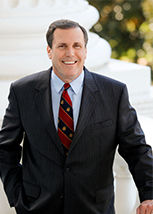
Photo of Scott Wilk
R California Senate · District 21

Sen. Scott Wilk

Contact Email
Compare
Total votes
25,318
all sessions
Attendance
96%
859 missed
Near the chamber average
With party
95%
of cast votes
Near the chamber average
Bipartisan score
3%
crosses aisle rarely
Near the chamber average
Sponsored
1,250
bills & resolutions
Near the chamber average
Committees
0
assignments
1,250 bills and resolutions

Sponsored bills

Total
1,250
Primary
196
Co-sponsor
1,054
This page
1,250
matching current filters
Co-sponsor AB 70
Failed · California Assembly · Co-sponsor
Budget Bill: public availability.

The California Constitution requires that a bill be read by title 3 times in each house or a bill with amendments be printed and distributed to the Members of each house before it may be passed. This bill would provide that a vote shall not be taken in either house of the Legislature on the Budget Bill or any other bill providing for appropriations related to the Budget Bill, as defined in the Constitution, until the bill has been made available to the public for 3 days on a publicly available Internet Web site.

Failed Feb 3, 2014 1 co-sponsor
Primary AB 806
Failed · California Assembly · Lead sponsor
Community colleges: salaries of classroom instructors.

Existing law establishes the California Community Colleges, under the administration of the Board of Governors of the California Community Colleges, as one of the segments of public postsecondary education in this state. Existing law establishes community college districts throughout the state, and authorizes these districts to provide instruction at community college campuses. Existing law requires that 50% of each district's current expense of education, as defined, be expended for payment of salaries of classroom instructors, as defined. Existing law requires the governing board of each district to provide for an internal audit in accordance with regulations of the board of governors. This bill would define "salaries of classroom instructors," commencing with the 2014–15 fiscal year, to include, by reference to the Budget and Accounting Manual for California Community Colleges, academic salaries, as defined, including the salaries of counselors; instructional aide salaries, as defined; and the health and welfare benefits paid to specified personnel. The bill would also authorize the board of governors, commencing with the 2014–15 fiscal year, to establish a committee to review the auditing procedures in order to ensure compliance with the requirement that 50% of each district's current expense of education be paid for the salaries of classroom instructors.

Failed Feb 3, 2014 0 co-sponsors
Primary AB 936
died · California Assembly · Lead sponsor
Group homes: mental health services.

Existing law provides for child welfare services, which are public social services directed toward, among other purposes, protecting and promoting the welfare of all children, including those in foster care placement. Existing law provides for the placement of children in foster care in various settings, including group homes, by foster placement agencies, under the oversight of the State Department of Social Services. Under existing law, mental health services may be provided to a child in a group home and shall be a case management responsibility of the placing agency. This bill would make technical, nonsubstantive changes to these provisions.

died Feb 3, 2014 0 co-sponsors
Co-sponsor AB 486
Failed · California Assembly · Co-sponsor
Sales and use taxes: exemption: manufacturing research and development.

Existing sales and use tax laws impose taxes on retailers measured by the gross receipts from the sale of tangible personal property sold at retail in this state, or on the storage, use, or other consumption in this state of tangible personal property purchased from a retailer for storage, use, or other consumption in this state. That law provides various exemptions from those taxes. The bill would exempt from those taxes, on and after January 1, 2014, the gross receipts from the sale of, and the storage, use, or other consumption of, qualified tangible personal property purchased by a qualified person for use primarily in manufacturing, processing, refining, fabricating, or recycling of property, as specified, qualified tangible personal property purchased for use by a contractor for specified purposes, as provided, and tangible personal property purchased for use by a qualified person to be used primarily in research and development, as provided. The Bradley-Burns Uniform Local Sales and Use Tax Law authorizes counties and cities to impose local sales and use taxes in conformity with the Sales and Use Tax Law, and existing law authorizes districts, as specified, to impose transactions and use taxes in conformity with the Transactions and Use Tax Law, which conforms to the Sales and Use Tax Law. Exemptions from state sales and use taxes are incorporated into these laws. This bill would specify that this exemption does not apply to local sales and use taxes, transactions and use taxes, and specified state taxes from which revenues are deposited into the Local Public Safety Fund, the Education Protection Account, and the Local Revenue Fund. This bill would take effect immediately as a tax levy.


Failed Feb 3, 2014 1 co-sponsor
Co-sponsor AB 124
Failed · California Assembly · Co-sponsor
State responsibility areas: fire prevention fees.

Existing law requires the State Board of Forestry and Fire Protection, on or before September 1, 2011, to adopt emergency regulations to establish a fire prevention fee in an amount not to exceed $150 to be charged on each habitable structure on a parcel that is within a state responsibility area, as defined, and requires that the fire prevention fee be adjusted annually using prescribed methods. Existing law requires the State Board of Equalization to collect the fire prevention fees, as prescribed, commencing with the 2011–12 fiscal year. Existing law establishes the State Responsibility Area Fire Prevention Fund and prohibits the collection of fire prevention fees if, commencing with the 2012–13 fiscal year, there are sufficient amounts of moneys in the fund to finance specified fire prevention activities for a fiscal year. Existing law requires that the fire prevention fees collected, except as provided, be deposited into the fund and be made available to the board and the Department of Forestry and Fire Protection for certain specified fire prevention activities that benefit the owners of structures in state responsibility areas who are required to pay the fee. Existing law further requires the board, on and after January 1, 2013, to submit an annual written report to the Legislature on specified topics. This bill would repeal these provisions.

Failed Feb 3, 2014 1 co-sponsor
Primary AB 144
died · California Assembly · Lead sponsor
Education: authorized classes and courses of instruction: technology.

Existing law requires the State Department of Education to administer the California Technology Assistance Project to provide a regionalized network of technical assistance to schools and school districts on the implementation of education technology as set forth in the policies of the State Board of Education. Existing law, for purposes of the above provisions, defines "technology" to mean technology-based materials, equipment, systems, and networks. This bill would make a technical, nonsubstantive change in that definition.

died Feb 3, 2014 0 co-sponsors
Co-sponsor SB 640
In committee · California Senate · Co-sponsor
Medi-Cal: reimbursement: provider payments.

The Medi-Cal Act establishes the Medi-Cal program, which is administered by the State Department of Health Care Services, under which qualified low-income individuals receive health care services. The Medi-Cal program is, in part, governed and funded by federal Medicaid Program provisions. Existing law requires, except as otherwise provided, Medi-Cal provider payments to be reduced by 1% or 5%, and provider payments for specified non-Medi-Cal programs to be reduced by 1%, for dates of service on and after March 1, 2009, and until June 1, 2011. Existing law requires, except as otherwise provided, Medi-Cal provider payments and payments for specified non-Medi-Cal programs to be reduced by 10% for dates of service on and after June 1, 2011. This bill would instead require that, to the extent permitted by federal law, this payment reduction not apply to skilled nursing facilities or subacute care units that are a distinct part of a general acute care hospital, intermediate care or other specified facilities serving developmentally disabled individuals, or specified Medi-Cal provider payments for fee-for-service benefits, including payments to pharmacies, for dates of service on or after June 1, 2011. The bill would also provide that this payment reduction shall not apply to managed health care plans for dates of service after the effective date of the bill. This bill would declare that it is to take effect immediately as an urgency statute.

In committee Feb 3, 2014 1 co-sponsor
Primary AB 1355
Failed · California Assembly · Lead sponsor
Limited liability companies: indemnification: agents.

Existing law requires a corporation, nonprofit public benefit corporation, nonprofit mutual benefit corporation, nonprofit religious corporation, or consumer cooperative corporation to indemnify its agent, as defined, in proceedings, as defined, for the successful defense or settlement of claims brought against the agent by reason of his or her agent status. Existing law, the California Revised Uniform Limited Liability Company Act, which becomes operative on January 1, 2014, governs the formation and operation of limited liability companies. The act requires a limited liability company to indemnify a member of a member-managed limited liability company or the manager of a manager-managed limited liability company for any liability incurred in the course of the member's or manager's activities on behalf of the limited liability company, if specified conditions are met. Existing law authorizes a limited liability company to purchase and maintain insurance on behalf of a member or manager of the limited liability company against liability asserted against or incurred by the member or manager in that capacity or arising from that status. This bill would require a limited liability company to indemnify its agent, as defined, in proceedings, as defined, for the successful defense or settlement of claims brought against the agent by reason of his or her agent status.

Failed Feb 3, 2014 0 co-sponsors
Co-sponsor AB 23
Failed · California Assembly · Co-sponsor
State responsibility areas: fire prevention fees.

Existing law requires the State Board of Forestry and Fire Protection, on or before September 1, 2011, to adopt emergency regulations to establish a fire prevention fee in an amount not to exceed $150 to be charged on each structure on a parcel that is within a state responsibility area, as defined, and requires that the fire prevention fee be adjusted annually using prescribed methods. Existing law requires the State Board of Equalization to collect the fire prevention fees, as prescribed, commencing with the 2011–12 fiscal year. Existing law establishes the State Responsibility Area Fire Prevention Fund and prohibits the collection of fire prevention fees if, commencing with the 2012–13 fiscal year, there are sufficient amounts of moneys in the fund to finance specified fire prevention activities for a fiscal year. Existing law requires that the fire prevention fees collected, except as provided, be deposited into the fund and be made available, to the board and the Department of Forestry and Fire Protection for certain specified fire protection activities that benefit the owners of structures in state responsibility areas who are required to pay the fee. Existing law further requires the board, on and after January 1, 2013, to submit an annual written report to the Legislature on specified topics. This bill would repeal the above provisions relating to the fire prevention fees.

Failed Feb 3, 2014 1 co-sponsor
Co-sponsor AB 947
Failed · California Assembly · Co-sponsor
School employees: teachers: termination: reappointment: seniority deviation.

Existing law provides that, when the services of employees are terminated pursuant to a reduction in workforce, a school district is required to terminate the employees in order of seniority. Existing law further provides those employees with a preferred right to reappointment and an opportunity for substitute service in order of seniority. Existing law authorizes a school district to deviate from the order of seniority for those purposes for specified reasons, including compliance with constitutional requirements related to equal protection of the laws. This bill would provide additional reasons for which a school district may deviate from terminating employees in order of seniority, including authorizing school districts to terminate an employee on the basis of performance evaluations and on the basis that the employee is assigned to a schoolsite that has implemented specific models of intervention and has been selected by the governing board of the school district for exemption from certificated reductions in workforce, based upon the needs of pupils in the educational program. The bill would provide an exception to this authorization for an employee who has 18 months or less from his or her date of retirement, or is on medical leave. The bill would prohibit a school district that deviates from the order of seniority for purposes of terminating a certificated employee from taking into consideration whether an employee has exercised any of the rights guaranteed in the Educational Employment Relations Act. The bill would also authorize a school district, during the period of an employee's preferred right to reappointment, to deviate from the order of seniority in offering the opportunity for substitute service for either of specified reasons. The bill would specify that the equal protection exception to the general requirement that terminations and reappointments occur in order of seniority applies to equal protection as that protection relates to pupils. The bill would make various nonsubstantive and clarifying changes.

Failed Feb 3, 2014 1 co-sponsor
Showing 1,111 to 1,120 of 1,250 bills