

Passed Jan 28, 2019
1 co-sponsor
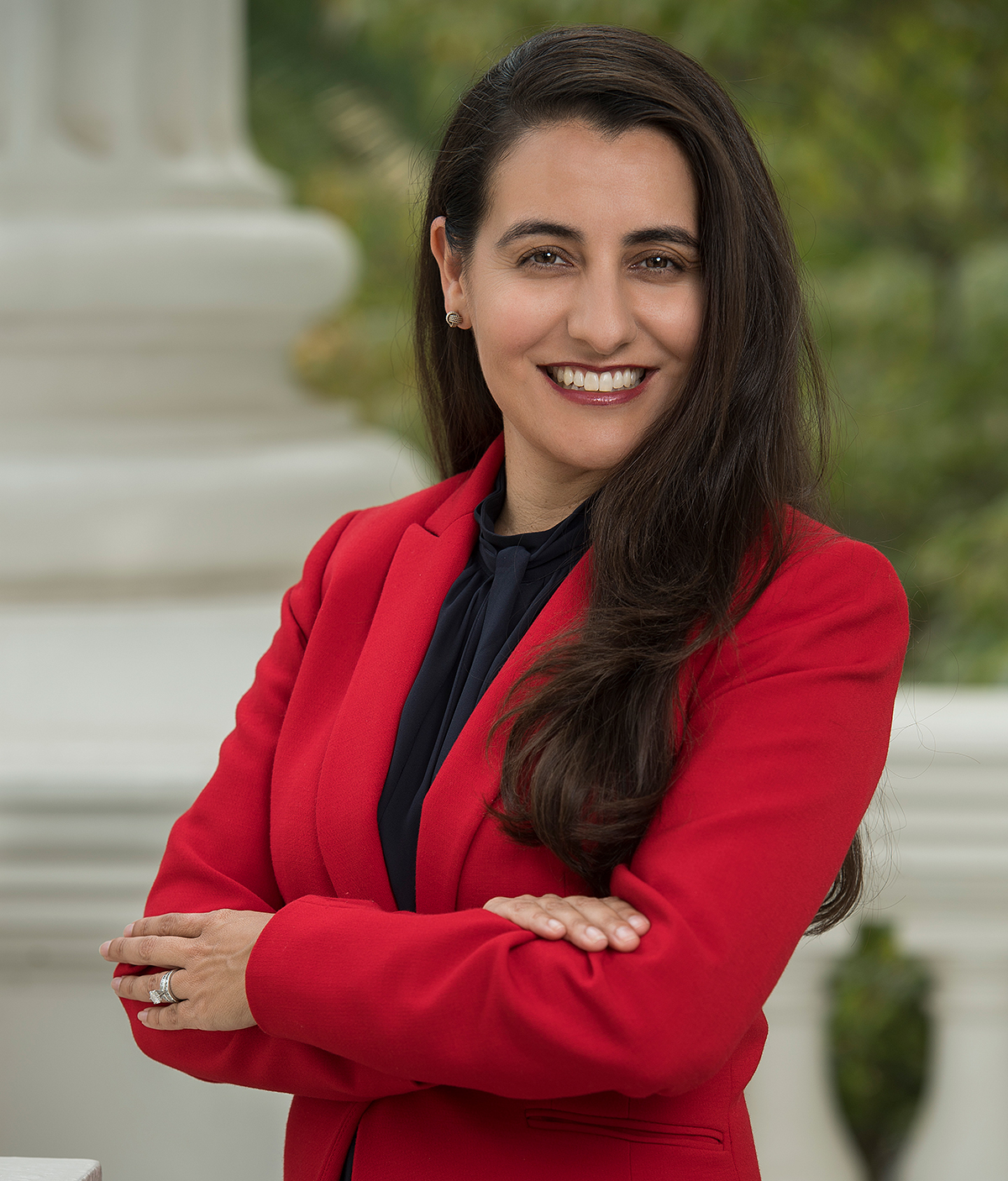
Total votes
20,781
all sessions
Attendance
92%
1,339 missed
Near the chamber average
With party
99%
of cast votes
Near the chamber average
Bipartisan score
0%
crosses aisle rarely
Near the chamber average
Sponsored
1,106
bills & resolutions
Near the chamber average
Committees
4
assignments
1,106 bills and resolutions
Sponsored bills
Total
1,106
Primary
238
Co-sponsor
868
This page
1,106
matching current filters
Passed Jan 22, 2019
0 co-sponsors
Employment discrimination: limitation of actions.
Existing law, the California Fair Employment and Housing Act, makes specified employment and housing practices unlawful, including discrimination against or harassment of employees and tenants, among others. Existing law authorizes a person claiming to be aggrieved by an alleged unlawful practice to file a complaint with the Department of Fair Employment and Housing within one year from the date upon which the unlawful practice occurred, unless otherwise specified. This bill would extend the above-described period to 3 years for complaints alleging employment discrimination, as specified. The bill would make conforming changes in provisions that grant a person allegedly aggrieved by an unlawful practice who first obtains knowledge of the facts of the alleged unlawful practice after the expiration of the limitations period, as specified. This bill would state that its changes shall not be interpreted to revive lapsed claims.
Vetoed Sep 30, 2018
1 co-sponsor
Employment: lactation accommodation.
Existing law requires every employer to provide a reasonable amount of break time to accommodate an employee desiring to express breast milk for the employee's infant child and requires an employer to make reasonable efforts to provide the employee with the use of a room or other location, other than a toilet stall, in close proximity to the employee's work area for the employee to express milk in private. Existing law makes a violation of these provisions subject to a civil penalty and makes the Labor Commissioner responsible for enforcement. This bill would instead require an employer to make reasonable efforts to provide an employee with use of a room or other location, other than a bathroom, for these purposes. The bill would deem an employer to be in compliance with the requirement of providing a lactation location if the employer makes available a temporary lactation location that meets specified conditions, including that the temporary lactation location be used only for lactation purposes while an employee expresses milk. The bill would deem an agricultural employer to be in compliance with the requirement of providing a lactation location if the agricultural employer provides an employee with a private, enclosed, and shaded space, as specified. If the employer can demonstrate to the Department of Industrial Relations that this requirement would impose an undue hardship, the bill would require that employer to make reasonable efforts to provide a room or location for expressing milk that is not a toilet stall.
Signed into law Sep 30, 2018
0 co-sponsors
Public resources: environmental education: grant program: Hollister Ranch.
Existing law requires the Division of Off-Highway Motor Vehicle Recreation of the Department of Parks and Recreation to develop and implement a grant and cooperative agreement program to support the planning, acquisition, development, maintenance, administration, operation, enforcement, restoration, and conservation of trails, trailheads, areas, and other facilities associated with the use of off-highway motor vehicles, and programs involving off-highway motor vehicle safety or education. This bill would require the Director of Parks and Recreation to establish the Outdoor Equity Grants Program, to increase the ability of underserved and at-risk populations to participate in outdoor environmental educational experiences at state parks and other public lands where outdoor environmental education programs take place. The bill would require the director to, among other things, give priority for funding to outdoor environmental education programs that primarily provide outreach to and serve students who are eligible for free or reduced-price meals, foster youth, or pupils of limited English proficiency, as provided. The bill would authorize the director to accept private funds to support the program. The bill would establish the California Outdoor Equity Account in the State Parks and Recreation Fund and would require any private funds donated for the program and any funds appropriated by the Legislature for purposes of the program to be deposited into the account. The California Coastal Act of 1976 (coastal act) requires any person wishing to perform or undertake any development in the coastal zone, as defined, to obtain a coastal development permit, except as provided. Existing law establishes the State Coastal Conservancy and prescribes its membership and responsibilities relating to the protection, preservation, and enhancement of coastal lands within the conservancy's jurisdiction. Existing law establishes the Coastal Access Account in the State Coastal Conservancy Fund and authorizes the conservancy to expend funds in the account, upon appropriation by the Legislature in the annual Budget Act, to pay for the development, maintenance, and operation of facilities that provide public access to the shoreline. The coastal act requires every person receiving a coastal development permit or a certificate of exemption for development on any vacant lot within specified designated areas, prior to commencement of construction, to pay to the California Coastal Commission for deposit in the Coastal Access Account an in-lieu public access fee, with the amount of the fee determined by specified costs of acquisition, as provided. This bill would delete the requirement, for purposes of this provision, that a coastal development permit or a certificate of exemption for development apply on any vacant lot within a designated area. The coastal act, for purposes of the above provisions governing the in-lieu public access fee amount and with respect to the Hollister Ranch public access program in the County of Santa Barbara, requires that the Hollister Ranch in-lieu fee for public access be $5,000 for each permit. The coastal act also requires that all in-lieu fees received pursuant to those provisions be deposited in the State Coastal Conservancy Fund and be available for appropriation to the conservancy for specified conservancy purposes. This bill would require that all past, present, and future in-lieu fees received pursuant to those provisions, as well as other moneys received by the State Coastal Conservancy for providing public access at Hollister Ranch from public and private sources, including nonprofit sources, be deposited in the Hollister Access Management Subaccount, which the bill would create in the fund, and used for any action necessary to implement the 1982 adopted coastal access program for the Hollister Ranch. Existing law, the Kapiloff Land Bank Act, creates the Land Bank Fund and continuously appropriates moneys in the fund, subject to a statutory trust, to the State Lands Commission, acting as the Land Bank Trustee, to acquire real property or any interest in real property for the purposes of public trust title settlements. Existing law requires that moneys in the fund be available for expenditure by the trustee to purchase outstanding interests in land where the public use and ownership of the land is necessary or extremely beneficial for furtherance of public trust purposes. Existing law authorizes acquisitions by negotiated agreement with the owner of the outstanding interests and specifies that the act is not intended to confer any authority to exercise the power of eminent domain for its purposes. This bill would create the Hollister Ranch Subaccount in the fund, and would require moneys received by the State Lands Commission from public and private sources, including nonprofit sources, to be used for the implementation of the 1982 adopted coastal access program for Hollister Ranch to be deposited into that subaccount and, upon appropriation by the Legislature, expended by the State Lands Commission for prescribed purposes. The bill would also authorize the State Lands Commission to transfer moneys from the fund to the subaccount, in an amount not to exceed $1,000,000, for expenditure for those purposes. Existing law states it is the intent of the Legislature that the State Coastal Conservancy and the State Public Works Board utilize their authority to implement specified public access policies and provisions at the Hollister Ranch in the County of Santa Barbara as expeditiously as possible. This bill would additionally state the intent of the Legislature that all other relevant state agencies, boards, and commissions utilize their authority to implement specified public access policies and provisions at the Hollister Ranch in the County of Santa Barbara as expeditiously as possible. This bill would make legislative findings and declarations as to the necessity of a special statute for Hollister Ranch.
Vetoed Sep 30, 2018
0 co-sponsors
Lactation accommodation.
Existing law requires employers to provide a reasonable amount of break time to employees desiring to express milk for the employee's infant child. Existing law also requires an employer to make reasonable efforts to provide the employee with the use of a room, or other location, other than a toilet stall, in close proximity to the employees' work area, for the employee to express milk in private. Existing law exempts an employer from the break time requirement if the employer's operations would be seriously disrupted by providing that time to employees desiring to express milk. Existing law subjects employers who violate these provisions to a civil penalty of $100 per violation and authorizes the Labor Commissioner to issue citations for those violations. Existing law prohibits an employer, who is required by law to give an employee a rest period during a workday, from requiring the employee to work during the rest period. Existing law requires an employer to pay the employee one additional hour of pay, at the employee's regular rate of compensation, for each rest period not provided. This bill would require an employer to provide a lactation room or location that includes prescribed features and would require an employer, among other things, to provide access to a sink and refrigerator in close proximity to the employee's workspace, as specified. The bill would require an employer to develop and implement a policy regarding lactation accommodation and make it available to employees, as specified. The bill would also require an employer to maintain records of requests for lactation accommodation for 3 years and to give the Labor Commission access to those records. The bill would provide that specified employers could seek an exemption from any of the requirements of these provisions if the employer could show that the requirement posed an undue hardship based on specified criteria. The bill would deem denial of reasonable break time or adequate space to express milk a failure to provide a rest period in accordance with state law. The bill would prohibit an employer from discharging, or in any other manner discriminating or retaliating against, an employee for exercising or attempting to exercise rights under these provisions and would establish specific additional remedies. The bill would require the Division of Labor Standards Enforcement to create a model lactation accommodation request form and to make it available for download from its Internet Web site by employees and employers. The bill would authorize the division to establish a model lactation accommodation policy and lactation accommodation best practices to provide guidance to employers.
Vetoed Sep 30, 2018
1 co-sponsor
Communications: broadband Internet access service.
Existing law imposes certain obligations in the context of particular transactions, and provides mechanisms to enforce those obligations. This bill would enact the California Internet Consumer Protection and Net Neutrality Act of 2018. This act would prohibit fixed and mobile Internet service providers, as defined, that provide broadband Internet access service, as defined, from engaging in specified actions concerning the treatment of Internet traffic. The act would prohibit, among other things, blocking lawful content, applications, services, or nonharmful devices, impairing or degrading lawful Internet traffic on the basis of Internet content, application, or service, or use of a nonharmful device, and specified practices relating to zero-rating, as defined. It would also prohibit fixed and mobile Internet service providers from offering or providing services other than broadband Internet access service that are delivered over the same last-mile connection as the broadband Internet access service, if those services have the purpose or effect of evading the above-described prohibitions or negatively affect the performance of broadband Internet access service.
Signed into law Sep 30, 2018
1 co-sponsor
Diversion: mental disorders.
Existing law authorizes a court to grant pretrial diversion, for a period no longer than 2 years, to a defendant suffering from a mental disorder, on an accusatory pleading alleging the commission of a misdemeanor or felony offense, in order to allow the defendant to undergo mental health treatment. Existing law conditions eligibility on, among other criteria, a court finding that the defendant's mental disorder played a significant role in the commission of the charged offense. Existing law requires, if the defendant has performed satisfactorily in diversion, that the court dismiss the defendant's criminal charges, with a record filed with the Department of Justice indicating the disposition of the case diverted, that the arrest is deemed never to have occurred, and requires the court to order access to the record of the arrest restricted, except as specified. This bill would make defendants ineligible for the diversion program for certain offenses, including murder, voluntary manslaughter, and rape. The bill would authorize a court to require the defendant to make a prima facie showing that the defendant will meet the minimum requirements of eligibility for diversion and that the defendant and the offense are suitable for diversion, as specified. The bill would also require the court, upon request, to conduct a hearing to determine whether restitution is owed to any victim as a result of the diverted offense and, if owed, to order its payment during the period of diversion. The bill would provide that a defendant's inability to pay restitution due to indigence or mental disorder would not be grounds for denial of diversion or a finding that the defendant has failed to comply with the terms of diversion. The bill would also make technical changes.
Signed into law Sep 30, 2018
1 co-sponsor
Agriculture: Cannella Environmental Farming Act of 1995: technical assistance grant program.
Existing law, the Cannella Environmental Farming Act of 1995, requires the Department of Food and Agriculture to establish and oversee an environmental farming program to provide incentives to farmers whose practices promote the well-being of ecosystems, air quality, and wildlife and their habitat. The act requires the Secretary of Food and Agriculture to convene the Scientific Advisory Panel on Environmental Farming, as prescribed, for the purpose of providing advice to the secretary on the implementation of the Healthy Soils Program and the State Water Efficiency and Enhancement Program and assistance to federal, state, and local government agencies on issues relating to the impact of agricultural practices on air, water, and wildlife habitat, as specified. Existing law requires the department, in consultation with the panel, to establish and oversee a Healthy Soils Program to seek to optimize climate benefits while supporting the economic viability of California agriculture by providing incentives, including, but not limited to, loans, grants, research, and technical assistance, and educational materials and outreach, to farmers whose management practices contribute to healthy soils and result in net long-term on-farm greenhouse gas benefits. This bill would require the department to establish a technical assistance grant program to provide funds to technical assistance providers, as defined, to provide assistance to Healthy Soils Program, alternative manure management practices programs, and State Water Efficiency and Enhancement Program applicants. The bill would require the secretary to make available to the grant program not less than 5% of the funds appropriated to the department for those programs, but not more than $5,000,000, for the purposes of providing technical assistance to farmers and ranchers who apply for grants from those programs, prioritizing that technical assistance to farms and ranches that are 500 acres or less, and supporting annual information sharing among technical assistance providers, the department, and other relevant stakeholders for the continuous improvement of programmatic guidelines, application processes, and relevant climate change and agricultural research. The bill would require the department, on or before January 31, 2021, to provide an update to the panel on the grant program.
Signed into law Sep 28, 2018
1 co-sponsor
Animal shelters: adoption application: crimes.
Existing law prohibits a person who has been convicted of a misdemeanor violation of specified animal cruelty provisions, within 5 years after the conviction, from owning, possessing, maintaining, having custody of, residing with, or caring for any animal. Existing law prohibits a person who has been convicted of a felony for animal cruelty or animal fighting, as specified, within 10 years after the conviction, from owning, possessing, maintaining, having custody of, residing with, or caring for any animal. This bill would clarify that an animal shelter administered by a public animal control agency or specified nonprofit entities and an animal rescue or animal adoption organization may ask an individual who is attempting to adopt an animal from that entity whether he or she is prohibited from owning or possessing an animal based on those prohibitions.
Signed into law Sep 28, 2018
0 co-sponsors
Ask Maddy
·
AI policy assistant
Ask Maddy about Monique Limón
Scope: california
Hi! I can help you understand Monique Limón's legislative record. What would you like to know?
Try one of these
i
Maddy answers using official bill text and legislative records. Always verify before sharing.
Sources cited inline