

The Consumers Legal Remedies Act makes unlawful certain unfair methods of competition and certain unfair or deceptive acts or practices undertaken by a person in a transaction intended to result or that results in the sale or lease of goods or services to a consumer, including charging or receiving an unreasonable fee, as defined, to prepare, aid, or advise any prospective applicant, applicant, or recipient in the procurement, maintenance, or securing of public social services, as defined to include, among other things, veterans pensions. This bill would expand the definition of public social services to also include other veterans benefits. The bill would also expand the definition of an unreasonable fee to include a fee charged with respect to federal veterans benefits that exceeds the amount that could be charged for those services by an attorney or claims agent accredited by the United States Department of Veterans Affairs. Existing law prohibits a person from, in connection with any transaction or any sale of goods or services, electronically accessing a Common Access Card (CAC) issued to a service member, placing or requiring the placement of such a CAC in a smart card reader, requesting or requesting entry of the personal identification number (PIN) associated with such a CAC, or requiring a service member to log in to any United States Department of Defense or, in the case of a member of the United States Coast Guard, United States Department of Homeland Security computer system. Existing law makes void a transaction or sale entered into in violation of these provisions. This bill would extend the above-described restrictions to prohibit requiring a former or current service member to log in or share their credentials for accessing, or accessing with another person's credentials, any United States Department of Defense, United States Department of Veterans Affairs, or United States Department of Homeland Security computer system. Except as provided, the bill would prohibit a person from, in connection with any transaction or any sale of goods or services, directly or indirectly soliciting, contracting for, charging, or receiving, or attempting to solicit, contract for, charge, or receive, any fee or compensation with respect to the preparation, presentation, or prosecution of any claim for benefits under the laws administered by the United States Department of Veterans Affairs. The bill would also make void a contract performed in violation of these provisions. The bill would make violations of these provisions a misdemeanor. By expanding the scope of a crime, this bill would impose a state-mandated local program. The California Constitution requires the state to reimburse local agencies and school districts for certain costs mandated by the state. Statutory provisions establish procedures for making that reimbursement. This bill would provide that no reimbursement is required by this act for a specified reason.
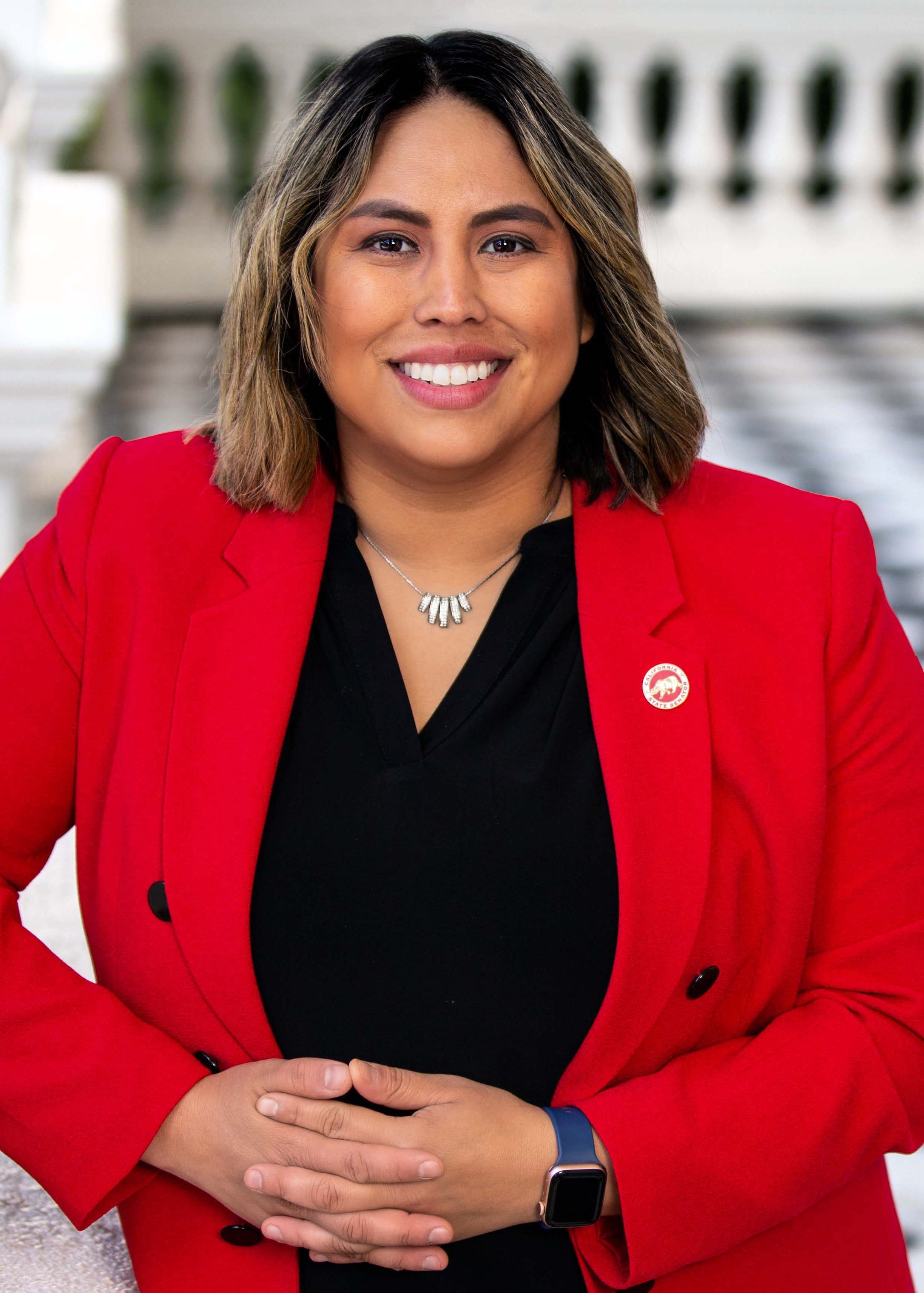
Sen. Caroline Menjivar
Sponsored bills
Existing law establishes the Medi-Cal program, which is administered by the State Department of Health Care Services and under which qualified low-income individuals receive health care services. The Medi-Cal program is, in part, governed and funded by federal Medicaid program provisions. Under existing law, one of the methods by which Medi-Cal services are provided is pursuant to contracts with various types of managed care plans. Existing law sets forth requirements for private duty nursing and home health care under the Medi-Cal program. Existing law imposes a managed care organization (MCO) provider tax, administered and assessed by the department, on licensed health care service plans and managed care plans contracted with the department to provide full-scope Medi-Cal services. Under existing law, proceeds from the MCO provider tax may be used, upon appropriation by the Legislature, for the increased costs incurred as a result of reimbursement requirements, among other things. This bill would provide that private duty nursing services provided to a child under 21 years of age by a home health agency are included as an eligible category for Medi-Cal reimbursement through the above-described scheme.
Existing law establishes various programs for the enforcement of environmental protection. Existing law defines environmental justice, for certain purposes, as the fair treatment of people of all races, cultures, and incomes with respect to the development, adoption, implementation, and enforcement of environmental laws, regulations, and policies. Existing law makes legislative findings and declarations that it is in the public interest to provide the people of the state through the Attorney General with adequate remedy to protect the natural resources of the state from pollution, impairment, or destruction. Existing law authorizes the Attorney General to intervene in any judicial or administrative proceeding in which facts are alleged concerning pollution or adverse environmental effects that could affect the public generally. This bill would continue in existence, within the Department of Justice, the Bureau of Environmental Justice for the purpose of protecting people and communities that endure a disproportionate share of environmental pollution and public health hazards. The bill would require the bureau to ensure fair treatment of people of all races, cultures, and incomes with respect to the development, adoption, implementation, and enforcement of environmental laws, regulations, and policies, pursuant to the existing authority of the Attorney General, as specified. The bill would require the Attorney General to ensure the bureau is staffed with a minimum of 12 attorneys and an appropriate number of support staff.
Existing law establishes the Department of Housing and Community Development and sets forth its powers and duties. Existing law creates a housing authority in each county or city, which functions upon the adoption of a specified resolution by the relevant governing body. Existing law authorizes these housing authorities, within their jurisdictions, to construct, reconstruct, improve, alter, or repair all or part of any housing project. Existing law establishes various programs that provide housing assistance. This bill would enact the Social Housing Act and would create the California Housing Authority as an independent state body, the mission of which would be to ensure that social housing developments that are produced and acquired align with the goals of eliminating the gap between housing production and regional housing needs assessment targets and preserving affordable housing. The bill would prescribe a definition of social housing that would describe, in addition to housing owned by the authority, housing owned by other entities, as specified, provided that all social housing developed or authorized by the authority would be owned by the authority. This bill would prescribe the composition of the California Housing Authority Board, which would govern the authority, and which would be composed of appointed members and members who would be elected by residents of social housing developments, as specified. The bill would set forth the powers and duties of the authority and the board. The bill would require the authority to seek to achieve revenue neutrality, as defined, and would require the authority to seek to recuperate the cost of development and operations over the life of its properties through mechanisms that maximize the number of Californians who can be housed without experiencing rent burden. This bill would require the authority to prioritize the development of specified property, including vacant parcels and parcels near transit, and would establish a process for the annual determination of required social housing units. Under the bill, social housing would accommodate a mix of household income ranges and would provide specified protections for residents, who would participate in the operation and management of the units in which they reside. This bill would require the California Housing Authority to employ 2 leasing models in social housing developments, referred to as the rental model and the ownership model, and would set forth the characteristics of both models. Under the ownership model, the authority would extend a 99-year lease, in the form of a limited equity arrangement, as defined, to individuals who commit to a minimum 5-year term of residence, and would authorize the authority to act as a lender for residents. The bill would specify how the units may be sold and transferred. The bill would establish eligibility requirements for social housing residents and would provide for the selection of residents by lottery, as specified, providing that people who may have been displaced from a property as part of its development would be granted a preference for occupancy. The bill, among other things, would require the authority to accept a local jurisdiction's preference for a project parcel if specified conditions are met. This bill would establish the Social Housing Revolving Loan Fund within the State Treasury to provide, upon appropriation by the Legislature, zero-interest loans for the purposes of constructing housing to accommodate a mix of household incomes. The bill would declare the intent of the Legislature to enact subsequent legislation to provide financing for the activities of the authority through the issuance of general obligation bonds. The bill would authorize the authority to issue revenue bonds, as specified. The bill would require the board to provide for regular audits of the authority's accounts and records, as specified. The bill would also require the authority to prepare and submit specified reporting information regarding its business plan and progress to the Legislature on an annual basis.
Existing law establishes the Medi-Cal program, which is administered by the State Department of Health Care Services and under which qualified low-income individuals receive health care services. The Medi-Cal program is, in part, governed and funded by federal Medicaid program provisions. Existing law establishes a schedule of covered benefits under the Medi-Cal program. This bill would add menstrual products, as defined, to that schedule of covered benefits. The bill would require the department to seek any necessary federal approvals to implement this coverage. The bill would require the department to seek, and would authorize the department to use, any and all available federal funding, as specified, to implement this coverage.
Maddy summaryThis Senate Resolution formally recognizes May as Maternal and Mental Health Awareness Month in California to highlight critical issues facing women and birthing people. The document draws attention to disparities in reproductive care, noting that many women lack access to hospitals with obstetrics services and that costs for fertility treatments remain a significant barrier. It also emphasizes the high prevalence of untreated mental health conditions among new mothers, particularly within communities of color and those with lower incomes. While the resolution does not create new laws, it serves to raise public awareness about the need for equitable access to both physical and mental health services during the reproductive years.
This measure would declare that the Legislature honors the life and legacy of Justice Ruth Bader Ginsburg, and proclaims March 15, 2024, as Justice Ruth Bader Ginsburg Day, a day of remembrance and education to ensure that all Californians always honor and remember a vibrant guardian of equality for all.
Existing law authorizes an unmarried person who is under 18 years of age to marry upon obtaining a court order granting permission and the written consent of at least one of the parents or the guardian of each underage party to the marriage, as specified. Existing law requires the court, if it considers it necessary, as part of the court order granting permission to marry, to require the parties to the prospective marriage of a minor to participate in premarital counseling, as specified. Existing law provides that 2 unmarried, unrelated adults who have chosen to share one another's lives in an intimate and committed relationship of mutual caring may establish a domestic partnership by filing a declaration with the Secretary of State, if certain requirements are met. Existing law provides that a person under 18 years of age who, together with the person with whom the person proposes to establish a domestic partnership, meets the requirements for a domestic partnership other than the requirement of being at least 18 years of age, is capable of consenting to and establishing a domestic partnership upon obtaining a court order granting permission to the underage person or persons to establish a domestic partnership. Under existing law, registered domestic partners have the same rights, protections, and benefits as spouses. This bill would repeal the authorization for a person under 18 years of age to be issued a marriage license or to establish a domestic partnership, thereby prohibiting a person under 18 years of age from being issued a marriage license or from establishing a domestic partnership. The bill would make conforming changes. Existing law required the State Registrar to create a document, no later than March 1, 2020, concerning marriage certificates in which one or both of the parties were minors at the time of solemnization of the marriage. Existing law requires the State Registrar to update that document annually, as specified. Existing law requires the local registrar to submit specified information for the purposes of that report. This bill would repeal those provisions.