

Existing law declares the public policy of the state regarding labor organization, including, among other things, that it is necessary for a worker to have full freedom of association, self-organization, and designation of representatives of their own choosing, to negotiate the terms and conditions of their employment, and to be free from the interference, restraint, or coercion of employers of labor, or their agents, in the designation of such representatives or in self-organization or in other concerted activities for the purpose of collective bargaining or other mutual aid or protection. Existing law establishes the Public Employment Relations Board (PERB) in state government as a means of resolving disputes and enforcing the statutory duties and rights of specified public employers and employees under various acts regulating collective bargaining. Under existing law, PERB has the power and duty to investigate an unfair practice charge and to determine whether the charge is justified and the appropriate remedy for the unfair practice. Existing law, the federal National Labor Relations Act (NLRA) , establishes a comprehensive statutory scheme regulating unfair labor practices on the part of employers and labor organizations in industries affecting interstate commerce, and vests in the National Labor Relations Board (NLRB) the power to conduct elections to determine employee representatives and to prevent unfair labor practices affecting commerce. Existing law, the California Public Records Act, requires that public records, as defined, be available to the public for inspection and made promptly available to any person. This bill would expand PERB's jurisdiction by authorizing a worker, to petition PERB to protect and enforce prescribed rights under specified circumstances, including if the worker is employed in a position subject to the NLRA but the NLRB has expressly or impliedly ceded jurisdiction. The bill would authorize PERB to, among other things, decide unfair labor practice cases pursuant to a specified timeline and order all appropriate relief for a violation, including civil penalties, as prescribed. In order to pursue relief from PERB, the bill would require a covered worker or their representative to file an unfair practice charge or petition that includes specified information, including, where applicable, the original charge or petition filed with the NLRB. The bill would require PERB to hold the supporting documentation and evidence confidential and maintain it as part of its investigatory file and would exempt this documentation and evidence from the California Public Records Act. If PERB determines, among other things, it has insufficient resources to process certain cases or doing so would prevent it from meeting specified statutory deadlines, the bill would require PERB to process and prioritize charges, as specified. The bill would also establish the Public Employment Relations Board Enforcement Fund (fund) in the State Treasury, would require the above-described civil penalties to be deposited into the fund, and would make moneys in the fund available upon appropriation by the Legislature to PERB for the purpose of administering the above-specified provisions. The bill would authorize PERB to rely on its own decisions and precedent under the NLRA and would authorize review of its decisions by a state appellate court, as specified. Existing law, the Alatorre-Zenovich-Dunlap-Berman Agricultural Labor Relations Act of 1975, grants agricultural employees the right to form and join labor organizations and engage in collective bargaining, as specified, and prohibits agricultural employers and labor organizations from engaging in unfair labor practices. Those provisions establish the Agricultural Labor Relations Board (ALRB) and empower the ALRB to prevent any person from engaging in those practices. Existing law establishes various definitions for these purposes. Existing law requires the ALRB to follow applicable precedents of the NLRA. This bill would specify that the ALRB has exclusive jurisdiction in all phases of the administration of the act, and to determine whether any person or entity meets one or more of those definitions. The bill would instead authorize the board to follow applicable precedents of the NLRA, but would not obligate the board to follow precedents where the ALRB deems it inappropriate to do so. This bill would make related findings and declarations and would make its provisions severable. Existing constitutional provisions require that a statute that limits the right of access to the meetings of public bodies or the writings of public officials and agencies be adopted with findings demonstrating the interest protected by the limitation and the need for protecting that interest. This bill would make legislative findings to that effect.
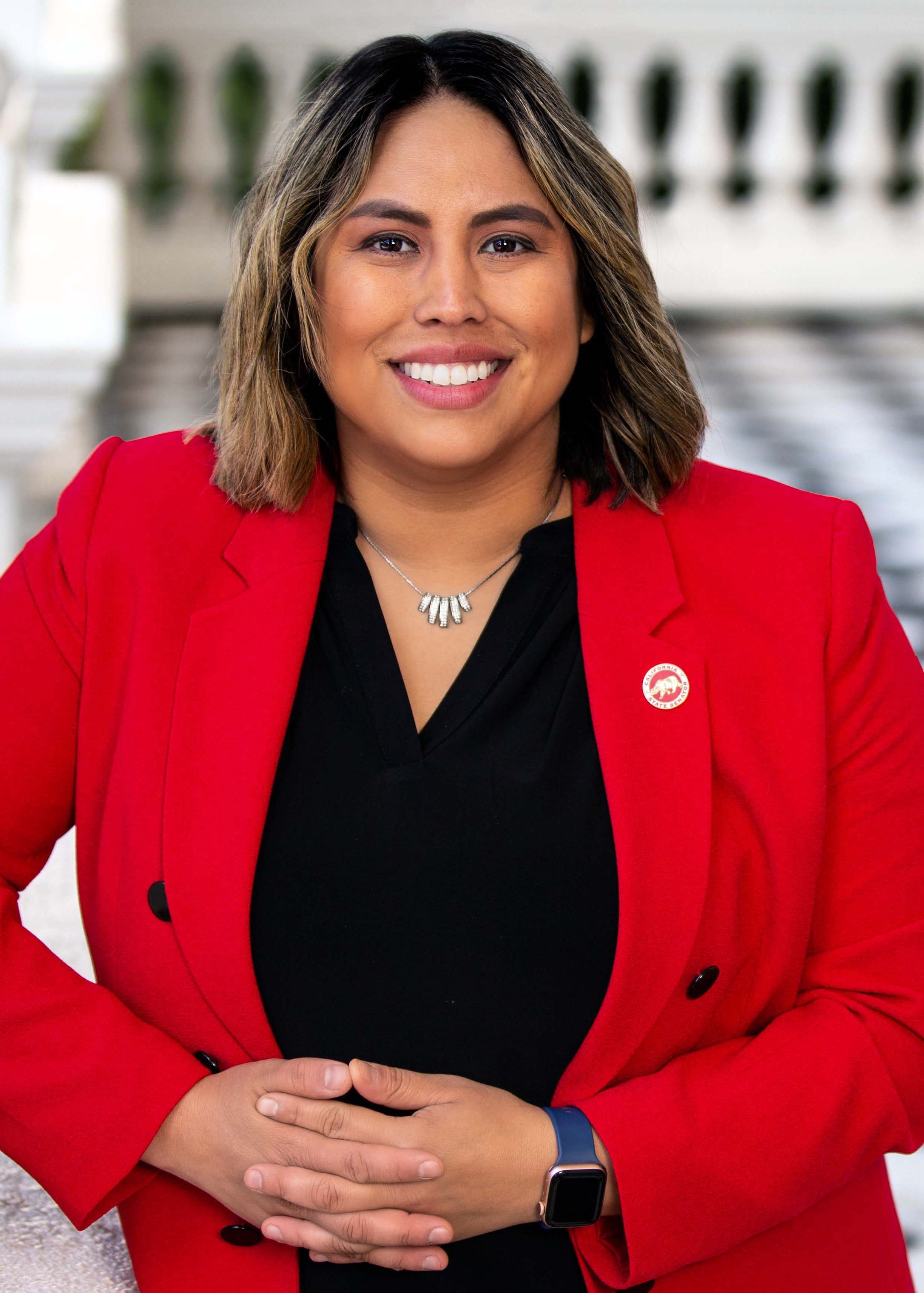
Sen. Caroline Menjivar
Sponsored bills
(1) The Confidentiality of Medical Information Act (CMIA) prohibits a provider of health care, a health care service plan, a contractor, or a corporation and its subsidiaries and affiliates from intentionally sharing, selling, using for marketing, or otherwise using any medical information, as defined, for any purpose not necessary to provide health care services to a patient, except as provided. The CMIA prohibits a provider of health care, health care service plan, or contractor from disclosing medical information regarding a patient of the provider of health care or an enrollee or subscriber of a health care service plan without first obtaining authorization from the patient, except if the disclosure is compelled by, among other things, a search warrant lawfully issued to a governmental law enforcement agency or a court order. Existing law makes a violation of these provisions that results in economic loss or personal injury to a patient punishable as a misdemeanor. This bill would revise the definition of "medical information" to include immigration status, including current and prior immigration status, and place of birth, if that information is known or collected, as specified, and would define "immigration enforcement" to mean any and all efforts to investigate, enforce, or assist in the investigation or enforcement of any federal civil immigration law, and also includes any and all efforts to investigate, enforce, or assist in the investigation or enforcement of any federal criminal immigration law that penalizes a person's presence in, entry or reentry to, or employment in, the United States. The bill would specify that a provider of health care, health care service plan, or contractor shall disclose medical information regarding a patient of the provider of health care or an enrollee or subscriber or a health care service plan pursuant to a valid search warrant issued by a judicial officer, including a magistrate, to a governmental law enforcement agency, or pursuant to a state or federal court order issued by a court of this state or a federal court. The bill would also prohibit, except to the extent expressly authorized by a patient, enrollee, or subscriber, or as otherwise permitted or required, a provider of health care, health care service plan, contractor, or corporation and its subsidiaries and affiliates from disclosing medical information for immigration enforcement. Because the bill would expand the scope of a crime, it would impose a state-mandated local program. (2) Under existing law, the State Department of Public Health is responsible for the licensing and regulation of various facilities and settings that provide health care services, as specified. Existing law makes a willful violation of these provisions a crime. This bill would require health care provider entities, as defined, to establish or amend procedures for monitoring, documenting, and receiving visitors to health care provider entities to the extent possible. The bill would require health care provider entity personnel to immediately notify health care provider entity management, administration, or legal counsel of any request for access to a health care provider entity site or patient for immigration enforcement, and to provide any requests for review of health care provider entity documents, as prescribed. The bill would prohibit, unless required by state or federal law, a health care provider entity and its personnel from allowing any person access to nonpublic areas of the provider's facilities for immigration enforcement purposes, except as specified. The bill would require health care provider entities to inform staff and relevant volunteers on how to respond to requests relating to immigration enforcement that grants access to health care provider entity sites or to patients. The bill would require that health care provider entities comply with these provisions within 45 days from their effective date. By expanding the scope of a crime and increasing duties on local health officials, the bill would impose a state-mandated local program. The California Constitution requires the state to reimburse local agencies and school districts for certain costs mandated by the state. Statutory provisions establish procedures for making that reimbursement. This bill would provide that with regard to certain mandates no reimbursement is required by this act for a specified reason. With regard to any other mandates, this bill would provide that, if the Commission on State Mandates determines that the bill contains costs so mandated by the state, reimbursement for those costs shall be made pursuant to the statutory provisions noted above. This bill would provide that no reimbursement is required by this act for a specified reason. This bill would declare that it is to take effect immediately as an urgency statute.
Existing law prohibits credibly impersonating a peace officer, firefighter, or employee of a public utility, state or local government agency, or search and rescue team, as specified. Existing law also prohibits willfully and credibly impersonating a peace officer, firefighter, or employee of a public utility, state or local government agency, or search and rescue team through or on an internet website, or by other electronic means, for the purposes of defrauding another. A violation of these prohibitions is punishable as a misdemeanor. This bill would revise and recast these provisions to prohibit impersonating a law enforcement officer, and would clarify that a law enforcement officer, for these purposes, includes a federal law enforcement officer. The bill would extend these offenses to include willfully and credibly impersonating any of those entities through any means for the purpose of defrauding another. By expanding the scope of a crime, this bill would impose a state-mandated local program. This bill would, on and after January 1, 2026, require a law enforcement officer operating in California that is not uniformed to visibly display identification that includes their agency and either a name or badge number to the public when performing their enforcement duties, except as specified. The bill would make a violation of these provisions a misdemeanor. The bill would define personnel of a law enforcement agency as any peace officer under California law and any federal law enforcement officer. By creating a new crime and imposing duties on local law enforcement, this bill would impose a state-mandated local program. The bill would require any law enforcement agency operating in California to, by January 1, 2026, maintain and publicly post a written policy on the visible identification of sworn personnel, including a purpose statement affirming the agency's commitment to specified principles including transparency, accountability, and public trust, and a requirement for sworn personnel to visibly display identification and for specified exceptions. The bill would exempt personnel of any agency from the crime for not displaying identification if an agency maintains a policy pursuant to these provisions. The bill would deem a policy consistent with that exception unless a member of the public, an oversight body, or a local governing authority challenges it. The bill would, if the agency does not address deficiencies within 90 days, authorize the complaining party to proceed to a court of competent jurisdiction for a judicial determination of the exemption, as specified. The bill would also authorize a peace officer, as defined, to request an alleged law enforcement officer to present identification when there is probable cause or reasonable suspicion to believe the alleged law enforcement officer has committed crime, including, but not limited to, impersonating a peace officer. Existing law, the Bail Fugitive Recovery Persons Act, regulates bail fugitive recovery agents, defined as a person given written authorization by the bail or depositor of bail and contracted to investigate, surveil, locate, and arrest a bail fugitive and any person employed to assist the bail or depositor of bail to investigate, surveil, locate, and arrest a bail fugitive. This bill would prohibit a person authorized to apprehend a bail fugitive from using that position for the purposes of immigration enforcement and would prohibit a person authorized to apprehend a bail fugitive from disclosing personally identifiable information of any bail fugitive that is requested for purposes of immigration enforcement, except as specified. This bill would declare these provisions are severable. The California Constitution requires the state to reimburse local agencies and school districts for certain costs mandated by the state. Statutory provisions establish procedures for making that reimbursement. This bill would provide that with regard to certain mandates no reimbursement is required by this act for a specified reason. With regard to any other mandates, this bill would provide that, if the Commission on State Mandates determines that the bill contains costs so mandated by the state, reimbursement for those costs shall be made pursuant to the statutory provisions noted above. This bill would declare that it is to take effect immediately as an urgency statute.
Existing law makes it a misdemeanor to wear a mask, false whiskers, or any personal disguise, as specified, with the purpose of evading or escaping discovery, recognition, or identification while committing a public offense, or for concealment, flight, evasion, or escape from arrest or conviction for any public offense. This bill would make it a crime for a law enforcement officer to wear a facial covering in the performance of their duties, except as specified. The bill would define law enforcement officer as anyone designated by California law as a peace officer who is employed by a city, county, or other local agency, and any officer or agent of a federal law enforcement agency or law enforcement agency of another state, or any person acting on behalf of a federal law enforcement agency or agency of another state. The bill would make a violation of these provisions punishable as an infraction or a misdemeanor, as specified. By creating a new crime, this bill would impose a state-mandated local program. The bill would require any law enforcement agency operating in California to, by July 1, 2026, maintain and publicly post a written policy limiting the use of facial coverings, as specified. The bill would exempt personnel of any agency from the crime of wearing a facial covering if an agency maintains a policy pursuant to this section no later than July 1, 2026. The bill would deem a policy consistent with these provisions for the purposes of that exception unless a member of the public, an oversight body, or a local governing authority challenges it. The bill would also impose a specified civil penalty against certain officers for tortious conduct, including, but not limited to, false imprisonment or false arrest of an individual while wearing a facial covering. The bill would, if the agency does not address deficiencies within 90 days, authorize the complaining party to proceed to a court of competent jurisdiction for a judicial determination of the exemption, as specified. The bill would define a law enforcement agency for these purposes as any entity of a city, county, or other local agency, that employs anyone designated by California law as a peace officer, any federal law enforcement agency, or any law enforcement agency of another state. By imposing additional duties on local law enforcement agencies, this bill would create a state-mandated local program. This bill would declare its provisions to be severable. This bill would make related findings and declarations. The California Constitution requires the state to reimburse local agencies and school districts for certain costs mandated by the state. Statutory provisions establish procedures for making that reimbursement. This bill would provide that with regard to certain mandates no reimbursement is required by this act for a specified reason. With regard to any other mandates, this bill would provide that, if the Commission on State Mandates determines that the bill contains costs so mandated by the state, reimbursement for those costs shall be made pursuant to the statutory provisions noted above.
This measure would declare October 28, 2025, as First Responders' Day and would urge all Californians to observe and promote the day with appropriate ceremonies and activities that promote awareness of the contributions of first responders in California.
(1) Existing law establishes the In-Home Supportive Services (IHSS) program, which is administered by the State Department of Social Services, counties, and other entities, under which qualified aged, blind, or disabled persons are provided with supportive services in order to permit them to remain in their own homes. Existing law authorizes a county board of supervisors to elect to contract with a nonprofit consortium to provide for the delivery of in-home supportive services or to establish, by ordinance, a public authority to provide for the delivery of those services, in accordance with certain procedures. Existing law deems a public authority created under these provisions to be the employer of in-home supportive services personnel under the Meyers-Milias-Brown Act, which governs labor relations between local public employers and employees. Existing law also deems a nonprofit consortium contracting with a county to be the employer of in-home supportive services personnel for purposes of collective bargaining over wages, hours, and other terms and conditions of employment. Existing law grants recipients of in-home supportive services the right to hire, fire, and supervise the work of any in-home supportive services personnel providing services for them. Existing law prohibits the state and specified local public employers from deterring or discouraging public employees from becoming or remaining members of an employee organization. Existing law also requires specified public employers to provide exclusive employee representatives access to new employee orientations. Existing law generally grants the Public Employment Relations Board jurisdiction over violations of these provisions. Existing law defines "public employers" who are subject to these provisions as including, among others, public agencies, cities, counties, and districts. This bill would expand the definition of "public employer," for purposes of those provisions, to include an employer who is subject to the In-Home Supportive Services Employer-Employee Relations Act, which the bill would create. The bill would establish a method for resolving disputes regarding wages, benefits, and other terms and conditions of employment between the state and recognized employee organizations representing individual providers. The bill would provide for the right of employees, also known as individual providers under the act, to form, join, and participate in activities of employee organizations for the purposes of representation on all matters within the scope of employee organizations. The bill would define "employee" or "individual provider" for these purposes to mean a person authorized to provide in-home supportive services pursuant to the individual provider mode or waiver personal care services, as prescribed. This bill would, for purposes of collective bargaining, deem the state to be the employer of record of individual providers in each county. The bill would grant the in-home supportive services recipient with the right to hire, fire, and supervise the work of the individual providers providing services to them. Among other things, the bill would specify that individual providers employed by a predecessor agency before January 1, 2026, shall retain employee status and not be required by the state to requalify to receive payment for providing in-home supportive services. Among other things, for purposes of collective bargaining, this bill would provide that existing bargaining units consisting of individual providers in a single county that are represented by the same recognized employee organization shall be deemed merged into the largest possible multicounty bargaining units represented by that employee organization. In counties where no recognized employee organization exists as of January 1, 2026, the bill would specify that a bargaining unit consisting of all employees in that county shall be deemed an appropriate unit for collective bargaining. Under the bill, if individual providers in a county bargaining unit are represented by a recognized employee organization on January 1, 2026, the state would be deemed the successor employer of the predecessor agency for purposes of negotiating a collective bargaining agreement, subject to the obligation to meet and confer in good faith and meet other related legal requirements. This bill would require all recognized employee organizations, as of January 1, 2026, to negotiate jointly on behalf of all bargaining units they represent to reach a single memorandum of understanding with the employer. The bill would authorize the memorandum of understanding to contain addenda reflecting regional or county-level terms and conditions. The bill would establish procedures for voting and ratification of a memorandum of understanding, and for the employer to assume a predecessor agency's rights and obligations under a memorandum of understanding or agreement between a predecessor agency and a recognized employee organization that is in effect on January 1, 2026. This bill would prescribe the duties of the state under the bill, including requiring the Governor to meet and confer in good faith, and to follow specified procedures regarding collective bargaining. If an agreement is reached by a representative of the Governor and the recognized employee organizations, the bill would require those parties to jointly prepare a written memorandum of understanding and present it to the Legislature for determination by majority vote. The bill would require the Governor, for any side letter, appendix, or other addendum to a memorandum of understanding that requires the expenditure of $250,000 or more related to salary and benefits not included in the original memorandum or the Budget Act, to provide that to the Joint Legislative Budget Committee, as specified. The bill would also establish mediation and arbitration procedures that would apply when the parties fail to reach an agreement. This bill would make certain actions by an employer and other entities involved in administering the IHSS program unlawful, including imposing or threatening to impose reprisals on employees or otherwise interfering with the exercise of their rights. The bill would authorize the Public Employment Relations Board to adopt reasonable rules and regulations pursuant to the bill, including the adoption of emergency regulations, as prescribed. (2) Existing law requires the Controller to provide for the administration of payroll deductions and salary reductions, and authorizes the Controller to establish procedures for that purpose. This bill would require the Controller to honor a written authorization for payroll deductions executed by an employee before January 1, 2026, and to make deductions for payments of dues to a recognized employee organization pursuant to the bill consistent with the above-described payroll deduction procedures. (3) Existing law, the California Public Records Act, requires public records to be open to inspection at all times during the office hours of the state or local agency that retains those records, and provides that every person has a right to inspect any public record, except as provided. Existing law provides that certain information regarding persons paid by the state to provide in-home supportive services, or other related public services, are not subject to disclosure under those provisions. Existing law further provides that copies of names, addresses, home telephone numbers, and other identifying information are required to be made available, upon request, to an exclusive bargaining agent and to any employee organization seeking representation rights under specified collective bargaining provisions. This bill would, with respect to the above-described personal identifying information, instead require this information to be made available to the exclusive bargaining agent and any employee organization seeking representation under the bill. The bill would require the state, or a county, public authority, or nonprofit consortium organized pursuant to the IHSS program, to promptly make the information available to the requesting entity. This bill would revise the IHSS program provisions to require the state to assume responsibilities as set forth in the bill. The bill would also require a county or city and county to continue to have certain IHSS program-related functions set forth in county ordinance or contract performed in accordance with specified provisions. (4) Existing law requires prospective providers of in-home supportive services to complete an in-person provider orientation at the time of enrollment that is developed by the department, in consultation with counties, that includes requirements to be an eligible IHSS provider and other related matters. This bill additionally would require that in-person provider orientation include any other information required to be communicated to prospective providers by a memorandum of understanding, appendix, or side letter between recognized employee organizations and the state. Existing law requires a specified mediation process, including a factfinding panel recommending settlement terms, to be held if a public authority or nonprofit consortium and an employee organization fail to reach agreement on a bargaining contract with in-home supportive service (IHSS) workers on or after October 1, 2023. This bill would make that provision inoperative. The bill would also require the department to appoint an IHSS Advisory Committee to provide ongoing advice and recommendations regarding in-home supportive services, as specified. The bill would require the employer, prior to finalizing a memorandum of understanding with one or more organizations that are the designated representatives of in-home services providers, to consult with specified advisory committee representatives to obtain input on county and public authority programmatic and fiscal implications. Existing law requires the state and counties to share the annual cost of providing IHSS pursuant to a specified cost ratio. Existing law requires all counties to have a rebased County IHSS Maintenance of Effort (MOE) , and requires the rebased MOE to be adjusted only by an inflation factor of 4% and for the annualized cost of increases in provider wages, health benefits, or other benefits that are locally negotiated, mediated, or imposed, as prescribed. This bill would prohibit the rebased County IHSS MOE from being adjusted based on any provision of any memorandum of understanding, or addenda, appendices, or side letters thereto, between the state and recognized employee organizations. Existing law requires the state to pay 100% of the allowable nonfederal share of county administration and public authority administration costs for each county, until the county's share of the General Fund moneys appropriated for this purpose is exhausted, and then requires the county to pay 100% of the remaining nonfederal share of county administration and public authority administration costs, as specified. This bill would require the state to also pay 100% of the nonfederal share of county administration and public authority administration costs for each county of any administration costs resulting from the provisions of any memorandum of understanding, or addenda, appendices, or side letters thereto, between the state and recognized employee organizations. Existing law, the Bagley-Keene Open Meeting Act, requires, with specified exceptions, that all meetings of a state body be open and public. This bill would exempt the IHSS Advisory Committee from the act. This bill would make other related changes. By imposing new duties on local government officials, the bill would impose a state-mandated local program. (5) This bill would include findings that changes proposed by this bill address a matter of statewide concern and, therefore, apply to all counties. (6) The California Constitution requires local agencies, for the purpose of ensuring public access to the meetings of public bodies and the writings of public officials and agencies, to comply with a statutory enactment that amends or enacts laws relating to public records or open meetings and contains findings demonstrating that the enactment furthers the constitutional requirements relating to this purpose. This bill would make legislative findings to that effect. (7) Existing constitutional provisions require that a statute that limits the right of access to the meetings of public bodies or the writings of public officials and agencies be adopted with findings demonstrating the interest protected by the limitation and the need for protecting that interest. This bill would make legislative findings to that effect. (8) The California Constitution requires the state to reimburse local agencies and school districts for certain costs mandated by the state. Statutory provisions establish procedures for making that reimbursement. This bill would provide that with regard to certain mandates no reimbursement is required by this act for a specified reason. With regard to any other mandates, this bill would provide that, if the Commission on State Mandates determines that the bill contains costs so mandated by the state, reimbursement for those costs shall be made pursuant to the statutory provisions noted above.
Maddy summarySCR 28 designates September 28, 2025, as Gold Star Mothers' and Families' Day in California. This ceremonial resolution honors families who have lost a member in military service. It does not create new laws or alter existing policies; it simply recognizes these families through a formal state designation. The measure directly affects California residents by providing a designated day for public acknowledgment of Gold Star families' sacrifices.
This measure would call on the state's Representatives in Congress to support legislation to repeal all of the provisions of the federal One Big Beautiful Bill Act that adversely affect Social Security, Medicare, and Medicaid programs, to oppose privatization of these programs, and to protect and improve these programs, and would call on the President of the United States to immediately restore program staffing levels, to work with Congress to protect and improve these programs, and to disavow any efforts to privatize Social Security.
The California Constitution establishes certain conditions of employment for state officers and employees. Existing law, the Firefighters Procedural Bill of Rights Act, grants specified employment rights to firefighters, as defined, including temporary, seasonal firefighters employed by the Department of Forestry and Fire Protection (CAL FIRE) . This bill would require the Department of Human Resources, the State Personnel Board, and any other relevant state agency to take the necessary actions to transition the Firefighter I classification within CAL FIRE to a permanent firefighter employment classification.
Existing law establishes the Medi-Cal program, which is administered by the State Department of Health Care Services and under which qualified low-income individuals receive health care services. The Medi-Cal program is, in part, governed and funded by federal Medicaid program provisions. Existing law, subject to implementation of the California Advancing and Innovating Medi-Cal (CalAIM) initiative, requires the department to implement an enhanced care management (ECM) benefit designed to address the clinical and nonclinical needs on a whole-person-care basis for certain target populations of Medi-Cal beneficiaries enrolled in Medi-Cal managed care plans. Under existing law, target populations include, among others, high utilizers with frequent hospital admissions, short-term skilled nursing facility stays, or emergency room visits, and individuals experiencing homelessness. Existing law, subject to CalAIM implementation, authorizes a Medi-Cal managed care plan to elect to cover community supports, as specified. Under existing law, community supports that the department is authorized to approve include, among others, housing transition navigation services and medically supportive food and nutrition services. This bill would require a Medi-Cal managed care plan, for purposes of covering the ECM benefit, or if it elects to cover a community support, to contract with community providers, as defined, that can demonstrate that they are capable of providing access and meeting quality requirements in accordance with Medi-Cal guidelines. In determining which community providers to contract with, the bill would authorize Medi-Cal managed care plans to take into consideration whether those providers are available in the respective county and have experience in providing the applicable ECM or community support. The bill would require the department, for purposes of enforcing these provisions, to require Medi-Cal managed care plans to set goals every other year for the level of contracting and utilization of community providers and local entities, as defined. The bill would require these goals to be established in consultation with the department, as specified. If a community provider contracted to provide ECM services or community supports submits a referral or authorization request for the applicable service on behalf of an eligible member, the bill would require a Medi-Cal managed care plan to assign the member to the contracted referring provider if the plan determines that the provider can appropriately meet the needs of the member. The bill would prohibit the above-described provisions from being construed to limit the department's authority to grant eligibility for presumptive authorization for categories of ECM providers that have extensive experience and expertise in serving certain ECM populations of focus. Existing law requires the department to develop, in consultation with Medi-Cal managed care plans and other appropriate stakeholders, a monitoring plan and reporting template for the implementation of ECM or community supports. Existing law requires the department to annually publish a public report on reported ECM or community support utilization data, populations served, and demographic data, stratified by age, sex, race, ethnicity, and languages spoken, to the extent that statistically reliant data are available. This bill would expressly include providers of ECM or community supports within the consultation process. The bill would require the department to publish the public report on a quarterly basis instead and would require additional demographic data. The bill would also require the department to develop standardized and streamlined templates to be used by Medi-Cal managed care plans or their contracted providers, as specified, and to develop guidance to allow community providers to act as a primary subcontractor with Medi-Cal managed care plans and to subcontract with other community providers as a 3rd-tier subcontractor, as specified.