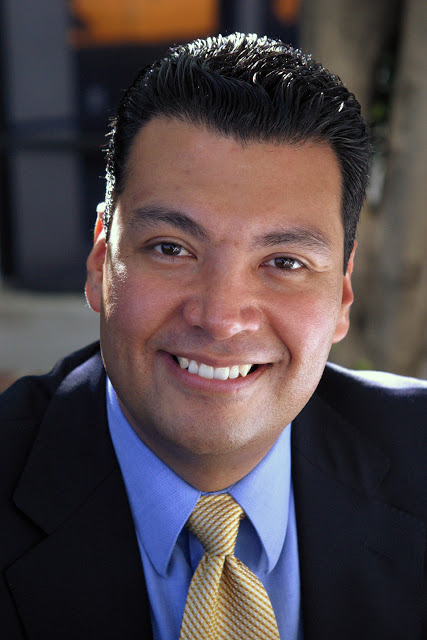
Photo of Alex Padilla
D California Senate · District 20

Sen. Alex Padilla

Compare
Total votes
18,975
all sessions
Attendance
92%
1,085 missed
Near the chamber average
With party
99%
of cast votes
Near the chamber average
Bipartisan score
0%
crosses aisle rarely
Near the chamber average
Sponsored
424
bills & resolutions
Near the chamber average
Committees
0
assignments
424 bills and resolutions

Sponsored bills

Total
424
Primary
190
Co-sponsor
234
This page
424
matching current filters
Primary SB 1255
Failed · California Senate · Lead sponsor
Schools: nutrition: beverages.

Existing law permits the sale of only certain beverages to pupils at schools. The beverages that may be sold include fruit-based and vegetable-based drinks, drinking water, milk, and, in middle and junior high schools, an electrolyte replacement beverage if those beverages meet certain nutritional requirements. This bill, commencing July 1, 2011, would recast those provisions and would restrict the sale of electrolyte replacement beverages in middle schools and high schools to specified times before and after school.

Failed Nov 30, 2010 0 co-sponsors
Primary SB 1435
Failed · California Senate · Lead sponsor
Electricity: plug-in electric vehicles: charging.

(1) Under existing law, the Public Utilities Commission has regulatory authority over public utilities, as defined. The existing Public Utilities Act requires every public utility to furnish and maintain adequate, efficient, just, and reasonable service, instrumentalities, equipment, and facilities as are necessary to promote the safety, health, comfort, and convenience of its patrons, employees, and the public. This bill would provide that the ownership, control, operation, or management of a facility that supplies electricity only for use to charge light-duty plug-in electric vehicles, as defined, does not make the corporation or person a public utility for purposes of the act. (2) Existing law requires the Public Utilities Commission, in consultation with the State Energy Resources Conservation and Development Commission, the State Air Resources Board, electrical corporations, and the motor vehicle industry, to evaluate policies to develop infrastructure sufficient to overcome any barriers to the widespread deployment and use of plug-in hybrid and electric vehicles and, by July 1, 2011, to adopt rules that address specified matters. This bill would require the Public Utilities Commission to adopt rules that it determines are necessary for the charging of plug-in electric vehicles within the service territory of an electrical corporation, to achieve certain results.

Failed Nov 30, 2010 0 co-sponsors
Co-sponsor SB 4
Failed · California Senate · Co-sponsor
Income tax credit: qualified principal residence.

The Personal Income Tax Law authorizes various credits against the taxes imposed by that law, including a credit against those taxes in an amount equal to the lesser of 5% of the purchase price of a qualified principal residence, as defined, or $10,000, for purchases made between March 1, 2009, and before March 1, 2010, subject to specified restrictions. This bill would authorize a credit against those taxes in an amount equal to the lesser of 5% of the purchase price of a qualified principal residence, as defined, or $10,000, for purchases made between May 1, 2010, and on or before December 31, 2010, or on or after December 31, 2010, and before August 1, 2011, subject to specified restrictions, including the submission of a certification to the Franchise Tax Board by either the taxpayer or seller, made under the penalty of perjury, that the residence has either never been occupied or that the taxpayer is a first-time home buyer. By expanding the definition of an existing crime, this bill imposes a state-mandated local program. The California Constitution requires the state to reimburse local agencies and school districts for certain costs mandated by the state. Statutory provisions establish procedures for making that reimbursement. This bill would provide that no reimbursement is required by this act for a specified reason. This bill would take effect immediately as a tax levy.

Failed Oct 8, 2010 1 co-sponsor
Primary SB 12
Failed · California Senate · Lead sponsor
Energy: California Alternative Energy and Advanced Transportation Financing Authority.

The California Alternative Energy and Advanced Transportation Financing Authority Act established the California Alternative Energy and Advanced Transportation Financing Authority. The authority is authorized to do all things necessary and convenient to carry out the purposes of the act. The authority is also required to establish a renewable energy program to provide financial assistance, as defined, to certain entities for projects to generate new and renewable energy sources, develop clean and efficient distributed generation, and demonstrate the economic feasibility of new technologies. Existing law provides that the transfer of title of tangible personal property constituting a project under the act to the authority by a participating party or the lease or transfer of tangible personal property constituting a project under the act by the authority to a participating party pursuant to the act is not a "sale" or "purchase" for the purposes of the Sales and Use Tax Law. This bill would include as a project, machinery or equipment that is utilized for the design, technology transfer, manufacture, production, assembly, distribution, or service of an alternative source component. The bill would require the authority to consider specified criteria in approving a project for which the purchase, sale, or lease of tangible personal property qualifies for the sales and use tax exclusion.

Failed Oct 8, 2010 0 co-sponsors
Co-sponsor AB 1650
Signed into law · California Assembly · Co-sponsor
Public contracts: state and local contract eligibility: energy sector investment activities in Iran.

Existing law sets forth the requirements for the solicitation and evaluation of bids and the awarding of contracts by public entities. The federal Comprehensive Iran Sanctions, Accountability, and Divestment Act of 2010, which became Public Law 111-195 on July 1, 2010, authorizes a state or local government to adopt and enforce measures meeting certain requirements, to divest the assets of the state or local government from, or prohibit the investment of those assets in, any person that the state or local government, using credible information available to the public, determines to be engaged in investment activities in Iran. The federal act specifies that an investment includes the entry into, or renewal of, a contract for goods or services, and that such a measure is not preempted by any federal law or regulation. Pursuant to this authority, this bill would prohibit a person that provides goods or services of $20,000,000 or more in the energy sector of Iran, as identified on a list created by the Department of General Services, or a financial institution that extends $20,000,000 or more in credit to such a person, from bidding on or entering into or renewing a contract for goods or services of $1,000,000 or more with a public entity, as specified. This bill would, by June 1, 2011, require the Department of General Services to, using credible information available to the public, develop, or contract to develop, a list of persons it determines provide goods or services of $20,000,000 or more in the energy sector of Iran. This bill would, before a person is included on the list, require the Department of General Services to provide 90 days' written notice of its intent to include the person on the list and to inform the person that inclusion on the list would make the person ineligible to bid on, submit a proposal for, or enter into or renew, a contract for goods and services of $1,000,000 or more with a public entity, and would require the department to provide the person with an opportunity to comment in writing that it is not engaged in investment activities in Iran. This bill would require a prospective bidder for those contracts to certify that it is not identified on a list created by the Department of General Services, or a financial institution that extends $20,000,000 or more in credit to such a person, as provided, and would impose penalties, as specified, for a person that provides a false certification. This bill would require a local public entity, or the Department of General Services in the case of state contracts, to provide a person with 90 days' written notice and an opportunity to comment in writing before the penalties are imposed. The bill would allow a public entity, under specified conditions, to permit a person engaged in investment activities in Iran to be eligible for, to bid on, submit a proposal for, or enter into or renew, a contract for goods or services. This bill would preempt any law, ordinance, rules, or regulation of any local public entity involving contracts for goods or services of $1,000,000 or more with a person engaged in investment activities in Iran. This bill would make legislative findings and declarations regarding a statewide concern. This bill would become inoperative upon the date that federal authorization ceases.


Signed into law Sep 30, 2010 1 co-sponsor
Primary SB 1008
Signed into law · California Senate · Lead sponsor
Engineering and land surveying: limited liability partnerships.

The Professional Engineers Act provides for the licensure and regulation of engineers and the Professional Land Surveyors' Act provides for the licensure and regulation of land surveyors by the Board for Professional Engineers and Land Surveyors. Existing law provides for the formation of various types of legal entities, including registered limited liability partnerships and foreign limited liability partnerships. Under existing law, a registered limited liability partnership or a foreign limited liability partnership may only be formed by persons licensed to engage in the practice of accountancy, the practice of law, or, until January 1, 2012, the practice of architecture. This bill would authorize registered limited liability partnerships and foreign limited liability partnerships to be formed by persons licensed to engage in the practice of engineering or land surveying, and would provide that one or more engineers or land surveyors are not prohibited from practicing or offering to practice, within the scope of their licensure, as a limited liability partnership if specified requirements are met. Existing law requires that every registered limited liability partnership and foreign limited liability partnership provide specified security for claims arising out of the partnership's professional practice. Under existing law, the total aggregate limit of liability under the policy or policies of insurance or the amount of security required to be provided by those partnerships providing architectural services is $100,000 multiplied by the number of licensed persons, but not less than $1,000,000 and not more than $5,000,000, as specified. This bill would also impose those security requirements on a limited liability partnership and foreign limited liability partnership providing engineering or land surveying services, except that the amount of security required to be provided would be not less than $2,000,000. This bill would specify that its provisions shall become inoperative on January 1, 2016, unless a later enacted statute, enacted prior to that date, deletes or extends that date. This bill would declare that it is to take effect immediately as an urgency statute.

Signed into law Sep 30, 2010 0 co-sponsors
Co-sponsor AB 2084
Signed into law · California Assembly · Co-sponsor
Child day care facilities: nutrition.

Existing law, the California Child Day Care Facilities Act, administered by the State Department of Social Services, provides for the licensure and regulation of child day care facilities, as defined. Willful or repeated violation of these provisions is a misdemeanor. This bill would require, commencing January 1, 2012, except as provided, a licensed child day care facility to follow specified requirements relating to the provision of beverages. The bill would allow the department to adapt the provisions by bulletin, as specified. By expanding the definition of a crime, the bill would impose a state-mandated local program. The California Constitution requires the state to reimburse local agencies and school districts for certain costs mandated by the state. Statutory provisions establish procedures for making that reimbursement. This bill would provide that no reimbursement is required by this act for a specified reason.

Signed into law Sep 30, 2010 1 co-sponsor
Co-sponsor AB 1413
Vetoed · California Assembly · Co-sponsor
Student financial aid.

(1) The Donahoe Higher Education Act sets forth, among other things, the missions and functions of California's public and independent segments of higher education, and their respective institutions of higher education. Provisions of the act apply to the University of California only to the extent that the Regents of the University of California, by appropriate resolution, act to make a provision applicable. Existing law requires that a person, other than a nonimmigrant alien, as defined, who has attended high school in California for 3 or more years, who has graduated from a California high school or attained the equivalent thereof, who has registered at or attends an accredited institution of higher education in California not earlier than the fall semester or quarter of the 2001–02 academic year, and who, if he or she is an alien without lawful immigration status, has filed a prescribed affidavit, is exempt from paying nonresident tuition at the California Community Colleges and the California State University. This bill would amend the Donahoe Higher Education Act to provide that persons who are exempt from paying nonresident tuition under the above provision, or who meet equivalent requirements adopted by the regents, are eligible to apply for, and participate in, any student financial aid program administered by the State of California to the full extent permitted by federal law. This bill would require the Student Aid Commission to establish procedures and forms that enable those persons who are exempt from paying nonresident tuition under the above provision to apply for, and participate in, all student financial aid programs administered by the State of California to the full extent permitted by federal law. This bill would prohibit persons who are exempt from paying nonresident tuition under the provision described above from being eligible for Competitive Cal Grant A and B Awards unless specified conditions are met. The bill would make these provisions operative as of July 1, 2011. (2) Existing federal law requires that a state may provide that an alien who is not lawfully present in the United States is eligible for any state or local public benefit for which that alien would otherwise be ineligible under a specified federal law only through enactment of a state law that affirmatively provides for that eligibility. This bill would find and declare that the amendments to the Donahoe Higher Education Act described above are state laws within the meaning of this federal provision. (3) This bill would provide that it would become operative only if SB 1460 of the 2009–10 Regular Session is enacted and becomes effective on or before January 1, 2011.

Vetoed Sep 30, 2010 1 co-sponsor
Co-sponsor AB 2733
Signed into law · California Assembly · Co-sponsor
Cigarettes and tobacco products.

Existing law, the California Cigarette and Tobacco Products Licensing Act of 2003, provides for the licensure by the State Board of Equalization of manufacturers, distributors, wholesalers, importers, and retailers of cigarette or tobacco products that are engaged in business in California. The act prohibits retailers, manufacturers, distributors, and wholesalers from distributing or selling those cigarette and tobacco products unless they are licensed. The act authorizes the board to suspend or revoke the license of any manufacturer, distributor, wholesaler, importer, or retailer of tobacco products that is in violation of the act's provisions. Violation of the act is a misdemeanor. This bill would, among other things, prohibit the transfer of title or possession of cigarettes or tobacco products without consideration, exchange, or barter if the cigarettes or tobacco products had been purchased for resale under a license issued pursuant to the act and the transfer occurs during the suspension or after revocation of the license. It would also prohibit specified displays of cigarettes or tobacco products. It would require prescribed notices to be posted when a license has been suspended or revoked by the board, and would make violation of these notice posting requirements subject to a civil penalty. By adding a new crime, this bill would impose a state-mandated local program. This bill would incorporate additional changes in Section 22979 of the Business and Professions Code proposed by AB 2496, that would become operative only if AB 2496 and this bill are both chaptered and become operative on or before January 1, 2011, and this bill is chaptered last. The California Constitution requires the state to reimburse local agencies and school districts for certain costs mandated by the state. Statutory provisions establish procedures for making that reimbursement. This bill would provide that no reimbursement is required by this act for a specified reason.

Signed into law Sep 30, 2010 1 co-sponsor
Primary SB 1476
Signed into law · California Senate · Lead sponsor
Public utilities: customer privacy: advanced metering infrastructure.

Under existing law, the Public Utilities Commission has regulatory authority over public utilities, including electrical corporations and gas corporations, as defined. Existing law requires the commission to conduct a pilot study of certain customers of each electrical corporation to determine the relative value to ratepayers of information, rate design, and metering innovations using specified approaches, but prohibits this data from being used for any commercial purpose, unless authorized by the customer. This bill would repeal the provisions relating to the pilot study. This bill would prohibit an electrical corporation or gas corporation from sharing, disclosing, or otherwise making accessible to any 3rd party a customer's electrical or gas consumption data, as defined, except as specified, and would require those utilities to use reasonable security procedures and practices to protect a customer's unencrypted electrical and gas consumption data from unauthorized access, destruction, use, modification, or disclosure. The bill would prohibit an electrical corporation or gas corporation from selling a customer's electrical or gas consumption data or any other personally identifiable information for any purpose. The bill would prohibit an electrical corporation or gas corporation from providing an incentive or discount to a customer for accessing the customer's electrical or gas consumption data without the prior consent of the customers. The bill would require that an electrical or gas corporation that utilizes an advanced metering infrastructure that allows a customer to access the customer's electrical and gas consumption data to ensure that the customer has an option to access that data without being required to agree to the sharing of his or her personally identifiable information with a 3rd party. The bill would provide that, if the electrical corporation or gas corporation contracts with a 3rd party for a service that allows a customer to monitor his or her electricity or gas usage, and the 3rd party uses the data for a secondary commercial purpose, the contract between the electrical or gas corporation and the 3rd party shall provide that the 3rd party prominently discloses that secondary commercial purpose to the customer. The bill would adopt nearly identical requirements applicable to a local publicly owned electric utility with respect to electrical consumption data, as defined.

Signed into law Sep 29, 2010 0 co-sponsors
Showing 231 to 240 of 424 bills
Previous 1 … 23 24 25 … 43 Next