

Passed Mar 7, 2024
0 co-sponsors
R
California Senate
·
District 19
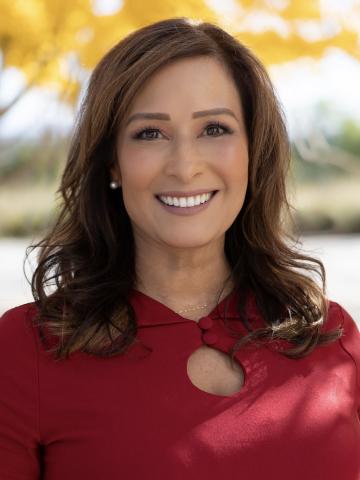
Sen. Rosilicie Ochoa Bogh
Total votes
14,537
all sessions
Attendance
92%
914 missed
Near the chamber average
With party
98%
of cast votes
Near the chamber average
Bipartisan score
2%
crosses aisle rarely
Near the chamber average
Sponsored
629
bills & resolutions
Near the chamber average
Committees
11
assignments
629 bills and resolutions
Sponsored bills
Total
629
Primary
143
Co-sponsor
486
This page
629
matching current filters
Worker classification: employees and independent contractors.
Existing law, as established in the case of Dynamex Operations W. v. Superior Court (2018) 4 Cal.5th 903 (Dynamex) , creates a presumption that a worker who performs services for a hirer is an employee for purposes of claims for wages and benefits arising under wage orders issued by the Industrial Welfare Commission. Existing law requires a 3-part test, commonly known as the "ABC" test, to determine if workers are employees or independent contractors for those purposes. Existing law establishes that, for purposes of the Labor Code, the Unemployment Insurance Code, and the wage orders of the Industrial Welfare Commission, a person providing labor or services for remuneration is considered an employee rather than an independent contractor unless the hiring entity demonstrates that the person is free from the control and direction of the hiring entity in connection with the performance of the work, the person performs work that is outside the usual course of the hiring entity's business, and the person is customarily engaged in an independently established trade, occupation, or business. This test is known as the "ABC" test, as described above. Existing law charges the Labor Commissioner with the enforcement of labor laws, including worker classification. Existing law exempts specified occupations and business relationships from the application of the ABC test described above. Existing law, instead, provides that these exempt relationships are governed by the multifactor test previously adopted in the case of S. G. Borello & Sons, Inc. v. Department of Industrial Relations (1989) 48 Cal.3d. This bill would repeal the above-described provisions that codify the ABC test. The bill would declare that its purpose is to suspend and nullify the California Supreme Court's decision in Dynamex and provide that this decision does not apply for purposes of California law.
In committee Mar 6, 2024
1 co-sponsor
Relative to honoring the family.
This measure would recognize November 19, 2023, to November 25, 2023, inclusive, as National Family Week, and would urge all Californians to recognize, appreciate, and be grateful for their families.
Signed into law Feb 28, 2024
0 co-sponsors
Relative to Childhood Cancer Awareness Month.
This measure would declare the month of September 2023 as Childhood Cancer Awareness Month.
Signed into law Feb 28, 2024
1 co-sponsor
Relative to National Domestic Violence Awareness Month.
This measure would proclaim the month of October 2023 as Domestic Violence Awareness Month.
Signed into law Feb 28, 2024
1 co-sponsor
Relative to California Emergency Preparedness Month.
This measure would declare the month of September 2023 as California Emergency Preparedness Month.
Signed into law Feb 28, 2024
0 co-sponsors
Passed Feb 16, 2024
1 co-sponsor
Relative to National Human Trafficking Awareness Month.
This measure would recognize the month of January 2024 as National Human Trafficking Awareness Month.
Signed into law Feb 15, 2024
1 co-sponsor
Relative to Data Privacy Week.
This measure would designate, in perpetuity, the 4th week of January as Data Privacy Week and the last Sunday of January as Data Privacy Day.
Signed into law Feb 13, 2024
1 co-sponsor
Sexual assault forensic evidence: testing.
Existing law requires law enforcement agencies to either submit sexual assault forensic evidence received on or after January 1, 2016, to a crime lab within 20 days after it is booked into evidence or to ensure that a rapid turnaround deoxyribonucleic acid (DNA) program is in place, as specified. Existing law also requires a crime lab that receives sexual assault forensic evidence on or after January 1, 2016, to either process the evidence, create DNA profiles when able, and upload qualifying DNA profiles into the Combined DNA Index System, as specified, or transmit the sexual assault forensic evidence to another crime lab as soon as practically possible, but no later than 30 days after receiving the evidence, for processing of the evidence for the presence of DNA. This bill would require a law enforcement agency, for any sexual assault forensic evidence connected to a reported crime received by the law enforcement agency prior to January 1, 2016, to submit that evidence to the crime lab on or before January 31, 2025. The bill would additionally require a crime lab, for any sexual assault evidence kit received by a law enforcement agency prior to January 1, 2016, and submitted to the crime lab on or after January 1, 2024, to process that evidence kit no later than January 31, 2026. Because the bill would impose a higher level of service on local law enforcement agencies in processing that evidence, it would impose a state-mandated local program. The California Constitution requires the state to reimburse local agencies and school districts for certain costs mandated by the state. Statutory provisions establish procedures for making that reimbursement. This bill would provide that, if the Commission on State Mandates determines that the bill contains costs mandated by the state, reimbursement for those costs shall be made pursuant to the statutory provisions noted above.
Failed Feb 1, 2024
1 co-sponsor
Ask Maddy
·
AI policy assistant
Ask Maddy about Rosilicie Ochoa Bogh
Scope: california
Hi! I can help you understand Rosilicie Ochoa Bogh's legislative record. What would you like to know?
Try one of these
i
Maddy answers using official bill text and legislative records. Always verify before sharing.
Sources cited inline