

Existing law regulates certain contracts for artistic employment between an unemancipated minor and third parties, including employment as an actor, dancer, musician, comedian, singer, stuntperson, voice-over artist, or other performer or entertainer, or sports participant. Existing law provides for the establishment of a trust for the purpose of preserving for the benefit of the minor 15% of the minor's gross earnings. This bill would require a vlogger, as defined, to compensate a minor under 18 years of age if the minor is engaged in the work of vlogging, as specified. The bill would require the vlogger to set aside gross earnings on the content in a trust account to be preserved for the benefit of the minor, as specified. The bill would also require the vlogger to prepare a written statement, under penalty of perjury, that includes specified information relating to the trust account. By expanding the scope of the crime of perjury, the bill would impose a state-mandated local program. This bill would require the vlogger to maintain records, including, among others, the number of vlogs that generated compensation and the amount deposited into the trust account, and to provide them to the minor upon request. The bill would authorize the minor to enforce these provisions in court. The bill would require that these provisions do not apply to a contract for vlogging services between a minor and their parent or guardian only if a court approves the contract, as specified. The California Constitution requires the state to reimburse local agencies and school districts for certain costs mandated by the state. Statutory provisions establish procedures for making that reimbursement. This bill would provide that no reimbursement is required by this act for a specified reason.
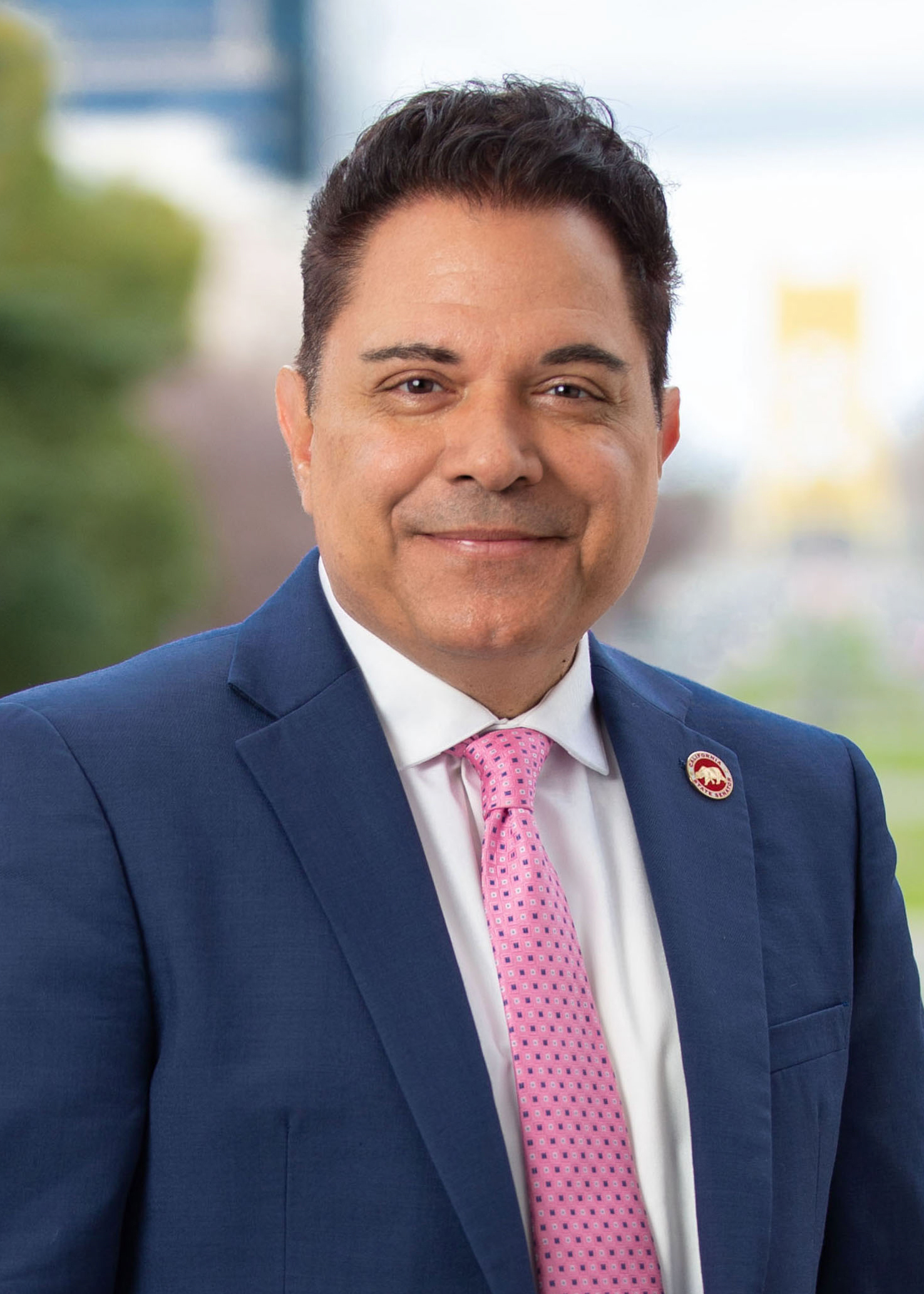
Sen. Steve Padilla
Sponsored bills
Existing law establishes the policy of the state that eligible renewable energy resources and zero-carbon resources supply 90% of all retail sales of electricity to California end-use customers by December 31, 2035, 95% of all retail sales of electricity to California end-use customers by December 31, 2040, 100% of all retail sales of electricity to California end-use customers by December 31, 2045, and 100% of electricity procured to serve all state agencies by December 31, 2035. This bill would require each transmission utility, as defined, on or before January 1, 2026, and every 2 years thereafter, to prepare a study of the feasibility of projects using grid-enhancing technologies to achieve, among other purposes, increased capacity to connect new renewable energy and zero-carbon resources, as provided. The bill would require each transmission utility, on or before January 1, 2026, and at least every 4 years thereafter, to prepare a study of which of its transmission lines can be reconductored with advanced conductors to achieve, among other purposes, increased capacity to connect new renewable energy and zero-carbon resources, as provided. The bill would, upon completion of those studies, require each transmission utility to submit the studies to the Independent System Operator, as specified, and would require each transmission utility to request that the Independent System Operator review the results of the studies as part of the annual transmission planning process for economic, reliability, and policy goals. The bill would, upon submission to the Independent System Operator, require the transmission utilities to make their studies publicly available. The bill would specify that information in the studies that is determined by the Independent System Operator, in consultation with the transmission utilities, to be necessary to protect the security of the electrical transmission system is to be withheld from public disclosure. Under existing law, a violation of the Public Utilities Act is a crime. Because the above-described requirements would be a part of the act, a violation of which would be a crime, this bill would impose a state-mandated local program. Existing constitutional provisions require that a statute that limits the right of access to the meetings of public bodies or the writings of public officials and agencies be adopted with findings demonstrating the interest protected by the limitation and the need for protecting that interest. This bill would make legislative findings to that effect. The California Constitution requires the state to reimburse local agencies and school districts for certain costs mandated by the state. Statutory provisions establish procedures for making that reimbursement. This bill would provide that no reimbursement is required by this act for a specified reason.
Existing law establishes the Governor's Office of Business and Economic Development, also known as "GO-Biz," to, among other duties, serve the Governor as the lead entity for economic strategy and the marketing of California on issues relating to business development, private sector investment, and economic growth. In this regard, existing law authorizes GO-Biz to develop content on its internet website or through other mediums to be used for public dissemination, through outreach activities, in order to provide information and resources to inform the general public about place-based and other geographically targeted economic development programs, including California Promise Zones and California Opportunity Zones. Existing law requires the office to convene, at least annually, representatives from various programs and agencies across the state and from various federal programs and agencies for the purpose of discussing how California can leverage promise zones and opportunity zones to meet state and local community and economic development needs. Existing law establishes the Community Economic Resilience Fund Program, within the Workforce Services Branch of the Employment Development Department, to build an equitable and sustainable economic recovery from the impacts of COVID-19 on California's industries, workers, and communities, and to provide for the durability of that recovery by fostering long-term economic resilience in the overall transition to a carbon-neutral economy. Existing law requires the Community Economic Resilience Fund Program to be administered by Labor and Workforce Development Agency, the Office of Planning and Research, and GO-Biz. Existing law refers to these 3 agencies as the Inter-Agency Leadership Team. This bill would, until January 1, 2030, designate the Southeast California Economic Region, as specified, and would state that its purpose is to, among other things, better align state and federal programs, services, and funding within those communities most impacted by the extraction and processing of lithium and other minerals from the Salton Sea and additional clean energy development in the surrounding areas within the region. The bill would require the Inter-Agency Leadership Team, on or before September 1, 2025, to prepare a list of state programs that use the Southeast California Economic Region designation for planning and funding purposes, as specified. The bill would authorize the Southeast California Economic Region to facilitate regional collaboration on developing a strategy-driven plan for regional economic development, as described. The bill would make legislative findings and declarations as to the necessity of a special statute for the County of Imperial.
Existing law, the Healthy Workplaces, Healthy Families Act of 2014, entitles an employee who works in California for the same employer for 30 or more days within one year from the commencement of employment to paid sick days, as specified. Existing law requires an employer to, upon the oral or written request of an employee, provide paid sick days for specified purposes, including the diagnosis, care, or treatment of an existing health condition of, or preventive care for, an employee or an employee's family member. Existing law prohibits an employer from denying an employee the right to use accrued sick days, or to discharge, threaten to discharge, demote, suspend, or in any manner discriminate against an employee for using or attempting to use accrued sick days. Existing law requires the Labor Commissioner to enforce the act, including investigating an alleged violation, and authorizes the Labor Commissioner to order any appropriate relief, as specified, to an employee or other person whose rights under the act were violated. This bill would also require paid sick days to be provided to agricultural employees, as defined, who work outside and are entitled to paid sick days, as described, to avoid smoke, heat, or flooding conditions created by a local or state emergency, as described. The bill would declare that these provisions are declarative of existing law to the extent that the sick days are necessary for preventive care, as provided. This bill would incorporate additional changes to Section 246.5 of the Labor Code proposed by AB 2499 to be operative only if this bill and AB 2499 are enacted and this bill is enacted last.
The Donahoe Higher Education Act sets forth the missions and functions of the public institutions of higher education, including the University of California, administered by the Regents of the University of California, the California State University, administered by the Trustees of the California State University, and the California Community Colleges, administered by the Board of Governors of the California Community Colleges. The provisions of the Donahoe Higher Education Act apply to the University of California only to the extent that the Regents of the University of California, by appropriate resolution, make them applicable. This bill would prohibit the University of California, California State University, or California Community Colleges from disqualifying a student from being hired for an employment position due to the student's failure to provide proof of federal work authorization, except where that proof is required by federal law or where that proof is required as a condition of a grant that funds the particular employment position for which the student has applied. This bill would require the University of California, the California State University, and the California Community Colleges to treat a specified prohibition in federal law on hiring undocumented noncitizens as inapplicable because that provision does not apply to any branch of state government. The bill would further provide that, to the extent student employment is considered a "benefit" for purposes of federal law, the bill constitutes authorization to provide that benefit for purposes of specified federal law. This bill would require the University of California, the California State University, and the California Community Colleges to implement the bill by January 6, 2025. The bill's provisions would apply to the University of California, unless it is found inapplicable to the University of California and then only to the extent that the Regents of the University of California, by appropriate resolution, make them applicable. By imposing new duties on community college districts, the bill would impose a state-mandated local program. The California Constitution requires the state to reimburse local agencies and school districts for certain costs mandated by the state. Statutory provisions establish procedures for making that reimbursement. This bill would provide that, if the Commission on State Mandates determines that the bill contains costs mandated by the state, reimbursement for those costs shall be made pursuant to the statutory provisions noted above.
(1) Existing law, the Medical Practice Act, provides for the licensure and regulation of physicians and surgeons by the Medical Board of California and requires the board to adopt and administer standards for the continuing education of those licensees. Existing law requires general internists and family physicians who have a patient population of which over 25% are 65 years of age or older to complete at least 20% of all mandatory continuing education hours in a course related to geriatric medicine or the care of older patients. This bill would revise the above-described course requirements to include the special care needs of patients with dementia. (2) Existing law, the Nursing Practice Act, establishes the Board of Registered Nursing to license and regulate the practice of nursing. Existing law requires the board to establish standards for continuing education consisting of specified approved coursework. Existing law requires a licensee under the act to submit a statement to the board, under penalty of perjury, indicating compliance with those continuing education requirements. This bill would require a nurse practitioner who provides primary care to a patient population of which over 25% are 65 years of age or older to certify that they have completed at least 20% of all existing mandatory continuing education hours in a course in the field of gerontology, the special care needs of patients with dementia, or the care of older patients at the time of renewal. By expanding the scope of a crime, the bill would impose a state-mandated local program. (3) Existing law, the Physician Assistant Practice Act, establishes the Physician Assistant Board for the licensure and regulation of physician assistants. Existing law authorizes the board to require a licensee to complete specified continuing education coursework as a condition of license renewal. This bill would require a physician assistant who provides primary care to a patient population of which over 25% are 65 years of age or older to complete at least 20% of all mandatory continuing education hours in a course in the field of geriatric medicine, the special care needs of patients with dementia, or the care of older patients. (4) This bill would incorporate additional changes to Section 2811.5 of the Business and Professions Code proposed by AB 2270 and AB 2581 to be operative only if this bill and either or both of those bills are enacted and this bill is enacted last. The California Constitution requires the state to reimburse local agencies and school districts for certain costs mandated by the state. Statutory provisions establish procedures for making that reimbursement. This bill would provide that no reimbursement is required by this act for a specified reason.
Under existing law, the California Emergency Services Act, the State Emergency Plan is the official document approved by the Governor that describes the principles and methods to be applied in carrying out emergency operations or rendering mutual aid during emergencies, and includes elements addressing continuity of government, the emergency services of governmental agencies, mobilization of resources, mutual aid, and public information. Existing law makes the State Emergency Plan effective in each political subdivision of the state, and requires the governing body of each political subdivision to take necessary actions to carry out its provisions. Existing law requires the Governor to coordinate the State Emergency Plan and those programs necessary for the mitigation of the effects of an emergency in this state and to coordinate the preparation of plans and programs for the mitigation of the effects of an emergency by the political subdivisions of this state, which are to be integrated into and coordinated with the State Emergency Plan and the plans and programs of the federal government and of other states to the fullest possible extent. Existing law establishes the Office of Emergency Services within the office of the Governor and requires the office to be responsible for the state's emergency and disaster response services for natural, technological, or manmade disasters and emergencies, including responsibility for activities necessary to prevent, respond to, recover from, and mitigate the effects of emergencies and disasters to people and property. Existing law requires the office to update the State Emergency Plan on or before January 1, 2019, and every 5 years thereafter, and, when updating the plan, to coordinate with specified representatives from the access and functional needs population regarding the integration of access and functional needs into the State Emergency Plan. Existing law also requires the office, on or before July 31, 2015, to update the State Emergency Plan to include proposed best practices for local governments and nongovernmental entities to use to mobilize and evacuate people with disabilities and others with access and functional needs during an emergency or natural disaster. This bill would require the office, as soon as possible, but no later than January 1, 2029, and every 5 years thereafter, to update the State Emergency Plan to include proposed policies and best practices for local government and nongovernmental entities to equitably serve lesbian, gay, bisexual, transgender, queer, questioning, and plus (LGBTQ+) communities during an emergency or natural disaster. The bill would require the office to coordinate with specified representatives from LGBTQ+ communities in complying with this requirement and would make related findings and declarations.
The California Constitution sets forth various requirements for the imposition of local taxes. The California Constitution excludes from classification as a tax assessments and property-related fees imposed in accordance with provisions of the California Constitution that establish requirements for those assessments and property-related fees. Under these requirements, an assessment is prohibited from being imposed on any parcel if it exceeds the reasonable cost of the proportional special benefit conferred on that parcel, and a fee or charge imposed on any parcel or person as an incident of property ownership is prohibited from exceeding the proportional cost of the service attributable to the parcel. Existing law, known as the Proposition 218 Omnibus Implementation Act, prescribes specific procedures and parameters for local compliance with the requirements of the California Constitution for assessments and property-related fees. This bill would require a local agency, if a court determines that a fee or charge for a property-related service, as specified, violates the above-described provisions of the California Constitution relating to fees and charges, to credit the amount of the fee or charge attributable to the violation against the amount of the revenues required to provide the property-related service, unless a refund is explicitly provided for by statute. This bill would declare that its provisions further the purposes and intent of Proposition 218, approved by the voters at the November 5, 1996, statewide general election, and the Proposition 218 Omnibus Implementation Act.
Existing law requires all contracts for the acquisition of information technology goods and services related to information technology projects, as defined, to be made by or under the supervision of the Department of Technology. Existing law requires all other contracts for the acquisition of information technology goods or services to be made by or under the supervision of the Department of General Services. Under existing law, both the Department of Technology and the Department of General Services are authorized to delegate their authority to another agency, as specified. This bill would require the Department of Technology to develop and adopt regulations to create an automated decision system (ADS) procurement standard. To develop those regulations, the bill would require the department to consider principles and industry standards addressed in specified publications regarding AI risk management. The bill would require the ADS procurement standard to include, among other things, a detailed risk assessment procedure that analyzes specified characteristics of the ADS, methods for appropriate risk controls, as provided, and adverse incident monitoring procedures. The bill would require the department to, among other things, collaborate with specified organizations to develop the ADS procurement standard and review and update the ADS procurement standard and related regulations, as specified. Commencing January 1, 2027, this bill would prohibit a state agency from procuring an ADS, entering into a contract for an ADS, or any service that utilizes an ADS, as specified, until the department has adopted regulations creating an ADS procurement standard. Commencing January 1, 2027, the bill would also require a contract for an ADS or a service that utilizes an ADS, as specified, to include a clause that, among other things, provides a completed risk assessment of the relevant ADS, as specified, requires adherence to appropriate risk controls, and provides procedures for adverse incident monitoring.
This measure would urge the President of the United States to use the federal Antiquities Act of 1906 to establish the Chuckwalla National Monument, to establish a National Park Service-managed Joshua Tree National Monument adjacent to Joshua Tree National Park, and to establish the Kw'tsán National Monument.