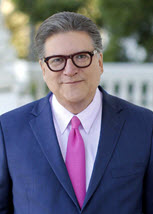
Photo of Robert M. Hertzberg
D California Senate · District 18

Sen. Robert M. Hertzberg

Compare
Total votes
28,591
all sessions
Attendance
94%
1,274 missed
Lower than 86% of chamber peers
With party
99%
of cast votes
Higher than 79% of chamber peers
Bipartisan score
0%
crosses aisle rarely
Near the chamber average
Sponsored
1,256
bills & resolutions
Near the chamber average
Committees
0
assignments
1,256 bills and resolutions

Sponsored bills

Total
1,256
Primary
300
Co-sponsor
956
This page
1,256
matching current filters
Co-sponsor SCR 53
Signed into law · California Senate · Co-sponsor
Relative to climate change.

This measure would declare that a climate emergency threatens the state, the nation, the planet, the natural world, and all of humanity.

Signed into law Aug 19, 2022 1 co-sponsor
Co-sponsor SCR 122
In committee · California Senate · Co-sponsor
Relative to the Vin Scully Memorial Highway.

This measure would designate a specified portion of State Route 110 in the County of Los Angeles as the Vin Scully Memorial Highway. The measure would also request the Department of Transportation to determine the cost of appropriate signs showing this special designation and, upon receiving donations from nonstate sources covering the cost, to erect those signs.

In committee Aug 15, 2022 1 co-sponsor
Co-sponsor SB 1258
Passed · California Senate · Co-sponsor
Energy Commission: electric vehicle charging infrastructure: assessment.

Existing law requires the State Energy Resources Conservation and Development Commission, working with specified state entities, to prepare a statewide assessment of the electric vehicle charging infrastructure needed to support the levels of electric vehicle adoption required to meet the goals of putting at least 5 million zero-emission vehicles in service by 2030 and of reducing emissions of greenhouse gases to 40% below 1990 levels by 2030. Existing law requires that the assessment expand on the commission's electric vehicle infrastructure projections to consider all necessary charging infrastructure, all vehicle categories, road, highway, and off-road electrification, port and airport electrification, and other programs to accelerate the adoption of electric vehicles to meet those goals, and examine existing and future infrastructure needs throughout California, including in low-income communities. This bill would require the assessment's examination of existing and future infrastructure needs throughout California to also include emerging electric vehicle use cases such as electric autonomous vehicle fleets.

Passed Aug 11, 2022 1 co-sponsor
Co-sponsor SB 21
Passed · California Senate · Co-sponsor
Specialized license plates: mental health awareness.

Under existing law, a state agency is authorized to apply to the Department of Motor Vehicles (DMV) to sponsor a specialized license plate program, and the DMV is required to issue those license plates if the agency meets certain requirements. Existing law also requires the DMV to charge specified fees for certain services related to the issuance of those plates. This bill would require the State Department of Education to apply to the DMV to sponsor a mental health awareness license plate program, and would require the DMV to issue the license plates if the State Department of Education meets certain requirements. The bill would also establish the Mental Health Awareness Fund in the State Treasury and would require the revenue generated from the license plates to be deposited in the fund for use, upon appropriation by the Legislature to the State Department of Education, for mental health services in public schools.

Passed Aug 11, 2022 1 co-sponsor
Co-sponsor SB 1329
Passed · California Senate · Co-sponsor
Publicly available hydrogen-fueling stations: electric vehicle charging stations.

Existing law requires the State Air Resources Board, on or before June 30, 2014, and until January 1, 2024, to annually aggregate and make available specified information regarding hydrogen-fueled vehicles and, based on that information, evaluate the need for additional publicly available hydrogen-fueling stations, as specified, and report those findings to the State Energy Resources Conservation and Development Commission. Existing law requires the commission to allocate $20,000,000 annually to fund the number of publicly available hydrogen-fueling stations identified by the state board, not to exceed 20% of the moneys appropriated by the Legislature from the Alternative and Renewable Fuel and Vehicle Technology Fund, until there are at least 100 publicly available hydrogen-fueling stations in operation in the state. Existing law requires the commission and the state board, on an annual basis, to jointly review and report progress toward establishing a hydrogen-fueling network that provides the coverage and capacity to fuel vehicles requiring hydrogen fuel that are being placed into operation in the state. Existing law requires the commission and the state board to consider certain information while conducting this review and determine the remaining cost and timing to establish a network of 100 publicly available hydrogen-fueling stations in operation in the state and whether funding from the Clean Transportation Program remains necessary to achieve this goal. This bill would delete the requirement that the state board aggregate and make available specified information and report to the commission on or before June 30, 2014. The bill would instead require the state board, on or before June 30, 2023, and annually thereafter, to determine the number of publicly available hydrogen-fueling stations that are necessary to provide a publicly available hydrogen-fueling station network, taking into consideration the state board's 2020 Mobile Source Strategy and specified goals, recommendations, and data. The bill would delete the requirement that the commission allocate $20,000,000 annually to fund the number of publicly available hydrogen-fueling stations identified by the state board. The bill would instead require the commission to annually allocate from the moneys annually appropriated by the Legislature from the fund an amount determined appropriate by the commission to achieve the goal established by the state board of providing a publicly available hydrogen-fueling station network and to build the number of electric vehicle or "EV" charging stations estimated by the commission its biennial statewide assessment of electric vehicle charging infrastructure, as provided. The bill would require the commission to ensure that certain requirements are met regarding expenditures of the moneys allocated by the commission. The bill would require the commission and the state board, as part of their annual joint review and report, to determine the remaining cost and timing to establish a network of 200 statewide publicly available hydrogen-fueling stations, instead of 100 stations.

Passed Aug 11, 2022 1 co-sponsor
Co-sponsor SB 364
Passed · California Senate · Co-sponsor
Pupil meals.

(1) Existing law establishes a system of public elementary and secondary schools in this state. This system comprises local educational agencies throughout the state that provide instruction to pupils in kindergarten and grades 1 to 12, inclusive, at schoolsites operated by these agencies. Existing law requires the governing board of a school district and the county superintendent of schools to make applications for free or reduced-price meals available to pupils at all times during each regular schoolday. Existing law authorizes the governing boards of school districts and county superintendents of schools to make applications for free or reduced-price meals electronically available online. Existing law specifies requirements to be met by the governing boards of school districts, county offices of education, and school food authorities that choose to provide access to an online application. This bill would require applications for free or reduced-price meals made electronically available online by school district governing boards or county offices of education to comply with specified requirements, including provisions prohibiting the misuse of information provided online by applicants. The bill would require applications for free and reduced-price meals, which are authorized to be submitted at any time during a schoolday, to be processed within 10 days of submission. To the extent that this provision would impose new duties on local educational agencies, it would constitute a state-mandated local program. The bill would make private third-party vendors who violate its provisions subject to specified civil penalties. The bill would specify that its provisions would not prevent the use of information provided by a school meal applicant from being used by a governmental entity to increase access to a government-administered anti-hunger program. The bill would authorize each school district and county superintendent of schools to establish a secured internet website providing access to an online data collection form as part of the annual enrollment process, and would require the department to host a sample application by July 1, 2024, unless the Superintendent of Public Instruction determines that use of the form would negatively impact the local control funding formula. (2) Existing law provides for the federal Supplemental Nutrition Assistance Program (SNAP) , administered in California as CalFresh, under which each county distributes nutrition assistance benefits provided by the federal government to eligible households. Existing law establishes the California Work Opportunity and Responsibility to Kids (CalWORKs) program, under which each county provides cash assistance and other benefits to qualified low-income families using federal, state, and county funds. Existing law establishes the Medi-Cal program, which is administered by the State Department of Health Care Services and under which qualified low-income persons receive health care benefits. Existing federal law provides for the Pandemic Electronic Benefit Transfer (P-EBT) program, under which the Secretary of Agriculture of the United States is authorized to approve state plans to provide eligible children with temporary emergency nutrition assistance benefits during fiscal years 2020 and 2021 in any case in which a school is closed or has reduced the number of days or hours that students attend the school during a public health emergency designation during which the school would otherwise be in session. This bill would establish the Better Out of School Time (BOOST) Nutrition EBT Program, to be administered by the State Department of Social Services, to provide benefits to eligible pupils during regularly scheduled summer breaks. The bill would make eligible pupils who receive benefits under Medi-Cal, CalFresh, or CalWORKs, or are in foster care. The bill would make implementation of the BOOST Nutrition EBT Program contingent upon an appropriation in the annual Budget Act or another statute for its purposes. The bill would require the department to seek all available funding for, and maximize participation in, the P-EBT program. The bill would also require the department to issue BOOST Nutrition EBT benefits to any pupil who was eligible to receive benefits under the P-EBT program, as of July 1, 2021, for the 5-month period following the end of the P-EBT program, and any child who was eligible to receive benefits under the P-EBT program, as of July 1, 2021, for the 5-month period following the end of the P-EBT program and who also receives benefits under Medi-Cal, CalFresh, or CalWORKs, or is in foster care. By imposing new duties on local educational agencies, the bill would impose a state-mandated local program. (3) The California Constitution requires the state to reimburse local agencies and school districts for certain costs mandated by the state. Statutory provisions establish procedures for making that reimbursement. This bill would provide that, if the Commission on State Mandates determines that the bill contains costs mandated by the state, reimbursement for those costs shall be made pursuant to the statutory provisions noted above.


Passed Aug 11, 2022 1 co-sponsor
Co-sponsor SB 1062
Passed · California Senate · Co-sponsor
The Fixing the Firefighter Shortage Act of 2022.

Existing law establishes the Department of Forestry and Fire Protection in the Natural Resources Agency to provide fire protection and prevention services, as specified. This bill would require the department to maintain a standard minimum level of staffing for each of its engines, as specified, without the regular practice of forcing overtime on its personnel. The bill would require the department to increase its existing firefighter fuel crews, as specified. The bill would require the department, on or before January 1, 2024, to provide to the Legislature a long-term staffing plan to meet the new era of wildfire firefighting.

Passed Aug 11, 2022 1 co-sponsor
Primary SB 513
Passed · California Senate · Lead sponsor
Homeless and domestic violence shelters grants: pets and veterinary services.

Existing law establishes the California Emergency Solutions and Housing Program, under the administration of the Department of Housing and Community Development and requires the department to, among other things, provide rental assistance and housing relocation and stabilization services to ensure housing affordability to people who are experiencing homelessness or who are at risk of homelessness. This bill would require the department, subject to an appropriation in the annual Budget Act, to develop and administer a program to award grants to qualified homeless shelters and qualified domestic violence shelters, as described, for the provision of shelter, food, and basic veterinary services for pets owned by people experiencing homelessness or escaping domestic violence. The bill would authorize the department to use up to 5% of the funds appropriated in the annual Budget Act for those purposes for its costs in administering the program.

Passed Aug 11, 2022 0 co-sponsors
Co-sponsor SB 505
Passed · California Senate · Co-sponsor
Civil law: firearms liability and insurance.

Existing law prescribes various civil causes of action and the measure of damages for those actions. Existing law requires any person who purchases or receives a firearm, as specified, to possess a firearm safety certificate. Existing law requires the Department of Justice to develop a written test required for the issuance of a firearm safety certificate. Existing law makes the violation of specified requirements with regard to firearms a misdemeanor or a felony, as specified. This bill would, commencing on January 1, 2024, make a person who owns a firearm strictly civilly liable for each incidence of property damage, bodily injury, or death resulting from the use of their firearm. This bill would provide that strict liability does not apply if the owner of the firearm has reported their firearm to local law enforcement as lost or stolen prior to the damage, injury, or death. The bill would additionally require a person who owns a firearm to obtain and continuously maintain in full force and effect a homeowner's, renter's, or gun liability insurance policy specifically covering losses or damages resulting from any negligent or accidental use of that firearm, including, but not limited to, death, injury, or property damage. This bill would require a person to keep written evidence of coverage in the place where a firearm is stored. By creating new requirements for firearm owners, violations of which would be punishable as misdemeanors, this bill would impose a state-mandated local program. The bill would also require the Insurance Commissioner to develop a standardized form of evidence of liability coverage. The California Constitution requires the state to reimburse local agencies and school districts for certain costs mandated by the state. Statutory provisions establish procedures for making that reimbursement. This bill would provide that no reimbursement is required by this act for a specified reason.

Passed Aug 11, 2022 1 co-sponsor
Showing 51 to 60 of 1,256 bills
Previous 1 … 5 6 7 … 126 Next