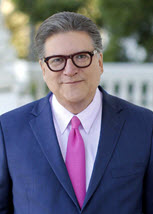
Photo of Robert M. Hertzberg
D California Senate · District 18

Sen. Robert M. Hertzberg

Compare
Total votes
28,591
all sessions
Attendance
94%
1,274 missed
Lower than 86% of chamber peers
With party
99%
of cast votes
Higher than 79% of chamber peers
Bipartisan score
0%
crosses aisle rarely
Near the chamber average
Sponsored
1,256
bills & resolutions
Near the chamber average
Committees
0
assignments
1,256 bills and resolutions

Sponsored bills

Total
1,256
Primary
300
Co-sponsor
956
This page
1,256
matching current filters
Primary SB 231
Signed into law · California Senate · Lead sponsor
Local government: fees and charges.

Articles XIIIC and XIIID of the California Constitution generally require that assessments, fees, and charges be submitted to property owners for approval or rejection after the provision of written notice and the holding of a public hearing. Existing law, the Proposition 218 Omnibus Implementation Act, prescribes specific procedures and parameters for local jurisdictions to comply with Articles XIIIC and XIIID of the California Constitution and defines terms for these purposes. This bill would define the term "sewer" for these purposes. The bill would also make findings and declarations relating to the definition of the term "sewer" for these purposes.

Signed into law Oct 6, 2017 0 co-sponsors
Co-sponsor SB 50
Signed into law · California Senate · Co-sponsor
Federal public lands: conveyances.

Existing law vests the authority over public lands owned by the state with the State Lands Commission. Existing federal law authorizes federal agencies to convey federal public lands under certain circumstances. This bill would establish, except as provided, a policy of the state to discourage conveyances of federal public lands in California from the federal government. The bill would, except as provided, specify that these conveyances are void ab initio unless the commission was provided with the right of first refusal or the right to arrange for the transfer of the federal public land to another entity. The bill would require the commission to issue a certificate of compliance if the commission was provided with the right of first refusal or the right to arrange for the transfer of the federal public land to another entity. The bill would require the commission to waive the right of first refusal or the right to arrange for the transfer of the federal public land to another entity for conveyances the commission deems to be routine, as specified. The bill would require the commission, the Wildlife Conservation Board, and the Department of Fish and Wildlife to enter into a memorandum of understanding establishing a state policy that they will undertake all feasible efforts to protect against future unauthorized conveyances of federal public lands or any change in federal public land designation. The bill would authorize the commission to seek declaratory and injunctive relief in a court of competent jurisdiction to contest these conveyances. The bill would, except as provided, prohibit a person from knowingly presenting for recording or filing with the county recorder a deed, instrument, or other document related to the conveyance of federal public lands unless it is accompanied by a certificate of compliance and would subject a person who violates this prohibition to a civil penalty not to exceed $5,000. By increasing the duties of the county recorder's office, this bill would impose a state-mandated local program. The bill would provide that the state shall not be responsible for any costs associated with conveyed federal public land that the commission did not accept, purchase, or arrange for the transfer of, as provided. The bill would require the commission to ensure, for any conveyed federal public land the commission accepts, purchases, or arranges for the transfer of, that future management of the conveyed federal public land is determined in a public process that gives consideration of past recognized and legal uses of those lands. The California Constitution requires the state to reimburse local agencies and school districts for certain costs mandated by the state. Statutory provisions establish procedures for making that reimbursement. This bill would provide that no reimbursement is required by this act for a specified reason.


Signed into law Oct 6, 2017 1 co-sponsor
Co-sponsor AB 1130
Signed into law · California Assembly · Co-sponsor
Heavy equipment rentals.

Existing law prescribes the manner in which contracts or agreements may be created. This bill would establish, in a rental agreement of heavy equipment property by a qualified heavy equipment renter, a rebuttable presumption that the parties agreed to the addition of estimated personal property tax reimbursement to the rental price of heavy equipment property to a lessee if specified conditions occur. This bill would establish the Property Tax Reimbursement Law that would require that any property tax reimbursement that is collected by a qualified heavy equipment renter be collected pursuant to the conditions described above.

Signed into law Oct 5, 2017 1 co-sponsor
Co-sponsor SB 33
Signed into law · California Senate · Co-sponsor
Arbitration agreements.

Existing law requires a court, on petition of a party to an arbitration agreement alleging (1) the existence of a written agreement to arbitrate a controversy and (2) that a party to the agreement refuses to arbitrate the controversy, to order the petitioner and the respondent to arbitrate the controversy if the court determines that an agreement to arbitrate exists, unless the court makes other determinations. This bill would add to these determinations instances in which a state or federally chartered depository institution is seeking to apply a written agreement to arbitrate, contained in a contract consented to by a respondent consumer, to a purported contractual relationship with that consumer that was created by the petitioner fraudulently without the consumer's consent and by unlawfully using the consumer's personal identifying information, as defined.

Signed into law Oct 4, 2017 1 co-sponsor
Co-sponsor SB 611
Signed into law · California Senate · Co-sponsor
Vehicles.

(1) Existing law authorizes the Department of Motor Vehicles to issue special license plates or distinguishing placards to disabled persons or disabled veterans or to organizations or agencies involved in the transportation of disabled persons or disabled veterans, for purposes of providing certain parking privileges. Existing law also authorizes the department to issue temporary distinguishing placards to temporarily disabled persons or other permanently disabled persons, as specified. Existing law requires an applicant for a special plate, distinguishing placard, or temporary distinguishing placard to submit a certification of disability by a physician and surgeon or other specified medical professional, except as provided. Existing law authorizes the department to conduct an annual random audit of applications submitted for these plates or placards to verify the authenticity of the certificates and information submitted in support of the applications. This bill would require an applicant for a special license plate, a distinguishing placard, or a temporary distinguishing placard to provide proof of his or her true full name and date of birth at the time of application by submitting specified documents to the department. The bill would include licensed podiatrists on the list of medical professionals authorized to provide disability certification. The bill would require the department to conduct a quarterly random audit of applications submitted for these plates or placards and to seek the assistance of the Medical Board of California or the appropriate regulatory boards in conducting the audits. Existing law requires distinguishing placards to have a fixed expiration date every 2 years, as specified. Existing law requires the department to annually compare its record of issued placards against the records of the Office of Vital Records of the State Department of Public Health, as specified, and to withhold any renewal notices that otherwise would have been sent for a placardholder identified as deceased. Existing law authorizes a placardholder to apply for a substitute placard without recertification of eligibility if his or her placard is lost or stolen. This bill would require the department to send a renewal form to each placardholder every 6 years, as specified. The renewal form would not require recertification of eligibility or proof of the applicant's true full name. The bill would additionally require the department to compare its record of issued placards against the Social Security Administration's Death Master File. The bill would prohibit the department from issuing more than 4 substitute placards to a placardholder in a 2-year renewal period. The bill would require a placardholder who requires a substitute placard in excess of this limit to reapply for a new placard and submit a new certification of disability. (2) Existing law requires, commencing January 1, 2019, and until January 1, 2026, a person who has been convicted of driving a motor vehicle under the influence of an alcoholic beverage, as specified, to install for a specified period of time as ordered by the court, an ignition interlock device (IID) on the vehicle he or she operates, provided however that installation of an IID is discretionary for a first offender, as specified. Existing law also requires persons convicted of driving under the influence of a drug to install an IID. Existing law, commencing January 1, 2019, and until January 1, 2026, authorizes a person convicted of driving a motor vehicle under the influence, if all other requirements are satisfied, including the installation of an IID, to apply for a restricted driver's license without completing a period of license suspension or revocation. Existing law requires the Department of Motor Vehicles, if a person maintains an IID for the specified required time, to reinstate the person's privilege to operate a motor vehicle at the time the other reinstatement requirements are satisfied. Existing law specifies periods for which a person convicted of one or more prior driving-under-the-influence violations is required to install an IID, as specified. Existing law requires suspension or revocation of a restricted driver's license if the person fails to comply with maintenance and other requirements for an IID one time under certain circumstances, or 3 or more times under other circumstances, as specified. Under existing law, some persons are required to install an IID on every vehicle operated by the person, and some persons are required to install an IID on every vehicle owned or operated by the person. This bill would make additional clarifying and conforming changes to those provisions. Among other things, the bill would make conforming changes to require persons convicted of driving under the combined influence of alcohol and any drug, or certain passenger-for-hire drivers convicted of driving under the influence to install an IID, as specified. The bill would clarify that "prior convictions" for purposes of determining the specified time that an IID is required to be installed means convictions within 10 years of the current conviction. The bill would conform certain provisions requiring installers of IIDs to report failures to comply with maintenance and other requirements by requiring reporting if the person fails 3 or more times to comply with those requirements. The bill would conform certain provisions to require a person to install an IID in a vehicle the person operates, rather than owns. The bill would make additional conforming and clarifying changes regarding IID programs and requirements, and would add changes to provisions relating to, among others, the application of credit toward mandatory IID restriction terms, as provided, and the issuance of an IID-restricted noncommercial driver's license to a person whose offense occurred in a commercial vehicle, as specified. The bill would clarify that these provisions apply only to a violation occurring on or after January 1, 2019. Existing law makes it a crime to violate certain provisions relating to IIDs and motor vehicles equipped with IIDs. This bill would additionally expand those provisions to apply to certain persons whose driving privileges are restricted pursuant to the provisions described above, as provided. By expanding the application of a crime, the bill would impose a state-mandated local program. (3) The California Constitution requires the state to reimburse local agencies and school districts for certain costs mandated by the state. Statutory provisions establish procedures for making that reimbursement. This bill would provide that no reimbursement is required by this act for a specified reason.
Signed into law Oct 4, 2017 1 co-sponsor
Primary SB 306
Signed into law · California Senate · Lead sponsor
Retaliation actions: complaints: administrative review.

(1) Existing law prohibits a person from discharging or otherwise discriminating, retaliating, or taking any adverse action against any employee or applicant for employment because the employee or applicant engaged in specified protected conduct. Under existing law, an aggrieved employee or applicant is entitled to reinstatement or employment and reimbursement for lost wages and work benefits caused by acts of the employer in violation of this prohibition, and may file a complaint with the Division of Labor Standards Enforcement (division) . Existing law requires a discrimination complaint investigator to investigate, and submit a report on, each complaint to the Labor Commissioner; authorizes the commissioner to designate specified officers to review the report; and authorizes the commissioner to hold an investigative hearing on the report if, after reviewing the report, the commissioner determines that a hearing is necessary. This bill would authorize the division to commence an investigation of an employer, with or without a complaint being filed, when specified retaliation or discrimination is suspected during the course of a wage claim or other specified investigation being conducted by the Labor Commissioner. The bill would also authorize the commissioner, upon finding reasonable cause to believe that any person has engaged in or is engaging in a violation, to petition a superior court for prescribed injunctive relief. The bill would require a court, if an employee has been discharged or faced adverse action for raising a claim of retaliation for asserting rights under any law under the jurisdiction of the commissioner, to order appropriate injunctive relief on a showing that reasonable cause exists to believe a violation has occurred. The bill would provide that temporary injunctive relief under these provisions would not prohibit an employer from disciplining or terminating an employee for conduct that is unrelated to the claim of the retaliation. (2) Existing law requires the commissioner, if the commissioner determines a violation has occurred, to direct the respondent to cease and desist from, and to remedy, the violation, as specified. Existing law authorizes the commissioner to bring a civil action against a respondent that does not comply with such an order. Existing law authorizes a complainant, if the commissioner does not promptly bring an action, to bring an action in court for a writ of mandate to compel the commissioner to bring an action. The bill would also authorize the commissioner to issue citations directing specific relief to persons determined to be responsible for violations. The bill would establish review procedures, including procedures for requesting a hearing before a hearing officer for the commissioner and for a petition for a writ of mandate. The bill would authorize the commissioner to adopt regulations to establish hearing procedures. The bill would subject an employer who willfully refuses to comply with a final order pursuant to the bill to prescribed civil penalties payable to the affected employee. (3) Existing law prohibits an employer from discharging an employee or in any manner discriminating, retaliating, or taking any adverse action against any employee or applicant for employment because the employee or applicant has engaged in protected conduct, as specified. Existing law provides that an employee who made a bona fide complaint, and was consequently discharged or otherwise suffered an adverse action, is entitled to reinstatement and reimbursement for lost wages. Existing law makes it a misdemeanor for an employer to willfully refuse to reinstate or otherwise restore an employee who is determined by a specified procedure to be eligible for reinstatement. Existing law subjects a person who violates these provisions to a civil penalty of up to $10,000 per violation. The bill would authorize an employee who is bringing a civil action under these provisions to also seek injunctive relief from the court. The bill would provide notice procedures and criteria for the court to evaluate in granting or denying the application for injunction. The bill would provide that injunctive relief granted under these provisions is not stayed pending appeal.

Signed into law Oct 3, 2017 0 co-sponsors
Primary SB 440
Signed into law · California Senate · Lead sponsor
Personal income taxes: voluntary contributions: California Breast Cancer Research Voluntary Tax Contribution Fund and California Cancer Research Voluntary Tax Contribution Fund.

Existing law allows individuals, until January 1, 2018, to designate on their personal income tax return that a specified amount in excess of their tax liability be contributed to the California Breast Cancer Research Fund, which is subject to appropriation by the Legislature, to be allocated to the Franchise Tax Board, the Controller, and the University of California for purposes of carrying out these provisions. Existing law also allows individuals, until January 1, 2018, to designate on their tax returns that a specified amount in excess of their tax liability be contributed to the California Cancer Research Fund, which is subject to appropriation by the Legislature, to be allocated to the Franchise Tax Board, the Controller, and the University of California for purposes of carrying out these provisions. Existing law requires that each of these funds equal or exceed a minimum contribution amount, which initially was $250,000 and which was required to be and has been adjusted for inflation. Existing law provides that when extending the operation of these voluntary tax contribution funds the words "voluntary tax contribution" be included in the name of the fund, that the administering agency comply with specified Internet Web site reporting requirements, that the fund provisions remain in effect only until January 1 of the 7th calendar year following the first appearance of the voluntary tax contribution on the personal income tax return, that the required calendar year minimum contribution amount for the fund to continue appearing on the return is $250,000, and that the contributions be continuously appropriated from the fund to the administering entity. This bill would extend the operation of each fund's provisions to January 1, 2025, and would conform to the above provisions by renaming the funds as the California Breast Cancer Research Voluntary Tax Contribution Fund and the California Cancer Research Voluntary Tax Contribution Fund, respectively, by continuously appropriating those funds to the Franchise Tax Board, the Controller, and the University of California for purposes of carrying out each fund's provisions, and by requiring each fund to equal or exceed an unadjusted $250,000 minimum contribution amount to continue appearing on the return. By continuously appropriating these funds, the bill would make an appropriation. The bill would also provide that the Legislature requests the University of California and the Regents of the University of California, respectively, to post on their Internet Web sites the process for awarding money, the amount of money spent on administration, and an itemization of how program funds were awarded, including, but not limited to, information regarding recipients of funds.

Signed into law Oct 2, 2017 0 co-sponsors
Co-sponsor SB 564
Signed into law · California Senate · Co-sponsor
Joint powers authorities: Water Bill Savings Act.

Existing law, the Marks-Roos Local Bond Pooling Act of 1985, authorizes joint powers authorities, among other powers, to issue bonds and loan the proceeds to local agencies to finance specified types of projects and programs. This bill would enact the Water Bill Savings Act, which would authorize a joint powers authority to provide funding for a customer of a local agency in the Counties of Alameda, Contra Costa, Los Angeles, Marin, Napa, San Francisco, San Mateo, Santa Clara, Solano, and Sonoma or its publicly owned utility to acquire, install, or repair a water efficiency improvement on the customer's property served by the local agency or its publicly owned utility. The bill would require the customer to repay the authority through an efficiency charge on the customer's water bill to be established and collected by the local agency or its publicly owned utility on behalf of the authority pursuant to a servicing agreement. The bill would authorize the authority to issue bonds to fund the program. The bill would require an efficiency improvement to comply with certain provisions of the CalConserve Water Use Efficiency Revolving Loan Program guidelines to be eligible for financing under the bill. The bill would also make technical changes. This bill would make legislative findings and declarations as to the necessity of a special statute for the San Francisco Bay Area and the County of Los Angeles.

Signed into law Oct 2, 2017 1 co-sponsor
Co-sponsor SB 2
Signed into law · California Senate · Co-sponsor
Building Homes and Jobs Act.

Under existing law, there are programs providing assistance for, among other things, emergency housing, multifamily housing, farmworker housing, home ownership for very low and low-income households, and downpayment assistance for first-time home buyers. Existing law also authorizes the issuance of bonds in specified amounts pursuant to the State General Obligation Bond Law. Existing law requires that proceeds from the sale of these bonds be used to finance various existing housing programs, capital outlay related to infill development, brownfield cleanup that promotes infill development, and housing-related parks. This bill would enact the Building Homes and Jobs Act. The bill would make legislative findings and declarations relating to the need to establish permanent, ongoing sources of funding dedicated to affordable housing development. The bill would impose a fee, except as provided, of $75 to be paid at the time of the recording of every real estate instrument, paper, or notice required or permitted by law to be recorded, per each single transaction per single parcel of real property, not to exceed $225. By imposing new duties on counties with respect to the imposition of the recording fee, the bill would create a state-mandated local program. The bill would require that a county recorder quarterly send revenues from this fee, after deduction of any actual and necessary administrative costs incurred by the county recorder, to the Controller for deposit in the Building Homes and Jobs Fund, which the bill would create within the State Treasury. The bill would, upon appropriation by the Legislature, except as provided, require (1) for moneys collected on and after January 1, 2018, and until December 31, 2018, that 50% of the moneys deposited in the fund be made available to local governments for specified purposes, and 50% made available to the Department of Housing and Community Development to assist persons experiencing or at risk of homelessness, and (2) for moneys collected on and after January 1, 2019, that 70% of the moneys deposited in the fund be provided to local governments in accordance with a specified formula and 30% made available to the department for specified purposes, including a continuous appropriation of moneys to the California Housing Finance Agency for the purpose of creating mixed income multifamily residential housing for lower to moderate income households, as provided. The bill would also provide that funds allocated to a local government that does not have a documented plan to expend certain moneys allocated to it within 5 years would revert and be deposited in the Housing Rehabilitation Loan Fund, to be used for specified purposes. By continuously appropriating moneys for use by the California Housing Finance Agency, this bill would make an appropriation. The bill would require that 20% of all moneys in the fund be expended for affordable owner-occupied workforce housing, and that moneys in the fund allocated to local governments be expended to support affordable housing, home ownership opportunities, and other housing-related programs, as specified. The bill would impose certain auditing and reporting requirements. The California Constitution requires the state to reimburse local agencies and school districts for certain costs mandated by the state. Statutory provisions establish procedures for making that reimbursement. This bill would provide that no reimbursement is required by this act for a specified reason. This bill would declare that it is to take effect immediately as an urgency statute.

Signed into law Sep 29, 2017 1 co-sponsor
Co-sponsor AB 466
Signed into law · California Assembly · Co-sponsor
Upper Los Angeles River and Tributaries Working Group.

Existing law provides for the protection, enhancement, and restoration of rivers in this state. Existing law establishes the Santa Monica Mountains Conservancy and prescribes the membership and functions and duties of the conservancy with regard to the acquisition, preservation, and improvement of real property within the Santa Monica Mountains zone, as defined. This bill would establish within the conservancy the Upper Los Angeles River and Tributaries Working Group. The bill would require the Secretary of the Natural Resources Agency, in consultation with the conservancy, and, to the extent they wish to consult, the Los Angeles County Board of Supervisors and the City of Los Angeles, to consider requests from specified local agency representatives to participate in the working group and would authorize them to appoint no more than 23 representatives to the working group. The bill would require, by March 1, 2019, the working group to develop, through watershed-based planning methods and community engagement, a revitalization plan for the Upper Los Angeles River, the tributaries of the Pacoima Wash, Tujunga Wash, and Verdugo Wash, and any additional tributary waterway that the working group determines to be necessary. The bill would require the revitalization plan to address the unique and diverse needs of the Upper Los Angeles River, Pacoima Wash, Tujunga Wash, and Verdugo Wash, and the communities through which they pass, and to include watershed education programs. The bill would require the conservancy to provide any necessary staffing to assist the working group. The bill would require the working group to submit the revitalization plan to the conservancy for approval. The bill would require the revitalization plan to be considered an amendment to the watershed and open space plan for the San Gabriel and Los Angeles Rivers upon adoption by the conservancy and, to the extent that the city or county wishes to consider the plan, would require the conservancy to submit the plan to the Los Angeles County Board of Supervisors and the Los Angeles City Council, as prescribed. This bill would make legislative findings and declarations as to the necessity of a special statute for the Upper Los Angeles River and its tributaries.

Signed into law Sep 28, 2017 1 co-sponsor
Showing 381 to 390 of 1,256 bills
Previous 1 … 38 39 40 … 126 Next