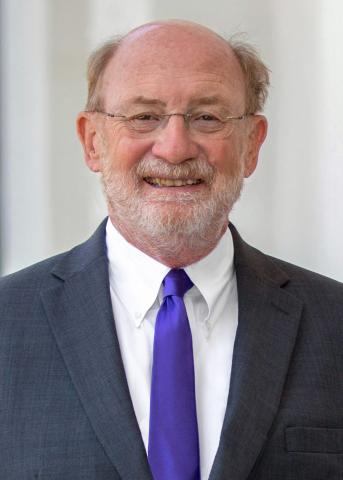
Photo of John Laird
D California Senate · District 17

Sen. John Laird

Compare
Total votes
17,321
all sessions
Attendance
98%
242 missed
Near the chamber average
With party
99%
of cast votes
Near the chamber average
Bipartisan score
0%
crosses aisle rarely
Near the chamber average
Sponsored
379
bills & resolutions
Near the chamber average
Committees
14
assignments
379 bills and resolutions

Sponsored bills

Total
379
Primary
134
Co-sponsor
245
This page
379
matching current filters
Co-sponsor SCR 123
Signed into law · California Senate · Co-sponsor
California Peace Officers' Memorial Day.

Maddy summaryThis bill designates Monday, May 4, 2026, as California Peace Officers' Memorial Day to honor law enforcement officers. It does not create new laws or change existing policies but serves as a formal proclamation to recognize the date. The measure affects the state by establishing an official day of remembrance for peace officers.

Signed into law May 21, 2026 1 co-sponsor
Co-sponsor SCR 130
Signed into law · California Senate · Co-sponsor
Relative to Child Abuse Prevention Month.

Maddy summaryThis bill designates April 2026 as Child Abuse Prevention Month to raise awareness about preventing child abuse. The measure does not change laws or allocate funding but instead directs state agencies to acknowledge the month through official proclamations. By recognizing this period, the legislature aims to highlight the importance of child safety without altering existing policies.

Signed into law May 21, 2026 1 co-sponsor
Co-sponsor SR 111
Passed · California Senate · Co-sponsor
Relative to International Day Against Homophobia, Biphobia, Interphobia, and Transphobia.

Maddy summaryThis Senate resolution formally recognizes May 17, 2026, as the International Day Against Homophobia, Biphobia, Interphobia, and Transphobia within California. The measure aims to raise awareness about the discrimination and violence faced by LGBTQ+ individuals globally and reaffirms the state's commitment to equality and civil rights. By adopting this resolution, the Senate encourages all Californians to support inclusive communities and stand against hate. The document serves as a symbolic gesture rather than establishing new laws or regulations.

Passed May 19, 2026 1 co-sponsor
Primary SB 1081
In committee · California Senate · Lead sponsor
Waste discharge requirements: minimum penalties: exception: publicly owned treatment works.

Under existing law, the State Water Resources Control Board and the 9 California regional water quality control boards regulate water quality and prescribe waste discharge requirements in accordance with the Porter-Cologne Water Quality Control Act (act) and the national pollutant discharge elimination system permit program. The act requires mandatory minimum penalties to be assessed for serious violations, as defined, relating to waste discharge requirements, and for certain violations relating to waste discharge requirements and reports whenever there are 4 or more violations in a period of 6 consecutive months, except as provided. The act authorizes the state board or regional board, in lieu of assessing all or a portion of those mandatory minimum penalties against a publicly owned treatment works serving a small community, to instead require the publicly owned treatment works to spend an equivalent amount towards the completion of a compliance project proposed by the publicly owned treatment works if the state board or regional board make specified findings. The act defines "a publicly owned treatment works serving a small community" for these purposes to mean a publicly owned treatment works serving a population of 20,000 persons or fewer or a rural county, with a financial hardship as determined by the state board after consideration of specified factors. This bill would expand the authorization for the state board or regional board to require funding of a compliance project in lieu of the otherwise mandatory penalty to apply to a publicly owned treatment works serving a population of 3,000 persons or fewer, with a financial hardship, determined by the state board, within the 10 years preceding the assessment of the penalty.

In committee May 14, 2026 0 co-sponsors
Co-sponsor SCR 149
Signed into law · California Senate · Co-sponsor
Relative to World Autism Awareness Day.

Maddy summaryThis bill designates April 2, 2026, as World Autism Awareness Day within the state of California. It directly affects state agencies and the general public by officially recognizing this specific date for awareness activities. The primary mechanism is a simple legislative declaration that adds this observance to the state calendar without creating new laws or funding requirements. Once enacted, the resolution serves as a formal record of the state's acknowledgment of the global observance.

Signed into law May 11, 2026 1 co-sponsor
Co-sponsor SR 103
Passed · California Senate · Co-sponsor
Relative to Tardive Dyskinesia Awareness Week.

Maddy summarySenate Resolution 103 designates the first full week in May 2026 as Tardive Dyskinesia Awareness Week in California. This proclamation aims to raise public and medical awareness about tardive dyskinesia, a movement disorder that can occur in people taking antipsychotic medications for mental health conditions. The resolution emphasizes the importance of early detection and routine screening for this condition, which affects a significant portion of patients who may be undiagnosed. By highlighting these issues, the bill encourages healthcare providers and patients to prioritize regular check-ups and education regarding the risks and symptoms associated with long-term antipsychotic use.

Passed May 4, 2026 1 co-sponsor
Primary SB 108
Passed · California Senate · Lead sponsor
Budget Act of 2025.

Maddy summarySB 108 is a procedural bill that expresses the Legislature's intent to later enact statutory changes related to the Budget Act of 2025. It does not make immediate budget changes or affect specific programs or individuals. The bill serves as a formal statement of future legislative action, with no fiscal impact or budgetary appropriation required at this stage. It has passed the Senate and is now pending in the Assembly for further consideration.

Passed May 4, 2026 0 co-sponsors
Co-sponsor SCR 141
Signed into law · California Senate · Co-sponsor
Relative to Women's Equal Pay Day.

This measure would recognize March 26, 2026, as Women's Equal Pay Day in California, in recognition of the need to eliminate the gender gap in earnings by women and to promote policies to ensure equal pay for all.

Signed into law Apr 21, 2026 1 co-sponsor
Co-sponsor AB 1900
In committee · California House · Co-sponsor
Guaranteed Health Care for All.

Existing federal law, the federal Patient Protection and Affordable Care Act (PPACA) , requires each state to establish an American Health Benefit Exchange to facilitate the purchase of qualified health benefit plans by qualified individuals and qualified small employers. PPACA defines a "qualified health plan" as a plan that, among other requirements, provides an essential health benefits package. Existing state law creates the California Health Benefit Exchange, also known as Covered California, to facilitate the enrollment of qualified individuals and qualified small employers in qualified health plans as required under PPACA. Existing law, the Knox-Keene Health Care Service Plan Act of 1975 (Knox-Keene) , provides for the licensure and regulation of health care service plans by the Department of Managed Health Care. Existing law provides for the regulation of health insurers by the Department of Insurance. Existing law provides for the Medi-Cal program, which is administered by the State Department of Health Care Services, under which qualified low-income individuals receive health care services. The Medi-Cal program is, in part, governed and funded by federal Medicaid program provisions. This bill, the California Guaranteed Health Care for All Act, would create the California Guaranteed Health Care for All program, or CalCare, to provide comprehensive universal single-payer health care coverage and a health care cost control system for the benefit of all residents of the state. Under the bill, CalCare would be a health care service plan subject to Knox-Keene. The bill, among other things, would provide that CalCare cover a wide range of medical benefits and other services and would incorporate the health care benefits and standards of other existing federal and state provisions, including the federal Children's Health Insurance Program, Medi-Cal, ancillary health care or social services covered by regional centers for persons with developmental disabilities, Knox-Keene, and the federal Medicare Program. The bill would make specified persons eligible to enroll as CalCare members during the implementation period, and would provide for automatic enrollment. The bill would require the board to seek all necessary waivers, approvals, and agreements to allow various existing federal health care payments to be paid to CalCare, which would then assume responsibility for all benefits and services previously paid for with those funds. This bill would create the CalCare Board to govern CalCare, made up of 9 voting members with demonstrated and acknowledged expertise in health care, and appointed as provided, plus the Secretary of California Health and Human Services or their designee as a nonvoting, ex officio member. The bill would provide the board with all the powers and duties necessary to establish CalCare, including determining when individuals may start enrolling into CalCare, employing necessary staff, negotiating pricing for covered pharmaceuticals and medical supplies, establishing a prescription drug formulary, and negotiating and entering into necessary contracts. The bill would require the board, on or before July 1 of an unspecified year, to conduct and deliver a fiscal analysis to determine whether or not CalCare may be implemented and if revenue is more likely than not to pay for program costs, as specified. The bill would establish an Advisory Committee on Long-Term Services and Supports to advise the board on matters of policy related to long-term services and supports. The bill would require the board to convene a CalCare Public Advisory Commission to advise the board on all matters of policy for CalCare, an Advisory Committee on Public Employees' Retirement System Health Benefits to provide recommendations related to public employee retiree health benefits, and a CalCare Health Workforce Working Group to provide the board with input on issues related to health care workforce education, recruitment, and retention. The bill would establish an Office of Health Equity within CalCare and under the direction of the Director of the Department of Health Care Access and Information to ensure health equity under the program and other health programs of the California Health and Human Services Agency and to support the board through specified actions. This bill would provide for the participation of health care providers in CalCare, including the requirements of a participation agreement between a health care provider and the board, provide for payment for health care items and services, and specify program participation standards. The bill would prohibit a participating provider from discriminating against a person by, among other things, reducing or denying a person's benefits under CalCare because of a specified characteristic, status, or condition of the person. This bill would prohibit a participating provider from billing or entering into a private contract with an individual eligible for CalCare benefits regarding a covered benefit, but would authorize contracting for a health care item or service that is not a covered benefit if specified criteria are met. The bill would authorize health care providers to collectively negotiate fee-for-service rates of payment for health care items and services using a 3rd-party representative, as provided. The bill would require the board to annually determine an institutional provider's global budget, to be used to cover operating expenses related to covered health care items and services for that fiscal year, and would authorize payments under the global budget. This bill would state the intent of the Legislature to enact legislation that would develop a revenue plan, taking into consideration anticipated federal revenue available for CalCare. The bill would create the CalCare Trust Fund in the State Treasury, as a continuously appropriated fund, consisting of any federal and state moneys received for the purposes of the act. The bill would specify uses for moneys in the CalCare budget, including special projects for which not-for-profit or governmental entities may apply. Because the bill would create a continuously appropriated fund, it would make an appropriation. This bill would prohibit specified provisions of this act from becoming operative until the Secretary of California Health and Human Services gives written notice to the Secretary of the Senate and the Chief Clerk of the Assembly that the CalCare Trust Fund has the revenues to fund the costs of implementing the act. The California Health and Human Services Agency would be required to publish a copy of the notice on its internet website. Existing constitutional provisions require that a statute that limits the right of access to the meetings of public bodies or the writings of public officials and agencies be adopted with findings demonstrating the interest protected by the limitation and the need for protecting that interest. This bill would make legislative findings to that effect.


In committee Apr 20, 2026 1 co-sponsor
Co-sponsor SR 93
Passed · California Senate · Co-sponsor
Relative to Jim Plunkett.

Maddy summaryThis Senate Resolution urges the Pro Football Hall of Fame to induct legendary quarterback Jim Plunkett into its hall for the Class of 2027. The bill highlights Plunkett's historic achievements, including winning two Super Bowls as the only Latino player to do so and being the first Latino selected first overall in the NFL Draft. It notes that despite his accolades and previous nominations, he has not yet been inducted and requires 80 percent of the votes from the selection committee to be honored. The resolution formally requests the Hall of Fame to consider his induction as a matter of pride for California residents.

Passed Apr 20, 2026 1 co-sponsor
Showing 51 to 60 of 379 bills
Previous 1 5 6 7 38 Next