

Passed Feb 12, 2024
0 co-sponsors
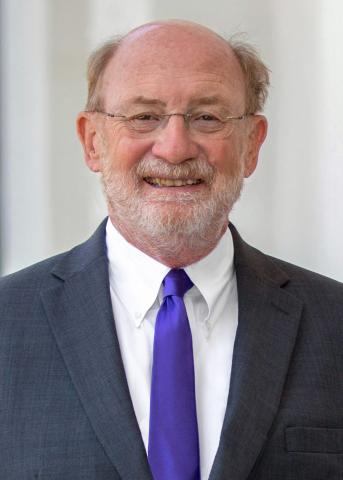
Total votes
17,321
all sessions
Attendance
98%
242 missed
Near the chamber average
With party
99%
of cast votes
Near the chamber average
Bipartisan score
0%
crosses aisle rarely
Near the chamber average
Sponsored
379
bills & resolutions
Near the chamber average
Committees
14
assignments
379 bills and resolutions
Sponsored bills
Total
379
Primary
134
Co-sponsor
245
This page
379
matching current filters
HIV preexposure prophylaxis and postexposure prophylaxis.
Existing law, the Pharmacy Law, provides for the licensure and regulation of pharmacists by the California State Board of Pharmacy. Existing law authorizes a pharmacist to furnish at least a 30-day supply of HIV preexposure prophylaxis, and up to a 60-day supply of those drugs if certain conditions are met. Existing law also authorizes a pharmacist to furnish postexposure prophylaxis to a patient if certain conditions are met. This bill would authorize a pharmacist to furnish up to a 90-day course of preexposure prophylaxis, or preexposure prophylaxis beyond a 90-day course, if specified conditions are met. The bill would require the California State Board of Pharmacy to adopt emergency regulations to implement these provisions by October 31, 2024. Existing law, the Knox-Keene Health Care Service Plan Act of 1975, provides for the licensure and regulation of health care service plans by the Department of Managed Health Care and makes a willful violation of the act a crime. Existing law also provides for the regulation of health insurers by the Department of Insurance. Existing law prohibits a health care service plan or health insurer from covering preexposure prophylaxis that has been furnished by a pharmacist in excess of a 60-day supply once every 2 years, except as specified. Existing law provides for the Medi-Cal program administered by the State Department of Health Care Services and under which qualified low-income individuals receive health care services pursuant to a schedule of benefits. The existing schedule of benefits includes coverage for preexposure prophylaxis as pharmacist services, limited to no more than a 60-day supply furnished by a pharmacist once every 2 years, and includes coverage for postexposure prophylaxis, subject to approval by the federal Centers for Medicare and Medicaid Services. The Medi-Cal program is, in part, governed and funded by federal Medicaid program provisions. This bill would require a health care service plan and health insurer to cover preexposure prophylaxis and postexposure prophylaxis furnished by a pharmacist, including the pharmacist's services and related testing ordered by the pharmacist, and to pay or reimburse for the service performed by a pharmacist at an in-network pharmacy or a pharmacist at an out-of-network pharmacy if the health care service plan or health insurer has an out-of-network pharmacy benefit, except as specified. The bill would include preexposure prophylaxis furnished by a pharmacist as pharmacist services on the Medi-Cal schedule of benefits. Because a willful violation of these provisions by a health care service plan would be a crime, this bill would impose a state-mandated local program. The California Constitution requires the state to reimburse local agencies and school districts for certain costs mandated by the state. Statutory provisions establish procedures for making that reimbursement. This bill would provide that no reimbursement is required by this act for a specified reason. This bill would declare that it is to take effect immediately as an urgency statute.
Signed into law Feb 6, 2024
1 co-sponsor
Department of Justice: civil rights investigations.
Existing law sets forth various civil rights and provides a cause of action for a violation of those rights, as specified. Existing law authorizes the Attorney General to bring a civil action for injunctive and other appropriate relief in order to protect the rights, privileges, or immunities secured or protected by the Constitution or laws of the United States or by the Constitution or laws of California. This bill would provide that the Attorney General is authorized to conduct an investigation when the Attorney General deems it necessary to determine whether any person or entity has violated or is about to violate the civil rights laws of California or of the United States, or to aid in enforcing these laws. The bill would provide that the Attorney General is authorized to publish findings, data, or preliminary conclusions concerning the determination that a violation has occurred, as specified. Existing law authorizes the head of a state department, in connection with an investigation of unlawful activity, to promulgate interrogatories, inspect books and records, and issue subpoenas for the attendance of witnesses and the production of papers, books, accounts, documents, any other writing, and testimony. Existing law authorizes the department head to provide information and evidence related to the investigation to the Attorney General if they agree to maintain the confidentiality of the information. Existing law makes it a misdemeanor for information obtained during an investigation to be disclosed, except as prescribed. Existing law authorizes the head of a state department to petition the superior court in the appropriate county to enforce a subpoena under these provisions. This bill would provide that the Attorney General, in connection with a civil rights investigation, may interview witnesses, take evidence, promulgate interrogatories, and obtain physical access to, and copies of, written records from the subject of an investigation. The bill would provide that the Attorney General, their employees, and any agents or experts contracted with the Department of Justice, may review the information obtained during the course of the investigation. The bill would provide the subject of an investigation a specified process for asserting that a document, or information in a document, may be withheld on the basis of the attorney-client privilege or attorney work-product doctrine. This bill would authorize the Attorney General to apply for an order from the superior court to compel a witness to comply with a subpoena or produce documents or information that are being improperly withheld under the attorney-client privilege or attorney work-product doctrine, and would deem a witness' failure to comply with the court's order punishable as contempt. This bill would also require a court to award the Attorney General reasonable attorney's fees and costs if the court finds that the refusal to obey a properly issued subpoena or the withholding of documents or information by a subject of an investigation was frivolous or was based on a legal theory advanced in bad faith. By expanding the number or persons having access to protected records, and thereby expanding the scope of the crime of unauthorized disclosure, this bill would impose a state-mandated local program. Existing law limits the Attorney General's right to conduct an investigation of a nonprofit religious corporation. This bill would authorize the Attorney General to conduct an investigation of a nonprofit religious corporation and to obtain judicial relief necessary to address civil rights issues, including, but not limited to, the abuse and neglect of children. Existing law establishes procedures for the reporting and investigation of suspected child abuse or neglect. This bill would provide that, upon request from the Attorney General, any person or agency in possession of specified reports and records relating to suspected child abuse or neglect, shall provide them to the Attorney General within 45 days. Existing law generally provides for the confidentiality of information regarding a minor in proceedings in the juvenile court and related court proceedings and limits access to juvenile case files. Existing law authorizes only certain individuals to inspect a juvenile case file, including, among others, the department for prescribed purposes. This bill would authorize the department to additionally inspect a juvenile case file during an investigation relating to a civil rights violation. Existing law generally requires the confidentiality of all information and records obtained in the course of providing intake, assessment, and services pursuant to specified provisions of existing law related to voluntary or involuntary recipients of services. Existing law authorizes disclosure only to specified persons as prescribed. This bill would also authorize the disclosure of information and records to the department to allow it to carry out an investigation relating to a civil rights violation. This bill would also make technical, nonsubstantive changes to these provisions. The California Constitution requires the state to reimburse local agencies and school districts for certain costs mandated by the state. Statutory provisions establish procedures for making that reimbursement. This bill would provide that no reimbursement is required by this act for a specified reason. Existing constitutional provisions require that a statute that limits the right of access to the meetings of public bodies or the writings of public officials and agencies be adopted with findings demonstrating the interest protected by the limitation and the need for protecting that interest. This bill would make legislative findings to that effect.
In committee Feb 1, 2024
0 co-sponsors
Municipal water districts: automatic exclusion of cities.
Existing law authorizes a governing body of a municipal water district to adopt an ordinance excluding any territory annexed to a metropolitan water district organized under the Metropolitan Water District Act, if the territory is annexed prior to the effective date of the formation of the municipal water district. Existing law requires the Secretary of State to issue a certificate reciting the passage of the ordinance and the exclusion of the area from the municipal water district within 10 days of receiving a certified copy of the ordinance. This bill would extend the number of days the Secretary of State has to issue a certificate to 14 days.
In committee Feb 1, 2024
0 co-sponsors
Solid waste: gas cylinders: stewardship program.
The California Integrated Waste Management Act of 1989, administered by the Department of Resources Recycling and Recovery, generally regulates the disposal, management, and recycling of solid waste. The act establishes stewardship programs for various products, including, among others, carpet, mattresses, and pharmaceutical and sharps waste. This bill would establish a stewardship program for gas cylinder products, as defined, and would authorize producers of those products to establish one more producer stewardship organizations for that purpose. The bill would require each producer or producer stewardship organization to submit a gas cylinder stewardship plan to the department that details, among other things, convenient and accessible opportunities for the recovery of gas cylinders used by consumers. The bill would prohibit gas cylinder producers that are not participating in a department-approved stewardship plan from supplying, selling, or offering for sale gas cylinders in the state. The bill would impose recordkeeping and reporting requirements on producers and producer stewardship organizations with department-approved stewardship plans and would require those producers to pay all administrative and operational costs associated with establishing and implementing the stewardship plan in which it participates, including the cost of collection, transportation, recycling, and the safe and proper management of recovered gas cylinders. The bill would require the department to set, review, and revise necessary convenience and performance standards and ensure appropriate data metrics for the gas cylinder stewardship program.
In committee Feb 1, 2024
0 co-sponsors
Santa Cruz Metropolitan Transit District.
Existing law authorizes the formation of the Santa Cruz Metropolitan Transit District, with specified powers and duties related to the operation of public transit services serving the County of Santa Cruz. Existing law authorizes the board of directors of the district to establish a retirement system for the officers and employees of the district. Existing law authorizes the board of directors of the district to create a retirement board, to administer the retirement system, of not more than 5 members, as specified. This bill would authorize the retirement board to instead have not more than 7 members.
In committee Feb 1, 2024
0 co-sponsors
Personal Income Tax Law: exclusion: student loan debt.
The Personal Income Tax Law, in modified conformity with federal income tax law, generally defines "gross income" as income from whatever source derived, except as specifically excluded, including an exclusion for the amount of student loan indebtedness repaid or canceled pursuant to a specified federal law. This bill would exclude from an individual's gross income, for taxable years beginning on or after January 1, 2021, and before January 1, 2026, the amount of certain student loans discharged, in whole or in part, after December 31, 2020, and before January 1, 2026, in conformity with federal law. Existing law requires any bill authorizing a new tax expenditure to contain, among other things, specific goals, purposes, and objectives that the tax expenditure will achieve, detailed performance indicators, and data collection requirements. This bill would include additional information required for any bill authorizing a new tax expenditure. This bill would make findings and declarations related to a gift of public funds.
In committee Feb 1, 2024
1 co-sponsor
Workforce development: Interagency High Road Act.
Existing law, the California Workforce Innovation and Opportunity Act, establishes the California Workforce Development Board as the body responsible for assisting the Governor in the development, oversight, and continuous improvement of California's workforce investment system and the alignment of the education and workforce investment systems to the needs of the 21st century economy and workforce. Existing law requires the board to assist the Governor in promoting the development of a well-educated and highly skilled 21st century workforce, and the development of a high road economy that offers an educated and skilled workforce with fair compensation and treatment in the workplace. Existing law also requires the board to assist in developing standards, procedures, and criteria for high road employers, high road jobs, high road workforce development, and high road training partners, as specified. Existing law defines "high road" for these purposes to mean a set of economic and workforce development strategies to achieve economic growth, economic equity, shared prosperity, and a clean environment. This bill would require the Department of Industrial Relations and the California Workforce Development Board, within the Labor and Workforce Development Agency, to collectively be responsible for among other duties, creating high road evaluation metrics, consulting with stakeholders, and providing for meaningful public input on the development and evaluation of high road evaluation metrics. The bill would require the board to also assist in developing standards, procedures, and criteria for high road contracting and high road procurement, as specified. The bill would require, upon request by a state agency, the board to establish memorandums of understanding to incorporate high road evaluation metrics in the state agency's procurement processes, contracts, and incentive programs. The bill would make these provisions effective only until January 1, 2030, and repeal them as of that date. This bill would also require specified state agencies, by January 1, 2025, to enter into a memorandum of understanding with the California Workforce Development Board to incorporate high road evaluation metrics in the state agency's procurement processes, contracts, and incentive programs. The bill would require these agreements to draw upon the experience of the California Workforce Development Board to ensure the state has the workforce and industry-based training partnerships necessary to meet its broadband, clean energy, and clean transportation goals, as specified. The bill would require these agreements to include advice and recommendations to ensure state agency policies and regulated programs create or support high-quality jobs in the broadband, energy, resources, and transportation sectors and expand access to those jobs for priority populations through high-quality education and training.
Vetoed Jan 25, 2024
1 co-sponsor
Relative to the Senator Bob Dutton Memorial Overcrossing.
This measure would designate the overcrossing on State Route 210 at Archibald Avenue in the City of Rancho Cucamonga as the Senator Bob Dutton Memorial Overcrossing. The measure would request that the Department of Transportation determine the cost of appropriate signs showing this special designation and, upon receiving donations from nonstate sources covering that cost, erect those signs.
Signed into law Jan 18, 2024
1 co-sponsor
Pajaro River Flood Risk Management Project: environmental laws: exemptions.
Existing law provides for funding for the project for flood control on the Pajaro River in the Counties of Monterey and Santa Cruz, authorized by the federal Flood Control Act of 1966. Existing law also requires a flood management project that receives financial assistance, as provided, to meet specified requirements, and requires the Department of Water Resources or a specified state entity to submit a report to the Legislature that indicates whether the project meets those requirements. This bill would exempt the Pajaro River flood control project from various state and local environmental laws and regulations, only if specified criteria are met and only until a specified date, and as of that date would repeal these provisions. The bill would provide, among other exemptions, that a specified report, as described, shall be conclusively presumed to satisfy the requirements of the California Environmental Quality Act for the Pajaro River Project, including to support the issuance of any permit, funding, or other approval by a state or local agency for the Pajaro River Project when implementing the California Environmental Quality Act. The bill would also require the Pajaro Regional Flood Management Agency to consult with the Department of Fish and Wildlife and the Central Coast Regional Water Quality Control Board regarding the avoidance, minimization, or mitigation of specified environmental impacts, on or before March 1, 2024, as provided. This bill would make legislative findings and declarations as to the necessity of a special statute for the Counties of Monterey and Santa Cruz. This bill would declare that it is to take effect immediately as an urgency statute.
Signed into law Oct 13, 2023
1 co-sponsor
Ask Maddy
·
AI policy assistant
Ask Maddy about John Laird
Scope: california
Hi! I can help you understand John Laird's legislative record. What would you like to know?
Try one of these
i
Maddy answers using official bill text and legislative records. Always verify before sharing.
Sources cited inline