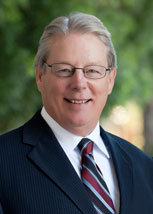
This measure would designate a specified portion of State Route 101 in the County of San Luis Obispo as the Matthew "SLOStringer" Frank Memorial Highway. The measure would also request the Department of Transportation to determine the cost for appropriate signs showing this special designation and, upon receiving donations from nonstate sources covering that cost, to erect those signs.
Sponsored bills
Existing law provides for the procedure of approving and accepting bail, and issuing an order for the appearance and release of an arrested person. Existing law requires that bail be set in a fixed amount and requires, in setting, reducing, or denying bail, a judge or magistrate to take into consideration the protection of the public, the seriousness of the offense charged, the previous criminal record of the defendant, and the probability of his or her appearing at trial or at a hearing of the case. Under existing law, the magistrate or commissioner to whom the application is made is authorized to set bail in an amount that he or she deems sufficient to ensure the defendant's appearance or to ensure the protection of a victim, or family member of a victim, of domestic violence, and to set bail on the terms and conditions that he or she, in his or her discretion, deems appropriate, or he or she may authorize the defendant's release on his or her own recognizance. Existing law provides that a defendant being held for a misdemeanor offense is entitled to be released on his or her own recognizance, unless the court makes a finding on the record that an own recognizance release would compromise public safety or would not reasonably ensure the appearance of the defendant as required. This bill would, as of October 1, 2019, repeal existing laws regarding bail and require that any remaining references to bail refer to the procedures specified in the bill. This bill would require, commencing October 1, 2019, persons arrested and detained to be subject to a pretrial risk assessment conducted by Pretrial Assessment Services, which the bill would define as an entity, division, or program that is assigned the responsibility to assess the risk level of persons charged with the commission of a crime, report the results of the risk determination to the court, and make recommendations for conditions of release of individuals pending adjudication of their criminal case. The bill would require the courts to establish pretrial assessment services, and would authorize the services to be performed by court employees or through a contract with a local public agency, as specified. The bill would require, if no local agency will agree to perform the pretrial assessments, and if the court elects not to perform the assessments, that the court may contract with a new local pretrial assessment services agency established specifically to perform the role. The bill would require a person arrested or detained for a misdemeanor, except as specified, to be booked and released without being required to submit to a risk assessment by Pretrial Assessment Services. The bill would authorize Pretrial Assessment Services to release a person assessed as being a low risk, as defined, on his or her own recognizance, as specified. The bill would additionally require a superior court to adopt a rule authorizing Pretrial Assessment Services to release persons assessed as being a medium risk, as defined, on his or her own recognizance. The bill would prohibit Pretrial Assessment Services from releasing persons who meet specified conditions. If a person is not released, the bill would authorize the court to conduct a prearraignment review and release the person. The bill would allow the court to detain the person pending arraignment if there is a substantial likelihood that no condition or combination of conditions of pretrial supervision will reasonably assure public safety or the appearance of the person in court. The bill would require the victim of the crime to be given notice of the arraignment by the prosecution and a chance to be heard on the matter of the defendant's custody status. By imposing additional duties on local prosecutors, this bill would impose a state-mandated local program. The bill would create a presumption that the court will release the defendant on his or her own recognizance at arraignment with the least restrictive nonmonetary conditions that will reasonably assure public safety and the defendant's return to court. The bill would allow the prosecutor to file a motion seeking detention of the defendant pending trial under specified circumstances. If the court determines that there is a substantial likelihood that no conditions of pretrial supervision will reasonably assure the appearance of the defendant in court or reasonably assure public safety, the bill would authorize the court to detain the defendant pending a preventive detention hearing and require the court to state the reasons for the detention on the record. The bill would prohibit the court from imposing a financial condition. In cases in which the defendant is detained in custody, the bill would require a preventive detention hearing to be held no later than 3 court days after the motion for preventive detention is filed. The bill would grant the defendant the right to be represented by counsel at the preventive detention hearing and would require the court to appoint counsel if the defendant is financially unable to obtain representation. By imposing additional duties on county public defenders, this bill would impose a state-mandated local program. The bill would require the prosecutor to give the victim notice of the preventive detention hearing. By imposing new duties on local prosecutors, this bill would impose a state-mandated local program. The bill would create a rebuttable presumption that no condition of pretrial supervision will reasonably assure public safety if, among other things, the crime was a violent felony or the defendant was convicted of a violent felony within the past 5 years. The bill would allow the court to order preventive detention of the defendant pending trial if the court determines by clear and convincing evidence that no condition or combination of conditions of pretrial supervision will reasonably assure public safety or the appearance of the defendant in court. If the court determines there is not a sufficient basis for detaining the defendant, the bill would require the court to release the defendant on his or her own recognizance or supervised own recognizance and impose the least restrictive nonmonetary conditions of pretrial release to reasonably assure public safety and the appearance of the defendant. The bill would require the Judicial Council to adopt Rules of Court and forms to implement these provisions as specified, and to identify specified data to be reported by each court. The bill would require the Judicial Council to, on or before January 1, 2021, and every other year thereafter, to submit a report to the Governor and the Legislature. The bill would provide that upon appropriation by the Legislature, the Judicial Council would allocate funds to local courts for pretrial assessment services and the Department of Finance would allocate funds to local probation departments for pretrial supervision services, as specified. The California Constitution requires the state to reimburse local agencies and school districts for certain costs mandated by the state. Statutory provisions establish procedures for making that reimbursement. This bill would provide that, if the Commission on State Mandates determines that the bill contains costs mandated by the state, reimbursement for those costs shall be made pursuant to the statutory provisions noted above.
(1) Existing law, the California Safe Drinking Water Act, requires the State Water Resources Control Board to administer provisions relating to the regulation of drinking water to protect public health. Existing law declares it to be the established policy of the state that every human being has the right to safe, clean, affordable, and accessible water adequate for human consumption, cooking, and sanitary purposes. This bill would establish the Safe and Affordable Drinking Water Fund in the State Treasury and would provide that moneys in the fund are continuously appropriated to the board. By creating a new continuously appropriated fund, the bill would make an appropriation. The bill would require the board to administer the fund to secure access to safe drinking water for all Californians, while also ensuring the long-term sustainability of drinking water service and infrastructure. The bill would authorize the board to provide for the deposit into the fund of federal contributions, voluntary contributions, gifts, grants, and bequests. The bill would require the board to expend moneys in the fund for grants, loans, contracts, or services to assist eligible applicants with projects relating to the provision of safe and affordable drinking water and, beginning January 1, 2020, would require the expenditure to be consistent with a fund implementation plan adopted by July 1 of each odd-numbered year by the board, as prescribed. The bill would require the board, working with a multistakeholder advisory group, to adopt by July 1 of each odd-numbered year a policy handbook with priorities and guidelines for expenditures of the fund. The bill would require the board annually to publish on its Internet Web site a report of expenditures from the fund and a summary of progress made with respect to the implementation of these provisions. The bill would require the board to adopt by July 1 of each odd-numbered year, an assessment of funding need that estimates the anticipated funding needed for the next two fiscal years to achieve the purposes of the fund. The bill would require, by January 1, 2020, the board, in consultation with local health officers and other relevant stakeholders, to make available a map of aquifers that are used or likely to be used as a source of drinking water that are at high risk of containing contaminants. For purposes of the map, the bill would require local health officers and other relevant local agencies to provide all results of, and data associated with, water quality testing performed by certified laboratories to the board, as specified. By imposing additional duties on local health officers and local agencies, the bill would impose a state-mandated local program. This bill, beginning January 1, 2020, would require a community water system with 200 or more service connections to provide an opportunity for each customer of a community water system to provide a voluntary remittance either as part of the customer's regular water bill or by using a specified notification procedure, to advance the purposes of the fund. The bill would require the board to develop and maintain a list of voluntary best practices associated with bill presentation, accounting, and collection of voluntary remittances, as prescribed. The bill would authorize a customer of a community water system to remit nothing, an amount recommended by the community water system, as prescribed, or an alternative amount. The bill would prohibit a community water system from sanctioning, taking any enforcement or collection action against, imposing any late charge or penalty against, or otherwise holding liable, a customer in any manner for deducting the amount from the bill or otherwise paying or not paying a voluntary remittance. The bill would require a community water system to transfer to the board for deposit in the fund all voluntary remittances received from its customers, except for a specified amount of a community water system's administrative cost for collecting the fee, as specified. (2) The California Constitution requires the state to reimburse local agencies and school districts for certain costs mandated by the state. Statutory provisions establish procedures for making that reimbursement. This bill would provide that, if the Commission on State Mandates determines that the bill contains costs mandated by the state, reimbursement for those costs shall be made pursuant to the statutory provisions noted above. (3) This bill would make its operation contingent on the enactment of SB 844 of the 2017–18 Regular Session.
(1) Existing law requires every person who manufactures or distributes fertilizing materials to be licensed by the Secretary of Food and Agriculture and to pay a license fee that does not exceed $300. Existing law requires every lot, parcel, or package of fertilizing material to have a label attached to it, as required by the secretary. Existing law requires a licensee who sells or distributes bulk fertilizing materials to pay to the secretary an assessment not to exceed $0.002 per dollar of sales for all sales of fertilizing materials, as prescribed, for the purposes of the administration and enforcement of provisions relating to fertilizing materials. In addition to that assessment, existing law authorizes the secretary to impose an assessment in an amount not to exceed $0.001 per dollar of sales for all sales of fertilizing materials for the purpose of providing funding for research and education regarding the use of fertilizing materials. Existing law specifies that a violation of the fertilizing material laws or the regulations adopted pursuant to those laws is a misdemeanor. This bill, during calendar years 2019 to 2033, inclusive, would require a licensee to pay to the secretary a fertilizer safe drinking water fee of $0.008 per dollar of sale for all sales of fertilizing materials intended for noncommercial use and $0.004 per dollar of sale for all sales of packaged fertilizing materials intended for noncommercial use. The bill, beginning calendar year 2034, would reduce the fee to $0.004 per dollar of sale intended for noncommercial use and $0.002 per dollar of sale of packaged materials intended for noncommercial use. The bill, on and after January 1, 2034, would authorize the secretary to adjust the fee as necessary to meet but not exceed 70% of the anticipated funding need for nitrate in the most recent assessment of funding need adopted by the state board pursuant to Senate Bill 845 of the 2017–18 Regular Session or the sum of $7,000,000, whichever is less and would authorize the secretary to adopt regulations relating to the administration and enforcement of these provisions. Because a violation of these provisions or regulations adopted pursuant to these provisions would be a crime, the bill would impose a state-mandated local program. (2) Existing law regulates the production, handling, and marketing of milk and dairy products and requires every milk handler subject to that regulatory scheme to pay specified assessments and fees to the Secretary of Food and Agriculture to cover the costs of regulating milk. Existing law governing milk defines "handler" as any person who, either directly or indirectly, receives, purchases, or otherwise acquires ownership, possession, or control of market milk from a producer, a producer-handler, or another handler for the purpose of manufacture, processing, sale, or other handling. Existing law defines "market milk" as milk conforming to specified standards and "manufacturing milk" as milk that does not conform to the requirements of market milk. Existing law provides that a violation of that regulatory scheme or a regulation adopted pursuant to that regulatory scheme is a misdemeanor. This bill would require, beginning January 1, 2021, until January 1, 2036, each handler subject to that regulatory scheme to deduct from payments made to producers for market and manufacturing milk the sum of $0.01355 per hundredweight of milk as a dairy safe drinking water fee. On and after January 1, 2036, the bill would reduce the fee to $0.00678 per hundredweight of milk. The bill would authorize the secretary to take specified enforcement actions and would require the secretary to adopt regulations for the administration and enforcement of these provisions. Because a violation of these provisions or regulations adopted pursuant to these provisions would be a crime, the bill would impose a state-mandated local program. (3) Existing law requires the Secretary of Food and Agriculture to enforce provisions governing livestock operations. Existing law generally provides that a violation of a provision of the Food and Agricultural Code is a misdemeanor. This bill, during calendar years 2021 to 2035, inclusive, would require each producer owning a nondairy confined animal facility, as defined, to pay annually to the secretary a safe drinking water fee of $1,000 for the first facility and $750 per each facility thereafter owned by the same producer, not to exceed $12,000. The bill, beginning calendar year 2036, would require the each producer owning a nondairy confined animal facility to pay annually to the secretary a safe drinking water fee of $500 for the first facility and $375 per each facility thereafter owned by the same producer, not to exceed $6,000. Because a violation of these provisions would be a crime, the bill would impose a state-mandated local program. (4) SB 845 of the 2017–18 Regular Session, if enacted, would establish the Safe and Affordable Drinking Water Fund in the State Treasury and would provide that moneys in the fund are continuously appropriated to the State Water Resources Control Board for grants, loans, contracts, or services to assist eligible applicants with projects relating to the provision of safe and affordable drinking water. Existing law, the Barry Keene Underground Storage Tank Cleanup Trust Fund Act of 1989, establishes the Underground Storage Tank Cleanup Fund. The act authorizes the State Water Resources Control Board to expend the moneys in the fund, upon appropriation by the Legislature, for various purposes relating to underground storage tanks. This bill would require the Controller to transfer $3,658,000 from the Underground Storage Tank Cleanup Fund to the Safe and Affordable Drinking Water Fund and would require the transferred funds to be used for administrative costs to implement provisions of this bill and SB 845 of the 2017–18 Regular Session. The bill would provide that the transfer is a loan to the Safe and Affordable Drinking Water Fund to be repaid by June 30, 2021, as prescribed. The bill would require moneys collected pursuant to the fertilizer safe drinking water fee, the dairy safe drinking water fee, and the safe drinking water fee for nondairy confined animal livestock facilities to be deposited in the Safe and Affordable Drinking Water Fund. By depositing these amounts in a continuously appropriated fund, the bill would make an appropriation. (5) Under the Porter-Cologne Water Quality Control Act, the State Water Resources Control Board and the California regional water quality control boards are the principal state agencies with authority over matters relating to water quality. The act requires the state board to formulate and adopt state policies for water quality control and requires the regional boards to adopt regional water quality control plans in compliance with the state policies. Under the act, the state board and the regional boards prescribe waste discharge requirements for the discharge of waste that could affect the quality of the waters of the state. The act requires, upon the order of a regional board, a person who has caused or permitted, causes or permits, or threatens to cause or permit any waste to be discharged or deposited where it is, or probably will be, discharged into the waters of the state and creates, or threatens to create, a condition of pollution or nuisance, to clean up the waste or abate the effects of the waste, or in the case of threatened pollution or nuisance, to take other remedial action. This bill would prohibit the state board or a regional board, until January 1, 2029, from subjecting an agricultural operation, as defined, to specified enforcement for causing or contributing to an accedence of a water quality objective for nitrate in groundwater or for causing or contributing to a condition of pollution or nuisance for nitrate in groundwater if that agricultural operation meets certain requirements. The bill would prohibit the state board or a regional board, beginning January 1, 2029, until January 1, 2034, from subjecting an agricultural operation to specified enforcement for creating or threatening to create a condition of pollution or nuisance for nitrate in groundwater if that agricultural operation meets the prescribed requirements. The bill would require the state board, by January 1, 2028, to conduct a public review of regulatory and basin plan amendment implementation programs to evaluate progress toward achieving water quality objectives with respect to nitrate in groundwater and assess compliance with adopted timelines, monitoring requirements, and implementation of best practicable treatment or control. (6) Existing constitutional provisions require that a statute that limits the right of access to the meetings of public bodies or the writings of public officials and agencies be adopted with findings demonstrating the interest protected by the limitation and the need for protecting that interest. This bill would make legislative findings to that effect. (7) The California Constitution requires the state to reimburse local agencies and school districts for certain costs mandated by the state. Statutory provisions establish procedures for making that reimbursement. This bill would provide that no reimbursement is required by this act for a specified reason. (8) This bill would make its operation contingent on the enactment of SB 845 of the 2017–18 Regular Session.

Existing law makes it a crime to maliciously and intentionally maim, mutilate, torture, wound, or kill a living animal. If a defendant is granted probation for a conviction under this provision, existing law requires the court to order the defendant to complete and pay for counseling designed to evaluate and treat behavior or conduct disorders, as specified. This bill would delete the requirement that a defendant granted probation complete counseling and would instead require the court, for every defendant granted probation for this and other specified offenses against animals, to consider whether to order the person to undergo a mental health evaluation by an evaluator chosen by the court. The bill would require the defendant to pay for the evaluation and subsequent treatment, but would authorize the court to establish a sliding fee schedule based on the defendant's ability to pay.
Existing law provides for the Medi-Cal program, which is administered by the State Department of Health Care Services, under which qualified low-income individuals receive health care services. The Medi-Cal program is, in part, governed and funded by federal Medicaid program provisions. The federal Medicaid program provisions prohibit payment to a state for medical assistance furnished to an alien who is not lawfully admitted for permanent residence or otherwise permanently residing in the United States under color of law. Existing law requires individuals under 19 years of age enrolled in restricted-scope Medi-Cal at the time the Director of Health Care Services makes a determination that systems have been programmed for implementation of these provisions, be enrolled in the full scope of Medi-Cal benefits, if otherwise eligible, pursuant to an eligibility and enrollment plan, as specified. Existing law makes the effective date of enrollment for those individuals the same day that systems are operational to begin processing new applications pursuant to the director's determination. This bill would additionally extend eligibility for full-scope Medi-Cal benefits to individuals 65 years of age or older, if otherwise eligible for those benefits, but for their immigration status, subject to an appropriation. The bill would also delete provisions delaying implementation until the director makes the determination described above. Because counties are required to make Medi-Cal eligibility determinations and this bill would expand Medi-Cal eligibility, the bill would impose a state-mandated local program. The California Constitution requires the state to reimburse local agencies and school districts for certain costs mandated by the state. Statutory provisions establish procedures for making that reimbursement. This bill would provide that, if the Commission on State Mandates determines that the bill contains costs mandated by the state, reimbursement for those costs shall be made pursuant to the statutory provisions noted above.
This measure would proclaim June 2018 as California Grown Flower Month to recognize and honor the people of the California grown flower industry for their dedication and productivity.
(1) Existing federal law, the Federal Food, Drug, and Cosmetic Act, regulates, among other things, the quality and packaging of foods introduced or delivered for introduction into interstate commerce and generally prohibits the misbranding of food. Existing federal law, the Nutrition Labeling and Education Act of 1990, governs state and local labeling requirements, including those that characterize the relationship of any nutrient specified in the labeling of food to a disease or health-related condition. Existing state law, the Sherman Food, Drug, and Cosmetic Law, generally regulates misbranded food and provides that any food is misbranded if its labeling does not conform with the requirements for nutrient content or health claims as set forth in the Federal Food, Drug, and Cosmetic Act and the regulations adopted pursuant to that federal act. Existing law requires that a food facility, as defined, make prescribed disclosures and warnings to consumers, as specified. A violation of these provisions is a crime. Existing state law, the Pupil Nutrition, Health, and Achievement Act of 2001, also requires the sale of only certain beverages to pupils at schools. The beverages that may be sold include fruit-based and vegetable-based drinks, drinking water with no added sweetener, milk, and in middle and high schools, an electrolyte replacement beverage if those beverages meet certain nutritional requirements. This bill would establish the Sugar-Sweetened Beverages Safety Warning Act, which would prohibit a person from distributing, selling, or offering for sale a sugar-sweetened beverage in a sealed beverage container, a multipack of sugar-sweetened beverages, or a concentrate, as those terms are defined, in this state unless the sealed beverage container, multipack, or packaging of the concentrate bears a safety warning, as prescribed. The bill also would require every person who owns, leases, or otherwise legally controls the premises where a vending machine or beverage dispensing machine is located, or where a sugar-sweetened beverage is sold in an unsealed container, to place a specified safety warning in certain locations, including on the exterior of any vending machine that includes a sugar-sweetened beverage for sale. (2) Under existing law, the State Department of Public Health, upon the request of a health officer, as defined, may authorize the local health department of a city, county, city and county, or local health district to enforce the provisions of the Sherman Food, Drug, and Cosmetic Law. Existing law authorizes the State Department of Public Health to assess a civil penalty against any person in an amount not to exceed $1,000 per day, except as specified. Existing law authorizes the Attorney General or any district attorney, on behalf of the State Department of Public Health, to bring an action in a superior court to grant a temporary or permanent injunction restraining a person from violating any provision of the Sherman Food, Drug, and Cosmetic Law. This bill, commencing July 1, 2019, would provide that any violation of the provisions described in (1) above, or regulations adopted pursuant to those provisions, is punishable by a civil penalty of not less than $50, but no greater than $500. This bill would also create the Sugar-Sweetened Beverages Safety Warning Fund for the receipt of all moneys collected for violations of those provisions. The bill would allocate moneys in this fund, upon appropriation by the Legislature, to the department for the purpose of enforcing those provisions. (3) The bill would make legislative findings and declarations relating to the consumption of sugar-sweetened beverages, obesity, and dental disease.
Existing law, the Knox-Keene Health Care Service Plan Act of 1975, provides for the licensure and regulation of health care service plans by the Department of Managed Health Care and makes a willful violation of the act a crime. Existing law requires a health care service plan to ensure that there is at least one full-time equivalent primary care physician for every 2,000 enrollees and authorizes the assignment of up to an additional 1,000 enrollees, as specified, to a primary care physician for each full-time equivalent nonphysician medical practitioner, as defined, supervised by that physician. Under existing law, these provisions repeal on January 1, 2019. This bill would delete the repeal date, thereby continuing operation of these provisions indefinitely. By extending the operation of these requirements, the willful violation of which would be a crime, this bill would impose a state-mandated local program. The California Constitution requires the state to reimburse local agencies and school districts for certain costs mandated by the state. Statutory provisions establish procedures for making that reimbursement. This bill would provide that no reimbursement is required by this act for a specified reason.
Existing law includes provisions that govern arbitration and conciliation proceedings for international commercial disputes. Existing law authorizes the parties in a conciliation proceeding to appear in person or be represented or assisted by any person of their choice, and provides that a person representing or assisting a party is not required to be a member of the legal profession or licensed to practice law in California. This bill would permit an individual who is not admitted to practice law in California but who is a member in good standing of a recognized legal profession in the United States or a foreign jurisdiction and is subject to effective regulation and discipline by a duly constituted professional body or public authority to provide legal services in an international commercial arbitration or related proceeding, as specified. Additionally, the bill would subject an individual rendering legal services pursuant to this provision to the disciplinary jurisdiction of the State Bar, and it would direct the State Bar to annually report to the Supreme Court regarding the number and nature of any complaints that it has received against these attorneys and any actions it has taken in response to these complaints.