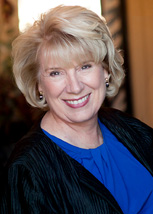
Photo of Jean Fuller
R California Senate · District 16

Sen. Jean Fuller

Compare
Total votes
23,594
all sessions
Attendance
93%
1,602 missed
Lower than 84% of chamber peers
With party
97%
of cast votes
Near the chamber average
Bipartisan score
2%
crosses aisle rarely
Near the chamber average
Sponsored
763
bills & resolutions
Near the chamber average
Committees
0
assignments
763 bills and resolutions

Sponsored bills

Total
763
Primary
207
Co-sponsor
556
This page
763
matching current filters
Primary SB 516
In committee · California Senate · Lead sponsor
Medi-Cal: Disease Management Waiver.

Existing law establishes the Medi-Cal program, administered by the State Department of Health Care Services, under which qualified low-income persons receive health care services. The Medi-Cal program is, in part, governed and funded by federal Medicaid Program provisions. Existing law requires the department to apply for a waiver of federal law to test the efficacy of providing a disease management benefit, as described, to specified beneficiaries under the Medi-Cal program. This bill would make technical, nonsubstantive changes to these provisions.

In committee Feb 1, 2018 0 co-sponsors
Primary SB 736
In committee · California Senate · Lead sponsor
Vote by mail ballot drop-off locations.

Existing law requires the Secretary of State, on or before January 1, 2017, to promulgate regulations establishing guidelines based on best practices for security measures and procedures that a county elections official may use if he or she establishes one or more vote by mail ballot drop-off locations. This bill would be a technical, nonsubstantive change to that provision.

In committee Feb 1, 2018 0 co-sponsors
Primary SB 661
In committee · California Senate · Lead sponsor
Income taxes: credit: new employment.

The Personal Income Tax Law and the Corporation Tax Law allow various credits against the taxes imposed by those laws, including, for taxable years beginning on or after January 1, 2014, and before January 1, 2021, a credit for hiring qualified full-time employees within specified economic development areas in an amount equal to 35% of the qualified wages paid to those employees multiplied by the applicable percentage for that taxable year. For the purposes of that credit, a qualified full-time employee is defined as an individual who meets certain requirements and satisfies at least one of several specified conditions, the applicable percentage is calculated, in part, by comparing the total number of full-time employees employed in this state during the taxable year to the total number of full-time employees employed in this state during the base year, as defined, and qualified wages are limited to wages that exceed 150% of minimum wage, or $10 per hour, as applicable, but do not exceed 350% of minimum wage. Under existing law, employers that provide retail trade services, or that are primarily engaged in providing food services, among others, are ineligible for that credit. This bill would extend the operation of that credit to taxable years beginning before January 1, 2031. This bill, for taxable years beginning on or after January 1, 2017, would revise the calculation of the applicable percentage used in determining the amount of the credit allowed to a small business that as of January 1, 2018, is located in a county that has an unemployment rate that is at least 150% of the statewide average or a county that has a poverty rate that is at least 125% of the statewide average by reducing the number of full-time employees considered to be employed in the state during the base year to zero. The bill would expand the definition of qualified full-time employee to include persons who meet those certain requirements and are either residents of those counties or were eligible to be recipients of the federal earned income tax credit. The bill would allow wages that do not exceed 150% of minimum wage, or $10 per hour, as applicable, to be included in qualified wages used to calculate the amount of the credit. The bill would also allow an employer that provides retail services, or that is primarily engaged in providing food services, to claim the credit. The Personal Income Tax Law and the Corporation Tax Law provide for an alternative minimum tax and provide that, except for specified credits, no credit shall reduce the regular tax, as defined, below the tentative minimum tax. This bill, for taxable years beginning on or after January 1, 2017, and before January 1, 2031, would allow the credit to reduce the regular tax below the tentative minimum tax. Existing law also allows a credit against tax under both laws for each taxable year beginning on or after January 1, 2014, and before January 1, 2025, in an amount as provided in a written agreement between the Governor's Office of Business and Economic Development and the taxpayer, agreed upon by the California Competes Tax Credit Committee, and based on specified factors, including the number of jobs the taxpayer will create or retain in the state and the amount of investment in the state by the taxpayer. Existing law limits the aggregate amount of credits allocated to taxpayers to a specified sum per fiscal year and provides that the amount available for these credits will decrease based in part, on how much credit is allowed under the hiring credit that would be modified by this bill. This bill would decrease the amount available for those credits by increasing the amount and availability of the hiring credit. This bill would include a change in state statute that would result in a taxpayer paying a higher tax within the meaning of Section 3 of Article XIIIA of the California Constitution, and thus would require for passage the approval of 23 of the membership of each house of the Legislature. This bill would take effect immediately as a tax levy.


In committee Feb 1, 2018 0 co-sponsors
Primary SB 515
In committee · California Senate · Lead sponsor
Health care coverage: individual market.

Existing law, the Knox-Keene Health Care Service Plan Act of 1975, provides for the licensure and regulation of health care service plans by the Department of Managed Health Care and makes a willful violation of the act a crime. Existing law also provides for the regulation of health insurers by the Department of Insurance. Existing law requires a health care service plan or health insurer, on and after October 1, 2013, to offer, market, and sell all of the plan's or insurer's health benefit plans that are sold in the individual market for policy years on or after January 1, 2014, to all individuals and dependents in each service area in which the plan or insurer provides or arranges for the provision of health care services, as specified, but requires plans and insurers to limit enrollment in individual health benefit plans to specified annual open enrollment and special enrollment periods. This bill would make technical, nonsubstantive changes to these provisions.

In committee Feb 1, 2018 0 co-sponsors
Co-sponsor AB 517
Failed · California House · Co-sponsor
State government: travel: political beliefs.

Existing law provides that a person in this state cannot be denied the benefits of, or be subjected to discrimination under, a state program or activity, as specified, on the basis of sex, race, color, religion, ancestry, national origin, ethnic group identification, age, mental disability, physical disability, medical condition, genetic information, marital status, or sexual orientation. Existing law also prohibits a state agency, department, board, authority, or commission, as specified, from requiring or approving travel to states that have enacted laws that meet certain criteria. This bill would prohibit a state agency, department, board, or commission, as specified, from prohibiting or denying travel to states on the basis of political beliefs.

Failed Feb 1, 2018 1 co-sponsor
Co-sponsor AB 1173
Failed · California House · Co-sponsor
Employment: work hours: holiday season: overtime.

Existing law, with certain exceptions, establishes 8 hours as a day's work and a 40-hour workweek, and requires payment of prescribed overtime compensation for additional hours worked. Existing law authorizes the adoption by 23 of employees in a work unit of alternative workweek schedules providing for workdays no longer than 10 hours within a 40-hour workweek. This bill would establish an overtime exemption for an employee-selected holiday season flexible work schedule. The exemption would allow during the holiday season, as defined, at the request of an individual nonexempt employee working in the retail industry, and upon employer approval, an employee-selected flexible work schedule providing for workdays up to 10 hours per day within a 40-hour workweek. The employer would be obligated to pay overtime based on the employee's regular rate of pay, as prescribed, for all hours worked over 40 hours in a workweek or over 10 hours in a workday, whichever is greater. The bill would establish requirements for the termination of an agreed-upon schedule. The bill would except from its provisions employees covered by collective bargaining and public employees, as specified. The bill would require the Division of Labor Standards Enforcement in the Department of Industrial Relations to enforce this provision and adopt or revise regulations as necessary.

Failed Feb 1, 2018 1 co-sponsor
Co-sponsor AB 15
Failed · California House · Co-sponsor
Denti-Cal program: reimbursement rates.

Existing law provides for the Medi-Cal program, which is administered by the State Department of Health Care Services, under which qualified low-income individuals receive health care services. The Medi-Cal program is, in part, governed and funded by federal Medicaid program provisions. Existing law provides for a schedule of benefits provided under the Medi-Cal program, which includes certain dental services that are referred to as Denti-Cal. Existing law, the California Healthcare, Research, and Prevention Tobacco Tax Act of 2016, or Proposition 56, which was approved by voters at the November 8, 2016, statewide general election, increases taxes imposed on distributors of cigarettes and tobacco products and allocates a specified percentage of those revenues to the department to increase funding for existing health care programs under the Medi-Cal program. Existing law establishes the Healthcare Treatment Fund for this purpose. This bill would require the department, for the 2017–18 fiscal year, to double Denti-Cal provider reimbursement rates for the 15 most common prevention, treatment, and oral evaluation services based on the average rates per service established in the 2015–16 fiscal year. The bill would appropriate for the 2017–18 fiscal year such an amount as may be necessary to double the reimbursement rates from the Healthcare Treatment Fund to the department, as specified.

Failed Feb 1, 2018 1 co-sponsor
Co-sponsor AB 240
Failed · California House · Co-sponsor
University of California: California Institute for Aerospace.

Existing law establishes the University of California, under the administration of the Regents of the University of California, as one of the segments of public postsecondary education in this state. The University of California provides instruction and performs research at the 10 campuses it operates and maintains in Berkeley, Davis, Irvine, Los Angeles, Merced, Riverside, San Diego, San Francisco, Santa Barbara, and Santa Cruz. This bill would express legislative findings and declarations relating to the aerospace industry in this state. The bill would request the regents to establish the California Institute for Aerospace to achieve specified goals relating to the development of the aerospace industry in the state. The bill would also request the regents to locate the California Institute for Aerospace at a satellite campus within 20 miles of Edwards Air Force Base or United States Air Force Plant 42 so that it will be in close proximity to a large part of California's current aerospace research and development. The bill would provide that it would be implemented only to the extent that the regents determine that adequate funding for its purposes has been provided to the University of California, as specified.

Failed Feb 1, 2018 1 co-sponsor
Primary SB 281
In committee · California Senate · Lead sponsor
Land use: planning and zoning.

The Planning and Zoning Law, among other things, requires the legislative body of each county and city to adopt a comprehensive, long-term general plan for the physical development of the county or city and of any land outside its boundaries that relates to its planning, and provides for the adoption and administration of zoning laws, ordinances, rules, and regulations by counties and cities. This bill would make nonsubstantive, changes to those provisions.

In committee Feb 1, 2018 0 co-sponsors
Showing 61 to 70 of 763 bills
Previous 1 6 7 8 77 Next