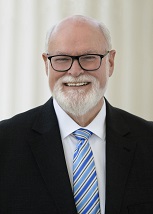
Photo of Jim Beall
D California Senate · District 15

Sen. Jim Beall

Compare
Total votes
32,933
all sessions
Attendance
98%
425 missed
Higher than 91% of chamber peers
With party
99%
of cast votes
Near the chamber average
Bipartisan score
0%
crosses aisle rarely
Near the chamber average
Sponsored
1,209
bills & resolutions
Near the chamber average
Committees
0
assignments
1,209 bills and resolutions

Sponsored bills

Total
1,209
Primary
298
Co-sponsor
911
This page
1,209
matching current filters
Co-sponsor SJR 29
Signed into law · California Senate · Co-sponsor
Relative to immigration.

This measure would call upon the President and the United States Congress to acknowledge that the separation of immigrant children from their families at the border is detrimental to the short- and long-term physical and mental well-being of the children and incompatible with our fundamental values as a nation. The measure would also call upon the United States Congress to issue a formal apology to all child detainees who were forcibly separated from their parents and legal guardians and seized by the United States Department of Homeland Security or United States Customs and Border Protection and to the parents of those children.

Signed into law Sep 12, 2018 1 co-sponsor
Co-sponsor SJR 30
Signed into law · California Senate · Co-sponsor
Relative to the Amtrak National Network.

This measure would urge the Congress and the President of the United States to support the retention of, and investment in, the Amtrak National Network of passenger trains, specifically the California Zephyr, the Coast Starlight, the Southwest Chief, and the Sunset Limited, as vital components of the state's rail program and would also urge Congress to reject President Trump's proposed Fiscal Year 2019 federal budget cuts to Amtrak and restore full funding for the Amtrak National Network through the appropriations process.

Signed into law Sep 12, 2018 1 co-sponsor
Co-sponsor SCR 114
Signed into law · California Senate · Co-sponsor
Relative to World Cup 2026.

This measure would declare that the State of California welcomes the hosting of World Cup 2026, would declare the state's full support of local organizing committees in the San Francisco Bay area and Los Angeles area to be selected as World Cup 2026 sites, and would encourage the Governor and all affected state departments to cooperate with those committees.

Signed into law Sep 11, 2018 1 co-sponsor
Co-sponsor ACR 261
Signed into law · California Assembly · Co-sponsor
Relative to California Hindu American Awareness and Appreciation Month.

This measure would designate the month of October 2018 as California Hindu American Awareness and Appreciation Month. The measure would also recognize and acknowledge the significant contributions made by Californians of Hindu heritage to the state and seek to increase awareness and understanding of the Hindu American community.

Signed into law Sep 11, 2018 1 co-sponsor
Co-sponsor SB 1363
Signed into law · California Senate · Co-sponsor
Personal income taxes: voluntary contributions: National Alliance on Mental Illness California Voluntary Tax Contribution Fund.

Existing law authorizes an individual to contribute amounts in excess of his or her personal income tax liability for the support of specified funds. Under existing law, there are general administrative provisions applicable to these voluntary contributions, which, among other things, provide for the disbursement of contributions following the repeal of the fund provisions and require undesignated funds to be transferred to the General Fund. Existing law requires any new or extended voluntary contribution to include the words "voluntary tax contribution" in the name of the fund, to require the administering agency to include specified information about the fund on its Internet Web site, to continuously appropriate from the fund the contributions made to the administering agency, and to set a minimum contribution amount for the continuation of any voluntary tax contribution fund provisions on the tax return form and a generally applicable repeal date for voluntary tax contribution provisions. This bill would allow an individual to designate on his or her tax return that a specified amount in excess of his or her personal income tax liability be transferred to the National Alliance on Mental Illness California Voluntary Tax Contribution Fund, which would be created by this bill. The bill would conform with those aforementioned administrative requirements by continuously appropriating those funds to the Franchise Tax Board, the Controller, and the Department of the California Highway Patrol for administrative costs and by requiring the Department of the California Highway Patrol to post specified information provided by the National Alliance on Mental Illness about those funds on its Internet Web site. The bill would require remaining funds in the National Alliance on Mental Illness California Voluntary Tax Contribution Fund to be transferred to the Department of the California Highway Patrol for disbursement to the National Alliance on Mental Illness California to fund the Crisis Intervention Team program that trains peace officers to assist, and engage safely with, persons living with mental illness. The bill would also conform by repealing the provisions as of December 1 of the year that the minimum contribution amount of $250,000 is not met or by the specified repeal date. By continuously appropriating these funds, the bill would make an appropriation.

Signed into law Sep 11, 2018 1 co-sponsor
Primary SB 192
Signed into law · California Senate · Lead sponsor
Mental Health Services Fund.

Existing law, the Mental Health Services Act (the MHSA) , an initiative measure enacted by the voters as Proposition 63 at the November 2, 2004, statewide general election, establishes the continuously appropriated Mental Health Services Fund to fund various county mental health programs by imposing a tax of 1% on incomes above $1,000,000. Existing law requires the State Department of Health Care Services, among other things, to implement specified mental health services through contracts with county mental health programs or counties acting jointly. The MHSA establishes the Mental Health Services Oversight and Accountability Commission to oversee various parts of the act, as specified. Under the MHSA, funds are distributed to counties for local assistance for designated mental health programs according to a specified county plan. The MHSA authorizes a county to maintain a prudent reserve to ensure that services do not have to be significantly reduced in years in which revenues are below the average of previous years. The MHSA, except as specified, requires any funds allocated to a county that have not been spent for their authorized purpose within 3 years to revert to the state to be deposited into the fund and available for other counties in future years. The MHSA permits amendment by the Legislature by a 23 vote of each house if the amendment is consistent with, and furthers the intent of, the MHSA, and also permits the Legislature to add provisions to clarify procedures and terms of the MHSA by a majority vote. This bill would clarify that the value of a prudent reserve for a Local Mental Health Services Fund shall not exceed 33% of the average community services and support revenue received for the fund, in the preceding 5 years. The bill would require the county to reassess the maximum amount of the prudent reserve every 5 years and to certify the reassessment as part of its 3-year program and expenditure plan required by the MHSA. By requiring a new assessment and certification to be made by the counties, this bill would impose a state-mandated local program. This bill would establish the Reversion Account within the fund, and would require that MHSA funds reverting from the counties, and the interest accrued on those funds, be placed in that account. Existing law deems all unspent MHSA funds that were subject to reversion as of July 1, 2017, as having been reverted and reallocated to the county of origin for the purposes for which they were originally allocated. Existing law requires each county with these reallocated funds, by July 1, 2018, to prepare a plan to expend those funds before July 1, 2020. This bill would require the counties to submit the plans to expend the reallocated funds to the commission. The bill would require the reallocated funds to revert to the state if a county has not submitted a plan for the expenditure of the reallocated funds by January 1, 2019. Additionally, the bill would require the reallocated funds in the plan that have not been spent or encumbered by July 1, 2020, to revert to the state, as specified. The California Constitution requires the state to reimburse local agencies and school districts for certain costs mandated by the state. Statutory provisions establish procedures for making that reimbursement. This bill would provide that, if the Commission on State Mandates determines that the bill contains costs mandated by the state, reimbursement for those costs shall be made pursuant to the statutory provisions noted above.

Signed into law Sep 10, 2018 0 co-sponsors
Co-sponsor SB 100
Signed into law · California Senate · Co-sponsor
California Renewables Portfolio Standard Program: emissions of greenhouse gases.

(1) Under existing law, the Public Utilities Commission (PUC) has regulatory authority over public utilities, including electrical corporations, while local publicly owned electric utilities, as defined, are under the direction of their governing boards. The California Renewables Portfolio Standard Program requires the PUC to establish a renewables portfolio standard requiring all retail sellers, as defined, to procure a minimum quantity of electricity products from eligible renewable energy resources, as defined, so that the total kilowatthours of those products sold to their retail end-use customers achieve 25% of retail sales by December 31, 2016, 33% by December 31, 2020, 40% by December 31, 2024, 45% by December 31, 2027, and 50% by December 31, 2030. The program additionally requires each local publicly owned electric utility, as defined, to procure a minimum quantity of electricity products from eligible renewable energy resources to achieve the procurement requirements established by the program. The Legislature has found and declared that its intent in implementing the program is to attain, among other targets for sale of eligible renewable resources, the target of 50% of total retail sales of electricity by December 31, 2030. This bill would revise the above-described legislative findings and declarations to state that the goal of the program is to achieve that 50% renewable resources target by December 31, 2026, and to achieve a 60% target by December 31, 2030. The bill would require that retail sellers and local publicly owned electric utilities procure a minimum quantity of electricity products from eligible renewable energy resources so that the total kilowatthours of those products sold to their retail end-use customers achieve 44% of retail sales by December 31, 2024, 52% by December 31, 2027, and 60% by December 31, 2030. Under existing law, a local publicly owned electric utility is not required to procure more than a specified minimum quantity of eligible renewable energy resources under the program if it receives more than 50% of its retail sales from hydroelectric generation, as specified. This bill would revise those provisions, limit the applicability of this exception to large hydroelectric generation, and reduce that threshold to 40%. (2) Existing law establishes the California Environmental Protection Agency, establishes the State Air Resources Board within the agency as the entity with responsibility for control of emissions from motor vehicles, and designates the state board as the air pollution control agency for all purposes set forth in federal law. The California Global Warming Solutions Act of 2006 establishes the state board as the state agency charged with monitoring and regulating sources of emissions of greenhouse gases that cause global warming. The Warren-Alquist State Energy Resources Conservation and Development Act establishes the State Energy Resources Conservation and Development Commission (Energy Commission) and requires it to conduct an ongoing assessment of the opportunities and constraints presented by all forms of energy, to encourage the balanced use of all sources of energy to meet the state's needs, and to seek to avoid possible undesirable consequences of reliance on a single source of energy. This bill would state that it is the policy of the state that eligible renewable energy resources and zero-carbon resources supply 100% of retail sales of electricity to California end-use customers and 100% of electricity procured to serve all state agencies by December 31, 2045. The bill would require that the achievement of this policy for California not increase carbon emissions elsewhere in the western grid and that the achievement not allow resource shuffling. The bill would require the PUC and the Energy Commission, in consultation with the state board, to take steps to ensure that a transition to a zero-carbon electric system for the State of California does not cause or contribute to greenhouse gas emissions increases elsewhere in the western grid. The bill would require the PUC, Energy Commission, state board, and all other state agencies to incorporate that policy into all relevant planning. The bill would require the PUC, Energy Commission, state board, and all other state agencies to ensure actions taken in furtherance of these purposes achieve specified objectives. The bill would require the PUC, Energy Commission, and state board to utilize programs authorized under existing statutes to achieve that policy and, as part of a public process, issue a joint report to the Legislature by January 1, 2021, and every 4 years thereafter, that includes specified information relating to the implementation of the policy. (3) Under existing law, a violation of the Public Utilities Act or any order, decision, rule, direction, demand, or requirement of the PUC is a crime. Because certain of the provisions of this bill would be a part of the act and because a violation of an order or decision of the PUC implementing its requirements would be a crime, the bill would impose a state-mandated local program. By expanding the requirements placed upon a local publicly owned electric utility, the bill would impose a state-mandated local program. The California Constitution requires the state to reimburse local agencies and school districts for certain costs mandated by the state. Statutory provisions establish procedures for making that reimbursement. This bill would provide that no reimbursement is required by this act for specified reasons.


Signed into law Sep 10, 2018 1 co-sponsor
Co-sponsor SCR 161
Signed into law · California Senate · Co-sponsor
Relative to California Runaway and Homeless Youth Prevention Month.

This measure would designate the month of November 2018 as California Runaway and Homeless Youth Prevention Month and would recognize the need for individuals, schools, communities, businesses, local governments, and the state to take action on behalf of runaway and homeless youth in California.

Signed into law Sep 4, 2018 1 co-sponsor
Co-sponsor AJR 52
Passed · California Assembly · Co-sponsor
Vietnam: political repression.

This measure would urge the President, the Vice President, and Congress to call on the Vietnamese government to immediately release all people imprisoned for exercising their right to speech or for joining political or religious groups disapproved by the government. The measure would also express the Legislature's solidarity with the people of Vietnam who have brought issues of human rights violations, environmental abuses, and censorship of the media to light.

Passed Aug 31, 2018 1 co-sponsor
Showing 141 to 150 of 1,209 bills
Previous 1 … 14 15 16 … 121 Next