

In committee Aug 14, 2019
1 co-sponsor
Total votes
35,964
all sessions
Attendance
93%
1,819 missed
Near the chamber average
With party
99%
of cast votes
Near the chamber average
Bipartisan score
1%
crosses aisle rarely
Near the chamber average
Sponsored
645
bills & resolutions
Near the chamber average
Committees
14
assignments
645 bills and resolutions
Sponsored bills
Total
645
Primary
181
Co-sponsor
464
This page
645
matching current filters
Drinking water.
(1) Existing law, the California Safe Drinking Water Act, requires the State Water Resources Control Board to administer provisions relating to the regulation of drinking water to protect public health. Existing law declares it to be the established policy of the state that every human being has the right to safe, clean, affordable, and accessible water adequate for human consumption, cooking, and sanitary purposes. This bill would establish the Safe and Affordable Drinking Water Fund in the State Treasury to help water systems provide an adequate and affordable supply of safe drinking water in both the near and long terms. The bill would authorize the state board to provide for the deposit into the fund of certain moneys and would continuously appropriate the moneys in the fund to the state board for grants, loans, contracts, or services to assist eligible recipients. The bill would require the state board, in consultation with the Department of Finance, to adopt a fund expenditure plan with specified contents and would require, on and after July 1, 2020, expenditures of the fund to be consistent with the plan. The bill would require, by January 1, 2021, the state board, in consultation with local health officers and other relevant stakeholders, to make publicly available, as specified, a map of aquifers that are used or likely to be used as a source of drinking water that are at high risk of containing contaminants that exceed safe drinking water standards. For purposes of the map, the bill would require local health officers and other relevant local agencies to provide all results of, and data associated with, water quality testing performed by certified laboratories to the state board, as specified. By imposing additional duties on local health officers and local agencies, the bill would impose a state-mandated local program. The act provides for the operation of public water systems and authorizes the state board to contract with, or provide a grant to, an administrator to provide administrative, technical, operational, or managerial services, or any combination of those services, to a designated water system to assist with the provision of an adequate supply of affordable, safe drinking water. The act defines an administrator as a person whom the state board has determined is competent to perform the administrative, technical, operational, or managerial services required, as specified, and authorizes a privately owned public utility to serve as an administrator. This bill would, among other things, authorize an administrator to additionally provide legal services pursuant to those provisions and to act, where the administrator is authorized to act on behalf of a designated public water system, on behalf of a voluntary participant, as defined. The bill would recast the authorization for a local agency or a privately owned public utility to serve as an administrator for these purposes. The act prohibits a person from operating a public water system unless the person first submits an application to the state board and receives a permit to operate the system, as specified. The act authorizes the state board, if the state board determines that it is feasible for the service area of the public water system addressed by the application to be served by one or more currently permitted public water systems, to deny the permit of a proposed new public water system if it determines that it is reasonably foreseeable that the proposed new public water system will be unable to provide affordable, safe drinking water in the reasonably foreseeable future, as prescribed. This bill would eliminate the requirement that the state board determine that it is reasonably foreseeable that the proposed new public water system will be unable to provide affordable, safe drinking water in the reasonably foreseeable future in order to deny the permit of a proposed new public water system. The act defines a disadvantaged community for its purposes as an area, as specified, in which the median household income is less than 80% of the statewide average. This bill would revise that definition to apply to specified areas with a median household income of less than 80% of the statewide annual median household income level. The act requires a public water system to submit a technical report to the state board as a part of the permit application or when otherwise required by the state board, as specified. This bill would require a public water system to submit the report in the form and format and at intervals specified by the state board. (2) Existing law requires a laboratory that performs analyses for regulatory purposes of drinking water, wastewater, hazardous waste, and contaminated soils or sediments to obtain certification or accreditation, as specified. Existing law requires, when a person or entity submits material to the laboratory for testing, the laboratory to report the results of all detected contaminants and pollutants to that person or entity. This bill would require a laboratory accredited by the State Water Resources Control Board to also report the results of each drinking water analysis to the state board in the form or format and at intervals specified by the state board. (3) The California Global Warming Solutions Act of 2006 designates the State Air Resources Board as the state agency charged with monitoring and regulating sources of emissions of greenhouse gases. The act authorizes the state board to include the use of market-based compliance mechanisms. Existing law requires all moneys, except for fines and penalties, collected by the state board as part of a market-based compliance mechanism to be deposited in the Greenhouse Gas Reduction Fund and to be available upon appropriation. Existing law continuously appropriates 35% of the annual proceeds of the fund for transit, affordable housing, and sustainable communities programs and 25% of the annual proceeds of the fund for certain components of a specified high-speed rail project. This bill, beginning in the 2020–21 fiscal year, would require 5% of the annual proceeds of the Greenhouse Gas Reduction Fund, up to the sum of $130,000,000, to be deposited into the Safe and Affordable Drinking Water Fund for the purposes of the Safe and Affordable Drinking Water Fund, subject to specified restrictions. The bill would require the Director of Finance, beginning in the 2023–24 fiscal year and until June 30, 2030, to calculate the sum to be transferred by the Controller from the General Fund to the Safe and Affordable Drinking Water Fund if the annual transfer from the annual proceeds of the Greenhouse Gas Reduction Fund is less than $130,000,000 to equal a total transfer into the Safe and Affordable Drinking Water Fund of $130,000,000, as specified. (4) The Budget Act of 2019 appropriates $100,000,000 from the Greenhouse Gas Reduction Fund and $30,000,000 from the General Fund to the State Water Resources Control Board for support or local assistance to fund grants, loans, contracts, or services to help water systems provide safe and affordable drinking water. This bill would require these moneys to be available for the purposes of the Safe and Affordable Drinking Water Fund, subject to specified restrictions. (5) This bill would provide that its provisions are severable. (6) The California Constitution requires the state to reimburse local agencies and school districts for certain costs mandated by the state. Statutory provisions establish procedures for making that reimbursement. This bill would provide that, if the Commission on State Mandates determines that the bill contains costs mandated by the state, reimbursement for those costs shall be made pursuant to the statutory provisions noted above. (7) This bill would declare that it is to take effect immediately as an urgency statute.
Signed into law Jul 24, 2019
1 co-sponsor
Relative to Title X.
This measure would urge the United States Department of Health and Human Services to rescind the new Title X regulations that will impede access to essential, time-sensitive health care for low-income individuals across California and the nation.
Signed into law Jul 15, 2019
1 co-sponsor
Relative to the 108th Anniversary of Women's Suffrage in California.
This measure would proclaim October 10, 2019, as the 108th Anniversary of Women's Suffrage in California.
In committee Jul 11, 2019
1 co-sponsor
California Environmental Quality Act: expedited judicial review: affordable housing projects: reports.
The California Environmental Quality Act (CEQA) requires a lead agency, as defined, to prepare, or cause to be prepared, and certify the completion of an environmental impact report on a project that it proposes to carry out or approve that may have a significant effect on the environment or to adopt a negative declaration if it finds that the project will not have that effect. CEQA also requires a lead agency to prepare a mitigated negative declaration for a project that may have a significant effect on the environment if revisions in the project would avoid or mitigate that effect and there is no substantial evidence that the project, as revised, would have a significant effect on the environment. CEQA authorizes a court, in an action or proceeding brought challenging the decision of a public agency on the ground of noncompliance with CEQA, to enter an order to suspend any specific project activity if the court finds that the activity will prejudice the consideration and implementation of particular mitigation measures or alternatives to the project. CEQA provides that, except as otherwise specified, it is not intended to limit the equitable powers of the courts. This bill would require the Judicial Council, by July 1, 2020, to adopt a rule of court applicable to an action or proceeding brought to attack, review, set aside, void, or annul the certification of an environmental impact report for an affordable housing project, as defined, or the granting of an approval of an affordable housing project that requires the action or proceeding, including any potential appeals therefrom, to be resolved, to the extent feasible, within 270 days of the filing of the certified record of proceeding with the court. The bill would provide that these provisions do not apply to an affordable housing project if it is in certain locations. The bill would repeal these provisions on January 1, 2025. This bill would require the Judicial Council, in coordination with the Office of Planning and Research, on or before specified dates, to report to the Legislature specified information relating to actions or proceedings brought pursuant to CEQA. The bill would repeal these provisions on January 1, 2025. This bill would state the intent of the Legislature to enact subsequent legislation that would provide additional funding to the courts to enable the courts to adjudicate, in an expeditious manner, actions or proceedings filed pursuant to CEQA.
Passed Jul 8, 2019
1 co-sponsor
Discrimination: hairstyles.
Existing law states the policy of the State of California to afford all persons in public schools, regardless of their disability, gender, gender identity, gender expression, nationality, race or ethnicity, religion, sexual orientation, or any other specified characteristic, equal rights and opportunities in the educational institutions of the state, and states that the purpose of related existing law is to prohibit acts that are contrary to that policy and to provide remedies therefor. Existing law defines race or ethnicity for these purposes. Under the California Fair Employment and Housing Act, it is unlawful to engage in specified discriminatory employment practices, including hiring, promotion, and termination based on certain protected characteristics, including race, unless based on a bona fide occupational qualification or applicable security regulations. The act also prohibits housing discrimination based on specified personal characteristics, including race. The act also prohibits discrimination because of a perception that a person has one of those protected characteristics or is associated with a person who has, or is perceived to have, any of those characteristics. Existing law defines terms such as race, religious beliefs, and sex, among others, for purposes of the act. This bill would provide that the definition of race for these purposes also include traits historically associated with race, including, but not limited to, hair texture and protective hairstyles, and would define protective hairstyles for purposes of these provisions.
Signed into law Jul 3, 2019
1 co-sponsor
Income taxation: Loophole Closure and Small Business and Working Families Tax Relief Act of 2019.
(1) The Personal Income Tax Law, beginning on or after January 1, 2015, in modified conformity with federal income tax laws, allows an earned income tax credit against personal income tax, and a payment from the Tax Relief and Refund Account for an allowable credit in excess of tax liability, to an eligible individual that is equal to that portion of the earned income tax credit allowed by federal law as determined by the earned income tax credit adjustment factor, as specified. The law provides that the amount of the credit is calculated as a percentage of the eligible individual's earned income and is phased out above a specified amount as income increases. The law deems, for each taxable year beginning on or after January 1, 2018, and before January 1, 2019, the California Consumer Price Index as the greater of 3.1% or the percentage change in the California Consumer Price Index for the recomputation of specified earned income amounts, phaseout amounts, and the amount of disqualified income that would disallow this credit. This bill, for taxable years beginning on or after January 1, 2019, and before January 1, 2020, would deem the California Consumer Price Index as the greater of 3.5% or the percentage change in the California Consumer Price Index for the recomputation of those specified amounts. The bill, for taxable years on and after January 1, 2019, would revise the calculation factors to increase the credit amount for specified taxpayers. The bill, for taxable years beginning on or after January 1, 2020, and until and including the taxable year in which the minimum wage is set at $15 per hour, would require specified, revised calculation factors to be recomputed annually in the same manner as the recomputation of income tax brackets for eligible individuals, but would require the Franchise Tax Board to recalculate the revised phaseout percentage in a manner that any eligible individual with an earned income of $30,000 per year would get credit equal to $0. This bill would allow a refundable young child tax credit against the taxes imposed under the Personal Income Tax Law, for each taxable year beginning on or after January 1, 2019, in an amount equal to $1,176 multiplied by the earned income tax credit adjustment factor, not to exceed $1,000 per each qualified taxpayer per taxable year. The bill would require amounts of this credit in excess of the qualified taxpayer's tax liability to be paid to the qualified taxpayer from the Tax Relief and Refund Account. Existing law establishes the continuously appropriated Tax Relief and Refund Account and provides that payments required to be made to taxpayers or other persons from the Personal Income Tax Fund are to be paid from that account, including any amount to be paid as an earned income tax credit in excess of any tax liabilities. By increasing the amount of the California Earned Income Tax Credit and allowing a refundable young child tax credit to be paid with funds from the Tax Relief and Refund Account, and thus, authorizing new payments from that account for additional amounts in excess of personal income tax liabilities, this bill would make an appropriation. (2) Existing federal law, the Stephen Beck, Jr., Achieving a Better Life Experience Act of 2014 (ABLE Act) , for taxable years beginning on or after January 1, 2014, encourages and assists individuals and families to save private funds for the purpose of supporting persons with disabilities to maintain their health, independence, and quality of life by excluding from gross income distributions used for qualified disability expenses by a beneficiary of a qualified ABLE program established and maintained by a state, as specified. Existing federal law, the Tax Cuts and Jobs Act, increases the amount of contributions allowed to an ABLE account, adds special rules for the increased contribution limit, and exempts from taxation distributions from a qualified tuition program, as defined, rolled into an ABLE account for taxable years beginning on or after December 31, 2017, and before January 1, 2026. Existing federal law, the Consolidated Appropriations Act, 2016 expanded the definitions of "qualified higher educational expenses" and "qualified ABLE program." Existing law, the Personal Income Tax Law and the Corporation Tax Law, for taxable years beginning on or after January 1, 2016, conforms to the exclusions from gross income provided under federal income tax law provisions relating to the ABLE Act, as those exclusions read prior to the federal Tax Cuts and Jobs Act and the Consolidated Appropriations Act, 2016. Existing law creates the California ABLE Act Board and requires the board to provide an annual listing of distributions to individuals that have an interest in an ABLE account to the Franchise Tax Board, as provided. This bill would conform state tax law to those changes relating to qualified ABLE accounts made by the Tax Cuts and Jobs Act and the Consolidated Appropriations Act, 2016. The bill would make a legislative finding and declaration that providing ABLE account beneficiaries the ability to contribute their own earnings to the ABLE account up to the federal poverty level and allowing Section 529 plan accounts to roll over to ABLE accounts eliminates differences in the qualification criteria for ABLE accounts under federal tax law and California tax law, and thus serves a public purpose and does not constitute a prohibited gift of public funds. (3) The Personal Income Tax Law provides an exclusion from gross income for the amount of student loan indebtedness repaid or canceled pursuant to a specified federal law. This bill would exclude from an individual's gross income the amount of student loan indebtedness discharged on or after December 31, 2011 due to the death or disability of the student, as provided. (4) The Personal Income Tax Law and the Corporation Tax Law, in modified conformity with federal income tax laws, allow various deductions from gross income in computing adjusted gross income under those laws, including a deduction, as trade or business expense, of the premiums paid pursuant to an assessment by the Federal Deposit Insurance Corporation. This bill would conform to the federal Tax Cuts and Jobs Act, by disallowing or limiting the amount specified taxpayers may deduct for these premiums depending on the amount of total consolidated assets, as defined, of the taxpayer. (5) The Personal Income Tax Law and the Corporation Tax Law, in modified conformity with federal income tax laws, allow a deduction from gross income in computing adjusted gross income of ordinary and necessary expenses paid or incurred during the taxable year in carrying on any trade or business. Existing law prohibits a deduction from being allowed with respect to any covered employee of a publicly held corporation if the amount of applicable employee remuneration exceeds $1,000,000. This bill would conform to the federal Tax Cuts and Jobs Act, by revising the definitions of covered employee and publicly held corporation to limit the amount those specified taxpayers may deduct for ordinary and necessary expenses. The bill would also disallow the performance-based compensation and commission exceptions with respect to the deduction limitation relating to covered employees. (6) The Personal Income Tax Law and the Corporation Tax Law allow net operating losses attributable to taxable years beginning on or after January 1, 2013, to be carrybacks to each of the preceding 2 taxable years, as provided. This bill would disallow the use of net operating loss carrybacks by individual and corporate taxpayers. (7) The federal Tax Cuts and Jobs Act allows a small business to use the cash method of accounting if its average annual gross receipts for the 3 taxable years ending with the prior taxable year do not exceed $25,000,000. The Personal Income Tax Law and the Corporation Tax Law allows a small business to use the cash method of accounting if its average annual gross receipts for the 3 taxable years ending with the prior taxable year do not exceed $5,000,000. This bill, for taxable years beginning on or after January 1, 2019, would conform the Personal Income Tax Law and the Corporation Tax Law to the increase to $25,000,000 made by the federal Tax Cuts and Jobs Act in the allowable amount of annual gross receipts of a small business allowed to use the cash method of accounting. The bill would allow a taxpayer to elect to have this conformity apply to taxable years beginning on or after January 1, 2018, and before January 1, 2019. (8) The federal Tax Cuts and Jobs Act exempts a corporation engaged in farming that has average annual gross receipts for the 3 taxable years ending with the prior taxable year not exceeding $25,000,000 from computing its taxable income by using the accrual method of accounting. The Personal Income Tax Law and the Corporation Tax Law exempt a corporation engaged in farming that has average annual gross receipts for the 3 taxable years ending with the prior taxable year not exceeding $5,000,000 from computing taxable income by using the accrual method of accounting. This bill, for taxable years beginning on or after January 1, 2019, would conform the Personal Income Tax Law and the Corporation Tax Law to the increase to $25,000,000 made by the Tax Cuts and Jobs Act in the amount of average annual gross receipts of a farming corporation that is exempt from using the accrual method of accounting. The bill would allow a taxpayer to elect to have this conformity apply to taxable years beginning on or after January 1, 2018, and before January 1, 2019. The bill would also make conforming changes related to suspense allowances, as provided. (9) The federal Tax Cuts and Jobs Act exempts a taxpayer with average annual gross receipts for the 3 taxable years ending with the prior taxable year of $25,000,000 or less from the provisions that preclude the deduction of certain direct and indirect costs and determine whether those property costs are inventory costs or are capitalized. The Personal Income Tax Law and the Corporation Tax Law exempts a taxpayer with average annual gross receipts for the 3 taxable years ending with the prior taxable year of $10,000,000 or less from the provisions that preclude the deduction of certain direct and indirect costs and determine whether those property costs are inventory costs or are capitalized. This bill, for taxable years beginning on or after January 1, 2019, would conform the Personal Income Tax Law and the Corporation Tax Law to the increase to $25,000,000 made by the Tax Cuts and Jobs Act in the amount of average annual gross receipts of a taxpayer exempt from those provisions precluding the deductibility of certain property costs and determining whether those costs are inventory costs or are capitalized. The bill would allow a taxpayer to elect to have this conformity apply to taxable years beginning on or after January 1, 2018, and before January 1, 2019. (10) The federal Tax Cuts and Jobs Act exempts a small business with average annual gross receipts for the 3 taxable years ending with the prior taxable year not exceeding $25,000,000 from the provisions that require a taxpayer to take inventories to clearly determine their income. The Personal Income Tax Law and the Corporation Tax Law conforms to the provisions of the Internal Revenue Code relating to the requirement that a taxpayer take inventories to clearly determine their income, but does not allow an exemption. This bill, for taxable years beginning on or after January 1, 2019, would conform the Personal Income Tax Law and the Corporation Tax Law to the exemption in the Tax Cuts and Jobs Act of a small business with average annual gross receipts for the 3 taxable years ending with the prior taxable year not exceeding $25,000,000 from the provisions that require a taxpayer to take inventories to clearly determine their income. The bill would allow a taxpayer to elect to have this conformity apply to taxable years beginning on or after January 1, 2018, and before January 1, 2019. (11) The federal Tax Cuts and Jobs Act exempts construction contracts entered into by a taxpayer with average annual gross receipts not exceeding $25,000,000 from the requirement that the taxable income from a long-term contract be determined by the percentage of completion method. The Personal Income Tax Law and the Corporation Tax Law exempts construction contracts entered into by a taxpayer with average annual gross receipts for the 3 taxable years ending with the prior taxable year not exceeding $10,000,000 from the requirement that the taxable income from a long-term contract be determined by the percentage of completion method. This bill would conform the Personal Income Tax Law and the Corporation Tax Law to the exemption in the Tax Cuts and Jobs Act of construction contracts entered into by a taxpayer with average annual gross receipts not exceeding $25,000,000 from the requirement that the taxable income from a long-term contract be determined by the percentage of completion method. This conformity would apply to contracts entered into on or after the effective date of this act, as provided, and would allow, where applicable, a taxpayer to elect to have the conformity apply to contracts entered into on or after January 1, 2018, and before the effective date of this act. (12) The Personal Income Tax Law generally allows a noncorporate taxpayer to deduct business losses from a pass through entity, like an "S" corporation. Under the federal Tax Cuts and Jobs Act, for taxable years beginning after December 31, 2017, and before January 1, 2026, excess business losses, as defined, of a noncorporate taxpayer are not allowed as a deduction and instead those losses must be carried forward and treated as a net operating loss in subsequent taxable years, as provided. This bill, for taxable years beginning after December 31, 2018, would provide modified conformity to the above-described limitation, including not conforming to the federal sunset date. (13) The Personal Income Tax Law conforms as of a specified date to federal income tax laws, January 1, 2015, and therefore allows for the termination of a partnership by the sale or exchange of 50% or more of the interest in a partnership within a 12-month period. The federal Tax Cuts and Jobs Act repealed that provision of federal income tax law for taxable years beginning on or after January 1, 2018. This bill would conform to federal income tax law with regard to the termination of partnerships described above and would additionally allow a partnership to elect to have this conformity apply to partnership taxable years beginning after December 31, 2017, and before January 1, 2019. This bill would make findings as to the public purpose served by the bill in this regard. (14) The Personal Income Tax Law and the Corporation Tax Law, in modified conformity with federal income tax laws, exclude the recognition of any gain or loss on the exchange of property held for productive use in a trade or business or for investment, if that property is exchanged solely for property of a like kind that is to be held either for productive use in a trade or business or for investment, unless an exception applies. This bill would conform to federal income tax law, as amended by the Tax Cuts and Jobs Act, by limiting that exclusion to the recognition of any gain or loss on the exchange of real property, except as otherwise provided. (15) The Corporation Tax Law, in conformity with federal income tax laws, and when a taxpayer does not elect otherwise for purposes of state income tax law, allows a purchasing corporation to make an election that its qualified stock purchase, as defined, from a target corporation may be treated as an asset acquisition resulting in a step up in the basis of the stock. This bill would provide that if the above-described election for federal income tax purposes has been made or deemed to have been made, or not made or not deemed to have been made, by a taxpayer, a separate state election shall not be allowed. (16) This bill would declare that it is to take effect immediately as an urgency statute.
Signed into law Jul 1, 2019
1 co-sponsor
Relative to the 75th anniversary of D-Day, the invasion of Normandy.
This measure would recognize June 6, 2019, as the 75th anniversary of the invasion of Normandy, also known as D-Day. This measure would express the gratitude and appreciation of the Legislature to the members of the United States Armed Forces who participated in D-Day, and would call upon the people of California to observe the anniversary with appropriate reflections and recognition.
Signed into law Jun 28, 2019
1 co-sponsor
Passed Jun 27, 2019
1 co-sponsor
Relative to International Midwives' Day.
This measure would recognize May 5, 2019, as International Midwives' Day.
Signed into law Jun 14, 2019
1 co-sponsor
Ask Maddy
·
AI policy assistant
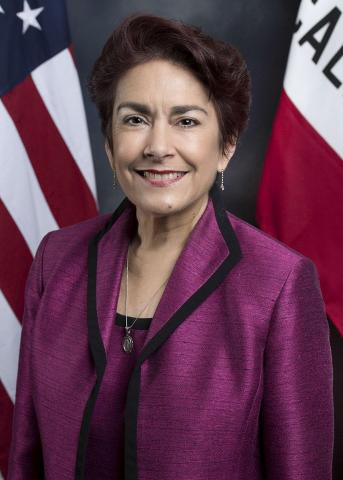
Ask Maddy about Anna Caballero
Scope: california
Hi! I can help you understand Anna Caballero's legislative record. What would you like to know?
Try one of these
i
Maddy answers using official bill text and legislative records. Always verify before sharing.
Sources cited inline