

Passed Sep 1, 2021
1 co-sponsor
Total votes
35,964
all sessions
Attendance
93%
1,819 missed
Near the chamber average
With party
99%
of cast votes
Near the chamber average
Bipartisan score
1%
crosses aisle rarely
Near the chamber average
Sponsored
645
bills & resolutions
Near the chamber average
Committees
14
assignments
645 bills and resolutions
Sponsored bills
Total
645
Primary
181
Co-sponsor
464
This page
645
matching current filters
In committee Sep 1, 2021
0 co-sponsors
Passed Sep 1, 2021
0 co-sponsors
Passed Sep 1, 2021
1 co-sponsor
Homeless shelters grants: pets and veterinary services.
Existing law establishes the California Emergency Solutions and Housing Program, under the administration of the Department of Housing and Community Development and requires the department to, among other things, provide rental assistance and housing relocation and stabilization services to ensure housing affordability to people who are experiencing homelessness or who are at risk of homelessness. This bill would require the department, subject to an appropriation in the annual Budget Act, to develop and administer a program to award grants to qualified homeless shelters, as described, for the provision of shelter, food, and basic veterinary services for pets owned by people experiencing homelessness. The bill would authorize the department to use up to 5% of the funds appropriated in the annual Budget Act for those purposes for its costs in administering the program.
Passed Aug 26, 2021
1 co-sponsor
Communicable diseases: respiratory disease information.
Existing law establishes the State Department of Public Health and sets forth its powers and duties, including the administration of provisions relating to the prevention and control of communicable diseases. Existing regulations require certain communicable diseases to be reported to local health officers by health providers, using a uniform Confidential Morbidity Report (CMR) . Existing law, the Information Practices Act of 1977, regulates the collection and disclosure of personal information regarding individuals by state agencies, except as specified. Under existing law, a person who willfully requests or obtains a record containing personal information from an agency under false pretenses or a person who intentionally discloses medical, psychiatric, or psychological information held by an agency is guilty of a misdemeanor. This bill would require the department to create a program to provide expedited release, during a declared public health emergency, of specified health care data to researchers at a bona fide research institution of higher education, as defined. The bill would require the department to make the specified data available promptly, and on an ongoing basis, only to qualified researchers who sign a memorandum of understanding (MOU) with the department agreeing to use the data only for public health research purposes, to not disclose it to any other party, and to keep all personal information confidential. The bill would require each individual researcher who accesses or obtains nonpublic personal data through the program to sign an MOU, and would make a violation of the MOU a misdemeanor under the Information Practices Act of 1977. Because a willful violation of an MOU would be a crime, the bill would impose a state-mandated local program. The bill would require the department, within one business day of agreeing to an MOU, to publish the MOU in full and make it available, along with specified information, to the general public on its internet website. The bill would require the program to create a special Institutional Review Board to review requests submitted under the program and would require the program to approve or reject the requests within 15 days of receiving a completed application. This bill would also require that any report of a communicable respiratory disease by a health care provider to a local health officer and any electronic tool used by a local health officer for the purposes of reporting cases of a communicable respiratory disease include information on the type of housing where the patient resides, the number of people in the patient's household, the occupation and workplace of the patient, and a relevant travel history based on the disease course. The bill would make implementation of its provisions subject to an appropriation by the Legislature. To the extent that this bill would increase the duties of local health officers, the bill would impose a state-mandated local program. The California Constitution requires the state to reimburse local agencies and school districts for certain costs mandated by the state. Statutory provisions establish procedures for making that reimbursement. This bill would provide that with regard to certain mandates no reimbursement is required by this act for a specified reason. With regard to any other mandates, this bill would provide that, if the Commission on State Mandates determines that the bill contains costs so mandated by the state, reimbursement for those costs shall be made pursuant to the statutory provisions noted above.
Passed Aug 26, 2021
1 co-sponsor
Unaccompanied Women Experiencing Homelessness Act of 2021.
Existing law establishes various programs, including, among others, the Emergency Housing and Assistance Program and homeless youth emergency service pilot projects to provide assistance to homeless persons. Existing law establishes the Homeless Coordinating and Financing Council to oversee the implementation of Housing First guidelines and regulations, and, among other things, identify resources, benefits, and services that can be accessed to prevent and end homelessness in California. This bill would require the council to assume additional responsibilities, including setting specific, measurable goals aimed at preventing and ending homelessness among unaccompanied women in the state and defining outcome measures and gathering data related to those goals. The bill would also require the council, in order to coordinate a spectrum of funding, policy, and practice efforts related to unaccompanied women experiencing homelessness, to coordinate with certain stakeholders and, to the extent that funding is made available, provide technical assistance and program development support.
Passed Aug 26, 2021
1 co-sponsor
Personal information: social security numbers: state agencies: Employment Development Department: fraud prevention.
Existing law prohibits a state agency from sending any outgoing United States mail to an individual that contains personal information about that individual, including, but not limited to, the individual's social security number, telephone number, driver's license number, or credit card account number, unless that personal information is contained within sealed correspondence and cannot be viewed from the outside of that sealed correspondence. Existing law, commencing on or before January 1, 2023, prohibits a state agency from sending any outgoing United States mail that contains an individual's social security number unless the number is truncated to its last 4 digits or in specified circumstances. This bill would instead require, as soon as feasible, but not later than January 1, 2023, a state agency to stop sending any outgoing United States mail that contains an individual's social security number unless the number is truncated to its last 4 digits or in specified circumstances. The bill, commencing on or before October 1, 2021, would prohibit, with exceptions, the Employment Development Department from sending any outgoing United States mail to an individual containing the individual's social security number, unless that social security number is replaced with a modified unique identifier or the number is truncated to its last 4 digits. Existing law creates, in the Labor and Workforce Development Agency, the Employment Development Department, which is vested with the duties, purposes, responsibilities, and jurisdiction with respect to job creation activities. Existing law requires the Director of Employment Development to periodically review policies and practices used to determine eligibility for and the amount of benefits in the unemployment insurance program to identify those policies and practices doing certain things, including, but not limited to, providing little or no value in identifying or preventing fraud or abuse in the unemployment insurance program. This bill would require the department, on or before January 1, 2022, to identify the fraud prevention efforts it can adjust to improve effectiveness during periods of high demand for benefits. The bill would also require the department, on or before January 1, 2022, using existing resources, to designate a single unit responsible for coordinating fraud prevention and align the unit's duties with best practices for detecting and preventing fraud. This bill would declare that it is to take effect immediately as an urgency statute.
Passed Aug 26, 2021
1 co-sponsor
State government: Immigrant and Refugee Affairs Agency: Office of Immigrant and Refugee Affairs.
Existing law designates 8 agencies in state government and requires the secretary of an agency to be generally responsible for the sound fiscal management of each department, office, or other unit within the agency. Existing law further requires the secretary of an agency to, among other duties, continually seek to improve the organization structure, the operating policies, and the management information systems of each department, office, or other unit. This bill would, until January 1, 2029, establish the Immigrant and Refugee Affairs Agency as an agency within state government, to be headed by a secretary who is appointed by the Governor and subject to Senate confirmation. The bill would specify that the purpose of the agency is to reduce obstacles and enhance immigrant integration, as defined, into the social, cultural, economic, and civic life of the state. The bill would establish the Office of Immigrant and Refugee Affairs within the agency. The bill would transfer functions relating to immigrants and refugees to the office and would declare the intent to incorporate existing and future programs created to assist immigrants and refugees into the office. The bill would transfer the property of any office, agency, or department that relates to functions transferred to the office by these provisions and would transfer the unencumbered balance of any appropriation and any other funds that are available for use in connection with any function transferred to the office. The bill would also provide that every officer and employee who is serving in the state civil service, as provided, and who is transferred to the office, shall retain the status position, and rights. The bill would create the Immigrant and Refugee Integration Fund within the State Treasury, and would make the moneys available in the fund available to the secretary of the office to administer the duties of the office. This bill would establish the duties and responsibilities of the agency and the office which includes, among other duties, establishing a permanent structure within the state to serve immigrants, assisting other state agencies in evaluating their programs for accessibility and effectiveness in providing services to immigrants and refugees, and recommending policy and budget mechanisms for meeting immigrant and refugee integration goals. The bill would prohibit interagency sharing of personal information and would prohibit use of agency resources to directly or indirectly participate or assist in immigration enforcement activity. Existing law establishes the Statewide Director of Immigrant Integration and requires the director serve as the statewide lead for the planning and coordination of immigrant services and policies in California. Existing law requires, among other things, that the director develop a comprehensive statewide report on programs and services that serve immigrants, develop an online clearinghouse of immigrant services, resources, and programs, and monitor the implementation of statewide laws and regulations that serve immigrants. This bill would recast those provisions to rename the director as the Statewide Director of Immigrant and Refugee Integration. The bill would place the director in charge of the office, and would require the director to report to the Governor and the Legislature on programs and services that serve immigrants and refugees by January 1, 2023, and require the director to provide a statewide plan for better implementation and coordination of immigrant and refugee assistance policies and programs. The bill would require the director to incorporate refugee services, resources, and programs into the online clearinghouse by January 1, 2023, and would require the director to monitor statewide laws and regulations that serve refugees, in addition to immigrants. The changes made by this bill would be in effect until January 1, 2029, and as of that date would be repealed. The provisions of this bill would only become operative if funds have been appropriated for the purposes described in the bill in the annual Budget Act or another statute. Existing constitutional provisions require that a statute that limits the right of access to the meetings of public bodies or the writings of public officials and agencies be adopted with findings demonstrating the interest protected by the limitation and the need for protecting that interest. This bill would make legislative findings to that effect.
Passed Aug 26, 2021
1 co-sponsor
Social Innovation Financing Program.
Existing law establishes the Social Innovation Financing Program, administered by the Board of State and Community Corrections, to award grants to 3 counties selected by the board, for the purpose of entering into a social innovation financing contract, pursuant to which private investors agree to provide financing to service providers to achieve social outcomes agreed upon in advance and the government agency that is a party to the contractual agreement agrees to pay a return on the investment to the investors if successful programmatic outcomes are achieved by the service provider. Existing law requires the board and each county receiving an award to report annually to the Governor and Legislature, as specified. Existing law repeals the program on January 1, 2022. This bill would, commencing July 1, 2022, authorize the board, upon an appropriation by the Legislature to the Social Innovation Fund created by this bill, to award a new round of grants to 5 counties selected by the board, as specified. The bill would also authorize the board to utilize no more than 2% of any appropriated funds to award microgrants to counties applying for a grant to support the development of grant proposals. The bill would require the board and the grant recipients to report annually to the Governor and the Legislature, as specified. The bill would extend the repeal date of the program to January 1, 2028.
Passed Aug 26, 2021
0 co-sponsors
Ask Maddy
·
AI policy assistant
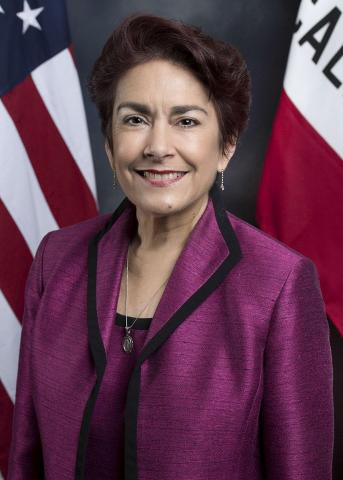
Ask Maddy about Anna Caballero
Scope: california
Hi! I can help you understand Anna Caballero's legislative record. What would you like to know?
Try one of these
i
Maddy answers using official bill text and legislative records. Always verify before sharing.
Sources cited inline