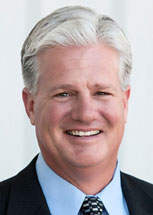
Photo of Andy Vidak
R California Senate · District 14

Sen. Andy Vidak

Compare
Total votes
11,155
all sessions
Attendance
90%
1,040 missed
Near the chamber average
With party
97%
of cast votes
Lower than 81% of chamber peers
Bipartisan score
3%
crosses aisle rarely
Higher than 83% of chamber peers
Sponsored
374
bills & resolutions
Near the chamber average
Committees
0
assignments
374 bills and resolutions

Sponsored bills

Total
374
Primary
69
Co-sponsor
305
This page
374
matching current filters
Co-sponsor AB 1881
In committee · California House · Co-sponsor
Valley Fever testing.

Existing law requires the State Department of Public Health to establish a list of reportable communicable and noncommunicable diseases and conditions and specify the timeliness requirements related to the reporting of each disease and condition. Existing law also supports research into the development of a vaccine to protect against coccidioidomycosis, also known as Valley Fever. This bill would require the department to develop standardized methodology for coccidioidomycosis tests to ensure comparable sensitivity and specificity among laboratories, among other things.

In committee Mar 20, 2018 1 co-sponsor
Primary SB 1364
In committee · California Senate · Lead sponsor
Safe, Clean, Reliable Water Supply Act.

Existing law, the Safe, Clean, Reliable Water Supply Act, approved by the voters as Proposition 204 at the November 5, 1996, statewide general election, authorizes the issuance of general obligation bonds in the amount of $995,000,000 for the purposes of financing a safe, clean, reliable water supply program. The bond act states various legislative findings and declarations. This bill would make a nonsubstantive change in those findings and declarations.

In committee Mar 8, 2018 0 co-sponsors
Primary SB 1282
In committee · California Senate · Lead sponsor
Elections: measures submitted to the voters.

Existing law requires a county elections official to examine an initiative petition to determine whether to not it is signed by the requisite number of voters. Existing law requires the elections official to inform the measure's proponents as to its sufficiency or insufficiency, and it directs the elections official to take no further action if the petition is found to be insufficient. Existing law also specifies that a proponent of a measure found to be insufficient may file a new petition on the same subject at a later date. This bill would make technical, nonsubstantive changes to this provision.

In committee Mar 1, 2018 0 co-sponsors
Primary SB 1439
Introduced · California Senate · Lead sponsor
Legislature: closed sessions: caucus.

Existing provisions of the California Constitution require meetings of each house and committee of the Legislature to be open to the public, except that closed meetings may be held to consider specified matters and a caucus of the Members of the Senate, the Members of the Assembly, or the Members of both houses, which is composed of the members of the same political party, may meet in closed session. This bill would limit the caucus exemption described above by prohibiting a closed session of a quorum of the Members of the Assembly or Senate, or both, if specific legislation is considered at that session and a vote or vote count of those members takes place at that session.

Introduced Feb 20, 2018 0 co-sponsors
Co-sponsor AB 403
Signed into law · California House · Co-sponsor
Legislature: Legislative Employee Whistleblower Protection Act.

Existing law generally protects employees who disclose illegal or improper workplace activities by prohibiting interference with, and retaliation for, making such disclosures. Existing law provides procedures for a person to file a complaint alleging violations of legislative ethics. Existing law also authorizes each house of the Legislature to adopt rules for its proceedings and to select committees necessary for the conduct of its business. This bill would impose criminal and civil liability on a Member of the Legislature or legislative employee, as defined, who interferes with, or retaliates against, a legislative employee's exercise of the right to make a protected disclosure, which is defined as a good faith allegation made by a legislative employee to specified entities that a Member of the Legislature or a legislative employee has engaged in, or will engage in, activity that may constitute a violation of law, including sexual harassment, or a violation of a legislative standard of conduct. The bill would also impose civil liability on an entity that interferes with, or retaliates against, a legislative employee's exercise of the right to make a protected disclosure, as specified. By creating new crimes, the bill would impose a state-mandated local program. The California Constitution requires the state to reimburse local agencies and school districts for certain costs mandated by the state. Statutory provisions establish procedures for making that reimbursement. This bill would provide that no reimbursement is required by this act for a specified reason. This bill would declare that it is to take effect immediately as an urgency statute.

Signed into law Feb 5, 2018 1 co-sponsor
Primary SB 524
died · California Senate · Lead sponsor
Employment: violations: good faith defense.

The Division of Labor Standards Enforcement of the Department of Industrial Relations is generally charged with enforcing employment statutes and regulations, either in administrative actions or through litigation. Under existing law, an employer may face administrative sanctions, civil fines and penalties, and criminal penalties for violations of employment statutes or regulations. This bill would permit a person to raise as an affirmative defense that, at the time of an alleged violation of statute or regulation in a judicial or administrative proceeding, the person was acting in good faith, had sought, relied upon, and conformed with a published opinion letter or enforcement policy of the division, and had provided true and correct information to the division in seeking the opinion letter or enforcement policy. The bill would require any person who asserts the affirmative defense to post a bond as prescribed. These provisions would be repealed on January 1, 2024.

died Feb 1, 2018 0 co-sponsors
Primary SB 414
died · California Senate · Lead sponsor
Transportation bonds: highway, street, and road projects.

Existing law, the Safe, Reliable High-Speed Passenger Train Bond Act for the 21st Century, approved by the voters as Proposition 1A at the November 4, 2008, general election, provides for the issuance of general obligation bonds in the amount of $9 billion for high-speed rail purposes and $950 million for other related rail purposes. Article XVI of the California Constitution requires measures authorizing general obligation bonds to specify the single object or work to be funded by the bonds and further requires a bond act to be approved by a 23 vote of each house of the Legislature and a majority of the voters. This bill would provide that no further bonds shall be sold for high-speed rail purposes pursuant to the Safe, Reliable High-Speed Passenger Train Bond Act for the 21st Century, except as specifically provided with respect to an existing appropriation for high-speed rail purposes for early improvement projects in the Phase 1 blended system. The bill, subject to the above exception, would require redirection of the unspent proceeds from outstanding bonds issued and sold for other high-speed rail purposes prior to the effective date of these provisions, upon appropriation, for use in retiring the debt incurred from the issuance and sale of those outstanding bonds. The bill, subject to the above exception, would also require the net proceeds of bonds subsequently issued and sold under the high-speed rail portion of the bond act, upon appropriation, to be made available to the California Transportation Commission for allocation for repair and new construction projects on state highways and freeways, and to the Controller for apportionment to cities and counties for transportation and local transit projects, as specified. The bill would make no changes to the authorization under the bond act for the issuance of $950 million in bonds for rail purposes other than high-speed rail. These provisions would become effective only upon approval by the voters at the June 5, 2018, statewide primary election. This bill would declare that it is to take effect immediately as an urgency statute.


died Feb 1, 2018 0 co-sponsors
Primary SB 415
died · California Senate · Lead sponsor
High-speed rail: rights-of-way.

Existing law creates the High-Speed Rail Authority with specified powers and duties relative to development and implementation of a high-speed train system, including the acquisition of property necessary for rights-of-way and the disposal of acquired property no longer necessary for that purpose. This bill would require the authority to make a good faith effort to sell or exchange real property or an interest in real property acquired by the state for high-speed rail purposes on or after January 1, 2018, within 3 years from the date of acquisition if the authority has not begun construction on the property or interest in the property within that 3-year period. For real property or an interest in real property acquired before January 1, 2018, the bill would require the authority to dispose of the property on or before January 1, 2021, or, for property subject to a lease as of January 1, 2018, within 3 years of the expiration of the lease, if the authority has not begun construction during those 3-year periods.

died Feb 1, 2018 0 co-sponsors
Showing 41 to 50 of 374 bills
Previous 1 4 5 6 38 Next