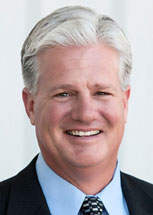
Photo of Andy Vidak
R California Senate · District 14

Sen. Andy Vidak

Compare
Total votes
11,155
all sessions
Attendance
90%
1,040 missed
Near the chamber average
With party
97%
of cast votes
Lower than 81% of chamber peers
Bipartisan score
3%
crosses aisle rarely
Higher than 83% of chamber peers
Sponsored
374
bills & resolutions
Near the chamber average
Committees
0
assignments
374 bills and resolutions

Sponsored bills

Total
374
Primary
69
Co-sponsor
305
This page
374
matching current filters
Co-sponsor AB 1787
Signed into law · California House · Co-sponsor
Reporting: Valley Fever.

Existing law requires the State Department of Public Health to establish a list of reportable communicable and noncommunicable diseases and conditions and specify the timeliness requirements related to the reporting of each disease and condition. Existing law also supports research into the development of a vaccine to protect against coccidioidomycosis, also known as Valley Fever. This bill would require the department, when it receives a report of a case of coccidioidomycosis after the department's reporting deadline for a specified year, to include the case in its data collection for the next year and attribute it to the year of diagnosis in future data reporting. This bill would require the department to collect data on coccidioidomycosis cases by April 15 of each year, as specified. The bill would require the department, if it collects data on coccidioidomycosis cases and removes discrepant data from its internal dataset, to timely report sufficient information about its removal of the discrepant data to a local health officer and the local health officer may remove the discrepant data from the county's dataset. The bill would also require the department, if it publishes provisional data on coccidioidomycosis cases, to publish an explanation of data changes likely to occur and of discrepancies between data reported by a local health officer and data reported by the department. The bill would require the department to publish the date range of a dataset and the date on which the dataset was updated if the department publishes data on coccidioidomycosis cases.

Signed into law Aug 28, 2018 1 co-sponsor
Co-sponsor AB 1788
Signed into law · California House · Co-sponsor
Public health: Valley Fever.

Existing law requires the State Department of Public Health to establish a list of reportable diseases and conditions. Existing law requires, for each reportable disease and condition, the department to specify the timeliness requirements related to the reporting of each disease and condition, and the mechanisms required for, and the content to be included in, reports made. This bill would, until January 1, 2024, authorize the department, for the purpose of reports confirming a case of Valley Fever, to use laboratory criteria for diagnosis, with or without clinical criteria.

Signed into law Aug 28, 2018 1 co-sponsor
Primary SB 495
Signed into law · California Senate · Lead sponsor
Protected species: blunt-nosed leopard lizard: taking or possession.

Existing law prohibits the taking or possession of a fully protected reptile or amphibian, except as provided, and designates the blunt-nosed leopard lizard as a fully protected reptile. The California Endangered Species Act prohibits the taking of an endangered or threatened species, except as specified. Under that act, the Department of Fish and Wildlife is permitted to authorize, by permit, the take of listed species if the take is incidental to an otherwise lawful activity and the impacts are minimized and fully mitigated. This bill would permit the department to authorize, under the California Endangered Species Act, by permit, the take or possession of the blunt-nosed leopard lizard resulting from impacts attributable to or otherwise related to the Allensworth Community Services District's drilling and construction of a new water well, connection of the new water well to the existing distribution system, and construction of a new water storage tank, if specified conditions are met. The bill would also make a conforming change and delete obsolete cross-references. This bill would declare that it is to take effect immediately as an urgency statute.

Signed into law Aug 27, 2018 0 co-sponsors
Co-sponsor ACR 276
In committee · California House · Co-sponsor
Relative to the Harvey L. Hall Memorial Highway.

This measure would designate State Route 204 between State Route 178 and State Route 58 in the County of Kern as the Harvey L. Hall Memorial Highway. The measure would also request the Department of Transportation to determine the cost of appropriate signs showing this special designation and, upon receiving donations from nonstate sources covering the cost, to erect those signs.

In committee Aug 27, 2018 1 co-sponsor
Co-sponsor SB 845
Passed · California Senate · Co-sponsor
Safe and Affordable Drinking Water Fund.

(1) Existing law, the California Safe Drinking Water Act, requires the State Water Resources Control Board to administer provisions relating to the regulation of drinking water to protect public health. Existing law declares it to be the established policy of the state that every human being has the right to safe, clean, affordable, and accessible water adequate for human consumption, cooking, and sanitary purposes. This bill would establish the Safe and Affordable Drinking Water Fund in the State Treasury and would provide that moneys in the fund are continuously appropriated to the board. By creating a new continuously appropriated fund, the bill would make an appropriation. The bill would require the board to administer the fund to secure access to safe drinking water for all Californians, while also ensuring the long-term sustainability of drinking water service and infrastructure. The bill would authorize the board to provide for the deposit into the fund of federal contributions, voluntary contributions, gifts, grants, and bequests. The bill would require the board to expend moneys in the fund for grants, loans, contracts, or services to assist eligible applicants with projects relating to the provision of safe and affordable drinking water and, beginning January 1, 2020, would require the expenditure to be consistent with a fund implementation plan adopted by July 1 of each odd-numbered year by the board, as prescribed. The bill would require the board, working with a multistakeholder advisory group, to adopt by July 1 of each odd-numbered year a policy handbook with priorities and guidelines for expenditures of the fund. The bill would require the board annually to publish on its Internet Web site a report of expenditures from the fund and a summary of progress made with respect to the implementation of these provisions. The bill would require the board to adopt by July 1 of each odd-numbered year, an assessment of funding need that estimates the anticipated funding needed for the next two fiscal years to achieve the purposes of the fund. The bill would require, by January 1, 2020, the board, in consultation with local health officers and other relevant stakeholders, to make available a map of aquifers that are used or likely to be used as a source of drinking water that are at high risk of containing contaminants. For purposes of the map, the bill would require local health officers and other relevant local agencies to provide all results of, and data associated with, water quality testing performed by certified laboratories to the board, as specified. By imposing additional duties on local health officers and local agencies, the bill would impose a state-mandated local program. This bill, beginning January 1, 2020, would require a community water system with 200 or more service connections to provide an opportunity for each customer of a community water system to provide a voluntary remittance either as part of the customer's regular water bill or by using a specified notification procedure, to advance the purposes of the fund. The bill would require the board to develop and maintain a list of voluntary best practices associated with bill presentation, accounting, and collection of voluntary remittances, as prescribed. The bill would authorize a customer of a community water system to remit nothing, an amount recommended by the community water system, as prescribed, or an alternative amount. The bill would prohibit a community water system from sanctioning, taking any enforcement or collection action against, imposing any late charge or penalty against, or otherwise holding liable, a customer in any manner for deducting the amount from the bill or otherwise paying or not paying a voluntary remittance. The bill would require a community water system to transfer to the board for deposit in the fund all voluntary remittances received from its customers, except for a specified amount of a community water system's administrative cost for collecting the fee, as specified. (2) The California Constitution requires the state to reimburse local agencies and school districts for certain costs mandated by the state. Statutory provisions establish procedures for making that reimbursement. This bill would provide that, if the Commission on State Mandates determines that the bill contains costs mandated by the state, reimbursement for those costs shall be made pursuant to the statutory provisions noted above. (3) This bill would make its operation contingent on the enactment of SB 844 of the 2017–18 Regular Session.

Passed Aug 24, 2018 1 co-sponsor
Co-sponsor SB 844
Passed · California Senate · Co-sponsor
Water quality: agricultural safe drinking water fees.

(1) Existing law requires every person who manufactures or distributes fertilizing materials to be licensed by the Secretary of Food and Agriculture and to pay a license fee that does not exceed $300. Existing law requires every lot, parcel, or package of fertilizing material to have a label attached to it, as required by the secretary. Existing law requires a licensee who sells or distributes bulk fertilizing materials to pay to the secretary an assessment not to exceed $0.002 per dollar of sales for all sales of fertilizing materials, as prescribed, for the purposes of the administration and enforcement of provisions relating to fertilizing materials. In addition to that assessment, existing law authorizes the secretary to impose an assessment in an amount not to exceed $0.001 per dollar of sales for all sales of fertilizing materials for the purpose of providing funding for research and education regarding the use of fertilizing materials. Existing law specifies that a violation of the fertilizing material laws or the regulations adopted pursuant to those laws is a misdemeanor. This bill, during calendar years 2019 to 2033, inclusive, would require a licensee to pay to the secretary a fertilizer safe drinking water fee of $0.008 per dollar of sale for all sales of fertilizing materials intended for noncommercial use and $0.004 per dollar of sale for all sales of packaged fertilizing materials intended for noncommercial use. The bill, beginning calendar year 2034, would reduce the fee to $0.004 per dollar of sale intended for noncommercial use and $0.002 per dollar of sale of packaged materials intended for noncommercial use. The bill, on and after January 1, 2034, would authorize the secretary to adjust the fee as necessary to meet but not exceed 70% of the anticipated funding need for nitrate in the most recent assessment of funding need adopted by the state board pursuant to Senate Bill 845 of the 2017–18 Regular Session or the sum of $7,000,000, whichever is less and would authorize the secretary to adopt regulations relating to the administration and enforcement of these provisions. Because a violation of these provisions or regulations adopted pursuant to these provisions would be a crime, the bill would impose a state-mandated local program. (2) Existing law regulates the production, handling, and marketing of milk and dairy products and requires every milk handler subject to that regulatory scheme to pay specified assessments and fees to the Secretary of Food and Agriculture to cover the costs of regulating milk. Existing law governing milk defines "handler" as any person who, either directly or indirectly, receives, purchases, or otherwise acquires ownership, possession, or control of market milk from a producer, a producer-handler, or another handler for the purpose of manufacture, processing, sale, or other handling. Existing law defines "market milk" as milk conforming to specified standards and "manufacturing milk" as milk that does not conform to the requirements of market milk. Existing law provides that a violation of that regulatory scheme or a regulation adopted pursuant to that regulatory scheme is a misdemeanor. This bill would require, beginning January 1, 2021, until January 1, 2036, each handler subject to that regulatory scheme to deduct from payments made to producers for market and manufacturing milk the sum of $0.01355 per hundredweight of milk as a dairy safe drinking water fee. On and after January 1, 2036, the bill would reduce the fee to $0.00678 per hundredweight of milk. The bill would authorize the secretary to take specified enforcement actions and would require the secretary to adopt regulations for the administration and enforcement of these provisions. Because a violation of these provisions or regulations adopted pursuant to these provisions would be a crime, the bill would impose a state-mandated local program. (3) Existing law requires the Secretary of Food and Agriculture to enforce provisions governing livestock operations. Existing law generally provides that a violation of a provision of the Food and Agricultural Code is a misdemeanor. This bill, during calendar years 2021 to 2035, inclusive, would require each producer owning a nondairy confined animal facility, as defined, to pay annually to the secretary a safe drinking water fee of $1,000 for the first facility and $750 per each facility thereafter owned by the same producer, not to exceed $12,000. The bill, beginning calendar year 2036, would require the each producer owning a nondairy confined animal facility to pay annually to the secretary a safe drinking water fee of $500 for the first facility and $375 per each facility thereafter owned by the same producer, not to exceed $6,000. Because a violation of these provisions would be a crime, the bill would impose a state-mandated local program. (4) SB 845 of the 2017–18 Regular Session, if enacted, would establish the Safe and Affordable Drinking Water Fund in the State Treasury and would provide that moneys in the fund are continuously appropriated to the State Water Resources Control Board for grants, loans, contracts, or services to assist eligible applicants with projects relating to the provision of safe and affordable drinking water. Existing law, the Barry Keene Underground Storage Tank Cleanup Trust Fund Act of 1989, establishes the Underground Storage Tank Cleanup Fund. The act authorizes the State Water Resources Control Board to expend the moneys in the fund, upon appropriation by the Legislature, for various purposes relating to underground storage tanks. This bill would require the Controller to transfer $3,658,000 from the Underground Storage Tank Cleanup Fund to the Safe and Affordable Drinking Water Fund and would require the transferred funds to be used for administrative costs to implement provisions of this bill and SB 845 of the 2017–18 Regular Session. The bill would provide that the transfer is a loan to the Safe and Affordable Drinking Water Fund to be repaid by June 30, 2021, as prescribed. The bill would require moneys collected pursuant to the fertilizer safe drinking water fee, the dairy safe drinking water fee, and the safe drinking water fee for nondairy confined animal livestock facilities to be deposited in the Safe and Affordable Drinking Water Fund. By depositing these amounts in a continuously appropriated fund, the bill would make an appropriation. (5) Under the Porter-Cologne Water Quality Control Act, the State Water Resources Control Board and the California regional water quality control boards are the principal state agencies with authority over matters relating to water quality. The act requires the state board to formulate and adopt state policies for water quality control and requires the regional boards to adopt regional water quality control plans in compliance with the state policies. Under the act, the state board and the regional boards prescribe waste discharge requirements for the discharge of waste that could affect the quality of the waters of the state. The act requires, upon the order of a regional board, a person who has caused or permitted, causes or permits, or threatens to cause or permit any waste to be discharged or deposited where it is, or probably will be, discharged into the waters of the state and creates, or threatens to create, a condition of pollution or nuisance, to clean up the waste or abate the effects of the waste, or in the case of threatened pollution or nuisance, to take other remedial action. This bill would prohibit the state board or a regional board, until January 1, 2029, from subjecting an agricultural operation, as defined, to specified enforcement for causing or contributing to an accedence of a water quality objective for nitrate in groundwater or for causing or contributing to a condition of pollution or nuisance for nitrate in groundwater if that agricultural operation meets certain requirements. The bill would prohibit the state board or a regional board, beginning January 1, 2029, until January 1, 2034, from subjecting an agricultural operation to specified enforcement for creating or threatening to create a condition of pollution or nuisance for nitrate in groundwater if that agricultural operation meets the prescribed requirements. The bill would require the state board, by January 1, 2028, to conduct a public review of regulatory and basin plan amendment implementation programs to evaluate progress toward achieving water quality objectives with respect to nitrate in groundwater and assess compliance with adopted timelines, monitoring requirements, and implementation of best practicable treatment or control. (6) Existing constitutional provisions require that a statute that limits the right of access to the meetings of public bodies or the writings of public officials and agencies be adopted with findings demonstrating the interest protected by the limitation and the need for protecting that interest. This bill would make legislative findings to that effect. (7) The California Constitution requires the state to reimburse local agencies and school districts for certain costs mandated by the state. Statutory provisions establish procedures for making that reimbursement. This bill would provide that no reimbursement is required by this act for a specified reason. (8) This bill would make its operation contingent on the enactment of SB 845 of the 2017–18 Regular Session.


Passed Aug 24, 2018 1 co-sponsor
Co-sponsor AB 1782
Signed into law · California House · Co-sponsor
Surfing.

Existing law establishes the state flag and the state's emblems, including, among other things, the golden poppy as the official state flower and the California redwood as the official state tree. This bill would establish surfing as the official state sport.

Signed into law Aug 20, 2018 1 co-sponsor
Co-sponsor AB 986
Passed · California House · Co-sponsor
Hunting and sport fishing licenses: sport fishing license duration: reduction in license fees for veterans.

Existing law requires every person 16 years of age or older who takes any fish, reptile, or amphibian for any purpose other than profit to first obtain a sport fishing license for that purpose, with specified exceptions, and to have that license on his or her person or in his or her immediate possession when engaged in carrying out any activity authorized by the license. Existing law requires a resident or a nonresident, 16 years of age or older, upon payment of a specified fee, to be issued a sport fishing license for the period of a calendar year, or, if issued after the beginning of the year, for the remainder thereof. Existing law also requires the issuance of shorter term licenses upon payment of a specified lesser fee. Existing law requires the Fish and Game Commission to adjust the amount of the fees, as prescribed, to fully recover, but not exceed, all reasonable administrative and implementation costs of the Department of Fish and Wildlife and the commission relating to those licenses. This bill, in addition to sport fishing licenses for the periods specified above, would require a sport fishing license to be issued to a resident or nonresident for the period of 12 consecutive months, upon payment of a fee that is equal to 130% of the fees for issuance of resident or nonresident calendar-year licenses, as applicable. The bill would require the commission to adjust the amount of the fees as necessary to fully recover, but not exceed, all reasonableimplementation and administrative costs of the department and the commission relating to these licenses, including all costs related to their establishment and enforcement. The bill would require the department to submit to the Legislature a written report on the implementation of these provisions, as provided. The bill would make these provisions operative beginning January 1, 2020, until January 1, 2023. Under existing law, a hunting license grants the privilege to take birds and mammals. Existing law requires the department to issue a hunting license for specified periods of time, including for a term of one year, as provided, upon payment of a fee, to eligible residents and nonresidents. Existing law requires the department to issue a sport fishing license for specified periods of time, including for the period of a calendar year, as provided, upon payment of a fee, to eligible residents and nonresidents. Existing law requires the department to issue lifetime hunting licenses and lifetime sport fishing licenses, and grants certain lifetime privileges to holders of those licenses, upon the one-time payment of specified fees. This bill would require the department to reduce the fee required to obtain the above-described licenses and the 12 consecutive month licenses created by this bill by 25% for a person who is a veteran of the Armed Forces of the United States, was honorably discharged, and is a resident of California. Under existing law, the department issues, upon payment of specified fees, various types of sport fishing report cards and validations that are required, in addition to a sport fishing license, to engage in various activities relating to the taking and possession of amphibians, reptiles, and fish for purposes other than profit. This bill would require the department to reduce the fee required to obtain a sport fishing report card, validation, or other entitlement by 25% for a person who is a veteran of the Armed Forces of the United States, was honorably discharged, and is a resident of California and by 50% for a person who meets those requirements and who also has a 50% or greater service-connected disability.

Passed Aug 16, 2018 1 co-sponsor
Showing 11 to 20 of 374 bills