

Passed Mar 20, 2017
1 co-sponsor
Total votes
11,155
all sessions
Attendance
97%
237 missed
Near the chamber average
With party
96%
of cast votes
Lower than 87% of chamber peers
Bipartisan score
3%
crosses aisle rarely
Higher than 86% of chamber peers
Sponsored
374
bills & resolutions
Near the chamber average
Committees
0
assignments
374 bills and resolutions
Sponsored bills
Total
374
Primary
69
Co-sponsor
305
This page
374
matching current filters
Passed Mar 6, 2017
1 co-sponsor
Relative to California Girls and Women in Sports Week.
This measure would recognize female athletes, coaches, officials, and sports administrators for their important contributions in promoting the value of sports in the achievement of full human potential and would proclaim January 30, 2017, to February 5, 2017, inclusive, as California Girls and Women in Sports Week.
Signed into law Feb 23, 2017
1 co-sponsor
Secondhand goods.
Existing law regulates secondhand dealers and coin dealers, and makes it unlawful for a person to engage in the business of a secondhand dealer without a license issued by the chief of police, the sheriff, or, where appropriate, the police commission. Existing law also regulates pawnbrokers. Existing law requires a local law enforcement agency to issue a license to engage in the business of a secondhand dealer or pawnbroker to an applicant who has not been convicted of an offense involving stolen property. Existing law requires a secondhand dealer to report, as specified, to the chief of police or sheriff all secondhand "tangible personal property," as defined, purchased, taken in trade, taken in pawn, accepted for sale on consignment, or accepted for auctioning. Existing law requires the report to include, among other things, the identification of the intended seller or pledger of the property, verified by the person taking the information by specified methods. Existing law requires the reporting of this information to the Department of Justice through a single, statewide, uniform electronic reporting system. Existing law requires the Department of Justice to develop descriptive categories and secondhand dealers and coin dealers to use these categories in their reports. This bill would define "CAPSS" as the California Pawn and SecondhandDealer System, which is the single, statewide, uniform electronic reporting system operated by the Department of Justice. The bill would eliminate the requirement that a secondhand dealer send reports on paper forms. The bill would eliminate the requirements that the Department of Justice develop, and secondhand dealers and coin dealers use, descriptive categories in their reports of acquired tangible personal property. Instead, the bill would require the Department of Justice to accept the properly spelled and non-abbreviated plain text property descriptions commonly recognized and utilized by the pawn and secondhand dealer industries. The bill would require a secondhand dealer to provide a property description in an article field descriptor, as specified. This bill would prohibit the Department of Justice, chiefs of police, and sheriffs from requiring secondhand dealers to report any additional information other than that which is required by these provisions. The bill would require that a future change to the reporting requirements of CAPSS that substantively alters the reporting standards be implemented and operated in compliance with the Administrative Procedure Act and prohibit the Department of Justice from taking any action with respect to the implementation, operation, or maintenance of CAPSS by adoption of an emergency regulation. The bill would also require the Department of Justice to convene a meeting with the Department of Technology to discuss issues pertaining to any proposed changes or upgrades, and authorize the Department of Technology to provide technological assistance for ongoing improvements, updates, or changes, to CAPSS. Existing law provides an exception to the reporting requirement for the acquisition of the same property from the same customer within 12 months of a reported transfer, except when submission of the report is specifically requested in writing by the local authorities. This bill would expand the reporting requirement exception to all acquisitions of the same property from the same customer within 12 months of a reported transfer. This bill would declare that it is to take effect immediately as an urgency statute.
Signed into law Sep 29, 2016
1 co-sponsor
Common interest developments.
Existing law, the Davis-Stirling Common Interest Development Act, defines and regulates common interest developments, which are managed by homeowners' associations. This bill would require the owners of the separate interests in a common interest development to annually provide the association with specified written information for the purpose of receiving notices from the association.
Signed into law Sep 28, 2016
0 co-sponsors
Passenger rail projects: funding.
Proposition 116, an initiative measure, enacted the Clean Air and Transportation Improvement Act of 1990, which establishes the Clean Air and Transportation Improvement Fund, continuously appropriates specified amounts from the fund for, among other things, rights-of-way for rail purposes and capital expenditures deemed necessary for a specified rail service, and requires the California Transportation Commission to adopt guidelines for the approval of grants for transit projects which are essential to the implementation of safe and reliable transit services. The act authorizes, if any of the funds are not expended or encumbered prior to July 1, 2010, the Legislature to reallocate the funds for any other passenger rail project in the state by a statute passed in each house by a 23 vote. This bill would reallocate funds allocated pursuant to the act that are not expended or encumbered by July 1, 2020, to any other existing passenger rail project with existing rail service, as specified. The bill would require the commission to determine the projects pursuant to this reallocation. By reallocating unexpended or unencumbered funds to any other existing passenger rail project, the bill would make an appropriation.
Signed into law Sep 28, 2016
1 co-sponsor
Driving under the influence: ignition interlock device.
Existing law requires the Department of Motor Vehicles to immediately suspend a person's privilege to operate a motor vehicle for a specified period of time if the person has been convicted of driving a motor vehicle when the person had a certain blood-alcohol concentration. Existing law authorizes certain individuals, whose privilege is suspended pursuant to that provision to receive a restricted driver's license if specified requirements are met, including the elapse of specified periods of license suspension or revocation. Existing law also requires the department to immediately suspend or revoke a person's privilege to operate a motor vehicle if the person has been convicted of violating specified provisions prohibiting driving a motor vehicle under the influence of an alcoholic beverage or drug or the combined influence of an alcoholic beverage and drug, or with 0.08% or more, by weight, of alcohol in his or her blood or while addicted to the use of any drug, with or without bodily injury to another. Existing law authorizes certain individuals whose privilege is suspended or revoked pursuant to that provision to receive a restricted driver's license if specified requirements are met, including the elapse of specified periods of license suspension or revocation and, in some instances, the installation of an ignition interlock device on the person's vehicle. Existing law does not permit a person who has been convicted of a first offense of driving a motor vehicle under the influence, with injury, to receive a restricted driver's license. Existing law also requires the Department of Motor Vehicles to establish a pilot program from July 1, 2010, to July 1, 2017, inclusive, in the Counties of Alameda, Los Angeles, Sacramento, and Tulare that requires, as a condition of being issued a restricted driver's license, being reissued a driver's license, or having the privilege to operate a motor vehicle reinstated subsequent to a conviction for any violation of the above offenses, a person to install for a specified period of time an ignition interlock device on all vehicles he or she owns or operates. Under existing law, the amount of time the ignition interlock device is required to be installed is based upon the number of prior convictions suffered by the individual, as prescribed. This bill would extend the pilot program in those counties until January 1, 2019. Effective January 1, 2019, and until January 1, 2026, the bill would make an individual whose license has been suspended for driving a motor vehicle when he or she has a certain blood-alcohol concentration and who is eligible for a restricted driver's license eligible for a restricted driver's license without serving any period of the suspension if the person meets all other eligibility requirements and the person installs an ignition interlock device. The bill would authorize that individual to install an ignition interlock device prior to the effective date of the suspension and would require the individual to receive credit towards the mandatory term to install an ignition interlock device, as specified. The bill would require the department to immediately reinstate the suspension of the privilege to operate a motor vehicle upon receipt of notification that a person has engaged in certain activities, including, among others, attempted to remove, bypass, or tamper with the ignition interlock device. The bill would also require, commencing January 1, 2019, and until January 1, 2026, a person who has been convicted of driving a motor vehicle under the influence of an alcoholic beverage, as specified, to install for a specified period of time an ignition interlock device on the vehicle, as ordered by the court, that is the vehicle that he or she operates. The bill would, commencing January 1, 2019, and until January 1, 2026, also authorize a person convicted of driving a motor vehicle under the influence, including a person who was convicted of a first offense of driving a motor vehicle under the influence, with injury, if all other requirements are satisfied, including the installation of an ignition interlock device, to apply for a restricted driver's license without completing a period of license suspension or revocation. The bill would require the department to, if a person maintains an ignition interlock device for the specified required time, reinstate the person's privilege to operate a motor vehicle at the time the other reinstatement requirements are satisfied. The bill would, commencing January 1, 2019, and until January 1, 2026, authorize a court to require a person convicted of a specified type of reckless driving to install a certified ignition interlock device on any vehicle that the person operates and prohibit that person from operating a motor vehicle unless that vehicle is equipped with a functioning, certified ignition interlock device for a specified period of time. The bill would require the Transportation Agency to issue a report to the Legislature by January 1, 2025, regarding the implementation and efficacy of these provisions. The bill would reinstate current law as described above as of January 1, 2026. The bill would also make conforming and clarifying changes. By specifying that certain crimes relating to ignition interlock devices apply when an ignition interlock device is installed pursuant to the provisions of this bill, this bill would impose a state-mandated local program. Existing law establishes the Bureau of Electronic and Appliance Repair, Home Furnishings, and Thermal Insulation under the supervision and control of the Director of Consumer Affairs and requires the director to administer and enforce provisions relating to the registration of electronic and appliance repair service dealers. Existing law authorizes the director to deny, suspend, revoke, or place on probation the registration of a service dealer for any of certain acts, as specified. Existing law authorizes a service dealer licensed under these provisions to install, calibrate, service, maintain, and monitor ignition interlock devices. A violation of these provisions is punishable as a misdemeanor. Existing law, the Automotive Repair Act, establishes the Bureau of Automotive Repair under the supervision and control of the Director of Consumer Affairs and provides for the registration and regulation of automotive repair dealers. Existing law requires the bureau to adopt standards for installation, maintenance, and servicing of ignition interlock devices by automotive repair dealers, and existing regulations authorizes automotive repair dealers to install, maintain, and service an ignition interlock device. Existing law authorizes the director to deny, suspend, revoke, or place on probation the registration of an automotive repair dealer for certain acts, as specified. A violation of the act is a crime. This bill would authorize the director to issue a citation to, or suspend, revoke, or place on probation the registration of an automotive repair dealer or service dealer who installs, calibrates, services, maintains, or monitors ignition interlock devices if the automotive repair dealer or service dealer is not in compliance with specified provisions relating to payment for the costs of an ignition interlock device and would require an automotive repair dealer or service dealer to provide that information to an individual receiving ignition interlock device services. By expanding the definition of a crime, the bill would impose a state-mandated local program. The bill would require, commencing January 1, 2019, until January 1, 2026, an ignition interlock device manufacturer to be in compliance with specified provisions relating to payment for the costs of an ignition interlock device and would require those manufacturers to provide information to an individual who is required to install an ignition interlock device pursuant to a restricted driver's license. The bill would make a violation of those requirements subject to a civil assessment not exceeding $1,000, as specified. The California Constitution requires the state to reimburse local agencies and school districts for certain costs mandated by the state. Statutory provisions establish procedures for making that reimbursement. This bill would provide that no reimbursement is required by this act for a specified reason.
Signed into law Sep 28, 2016
1 co-sponsor
Prostitution.
Existing law provides that a person who solicits or agrees to engage in or engages in any act of prostitution is guilty of disorderly conduct, a misdemeanor. This bill would recast these provisions to distinguish between the different individuals who are guilty of disorderly conduct by soliciting, agreeing to engage in, or engaging in, any act of prostitution based on whether the person is soliciting or agreeing to receive compensation, money, or anything of value for an act of prostitution, as specified, or the person is soliciting or agreeing to provide compensation, money, or anything of value for an act of prostitution with a minor or with an adult, as specified. This bill would incorporate additional changes to Section 647 of the Penal Code, proposed by SB 1129, SB 1322, and AB 1708, that would become operative only if this bill and one or more of those other bills are enacted and become effective January 1, 2017, and this bill is chaptered last.
Signed into law Sep 27, 2016
1 co-sponsor
Employee Codes of Conduct.
Existing law requires local educational agencies to provide certain documents to parents and post certain documents on an Internet Web site. This bill would require a local educational agency, as specified, or a person, firm, association, partnership, or corporation offering or conducting private school instruction at the elementary or high school level, as specified, that maintains an employee code of conduct with pupils to, commencing July 1, 2017, provide a written copy of the code of conduct to the parent or guardian of each enrolled pupil at the beginning of each school year and, commencing January 1, 2017, to post the code of conduct, or provide a link to it, on each of its schools' Internet Web sites, or, if a school of a local educational agency does not have its own Internet Web site, on the local educational agency's Internet Web site, in a publicly accessible manner. The bill would also provide that a local educational agency may satisfy the individual parent notification requirement by including a copy of the code of conduct with other specified notifications that are required at the beginning of the first semester or quarter of the regular school term.
Vetoed Sep 27, 2016
1 co-sponsor
Teacher credentialing.
Existing law authorizes the Commission on Teacher Credentialing to issue single subject teaching credentials only in specific subjects. This bill would add dance and theatre to the list of authorized subjects. Existing law authorizes the Commission on Teacher Credentialing to authorize a person who holds a certain teaching credential and who has completed 20 semester hours of coursework or 10 semester hours of upper division or graduate coursework approved by the commission at an accredited institution in any subject commonly taught in grades 7 to 12, inclusive, other than the subject for which he or she is already certificated to teach, to have this subject appear on the credential as an authorization to teach this subject. This bill would provide that a person issued a single subject teaching credential in physical education or English before the establishment of a single subject teaching credential in dance or theatre, respectively, is authorized to teach in dance or theatre, respectively. The bill would also provide that a person pursuing a single subject teaching credential in physical education or English before the establishment of a single subject teaching credential in dance or theatre shall not become subject to additional requirements for the single subject teaching credential in physical education or English, respectively, as a result of the authorization provided by this bill.
Signed into law Sep 26, 2016
1 co-sponsor
Ask Maddy
·
AI policy assistant
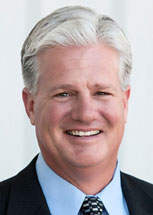
Ask Maddy about Andy Vidak
Scope: california
Hi! I can help you understand Andy Vidak's legislative record. What would you like to know?
Try one of these
i
Maddy answers using official bill text and legislative records. Always verify before sharing.
Sources cited inline