

In committee Jan 3, 2024
1 co-sponsor
Total votes
14,289
all sessions
Attendance
96%
411 missed
Near the chamber average
With party
99%
of cast votes
Near the chamber average
Bipartisan score
0%
crosses aisle rarely
Near the chamber average
Sponsored
499
bills & resolutions
Near the chamber average
Committees
9
assignments
499 bills and resolutions
Sponsored bills
Total
499
Primary
130
Co-sponsor
369
This page
499
matching current filters
Controlled substances.
Existing law makes it a crime to possess for sale or purchase for purpose of sale, transport, import, sell, furnish, administer, give away, manufacture, compound, convert, produce, derive, process, or prepare various controlled substances, including, among others, fentanyl, peyote, and various other opiates and narcotics. This bill, Alexandra's Law, would require the court to advise a person who is convicted of, or who pleads guilty or no contest to, the above crimes, as specified, of the danger of selling or administering illicit drugs and counterfeit pills and that, if a person dies as a result of that action, the defendant can be charged with homicide. The bill would require the court to read the advisory statement in a case in which the defendant exchanged a controlled substance containing fentanyl or its analogs for anything else of value, as specified. The bill would require the advisory statement to be included in a plea form, if used, and specified on the record. The bill would require that the fact the advisory was given be recorded in the abstract of conviction and would prohibit the advisement from being used as evidence in the prosecution of a minor in juvenile court.
died Nov 29, 2023
1 co-sponsor
Minor league baseball players.
Existing law provides that 8 hours of labor constitute a day's work unless it is otherwise expressly stipulated in a collective bargaining agreement, and requires that any work in excess of specified hours in one workday or one workweek be compensated at a rate higher than the regular rate of pay for the employee, as specified. Existing law authorizes, upon the proposal of an employer, employees of an employer to adopt a regularly scheduled alternative workweek that authorizes work by the affected employees for no longer than 10 hours per day within a 40-hour workweek without the payment to the affected employees of an overtime rate of compensation, as specified. Existing law prohibits an employer from employing an employee for a work period of more than 5 hours per day without providing the employee with a meal period, as specified, but, notwithstanding these provisions, existing law authorizes the Industrial Welfare Commission to adopt a working condition order permitting a meal period to commence after 6 hours of work if specified conditions are met. Under existing law, the Industrial Welfare Commission issues wage orders that regulates wages, hours, and working conditions in various occupations, including Wage Order No. 10-2001, which regulates the amusement and recreation industry. This bill would provide that these provisions do not apply to a person who is covered by a contract to play baseball at the minor league level with a labor organization that has at least 10 years of experience representing baseball players and who is compensated pursuant to the terms of a valid collective bargaining agreement that expressly provides for the wages, hours of work, working conditions of employees, payment for time worked during the off-season and spring training, and final and binding arbitration of disputes. The bill would require the Department of Industrial Relations to amend and republish Wage Order No. 10-2001 to provide that specified provisions of the wage order do not apply to a person subject to these provisions, as specified. Existing law requires an employer, semimonthly or at the time of payment of wages, to furnish an employee an accurate, itemized, written statement containing specified information regarding the amounts earned, hours worked, and the employee's identity, among other things, subject to certain variations. Existing law provides that an itemized wage statement furnished by an employer pursuant to these provisions is not required to show total hours worked by the employee if, among other things, the employee is exempt from the payment of minimum wage and overtime under specified law. This bill would provide that an itemized wage statement furnished by an employer pursuant to these provisions is not required to show total hours worked by an employee if the employee is exempt from the payment of minimum wage and overtime under the bill's provisions described above. Existing law, the Administrative Procedure Act, governs, among other things, the procedures for the adoption, amendment, or repeal of regulations by state agencies. Existing law also describes procedures for the promulgation of regulations by the Industrial Welfare Commission. This bill would exempt these provisions from the rulemaking procedures described above. Existing constitutional provisions require that a statute that limits the right of access to the meetings of public bodies or the writings of public officials and agencies be adopted with findings demonstrating the interest protected by the limitation and the need for protecting that interest. This bill would make legislative findings to that effect. This bill would declare that it is to take effect immediately as an urgency statute.
Signed into law Oct 13, 2023
1 co-sponsor
Teacher credentialing: computer science instruction: workgroup.
Existing law requires the Commission on Teacher Credentialing, among other duties, to establish standards for the issuance and renewal of credentials, certificates, and permits. Existing law requires the commission to issue a single subject teaching credential only in specified subjects and authorizes the commission to issue an authorization to teach a subject other than the one authorized by a single subject teaching credential if the holder of the credential meets certain requirements. Existing regulations of the commission authorize the holder of a single subject teaching credential who meets those requirements to add a supplementary authorization to teach specified subjects, including computer science. This bill would, upon appropriation by the Legislature for this purpose, require the commission, on or before July 1, 2024, to convene a workgroup on credentialing for instruction in computer science, as provided, to determine, among other things, which credentials should also authorize teaching computer science, as specified. The bill would require the commission, on or before July 1, 2025, to provide a report of the workgroup's findings and recommendations, as provided. The bill would repeal these provisions as of January 1, 2028.
Signed into law Oct 13, 2023
1 co-sponsor
Individuals with disabilities: The Dignity for All Act.
Existing law includes the terms "mentally retarded persons," "mentally retarded children," "retardation," and "handicap." This bill, The Dignity for All Act, would make nonsubstantive changes to those provisions to eliminate this obsolete terminology. The bill would repeal obsolete provisions of law.
Signed into law Oct 13, 2023
1 co-sponsor
Planning and zoning: housing development: higher education institutions and religious institutions.
The Planning and Zoning Law requires each county and city to adopt a comprehensive, long-term general plan for its physical development, and the development of certain lands outside its boundaries, that includes, among other mandatory elements, a housing element. That law allows a development proponent to submit an application for a development that is subject to a specified streamlined, ministerial approval process not subject to a conditional use permit, if the development satisfies certain objective planning standards. Existing law, the Zenovich-Moscone-Chacon Housing and Home Finance Act, establishes the California Tax Credit Allocation Committee within the Department of Housing and Community Development. Existing law requires the committee to allocate state low-income housing tax credits in conformity with state and federal law that establishes a maximum rent that may be charged to a tenant for a project unit constructed using low-income housing tax credits. This bill would require that a housing development project be a use by right upon the request of an applicant who submits an application for streamlined approval, on any land owned by an independent institution of higher education or religious institution on or before January 1, 2024, if the development satisfies specified criteria, including that the development is not adjoined to any site where more than one-third of the square footage on the site is dedicated to industrial use. The bill would define various terms for these purposes. Among other things, the bill would require that 100% of the units, exclusive of manager units, in a housing development project eligible for approval as a use by right under these provisions be affordable to lower income households, except that 20% of the units may be for moderate-income households, and 5% of the units may be for staff of the independent institution of higher education or the religious institution that owns the land, provided that the units affordable to lower income households are offered at affordable rent, as set in an amount consistent with the rent limits established by the California Tax Credit Allocation Committee, or affordable housing cost, as specified. The bill would authorize the development to include ancillary uses on the ground floor of the development, as specified. This bill would specify that a housing development project that is eligible for approval as a use by right under the bill is also eligible for a density bonus, incentives, or concessions, or waivers or reductions of development and parking standards, except as specified. The bill would require a development subject to these provisions to provide off-street parking of up to one space per unit, unless a state law or local ordinance provides for a lower standard of parking, in which case the law or ordinance applies. The bill would prohibit a local government from imposing any parking requirement on a development subject to these provisions if the development is located within one-half mile walking distance of public transit, either a high-quality transit corridor or a major transit stop, as those terms are defined, or it is within one block of a car share vehicle. This bill would require a local government that determines a proposed development is in conflict with any objective planning standards, as specified, to provide the developer with written documentation explaining those conflicts under a specified timeframe. The bill would provide that the development shall be deemed to satisfy the required objective planning standards if the local government fails to provide the requisite documentation explaining any conflicts. The bill would authorize a local government to conduct a design review, as described, only if the design review focuses on compliance with the requisite criteria of a streamlined, ministerial review process. The bill would prohibit a local government from using a design review, as specified, from inhibiting, chilling, or precluding a streamlined, ministerial approval. The bill would require a local government to issue a subsequent permit for developments approved under the provisions of this act. The bill would include findings that changes proposed by this bill address a matter of statewide concern rather than a municipal affair and, therefore, apply to all cities, including charter cities. The California Environmental Quality Act (CEQA) requires a lead agency, as defined, to prepare, or cause to be prepared, and certify the completion of, an environmental impact report on a project that it proposes to carry out or approve that may have a significant effect on the environment or to adopt a negative declaration if it finds that the project will not have that effect. CEQA does not apply to the ministerial approval of projects. This bill, by requiring approval of certain development projects as a use by right, would expand the exemption for ministerial approval of projects under CEQA. The bill would repeal its provisions as of January 1, 2036. By adding to the duties of local planning officials with respect to approving certain development projects, this bill would impose a state-mandated local program. The California Constitution requires the state to reimburse local agencies and school districts for certain costs mandated by the state. Statutory provisions establish procedures for making that reimbursement. This bill would provide that no reimbursement is required by this act for a specified reason.
Signed into law Oct 11, 2023
1 co-sponsor
Housing development.
Existing law, the Planning and Zoning Law, requires a city or county to adopt a general plan for land use development within its boundaries that includes, among other things, a housing element. The law requires the Department of Housing and Community Development to determine whether the housing element is in substantial compliance with specified provisions of that law. Existing law requires the department to designate jurisdictions as prohousing pursuant to emergency regulations adopted by the department, as prescribed. Existing law awards jurisdictions that are in substantial compliance with specified provisions and that are prohousing additional points or preference in the scoring of applications for specified state programs, including, among others, the Infill Incentive Grant Program of 2007. Existing law authorizes additional bonus points to be awarded to other state programs when already allowable under state law. Existing law establishes the Infill Infrastructure Grant Program of 2019, which requires the department, upon appropriation of funds by the Legislature, to establish and administer a grant program to allocate those funds to eligible applicants, as defined, to fund capital improvement projects that are an integral part of, or necessary to facilitate the development of, a qualifying infill project, qualifying infill area, or catalytic qualifying infill area pursuant to specified requirements. Existing law requires the department, in its review and ranking of applications for the award of capital improvement project grants, to rank affected qualifying infill areas based on specified priorities. This bill, with respect to the Infill Infrastructure Grant Program of 2019, would specify that only the qualifying infill area portion of that program must be awarded additional points or preference. This bill would add the qualifying infill area and catalytic qualifying infill area portions of the Infill Infrastructure Grant Program of 2019 as one of the specified state programs for which additional points or preference is awarded. This bill would also make technical changes to the provisions of the programs. This bill would incorporate additional changes to Section 65589.9 of the Government Code proposed by AB 529 to be operative only if this bill and AB 529 are enacted and this bill is enacted last. This bill would incorporate additional changes to Section 53559 of the Health and Safety Code proposed by AB 1764 to be operative only if this bill and AB 1764 are enacted and this bill is enacted last.
Signed into law Oct 11, 2023
0 co-sponsors
Bay Area Housing Finance Authority: housing revenue.
(1) Existing law, the San Francisco Bay Area Regional Housing Finance Act, establishes the Bay Area Housing Finance Agency to raise, administer, and allocate funding for affordable housing in the San Francisco Bay area, as defined, and provide technical assistance at a regional level for tenant protection, affordable housing preservation, and new affordable housing production. Existing law requires the Bay Area Housing Finance Authority and executive board of the Association of Bay Area Governments to form an advisory committee composed of 9 representatives with knowledge and experience in the areas of affordable housing finance and development, tenant protection, and housing preservation. This bill would require the authority and executive board to form an advisory committee composed of at least 9 and no more than 11 representatives with knowledge and expertise in the areas of affordable housing finance, construction workforce, and development, tenant protection, and housing preservation. The act provides the authority with various powers, including the power to place a measure on the ballot to raise revenue and allocate funds throughout the San Francisco Bay area, apply for and receive grants or loans from public and private entities, incur and issue bonds and other indebtedness, and otherwise incur liabilities or obligations. The act authorizes the authority to allocate and deploy financing to cities, counties, other public agencies within the San Francisco Bay area and private affordable housing developers to finance affordable housing development, as specified. This bill would specify that the authority is limited to placing only one measure on the ballot per election. The bill would also authorize the authority to deploy financing to nonprofit corporations to finance affordable housing development, as specified. Existing law authorizes a city or county, or an agency created pursuant to a joint powers agreement, to issue revenue bonds to defray the costs of acquiring home mortgages or making loans to lending institutions in order to enable them to make home mortgages, and the costs of studies and surveys, insurance premiums, underwriting fees, legal, accounting and marketing services incurred in connection with the issuance and sale of bonds, as specified. This bill would authorize the authority to issue mortgage revenue bonds, pursuant to provisions described above; acquire, hold, develop, operate, and dispose of real property; and create one or more California limited liability companies of which the authority is the sole member. (2) The California Environmental Quality Act (CEQA) requires a lead agency, as defined, to prepare, or cause to be prepared, and certify the completion of an environmental impact report on a project that it proposes to carry out or approve that may have a significant effect on the environment or to adopt a negative declaration if it finds that the project will not have that effect. CEQA also requires a lead agency to prepare a mitigated negative declaration for a project that may have a significant effect on the environment if revisions in the project would avoid or mitigate that effect and there is no substantial evidence that the project, as revised, would have a significant effect on the environment. This bill would exempt from CEQA any actions taken by the authority to raise, administer, or allocate funding for tenant protection, affordable housing preservation, or new affordable housing production or to provide technical assistance consistent with the authority's purpose. (3) Existing law authorizes the executive board of the authority to impose a commercial linkage fee, as defined, in an amount not to exceed ten dollars ($10) per square foot, within the San Francisco Bay area, as specified. Existing law requires the expenditures of proceeds from a commercial linkage fee be limited to affordable housing production, preservation, and tenant protection programs. This bill would authorize the expenditures of proceeds from a commercial linkage fee to include the authority's related administrative costs. (4) The act defines "authority revenues" to include, without limitation, revenues generated by any special tax, fee, or charge imposed by the authority, other than ad valorem property taxes. Existing law, the Revenue Bond Law of 1941, requires a local agency to annually publish a summary statement showing, among other things, the amount of gross revenues from revenue bonds. This bill would revise and recast the definition of "authority revenue" to also include loan repayments, investment income, or income derived from the ownership or operation of real property. The bill would provide for prioritization of spending of authority revenues. The bill would require the authority to publish the above-described summary statement not more than 9 months after the close of each fiscal year. (5) Existing law requires the authority to distribute regional housing revenue, as defined, in the form of a grant, loan, or other financing tool in a manner that achieves certain minimum shares over 5-year periods. In this regard, existing law requires 5% of those regional housing revenues for tenant protection programs for low- and moderate-income households, which includes, among other things, preeviction and eviction legal services and providing emergency rental assistance for lower income households. This bill would include homelessness prevention services, as specified, as an eligible expense under tenant protection programs for low- and moderate-income households. (6) Existing law requires the authority to distribute funds received through the authorized funding measures according to specified provisions, which in part require each county to adopt a county expenditure plan applicable to county housing revenue. Existing law requires, in order for the expenditure plan to be deemed complete, the expenditure plan to specify, among other things, a description of any specific project or program proposed to receive funding. This bill would additionally require the plan to demonstrate that the county has consulted with each city in the county, excluding cities that receive a direct allocation. (7) Existing law requires, if the authority proposes a measure that will generate revenues and that requires voter approval, the board of supervisors of the relevant county or counties to call a special election on the measure. Existing law requires each county included in the measure to use the exact ballot question, impartial analysis, and summary of the expenditure plan provided by the authority. Existing law requires these materials to include, among other things, an estimate of the number of affordable housing units to be built or preserved by household income category served, and a description of any specific projects planned to be funded. This bill would instead require each county included in the measure to use the election materials provided by the authority, including the exact ballot question, impartial analysis, and full text of the ballot measure for inclusion in the voter information pamphlet. The bill would make conforming changes. By changing the duties of local officials with respect to elections procedures for revenue measures on behalf of the authority, this bill would impose a state-mandated local program. (8) The California Constitution requires the state to reimburse local agencies and school districts for certain costs mandated by the state. Statutory provisions establish procedures for making that reimbursement. This bill would provide that, if the Commission on State Mandates determines that the bill contains costs mandated by the state, reimbursement for those costs shall be made pursuant to the statutory provisions noted above.
Signed into law Oct 11, 2023
1 co-sponsor
Criminal procedure: factual innocence.
Existing law authorizes a person who is unlawfully imprisoned under specified circumstances, including, without limitation, conviction on the basis of false evidence or the existence of new exculpatory evidence, to prosecute a writ of habeas corpus ordering their release. Existing law also authorizes such a person who is no longer in custody to prosecute a motion to vacate a judgment. Under existing law, if the district attorney stipulates to or does not contest the factual allegations underlying the application for the writ or motion, the district attorney is required to provide notice to the Attorney General. This bill would require that notice to be given no less than 7 days before entering a stipulation. Under existing law, if a writ of habeas corpus or motion to vacate a judgment is granted for specified reasons, the petitioner may move for a finding of factual innocence by a preponderance of the evidence for the purpose of obtaining compensation for the pecuniary injury sustained through the erroneous conviction and incarceration. This bill would authorize a person, if the court has granted specified writs of habeas corpus and the charges were subsequently dismissed, or the person was acquitted of the charges on a retrial, to move the court for a finding that they are entitled to compensation. The bill would require the court to grant that motion unless the district attorney can establish by clear and convincing evidence that the person committed the acts constituting the offense and is therefore not entitled to compensation, as specified. Existing law requires the California Victim Compensation Board to recommend to the Legislature that an appropriation be made and a claim paid, as specified, to a person who has secured a declaration of factual innocence from the court and has applied to the board for compensation, as specified. This bill would instead require the board to approve payment to the person if sufficient funds are available and funds are appropriated by the Legislature for that purpose. Existing law requires the board to calculate the compensation for injury sustained because of erroneous conviction and imprisonment based on factual innocence and approve payment to a claimant, as specified, within 30 days of the presentation of the claim to the board, if sufficient funds are available, upon appropriation by the Legislature. This bill would instead require the calculation within 90 days of the filing of the claim. The bill would authorize the board, prior to approving payment, to request from both parties additional documents or arguments as needed to calculate compensation. The bill would make other conforming changes.
Signed into law Oct 10, 2023
1 co-sponsor
Dependent children.
Existing law establishes the jurisdiction of the juvenile court, which may adjudge a child to be a dependent of the court under certain circumstances, including when the child suffered, or there is a substantial risk that the child will suffer, serious physical harm or illness as a result of the failure or inability of their parent or guardian to adequately supervise or protect the child. Existing law requires the court to make a determination, throughout various hearings in the juvenile dependency process, including at the 6-month review hearing, the 12-month permanency hearing, and subsequent permanency review hearings, as to whether the return of the child to their parent or legal guardian would create a substantial risk of detriment to the safety, protection, or physical or emotional well-being of the child. Under existing law, the failure of the parent or legal guardian to participate regularly and make substantive progress in court-ordered treatment programs is considered prima facie evidence at these hearings that return would be detrimental. This bill would delete these provisions requiring the failure of the parent or legal guardian to participate regularly and make substantive progress in court-ordered treatment programs to be considered prima facie evidence at specified review hearings. This bill would incorporate additional changes to Section 366.22 of the Welfare and Institutions Code proposed by AB 937 to be operative only if this bill and AB 937 are enacted and this bill is enacted last.
Signed into law Oct 10, 2023
1 co-sponsor
Ask Maddy
·
AI policy assistant
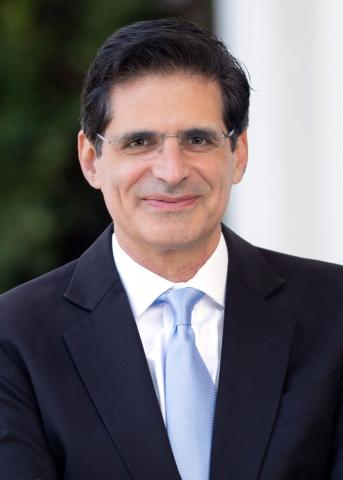
Ask Maddy about Josh Becker
Scope: california
Hi! I can help you understand Josh Becker's legislative record. What would you like to know?
Try one of these
i
Maddy answers using official bill text and legislative records. Always verify before sharing.
Sources cited inline