

Passed May 18, 2015
1 co-sponsor
Total votes
34,484
all sessions
Attendance
99%
121 missed
Higher than 94% of chamber peers
With party
99%
of cast votes
Near the chamber average
Bipartisan score
0%
crosses aisle rarely
Near the chamber average
Sponsored
1,209
bills & resolutions
Near the chamber average
Committees
0
assignments
1,209 bills and resolutions
Sponsored bills
Total
1,209
Primary
295
Co-sponsor
914
This page
1,209
matching current filters
Relative to California Agriculture Day.
This measure would recognize and honor the men and women of California agriculture for their dedication and productivity by observing March 18, 2015, as National Agriculture Day, and designating March 18, 2015, as California Agriculture Day.
Signed into law May 7, 2015
1 co-sponsor
Relative to California Library Week.
This measure would declare April 12, 2015, to April 18, 2015, inclusive, as California Library Week.
Signed into law Apr 21, 2015
1 co-sponsor
Passed Apr 20, 2015
1 co-sponsor
Passed Mar 24, 2015
1 co-sponsor
Political Reform Act of 1974: campaign statements.
Existing law, the Political Reform Act of 1974, provides for the comprehensive regulation of campaign financing, including requiring the reporting of campaign contributions and expenditures and imposing other reporting and recordkeeping requirements on campaign committees. The act requires elected officers, candidates, committees, and slate mailer organizations to file various reports, including semiannual reports, preelection statements, and supplemental preelection statements. The act requires the Secretary of State, in consultation with the Fair Political Practices Commission, to develop online and electronic filing processes for specified entities. This bill would require elected state officers, candidates for elective state office and their controlled committees, committees primarily formed to support or oppose a candidate for elective state office or a statewide ballot measure, and state general purpose committees to file quarterly statements each year instead of semiannual statements, as specified. The bill would recast or repeal other specified reporting requirements, including supplemental preelection statements, supplemental independent expenditure reports, and odd-numbered year reports. The act defines "late contributions" and "late independent expenditures" for purposes of the act to include certain contributions and independent expenditures, respectively, that are made within 90 days before the date of the election. This bill would revise the definitions to specify that those terms also include contributions and independent expenditures that are made on the date of the election. The bill would also make conforming changes. This bill would require the Secretary of State, in consultation with the Fair Political Practices Commission, to develop a statewide Internet-based system for the electronic filing and public display of all records filed by or for specified entities. This bill would make all other changes to existing law effected by the bill operative on January 1 of the year following the year in which this system becomes operative, as certified by the Secretary of State. A violation of the act's provisions is punishable as a misdemeanor. By expanding the scope of a crime, this bill would impose a state-mandated local program. The California Constitution requires the state to reimburse local agencies and school districts for certain costs mandated by the state. Statutory provisions establish procedures for making that reimbursement. This bill would provide that no reimbursement is required by this act for a specified reason. The Political Reform Act of 1974, an initiative measure, provides that the Legislature may amend the act to further the act's purposes upon a 23 vote of each house and compliance with specified procedural requirements. This bill would declare that it furthers the purposes of the act.
Vetoed Nov 30, 2014
1 co-sponsor
Local government: special tax, assessment, or property-related fee.
Existing law, until January 1, 2013, authorized the City/County Association of Governments of San Mateo County to impose a fee of up to $4 on motor vehicles registered within San Mateo County for a program for the management of traffic congestion and stormwater pollution within that county. This bill would authorize the City/County Association of Governments of San Mateo County, in accordance with specified provisions of the California Constitution, to impose a parcel tax or a property-related fee for the purpose of implementing stormwater management programs, as prescribed. This bill would make legislative findings and declarations as to the necessity of a special statute. This bill would declare that it is to take effect immediately as an urgency statute.
died Nov 30, 2014
1 co-sponsor
Medi-Cal: reimbursement: provider payments.
Existing law establishes the Medi-Cal program, administered by the State Department of Health Care Services, under which basic health care services are provided to qualified low-income persons. The Medi-Cal program is, in part, governed and funded by federal Medicaid Program provisions. Existing law requires, except as otherwise provided, Medi-Cal provider payments to be reduced by 1% or 5%, and provider payments for specified non-Medi-Cal programs to be reduced by 1%, for dates of service on and after March 1, 2009, and until June 1, 2011. Existing law requires, except as otherwise provided, Medi-Cal provider payments and payments for specified non-Medi-Cal programs to be reduced by 10% for dates of service on and after June 1, 2011. This bill would, instead, prohibit the application of those reductions for payments to providers for dates of service on or after June 1, 2011. The bill would also require payments for managed care health plans for dates of service following the effective date of the bill to be determined without application of some of those reductions. The bill would require the Director of Health Care Services to implement this provision to the maximum extent permitted by federal law and for the maximum time period for which the director obtains federal approval for federal financial participation for those payments. This bill would declare that it is to take effect immediately as an urgency statute.
Failed Nov 30, 2014
1 co-sponsor
Ignition interlock devices: repeat driving under the influence offenders.
Existing law requires a person's privilege to operate a motor vehicle to be suspended or revoked for a specified period of time if the person has been convicted of violating specified provisions prohibiting driving a motor vehicle while under the influence of an alcoholic beverage or drug or the combined influence of an alcoholic beverage and drug, or with 0.08% or more, by weight, of alcohol in his or her blood or while addicted to the use of any drug, with or without bodily injury to another. Existing law also authorizes a person whose privilege is suspended or revoked in that manner to receive a restricted driver's license if specified requirements are met, including, in some instances, the installation of an ignition interlock device on the person's vehicle. This bill would, commencing July 1, 2015, establish a statutory scheme under which, as a condition of being issued a restricted driver's license, being reissued a driver's license, or having the privilege to operate a motor vehicle reinstated for a 2nd or subsequent conviction for an alcohol-related violation of the above offenses, a person would be required to install for a specified period of time an ignition interlock device on all vehicles he or she owns or operates, except as provided. The amount of time the ignition interlock device would be required to be installed would be based upon the number of convictions, as prescribed. The bill would require the department, with regard to the installation of an ignition interlock device described above, to notify the person of the ignition interlock device installation requirements established under the bill, accept notification from the installer of the ignition interlock device of attempts to remove, bypass, or tamper with the ignition interlock device or if the person fails 3 or more times to comply with the maintenance requirements, monitor the installation and maintenance of the ignition interlock device, and keep specified records. The bill would also require that manufacturers and manufacturer's agents, certified by the department to provide ignition interlock devices, adopt a fee schedule for payment of the costs of the ignition interlock device based on the offender's ability to pay, and would require the court to adopt a similar fee schedule with regard to the fees for the county alcohol and drug problem assessment program. The bill would repeal these provisions on January 1, 2016. Because it is a crime to operate a vehicle that is not equipped with a functioning, certified ignition interlock device by a person whose driving privilege is so restricted, the bill would impose a state-mandated local program by expanding the scope of that crime. The California Constitution requires the state to reimburse local agencies and school districts for certain costs mandated by the state. Statutory provisions establish procedures for making that reimbursement. This bill would provide that no reimbursement is required by this act for a specified reason.
Failed Nov 30, 2014
0 co-sponsors
Nonvehicular air pollution control: penalties.
Existing law, commencing January 1, 2014, prohibits a person from discharging from nonvehicular sources air contaminants or other materials that cause injury, detriment, nuisance, or annoyance to the public, or that endanger the comfort, repose, health, or safety of the public, or that cause injury or damage to business or property, as specified. Under existing law, a person who violates this provision is guilty of a misdemeanor, as specified, or is liable for a civil penalty of not more than $10,000, unless that person alleges by affirmative defense and establishes that the act was not the result of intentional or negligent conduct, in which case that person is liable for a civil penalty of not more than $1,000. A person who violates this provision and who acts negligently, knowingly, willfully and intentionally, or with reckless disregard, is liable for a civil penalty in a greater amount, as specified. This bill would make a person who violates this provision liable for a civil penalty of not more than $100,000, as specified, if the violation results from a discharge from a stationary source required by federal law to be included in an operating permit program established pursuant to Title V of the federal Clean Air Act, the discharge results in a severe disruption to the community, the discharge contains or includes one or more toxic air contaminants, as specified, and 100 or more people are exposed to the discharge. The bill would prohibit this provision from applying if the violation is caused by unforeseen and unforeseeable criminal acts, acts of war, acts of terrorism, or civil unrest. The bill would require moneys collected pursuant to this provision to be expended in support of air quality programs. The bill would require that the recovery of a civil penalty under these provisions precludes prosecution of a misdemeanor for the same offense.
Failed Nov 30, 2014
1 co-sponsor
Ask Maddy
·
AI policy assistant
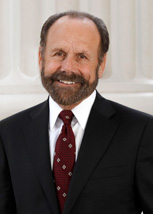
Ask Maddy about Jerry Hill
Scope: california
Hi! I can help you understand Jerry Hill's legislative record. What would you like to know?
Try one of these
i
Maddy answers using official bill text and legislative records. Always verify before sharing.
Sources cited inline