

Passed Mar 19, 2018
1 co-sponsor
Total votes
34,484
all sessions
Attendance
99%
121 missed
Higher than 94% of chamber peers
With party
99%
of cast votes
Near the chamber average
Bipartisan score
0%
crosses aisle rarely
Near the chamber average
Sponsored
1,209
bills & resolutions
Near the chamber average
Committees
0
assignments
1,209 bills and resolutions
Sponsored bills
Total
1,209
Primary
295
Co-sponsor
914
This page
1,209
matching current filters
Passed Mar 19, 2018
1 co-sponsor
Passed Mar 19, 2018
0 co-sponsors
Public lands: Martins Beach: property acquisition.
(1) Existing law establishes the State Lands Commission in the Natural Resources Agency, and vests with the commission control over specified state lands, including coastal lands. Existing law requires the commission to consult, and enter into any necessary negotiations, with the owners of a specified property known as the Martins Beach property, as described, in the unincorporated area of the County of San Mateo, to acquire a right-of-way or easement for the creation of a public access route to and along the shoreline, including the sandy beach. Existing law authorizes the commission, if it is unable to reach an agreement to acquire the right-of-way or easement for the creation of that public access route or the owners do not voluntarily provide access by January 1, 2016, to acquire a right-of-way or easement for the creation of that public access route at Martins Beach, in accordance with specified procedures. Existing law, the Kapiloff Land Bank Act, creates the Land Bank Fund and continuously appropriates moneys in the fund, subject to a statutory trust, to the commission, acting as the Land Bank Trustee, to acquire real property or any interest in real property for the purposes of public trust title settlements. Existing law requires that moneys in the fund be available for expenditure by the trustee to purchase outstanding interests in land where the public use and ownership of the land is necessary or extremely beneficial for furtherance of public trust purposes. Existing law authorizes acquisitions by negotiated agreement with the owner of the outstanding interests and specifies that the act is not intended to confer any authority to exercise the power of eminent domain for its purposes. This bill would create the Martins Beach Subaccount in the fund, and would require that moneys received from public and private sources, including nonprofit sources, to be used for the creation of that public access route be deposited into that subaccount and continuously appropriated to the commission for expenditure to acquire that right-of-way or easement, as prescribed, and be expended in accordance with a specified priority. The bill would also authorize the commission to transfer moneys from the fund to the subaccount, in an amount not to exceed $1,000,000, for expenditure for that public access route, and would permit the commission to acquire the right-of-way or easement necessary for the creation of that public access route, as prescribed. The bill would authorize the commission to deposit into the subaccount and expend specified moneys received from the County of San Mateo for purposes related to the creation of that public access route. (2) This bill would make legislative findings and declarations as to the necessity of a special statute for Martins Beach. (3) This bill would declare that it is to take effect immediately as an urgency statute.
Vetoed Mar 3, 2018
0 co-sponsors
Firearms dealers: storage and security.
Existing law generally requires all inventory firearms of a firearms dealer to be stored in the licensed location when the firearms dealer is not open for business. Existing law requires each firearm to be secured by (1) storing the firearm in a secure facility that is a part of, or that constitutes, the firearms dealer's business premises, (2) securing the firearm with a steel rod or cable with specified features, or (3) storing the firearm in a locked fireproof safe or vault in the business premises. A firearms dealer's license is subject to forfeiture for a breach of any of those provisions. This bill would instead, commencing July 1, 2018, require each of the firearms to be secured by storing the firearm in a secure facility, as described above. The bill would require the firearms to also be secured using one of several methods, including the method involving a steel rod or cable or the method involving a safe or vault, as described above. The bill would require, if the rod or cable method is used and if the licensed location is at street level, that the licensee install, or cause to be installed, concrete or hardened steel bollards meeting certain specifications, or other specified barriers, to protect the location's front entrance, any floor-to-ceiling windows, and any other doors, from breach by a vehicle, as specified. If a safe or vault method is used, the bill would require the safe to meet specified safety standards established by the Attorney General relating to risk reduction of firearm-related injuries to children 17 years of age and younger. The bill would also authorize the dealer to secure the firearms by storing them in a shatter-proof or other specified display case, or in a windowless room without a door accessing the outside of the building, or by use of a steel roll-down door or security gate, or in a locked steel gun rack. The bill would also require the dealer to install steel roll-down doors on perimeter doors and floor-to-ceiling windows if the other securing methods described above are not used.
Vetoed Mar 3, 2018
0 co-sponsors
Passed Feb 12, 2018
1 co-sponsor
Passed Feb 5, 2018
1 co-sponsor
Legislature: Legislative Employee Whistleblower Protection Act.
Existing law generally protects employees who disclose illegal or improper workplace activities by prohibiting interference with, and retaliation for, making such disclosures. Existing law provides procedures for a person to file a complaint alleging violations of legislative ethics. Existing law also authorizes each house of the Legislature to adopt rules for its proceedings and to select committees necessary for the conduct of its business. This bill would impose criminal and civil liability on a Member of the Legislature or legislative employee, as defined, who interferes with, or retaliates against, a legislative employee's exercise of the right to make a protected disclosure, which is defined as a good faith allegation made by a legislative employee to specified entities that a Member of the Legislature or a legislative employee has engaged in, or will engage in, activity that may constitute a violation of law, including sexual harassment, or a violation of a legislative standard of conduct. The bill would also impose civil liability on an entity that interferes with, or retaliates against, a legislative employee's exercise of the right to make a protected disclosure, as specified. By creating new crimes, the bill would impose a state-mandated local program. The California Constitution requires the state to reimburse local agencies and school districts for certain costs mandated by the state. Statutory provisions establish procedures for making that reimbursement. This bill would provide that no reimbursement is required by this act for a specified reason. This bill would declare that it is to take effect immediately as an urgency statute.
Signed into law Feb 5, 2018
1 co-sponsor
Oil spill response and contingency planning.
The Lempert-Keene-Seastrand Oil Spill Prevention and Response Act generally requires the administrator for oil spill response, acting at the direction of the Governor, to implement activities relating to oil spill response, including emergency drills and preparedness, and oil spill containment and cleanup, and to represent the state in any coordinated response efforts with the federal government. Existing law requires the Governor to establish a California oil spill contingency plan that provides for an integrated and effective state procedure to combat the results of major oil spills within the state and that specifies state agencies to implement the plan. Existing law requires the administrator to submit to the Governor and the Legislature an amended California oil spill contingency plan that addresses marine oil spills, by January 1, 1993, and to submit revised plans every 3 years thereafter. Beginning January 1, 2017, and every 3 years thereafter, the administrator is required to submit an amended California oil spill contingency plan that addresses both marine and inland oil spills. Existing law requires the administrator to adopt and implement regulations governing the adequacy of oil spill contingency plans to be prepared and implemented and requires the regulations to provide for the best achievable protection of coastal and marine waters. Existing law requires an owner or operator of a facility, small marine fueling facility, or mobile transfer unit, or an owner or operator of a tank vessel, nontank vessel, or vessel carrying oil as secondary cargo, while operating in the waters of the state or where a spill could impact waters of the state, to have an oil spill contingency plan that complies with the rules, regulations, and policies established by the administrator, that meets specified minimum requirements, and that has been submitted to, and approved by, the administrator. This bill would define "nonfloating oil" for purposes of the act. The bill would require the administrator, by January 1, 2020, to conduct and complete an independent scientific study on the best achievable protection of state waters from spills of nonfloating or potentially nonfloating oils, including criteria for oil spill contingency plans and oil spill response organizations (OSROs) responsible for remediating those spills. The bill would require that the scientific study evaluate the hazards and risks and potential hazards and risks that nonfloating or potentially nonfloating oils pose to natural resources and public, occupational, and environmental health and safety. The bill would require the administrator to post the results and recommendations of the completed scientific study on an Internet Web site maintained by the administrator. The bill would require the administrator, by January 1, 2019, to identify those oils transported into or through the state that place waters of the state at risk from an oil spill that are composed in whole or in part of nonfloating or potentially nonfloating oil and, through a public process, to establish criteria to identify specific characteristics of nonfloating and potentially nonfloating oil. The bill would require the administrator to periodically update and publicly release this list as the sources and types of nonfloating or potentially nonfloating oil change. The bill would, if nonfloating or potentially nonfloating oil is present, require that the oil spill contingency plan that is filed with and approved by the administrator identifies one OSRO capable of oil spill response activities related to that nonfloating or potentially nonfloating oil. The bill would additionally require the oil spill contingency plan to describe spill location-specific procedures, techniques, and demonstrated technologies effective for responding to a spill of the nonfloating or potentially nonfloating oil. The bill would require that the 3-year update to the California oil spill contingency plan that addresses marine and inland oil spills that is to be revised and submitted to the Governor and the Legislature by January 1, 2020, and every 3 years thereafter, include consideration of nonfloating or potentially nonfloating oils. Existing law authorizes an OSRO to apply to the administrator for a rating of that OSRO's response capabilities. Upon receiving a completed application for rating, the administrator is required to review the application and rate the OSRO based on the OSRO's satisfactory compliance with criteria established by the administrator, including specified elements. This bill would require that those elements include the type of oil, including nonfloating or potentially nonfloating oil, the OSRO is capable of recovering and containing. The bill would require any OSRO seeking a nonfloating or potentially nonfloating oil response capability rating to explain, in detail, the tools, technologies, and techniques it will deploy, including how these tools, technologies, and techniques will overcome identified challenges in remediating spills of nonfloating or potentially nonfloating oils, in order to meet the criteria developed for remediating a nonfloating or potentially nonfloating oil spill necessary to protect state waters. The Lempert-Keene-Seastrand Oil Spill Prevention and Response Act prohibits a person from operating a marine facility, as defined, unless the owner or operator of the marine facility has obtained a certificate of financial responsibility. To receive a certificate of financial responsibility from the administrator for oil spill response, the act requires the owner or operator of a marine facility to make a specified showing of financial resources to the satisfaction of the administrator. The act authorizes the administrator to issue a certificate of financial responsibility on a lesser showing of financial resources for a period of not longer than 3 years if the administrator makes specified findings. This bill would require that the administrator, when determining whether to issue a certificate of financial responsibility on a lesser showing of financial resources, to consider the particular risks posed by the type of oil proposed to be carried and to differentiate the risk based upon whether the oil is floating oil or nonfloating or potentially nonfloating oil.
In committee Feb 1, 2018
1 co-sponsor
Driving under the influence: alcohol and marijuana.
Existing law makes it a crime for a person who has 0.08% or more, by weight, of alcohol in his or her blood to drive a vehicle. Existing law establishes a rebuttable presumption that the person had 0.08% or more, by weight, of alcohol in his or her blood at the time of driving the vehicle if the person had 0.08% or more, by weight, of alcohol in his or her blood at the time of the performance of a chemical test within 3 hours after the driving. This bill, until January 1, 2021, would make it a crime for a person who has between 0.04% and 0.07%, by weight, of alcohol in his or her blood and whose blood contains any controlled substance or 5 ng/ml or more of delta-9-tetrahydrocannabinol to drive a vehicle. The bill would require a person to fail field sobriety tests to establish probable cause for a chemical test to test the person's blood. The bill would make a first violation punishable as an infraction and would make subsequent violations punishable as a misdemeanor. By creating a new crime, this bill would impose a state-mandated local program. The California Constitution requires the state to reimburse local agencies and school districts for certain costs mandated by the state. Statutory provisions establish procedures for making that reimbursement. This bill would provide that no reimbursement is required by this act for a specified reason.
In committee Feb 1, 2018
0 co-sponsors
Ask Maddy
·
AI policy assistant
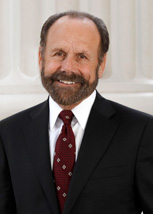
Ask Maddy about Jerry Hill
Scope: california
Hi! I can help you understand Jerry Hill's legislative record. What would you like to know?
Try one of these
i
Maddy answers using official bill text and legislative records. Always verify before sharing.
Sources cited inline