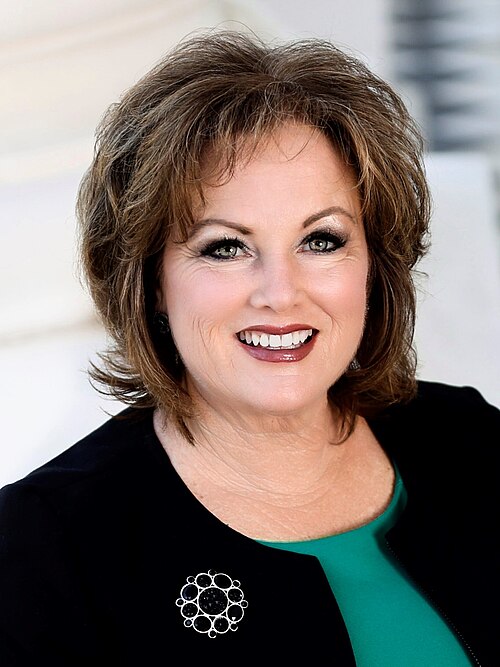
Photo of Shannon Grove
R California Senate · District 12

Sen. Shannon Grove

Compare
Total votes
28,348
all sessions
Attendance
91%
2,258 missed
Near the chamber average
With party
97%
of cast votes
Near the chamber average
Bipartisan score
2%
crosses aisle rarely
Near the chamber average
Sponsored
1,126
bills & resolutions
Near the chamber average
Committees
9
assignments
1,126 bills and resolutions

Sponsored bills

Total
1,126
Primary
249
Co-sponsor
877
This page
1,126
matching current filters
Primary SB 1339
In committee · California Senate · Lead sponsor
Diversion.

Existing law authorizes diversion, defined as the postponement of prosecution of an offense filed as a misdemeanor either temporarily or permanently at any point in the judicial process from the point at which the accused is charged until adjudication, except as specified. Under existing law, if a divertee has performed satisfactorily during the period of diversion, the criminal charges are required to be dismissed at the end of the period of diversion. This bill would state the intent of the Legislature to enact legislation to strengthen diversion statutes to ensure they operate in a manner that protects the public, supports victims, and maintains accountability for individuals who engage in criminal conduct.

In committee Mar 4, 2026 0 co-sponsors
Co-sponsor SB 1402
In committee · California Senate · Co-sponsor
Property taxation: imposition and assessment: appeals.

(1) Existing property tax law, except as provided, establishes a rebuttable presumption regarding the burden of proof in favor of a taxpayer or assessee who has supplied the required information to the assessor in an administrative hearing involving, among other things, the imposition of a tax on, or an assessment of, an owner-occupied single-family dwelling, as defined. This bill would, instead, establish a rebuttable presumption, as described above, in an administrative hearing involving, among other things, the imposition of a tax on, or assessment of, residential real property. The bill would define residential real property to mean real property improved with one or more units used or intended for human habitation, including single-family residences, condominiums, cooperative units, duplexes, and multifamily residential property with fewer than 4 units, and any land and appurtenant improvements thereon. (2) Existing property tax law prohibits a reduction in an assessment on the local roll from being made unless the party affected or the party's agent makes and files with the county board a verified, written application showing the facts claimed to require the reduction and the applicant's opinion of the full value of the property. This bill would prohibit an assessor, tax collector, or auditor from charging or collecting a fee for that application for homes valued less than $2,500,000. (3) Existing property tax law, subject to certain exceptions, makes the applicant's opinion of value, as reflected on an application for reduction in assessment of property, the value upon which taxes are to be levied for the tax year or tax years covered by the application if the county board fails to hear evidence and fails to make a final determination on the application within 2 years of the timely filing of the application. This bill would reduce that time period to hear evidence and to make a final determination to within 6 months of the timely filing of the application. The bill would also make conforming changes. Existing property tax law prohibits a reduction in assessment reflecting the applicant's opinion of value from being made until 2 years after the close of the filing period during which the timely application was filed. Existing property law, notwithstanding the 2-year time period to hear evidence and make a final determination described above, or any other law, retroactively extends the 2-year deadline by which a county board is required to render a final determination on a qualified application, as defined, until December 31, 2021, as provided. This bill would remove those provisions. (4) By increasing the duties of local officials, this bill would impose a state-mandated local program. (5) This bill would include findings that changes proposed by this bill address a matter of statewide concern and, therefore, apply to all counties, including charter counties. (6) The California Constitution requires the state to reimburse local agencies and school districts for certain costs mandated by the state. Statutory provisions establish procedures for making that reimbursement. This bill would provide that no reimbursement is required by this act for a specified reason.


In committee Mar 4, 2026 1 co-sponsor
Primary SB 1336
In committee · California Senate · Lead sponsor
Gambling licenses.

Existing law, the Gambling Control Act, provides for the licensure and regulation of various legalized gambling activities and establishments by the California Gambling Control Commission and the investigation and enforcement of those activities and establishments by the Department of Justice. Existing law requires a person who, either as owner, lessee, or employee, deals, operates, carries on, conducts, maintains, or exposes for play a controlled game, or who receives, directly or indirectly, any compensation or reward, or any percentage or share of the money or property played, for keeping, running, or carrying on a controlled game to apply for and obtain from the commission, a valid state gambling license, key employee license, or work permit. This bill would make technical, nonsubstantive changes to those license and work permit provisions.

In committee Mar 4, 2026 0 co-sponsors
Co-sponsor SCR 115
Signed into law · California Senate · Co-sponsor
Relative to Wear Red Day.

Maddy summaryThis resolution designates February 6, 2026, as "Wear Red Day" in California to raise public awareness about heart health, aligning with the national Heart Disease Awareness initiative. It does not create new laws or requirements but formally recognizes the day for voluntary public observance by California residents. The measure is ceremonial and procedural, solely intended to highlight heart health awareness through state-level acknowledgment.

Signed into law Mar 4, 2026 1 co-sponsor
Co-sponsor AB 2070
In committee · California Assembly · Co-sponsor
Employees: meal periods: construction industry.

Existing law generally prohibits an employer from employing an employee for a work period of more than 5 hours per day without providing the employee with a meal period of not less than 30 minutes, except as specified. Existing law also prohibits an employer from employing an employee for a work period of more than 10 hours per day without providing the employee with a 2nd meal period, as prescribed. Existing law creates exceptions from these work limits for employees in specified occupations, including those in a construction occupation, as defined, covered by a valid collective bargaining agreement expressly providing for wages, hours of work, and working conditions. Existing law also authorizes the Industrial Welfare Commission to adopt a working condition order permitting a meal period to commence after 6 hours of work if it determines that the order is consistent with the health and welfare of the affected workers. Existing law charges the Labor Commissioner with enforcement of these provisions. This bill would create an exception from the above-described work period limits for an employee in a construction occupation while the employee is on the jobsite, as specified.

In committee Mar 2, 2026 1 co-sponsor
Co-sponsor ACR 121
Signed into law · California Assembly · Co-sponsor
Relative to National Mentoring Month.

This measure would proclaim the month of January 2026 as National Mentoring Month, and would proudly recognize Big Brothers Big Sisters of Central California for its unwavering commitment to the children and families of our region and its enduring impact on future generations.

Signed into law Feb 25, 2026 1 co-sponsor
Co-sponsor AB 1745
In committee · California Assembly · Co-sponsor
Motor Vehicle Fuel Tax Law: suspension of tax.

Existing law, the Motor Vehicle Fuel Tax Law, imposes a tax upon each gallon of motor vehicle fuel removed from a refinery or terminal rack in this state, entered into this state, or sold in this state, at a specified rate per gallon. Existing unfair competition laws establish a statutory cause of action for unfair competition, including any unlawful, unfair, or fraudulent business act or practice and unfair, deceptive, untrue, or misleading advertising and acts prohibited by false advertisement laws. This bill would suspend the imposition of the tax on motor vehicle fuels for one year. The bill would require that all savings realized based on the suspension of the motor vehicle fuels tax by a person other than an end consumer, as defined, be passed on to the end consumer, and would make the violation of this requirement an unfair business practice, in violation of unfair competition laws, as provided. The bill would require a seller of motor vehicle fuels to provide a receipt to a purchaser that indicates the amount of tax that would have otherwise applied to the transaction. This bill would also direct the Controller to transfer a specified amount from the General Fund to the Motor Vehicle Fuel Account in the Transportation Tax Fund. By transferring General Fund moneys to a continuously appropriated account, this bill would make an appropriation. This bill would declare that it is to take effect immediately as an urgency statute.

In committee Feb 23, 2026 1 co-sponsor
Co-sponsor AB 1835
In committee · California Assembly · Co-sponsor
State of emergency: Governor's powers and termination.

Existing law, the California Emergency Services Act (CESA) , among other things, authorizes the Governor to proclaim a state of emergency in an area affected by or likely to be affected thereby, if specified conditions exist and either specified local officials request the Governor to make that proclamation, or the Governor determines that local authority is inadequate to cope with, the emergency. During a state of emergency, existing law confers on the Governor, to the extent the Governor deems necessary, complete authority over all agencies of the state government and the right to exercise within the area designated all police power vested in the state by the Constitution and laws of the state to effectuate the purposes of the CESA. This bill, instead, would authorize the Governor to exercise within the area designated all executive power vested in the state by the Constitution and laws of the state to effectuate the purposes of the CESA. Existing law requires the Governor to proclaim the termination of a state emergency at the earliest possible date that conditions warrant. Existing law requires all of the powers granted to the Governor by the CESA with respect to a state of emergency to terminate when the state of emergency has been terminated by proclamation of the Governor or by concurrent resolution of the Legislature declaring it at an end. This bill would require a state of emergency that has not been terminated by the Governor to automatically terminate 90 days after the Governor's proclamation unless the Legislature extends it by a concurrent resolution, as specified.

In committee Feb 23, 2026 1 co-sponsor
Co-sponsor AB 505
Failed · California Assembly · Co-sponsor
Multifamily Housing Program: Homekey: report.

Existing law establishes the Multifamily Housing Program administered by the Department of Housing and Community Development. Existing law requires that specified funds appropriated to provide housing for individuals and families who are experiencing homelessness or who are at risk of homelessness and who are inherently impacted by or at increased risk for medical diseases or conditions due to the COVID-19 pandemic or other communicable diseases be disbursed in accordance with the Multifamily Housing Program for specified uses. This disbursement program is referred to as Homekey. This bill would require the Legislative Analyst's Office to conduct an evaluation of the Homekey disbursement program described above to review the effectiveness of the program in relation to sustaining people experiencing homelessness, including, among other things, the number of housing units and projects funded since the program's inception, and the timeliness of the allocation of program funds provided to localities participating in the program, including, among other things, the average time between application submission and fund disbursement. The bill would require the office, on or before July 1, 2027, to submit a report to the Legislature, subject to specified requirements, with the results of the above-described evaluation described that includes policy recommendations to address any issues identified during the evaluation. The bill would repeal its provisions on January 1, 2031, pursuant to specified provisions.

Failed Feb 2, 2026 1 co-sponsor
Showing 71 to 80 of 1,126 bills
Previous 1 … 7 8 9 … 113 Next