

In committee Jun 18, 2020
0 co-sponsors
Total votes
28,348
all sessions
Attendance
91%
2,258 missed
Near the chamber average
With party
97%
of cast votes
Near the chamber average
Bipartisan score
2%
crosses aisle rarely
Near the chamber average
Sponsored
1,126
bills & resolutions
Near the chamber average
Committees
9
assignments
1,126 bills and resolutions
Sponsored bills
Total
1,126
Primary
249
Co-sponsor
877
This page
1,126
matching current filters
AMVETS 75th Anniversary.
This measure would commend AMVETS Department of California on its 75th year of providing benefits and services to Veterans.
In committee Jun 18, 2020
0 co-sponsors
Passed Jun 11, 2020
1 co-sponsor
Passed Jun 11, 2020
1 co-sponsor
Relative to Women's Military History Week.
This measure would recognize "Women Warriors" by proclaiming the week of March 16, 2020, to March 22, 2020, inclusive, as Women's Military History Week in California, and would encourage Californians to recognize, among other things, the hard-fought contributions of women to our military and our freedom, and the courageous sacrifices that women have made while serving our country.
Passed Jun 11, 2020
0 co-sponsors
Restraining orders: duration.
Existing law allows the court to issue a protective order restraining a defendant from any contact with the victim if the defendant has been convicted of a crime of domestic violence, human trafficking, a crime in furtherance of a criminal street gang, or a registerable sex offense. Under existing law, the protective order may be valid for up to 10 years, as determined by the court. Existing law, commencing January 1, 2021, requires a person required to register as a sex offender to register for 10 years, 20 years, or life, depending on the conviction for which the person is required to register. This bill would, commencing July 1, 2022, in cases in which the defendant has been convicted for a felony offense that requires sex offender registration, allow the court to make the protective order valid for up to the duration of the period of registration. Because a violation of the protective order would be a crime, this bill would impose a state-mandated local program. The California Constitution requires the state to reimburse local agencies and school districts for certain costs mandated by the state. Statutory provisions establish procedures for making that reimbursement. This bill would provide that no reimbursement is required by this act for a specified reason.
died May 27, 2020
1 co-sponsor
Worker status: independent contractors: transportation network companies.
Existing law requires a 3-part test, commonly known as the "ABC" test, to determine if workers are employees or independent contractors for purposes of the Labor Code, the Unemployment Insurance Code, and the wage orders of the Industrial Welfare Commission. Under the ABC test, a person providing labor or services for remuneration is considered an employee rather than an independent contractor unless the hiring entity demonstrates that the person is free from the control and direction of the hiring entity in connection with the performance of the work, the person performs work that is outside the usual course of the hiring entity's business, and the person is customarily engaged in an independently established trade, occupation, or business. Existing law charges the Labor Commissioner with the enforcement of labor laws, including worker classification. Existing law exempts specified occupations and business relationships from the application of the ABC test described above. Existing law, instead, provides that these exempt relationships are governed by the multifactor test previously established in the case of S. G. Borello & Sons, Inc. v. Department of Industrial Relations (1989) 48 Cal.3d 341. This bill would repeal these existing ABC test provisions and instead makes them operative on January 1, 2022.
died May 18, 2020
1 co-sponsor
Worker status: employees: independent contractors.
Existing law, as established in the case of Dynamex Operations W. Inc. v. Superior Court (2018) 4 Cal.5th 903 (Dynamex) , creates a presumption that a worker who performs services for a hirer is an employee for purposes of claims for wages and benefits arising under wage orders issued by the Industrial Welfare Commission. Existing law requires a 3-part test, commonly known as the "ABC" test, to determine if workers are employees or independent contractors for purposes of specified wage orders. Existing law establishes that, for purposes of the Labor Code, the Unemployment Insurance Code, and the wage orders of the Industrial Welfare Commission, a person providing labor or services for remuneration is considered an employee rather than an independent contractor unless the hiring entity demonstrates that the person is free from the control and direction of the hiring entity in connection with the performance of the work, the person performs work that is outside the usual course of the hiring entity's business, and the person is customarily engaged in an independently established trade, occupation, or business. This test is commonly known as the "ABC" test. Existing law charges the Labor Commissioner with the enforcement of labor laws, including worker classification. Existing law exempts specified occupations and business relationships from the application of Dynamex and these provisions. Existing law instead provides that these exempt relationships are governed by the test adopted in S. G. Borello & Sons, Inc. v. Department of Industrial Relations (1989) 48 Cal.3d 341. This bill would repeal these statutory provisions. The bill would, instead, establish a new test that, for purposes of specific provisions of the Labor Code governing the relationship of employer and employees, a person providing labor or services for remuneration is considered an employee rather than an independent contractor, unless the hiring entity demonstrates that the person is (1) free from the control and direction of the hiring entity in connection with the performance of the work, both under the contract for the performance of the work and in fact, determined by a preponderance of factors, with no single factor of control being determinative, and either that (2) the person performs work that is outside the usual course of the hiring entity's business, or the work performed is outside the place of business of the hiring entity, or the worker is responsible for the costs of the place of the business where the work is performed, or that (3) the person is customarily engaged in an independently established trade, occupation, or business of the same nature as that involved in the work performed. The bill would apply the new test to all pending claims, whether in civil court or as an administrative action, filed on or after January 1, 2018, that relate to the classification of workers in this state. This bill would declare that it is to take effect immediately as an urgency statute.
died May 18, 2020
0 co-sponsors
Worker status: employees: independent contractors.
Existing law, as established in the case of Dynamex Operations W. Inc. v. Superior Court (2018) 4 Cal.5th 903 (Dynamex) , creates a presumption that a worker who performs services for a hirer is an employee for purposes of claims for wages and benefits arising under wage orders issued by the Industrial Welfare Commission. Existing law requires a 3-part test, commonly known as the "ABC" test, to determine if workers are employees or independent contractors for purposes of specified wage orders. Existing law establishes that, for purposes of the Labor Code, the Unemployment Insurance Code, and the wage orders of the Industrial Welfare Commission, a person providing labor or services for remuneration is considered an employee rather than an independent contractor unless the hiring entity demonstrates that the person is free from the control and direction of the hiring entity in connection with the performance of the work, the person performs work that is outside the usual course of the hiring entity's business, and the person is customarily engaged in an independently established trade, occupation, or business. This test is commonly known as the "ABC" test. Existing law charges the Labor Commissioner with the enforcement of labor laws, including worker classification. Existing law exempts specified occupations and business relationships from the application of Dynamex and these provisions. Existing law instead provides that these exempt relationships are governed by the test adopted in S. G. Borello & Sons, Inc. v. Department of Industrial Relations (1989) 48 Cal.3d 341. This bill would expand the above-described exemptions to also include licensed geologists, geophysicists, land surveyors, contractors, engineers, and pest control operators, when those persons are performing work on forested landscapes, as specified.
In committee Mar 26, 2020
1 co-sponsor
Firearms: concealed carry.
Existing law prohibits a person from carrying a concealed firearm. Existing law authorizes the sheriff of a county, or the chief or other head of a municipal police department, if good cause exists for the issuance, and subject to certain other criteria, to issue a license to carry a concealed firearm. This bill would authorize a city council or county board of supervisors to declare that city or county to be a jurisdiction in which persons may carry a concealed firearm in compliance with a valid license to carry a concealed firearm that was issued by another state, as specified. The bill would exempt a person from the prohibition on carrying a concealed firearm if they are carrying a concealed firearm in a jurisdiction that has made the declaration above and they are carrying that firearm in compliance with a valid license to carry a concealed firearm that was issued by another state.
In committee Mar 16, 2020
1 co-sponsor
Ask Maddy
·
AI policy assistant
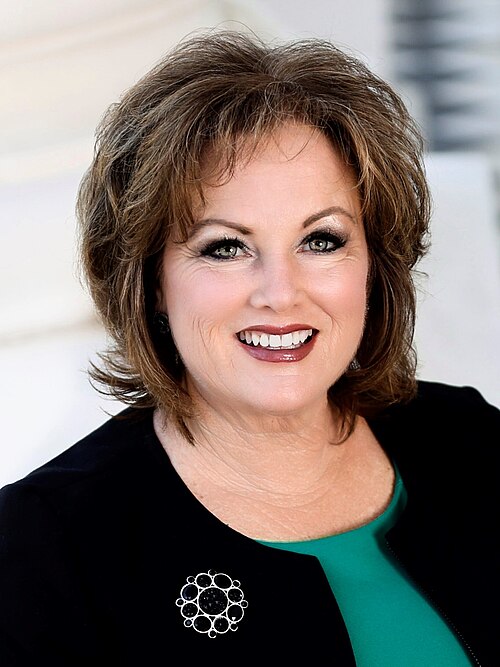
Ask Maddy about Shannon Grove
Scope: california
Hi! I can help you understand Shannon Grove's legislative record. What would you like to know?
Try one of these
i
Maddy answers using official bill text and legislative records. Always verify before sharing.
Sources cited inline