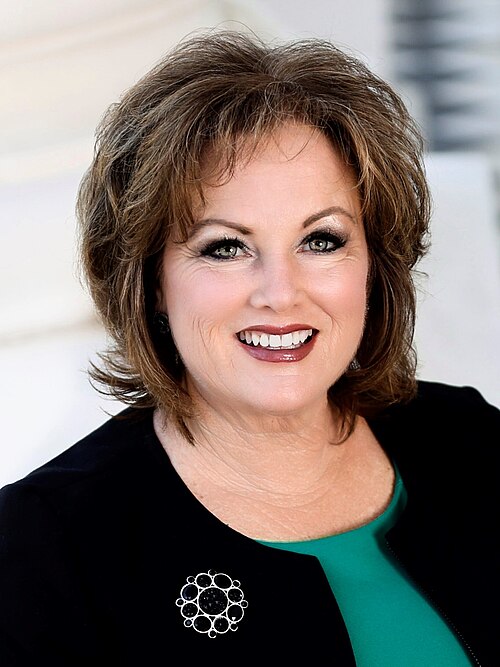
Photo of Shannon Grove
R California Senate · District 12

Sen. Shannon Grove

Compare
Total votes
28,348
all sessions
Attendance
91%
2,258 missed
Near the chamber average
With party
97%
of cast votes
Near the chamber average
Bipartisan score
2%
crosses aisle rarely
Near the chamber average
Sponsored
1,126
bills & resolutions
Near the chamber average
Committees
9
assignments
1,126 bills and resolutions

Sponsored bills

Total
1,126
Primary
249
Co-sponsor
877
This page
1,126
matching current filters
Primary SB 636
In committee · California Senate · Lead sponsor
Alcoholic beverages.

The Alcoholic Beverage Control Act, which is administered by the Department of Alcoholic Beverage Control, regulates the application, issuance, and suspension of alcoholic beverage licenses. Existing law makes a statement of legislative intent regarding the strict, honest, impartial, and uniform administration and enforcement of state liquor laws and the creation of a governmental organization for this purpose. This bill would make nonsubstantive changes to this intent statement.

In committee Feb 1, 2022 0 co-sponsors
Co-sponsor SB 511
In committee · California Senate · Co-sponsor
Voter file maintenance: information from potential jurors.

(1) Under existing law, the registration of a voter is permanent for all purposes during their life, unless and until the affidavit of registration is canceled for specified causes by the Secretary of State or the county elections official. Existing law requires the county elections official to cancel the registration of a voter for causes that include, among others, legally established mental incompetency. Under the Trial Jury Selection and Management Act, all persons are eligible and qualified to be prospective trial jurors, unless specified circumstances exist, that include, among others, the person is the subject of conservatorship. The act authorizes the jury commissioner to require a person to complete a questionnaire related to juror identification, qualification, and ability to serve as a prospective juror. This bill would require the jury commissioner, every 6 months, to share with the county elections official for the same county the information that a potential juror provides about their qualification to be a juror and would further require a county elections official to use that information to cancel the registration of a person who is ineligible to vote. By expanding the duties of county elections officials, this bill would impose a state-mandated local program. The bill would require the information shared pursuant to these provisions to retain all confidentiality from public disclosure provided under any other law. (2) The California Constitution requires the state to reimburse local agencies and school districts for certain costs mandated by the state. Statutory provisions establish procedures for making that reimbursement. This bill would provide that, if the Commission on State Mandates determines that the bill contains costs mandated by the state, reimbursement for those costs shall be made pursuant to the statutory provisions noted above.

In committee Feb 1, 2022 1 co-sponsor
Primary SB 610
In committee · California Senate · Lead sponsor
Personal income tax: credit: virtual learning costs: dependent of the taxpayer.

The Personal Income Tax Law allows various credits against the taxes imposed by that law. Existing law requires any bill authorizing a new tax expenditure to contain, among other things, specific goals, purposes, and objectives that the tax expenditure will achieve, detailed performance indicators, and data collection requirements. This bill would allow a credit against those taxes for each taxable year beginning on or after January 1, 2021, and before January 1, 2026, in an amount equal to 50% of the amount paid or incurred by a qualified taxpayer, as defined, during the taxable year for qualified costs, as defined, related to virtual learning for a qualified dependent, as defined, not to exceed $2,250 per qualified dependent for any taxable year. This bill would also state the intent of the Legislature to comply with the additional information requirement for any bill authorizing a new income tax expenditure. This bill would take effect immediately as a tax levy.

In committee Feb 1, 2022 0 co-sponsors
Primary SB 658
In committee · California Senate · Lead sponsor
Property tax: exemptions: disabled veterans.

Existing property tax law, pursuant to the authorization of the California Constitution, provides a disabled veteran's property tax exemption for the principal place of residence of a veteran, the veteran's spouse, or the veteran and veteran's spouse jointly, and the unmarried surviving spouse of a veteran, as provided, if the veteran is blind in both eyes, has lost the use of 2 or more limbs, or is totally disabled as a result of injury or disease incurred in military service, or if the veteran has, as a result of a service-connected injury or disease, died while on active duty in military service. Existing law exempts that part of the full value of the residence that does not exceed $100,000, or $150,000 if the household income of the claimant does not exceed $40,000, as adjusted for inflation, as specified. This bill, for property tax lien dates occurring on or after January 1, 2022, would additionally provide a partial exemption for property owned by, and that constitutes the principal place of residence of, a veteran who is partially disabled, as defined, or the veteran's spouse or the veteran and the veteran's spouse jointly, under these provisions. The bill would require that the amount of partial exemption provided be the percentage of the full amount of exemption, as described above, equivalent to the partially disabled veteran's disability rating percentage by the United States Department of Veterans Affairs or the military service from which the veteran was discharged, as applicable. By adding to the duties of local tax officials in administering the disabled veterans' property tax exemption, this bill would impose a state-mandated local program. The California Constitution requires the state to reimburse local agencies and school districts for certain costs mandated by the state. Statutory provisions establish procedures for making that reimbursement. This bill would provide that, if the Commission on State Mandates determines that the bill contains costs mandated by the state, reimbursement for those costs shall be made pursuant to the statutory provisions noted above. Existing law requires the state to reimburse local agencies annually for certain property tax revenues lost as a result of any exemption or classification of property for purposes of ad valorem property taxation. This bill would provide that, notwithstanding those provisions, no appropriation is made and the state shall not reimburse local agencies for property tax revenues lost by them pursuant to the bill. This bill would take effect immediately as a tax levy.


In committee Feb 1, 2022 0 co-sponsors
Primary SB 680
In committee · California Senate · Lead sponsor
Well stimulation.

Under existing law, the Geologic Energy Management Division in the Department of Conservation regulates the drilling, operation, maintenance, and abandonment of oil and gas wells in the state. Existing law requires the division, on or before January 1, 2015, to adopt regulations specific to well stimulation treatments, as defined. This bill would make nonsubstantive changes to the provision relating to the adoption of regulations.

In committee Feb 1, 2022 0 co-sponsors
Co-sponsor SB 397
died · California Senate · Co-sponsor
Emergency powers: essential services: religious services.

Existing law, the California Emergency Services Act, authorizes the Governor to proclaim a state of emergency, and local governments to proclaim a local emergency, when specified conditions of disaster or extreme peril to the safety of persons and property exist, and authorizes the Governor or the local government to exercise certain powers in response to that emergency. Existing law grants immunity to the state and its political subdivisions for any claim based upon the exercise or performance, or the failure to exercise or perform, a discretionary function or duty on the part of a state or local agency or any employee of the state or its political subdivisions in carrying out the California Emergency Services Act. Existing law establishes the State Department of Public Health, headed by the State Public Health Officer, and sets forth its powers and duties, including the administration of provisions relating to the prevention and control of communicable disease. Existing law authorizes the department to adopt and enforce regulations requiring strict or modified isolation, or quarantine, for any of the contagious, infectious, or communicable diseases, if in the opinion of the department the action is necessary for the protection of the public health. On March 4, 2020, the Governor proclaimed a state of emergency in response to the 2019 novel coronavirus disease (COVID-19) pandemic. Pursuant to specified provisions relating to the prevention and control, the State Public Health Officer ordered all individuals living in the state to stay home or at their place of residence except as needed to maintain continuity of operations of the federal critical infrastructure sectors, as outlined in the United States Cybersecurity and Infrastructure Security Agency's guidance on the essential critical infrastructure workforce. Pursuant to authority under specified provisions of the California Emergency Services Act, the Governor issued Executive Order No. N-33-20 requiring all residents to immediately heed those state public health directives. This bill, the Religion is Essential Act, would, during a state of emergency or local emergency, require the Governor or the local government to deem religious services to be an essential service and to be necessary and vital to the health and welfare of the public. The bill would prohibit the state and local government from taking a discriminatory action against a religious organization, as those terms are defined, and would require the state and local government to permit a religious organization to continue operating and engaging in religious services during a state of emergency to the same or greater extent that other organizations or businesses that provide essential services that are necessary and vital to the health and welfare of the public are permitted to operate. The bill would prohibit the state and local government from enforcing any health, safety, or occupancy requirement that imposes a substantial burden on a religious service unless the state or local government demonstrates that applying the burden to the religious service is essential to further a compelling governmental interest and is the least restrictive means of furthering that compelling governmental interest. This bill would authorize a religious organization to assert a violation of these provisions as a claim against the state or a local government in a judicial or administrative proceeding or as a defense in a judicial or administrative proceeding, as specified. The bill would entitle a religious organization that successfully asserts a claim or defense to certain relief, as specified. The bill would make related findings and declarations. By imposing additional duties on a local government in the exercise of emergency powers, this bill would impose a state-mandated local program. The California Constitution requires the state to reimburse local agencies and school districts for certain costs mandated by the state. Statutory provisions establish procedures for making that reimbursement. This bill would provide that, if the Commission on State Mandates determines that the bill contains costs mandated by the state, reimbursement for those costs shall be made pursuant to the statutory provisions noted above.

died Feb 1, 2022 1 co-sponsor
Primary SB 698
In committee · California Senate · Lead sponsor
Water rights: reasonable and beneficial use of water.

Existing law declares that the right to water is limited to that water that is reasonably required for the beneficial use to be served, and does not extend to the waste or unreasonable use, unreasonable method of use, or unreasonable method of diversion of water. This bill would make nonsubstantive changes to that provision.

In committee Feb 1, 2022 0 co-sponsors
Co-sponsor SB 102
died · California Senate · Co-sponsor
COVID-19 emergency order violation: license revocation.

Existing law provides for the licensure and regulation of various professions and vocations by boards within the Department of Consumer Affairs and provides for the denial, suspension, and revocation of licenses for specified conduct. Existing law provides for the regulation of healing arts by various boards. Existing law authorizes boards to impose fines or penalties, as provided. Existing law, the Alcoholic Beverage Control Act, which is administered by the Department of Alcoholic Beverage Control, regulates the application, issuance, and suspension of alcoholic beverage licenses. The act provides the grounds upon which the department may suspend or revoke licenses and impose fines and penalties, as provided. This bill would prohibit the Department of Consumer Affairs, a board within the Department of Consumer Affairs that does not regulate healing arts licensees, and the Department of Alcoholic Beverage Control from revoking a license or imposing a fine or penalty for failure to comply with any COVID-19 state of emergency orders or COVID-19 stay-at-home orders, unless the board or department can prove that lack of compliance resulted in transmission of COVID-19. The bill would specify that the provisions do not preclude issuance of fines, penalties, or revoking a license for any action that is not related to the issuance of any COVID-19 state of emergency orders or COVID-19 stay-at-home order. The provisions of the bill would remain in effect until either the COVID-19 state of emergency is terminated or all COVID-19 stay-at-home orders are no longer in effect, whichever occurs later, but in no case would the provisions remain in effect after January 1, 2024. This bill would declare that it is to take effect immediately as an urgency statute.

died Feb 1, 2022 1 co-sponsor
Co-sponsor AB 1336
Failed · California Assembly · Co-sponsor
Hate crimes: task force.

Existing law defines "hate crime" as a criminal act committed, in whole or in part, because of actual or perceived characteristics of the victim, including, among other things, race, religion, disability, and sexual orientation. Existing law provides punishments for hate crimes that range from misdemeanors with specified penalties to felonies with additional terms of one to 3 years in state prison, depending on the underlying criminal act and other circumstances. This bill would require the Board of State and Community Corrections to establish a hate crimes task force. The bill would authorize local law enforcement agencies to participate in the task force through regional task forces, as specified. The bill would require the board to, upon appropriation by the Legislature, administer grants to law enforcement agencies that participate in the regional hate crime task forces. The bill would require funds allocated to the regional task forces to be expended with the goal of reducing hate crimes, identifying suspects engaging in hate crimes, identifying interregional movement of offenders, coordinating enforcement efforts, and promoting law enforcement training and best practices to reduce the incidence of hate crimes. The bill would require the regional task forces to report specified information to the board, and would require the board to compile that information and report it to the Legislature, as specified.

Failed Feb 1, 2022 1 co-sponsor
Co-sponsor SB 690
In committee · California Senate · Co-sponsor
The California aerospace industry.

Existing law establishes the Governor's Office of Business and Economic Development (GO-Biz) , which is administered by a director appointed by the Governor. The office serves the Governor as the lead entity for economic strategy and the marketing of California on issues relating to business development, private sector investment, and economic growth. This bill would, in addition to making certain findings and declarations, state the intent of the Legislature to enact legislation that would establish the California Aerospace Commission to develop an official space plan and oversee a special district created within the GO-Biz that would foster the growth and development of a sustainable and world-leading aerospace industry in the state, and promote aerospace business development by facilitating business financing, spaceport operations, research and development, workforce development, and innovative education programs.

In committee Feb 1, 2022 1 co-sponsor
Showing 331 to 340 of 1,126 bills
Previous 1 … 33 34 35 … 113 Next