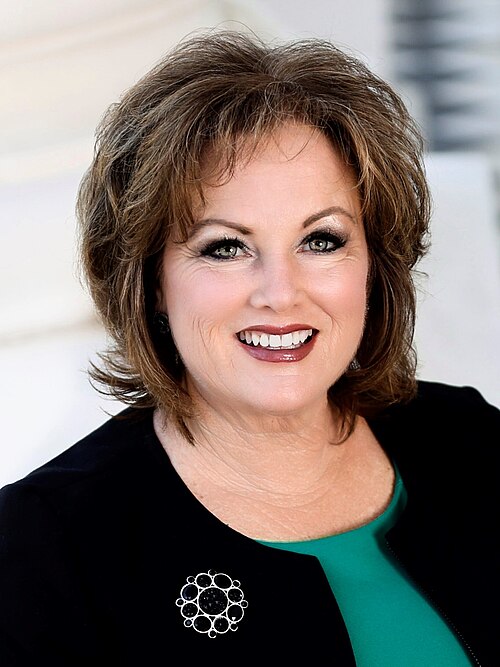
This measure designates the month of April 2023 as Sexual Assault Awareness Month, and recognizes April 26, 2023, as "Denim Day" in California.
Sponsored bills
This measure would recognize May 14, 2023, as the 116th annual Mother's Day and would urge all Californians to recognize, appreciate, and be grateful for the gifts and good works of mothers on that day.
This measure would acknowledge April 2023 as Child Abuse Prevention Month and encourage Californians to work together to support youth-serving child abuse prevention activities in their communities and schools.
Existing law, the Petroleum Industry Information Reporting Act of 1980, requires refiners, as defined, to report monthly to the State Energy Resources Conservation and Development Commission (Energy Commission) , for each of their refineries, specified information, including the origin of petroleum receipts and the source of imports of finished petroleum products. This bill would express the intent of the Legislature that the Energy Commission monitor foreign countries that export oil to California and identify on its internet website which of those countries have demonstrated human rights abuses, as documented by the United States Department of State or by human rights organizations, and which of those countries have lower environmental standards for the production of oil than California. Existing law imposes various limitations on the emissions of air contaminants for the control of air pollution from vehicular and nonvehicular sources. Existing law requires the State Air Resources Board to post on its internet website information on air quality conditions and trends statewide and to develop and conduct a program of monitoring airborne fine particles smaller than 2.5 microns in diameter (PM 2.5) . This bill would require the state board to annually produce an assessment of the greenhouse gas emissions associated with the transportation of oil in California, as specified, and to include that assessment on the board's internet website. The bill would also require the Energy Commission to annually provide data collected pursuant to the Petroleum Industry Information Reporting Act of 1980 to the state board for the purposes of the assessment. Under existing law, the Geologic Energy Management Division in the Department of Conservation regulates the drilling, operation, maintenance, and abandonment of oil and gas wells in the state. This bill would require the division to provide a link on its internet website to air quality emissions data associated with the transportation of oil imported into the state.
(1) The California Global Warming Solutions Act of 2006 establishes the State Air Resources Board as the state agency responsible for monitoring and regulating sources emitting greenhouse gases. The act requires the state board to adopt rules and regulations to achieve the maximum technologically feasible and cost-effective greenhouse gas emissions reductions to ensure that the statewide greenhouse gas emissions are reduced to at least 40% below the statewide greenhouse gas emissions limit, as defined, no later than December 31, 2030. Pursuant to the act, the state board has adopted the Low Carbon Fuel Standard regulations. The act authorizes the state board to include in its regulation of those emissions the use of market-based compliance mechanisms. Existing law requires all moneys, except for fines and penalties, collected by the state board from the auction or sale of allowances as part of a market-based compliance mechanism to be deposited in the Greenhouse Gas Reduction Fund. This bill would suspend the Low Carbon Fuel Standard regulations for one year. The bill would also exempt suppliers of transportation fuels from regulations for the use of market-based compliance mechanisms for one year. This bill would direct the Controller to transfer a specified amount from the General Fund to the Greenhouse Gas Reduction Fund. By transferring General Fund moneys to a partially continuously appropriated fund, this bill would make an appropriation. (2) Existing law, the Motor Vehicle Fuel Tax Law, imposes a tax upon each gallon of motor vehicle fuel removed from a refinery or terminal rack in this state, entered into this state, or sold in this state, at a specified rate per gallon. This bill would suspend the imposition of the tax on motor vehicle fuels for one year. The bill would require a seller of motor vehicle fuels to provide a receipt to a purchaser that indicates the amount of tax that would have otherwise applied to the transaction. This bill would also direct the Controller to transfer a specified amount from the General Fund to the Motor Vehicle Fuel Account in the Transportation Tax Fund. By transferring General Fund moneys to a continuously appropriated account, this bill would make an appropriation. (3) Existing unfair competition laws establish a statutory cause of action for unfair competition, including any unlawful, unfair, or fraudulent business act or practice and unfair, deceptive, untrue, or misleading advertising and acts prohibited by false advertisement laws. This bill would require that all savings realized based on the suspension of the motor vehicle fuels tax, the suspension of the Low Carbon Fuel Standard regulations, and the exemption of suppliers of transportation fuels from regulations for use of market-based compliance mechanisms by a person other than an end consumer, as defined, be passed on to the end consumer, and would make the violation of this requirement an unfair business practice, in violation of unfair competition laws, as provided. (4) This bill would declare that it is to take effect immediately as an urgency statute.
Existing law establishes the hearsay rule, which provides that evidence of a statement that was made other than by a witness while testifying at a hearing and that is offered to prove the truth of the matter stated is inadmissible. Existing law provides exceptions to the hearsay rule, including an exception in criminal prosecutions for statements made by victims, when under 12 years of age, describing any act or attempted act of child abuse with or on the child by another, as specified. This bill, Kelsey's Law, would additionally make an exception to the hearsay rule for statements by a victim who is a minor over 12 years of age if the court determines that the victim has an intellectual disability, when describing any act or attempted act of child abuse, as specified.
The Safe Neighborhoods and Schools Act, enacted as an initiative statute by Proposition 47, as approved by the electors at the November 4, 2014, statewide general election, made various changes relating to theft and the possession of controlled substances, including by, among other things, generally reducing the penalty for those crimes, including reducing the penalty for possession of concentrated cannabis, establishing a procedure by which individuals convicted of those crimes prior to the passage of the act may petition for resentencing under the act, and creating the crime of shoplifting. The act also requires the Director of Finance to calculate the savings accruing to the state as a result of the implementation of the act and requires the Controller to transfer that sum from the General Fund to the Safe Neighborhoods and Schools Fund, which was created by the act. The act specifies the manner of distribution of those funds and the purposes for which they may be used. This bill would repeal the changes and additions made by Proposition 47, except those related to reducing the penalty for possession of concentrated cannabis. Existing law makes it a crime for a caretaker of an elder or a dependent adult, or a person who is not a caretaker and who knows or reasonably should know that the victim is an elder or a dependent adult, to violate specified laws proscribing theft, embezzlement, forgery, fraud, or identity theft with respect to the property or personal identifying information of that elder or dependent adult. Existing law makes a violation of those provisions punishable as a misdemeanor or a felony when the moneys, labor, goods, services, or real or personal property taken or obtained is of a value exceeding $950. This bill would reduce the value threshold for a violation of those provisions to be punishable as a felony from $950 to $400. Existing law defines grand theft as the wrongful taking of money, labor, or property of a value exceeding $950, except as specified. Existing law also makes it grand theft where the money, labor, or real or personal property is taken by a servant, agent, or employee from their principal or employer and aggregates $950 or more in any consecutive 12-month period. This bill would reduce the value threshold for committing grand theft under those provisions from $950 to $400. This bill would provide that it would become effective only upon approval of the voters, and would provide for the submission of this measure to the voters for approval at the next statewide general election.