

Passed Dec 5, 2016
0 co-sponsors
Total votes
15,398
all sessions
Attendance
91%
1,152 missed
Lower than 94% of chamber peers
With party
92%
of cast votes
Among the lowest in the chamber
Bipartisan score
5%
crosses aisle rarely
Higher than 97% of chamber peers
Sponsored
807
bills & resolutions
Lower than 83% of chamber peers
Committees
0
assignments
807 bills and resolutions
Sponsored bills
Total
807
Primary
157
Co-sponsor
650
This page
807
matching current filters
Child abuse: reporting: foster family agencies.
(1) The Child Abuse and Neglect Reporting Act requires a mandated reporter, as defined and including an administrator or employee of a public or private organization whose duties require direct contact and supervision of children, to make a report to a specified agency whenever the mandated reporter, in his or her professional capacity or within the scope of his or her employment, has knowledge of or observes a child whom the mandated reporter knows or reasonably suspects has been the victim of child abuse or neglect. Under existing law, the failure to make this report is a crime. Existing law also prohibits a supervisor or administrator from impeding or inhibiting the reporting duties, provides that a person making the report shall not be subject to any sanctions for making the report, and prohibits internal procedures to facilitate reporting from requiring any employee required to make reports to disclose his or her identity to the employer. Existing law, the California Community Care Facilities Act (the act) , governs the licensing and regulation of community care facilities, as defined, including foster family agencies for children. Existing law vests responsibility for administering and enforcing laws and regulations governing those facilities in the State Department of Social Services. Existing law authorizes the department to prohibit a person from being a member of the board of directors, an executive director, or an officer of a licensee, or a licensee from employing, or continuing the employment of, or allowing in a licensed facility or certified family home, or allowing contact with clients of a licensed facility or certified family home by, any employee, prospective employee, or person who is not a client who has committed various acts or has been denied an exemption to work or to be present in a facility or certified family home, as specified. This bill would expand the definition of mandated reporter to include a board member of a public or private organization whose duties require direct contact and supervision of children, including a foster family agency. By imposing the reporting requirements on a new class of persons, for whom failure to report specified conduct is a crime, this bill would impose a state-mandated local program. The bill would also require the department to develop a notice regarding the reporting of complaints and would require the posting of that notice in all foster family agencies, as specified. The bill would require that if the department, as a condition of licensure, requires the chief executive officer or other authorized member of the board of directors and the administrator of a foster family agency to attend an orientation given by the licensing agency that outlines the applicable rules and regulations for operation of a foster family agency, that orientation shall include a description of policies, procedures, or practices that violate the provisions described above governing mandated reporters. The bill would require the department to take reasonable action, including, among other things, prohibiting a person from being a member of the board of directors, upon a finding of a violation of the provisions described above governing mandated reporters. (2) This bill would incorporate additional changes to Section 11165.7 of the Penal Code proposed by AB 1997 that would become operative if this bill and AB 1997 are chaptered and this bill is chaptered last. (3) The California Constitution requires the state to reimburse local agencies and school districts for certain costs mandated by the state. Statutory provisions establish procedures for making that reimbursement. This bill would provide that no reimbursement is required by this act for a specified reason.
Signed into law Sep 30, 2016
1 co-sponsor
Sexual assault forensic medical evidence kit.
Existing law requires the Office of Emergency Services to establish a protocol for the examination and treatment of victims of sexual assault and attempted sexual assault, including child molestation, and the collection and preservation of related evidence. Existing law provides failure to comply with this protocol does not constitute grounds to exclude evidence and prohibits a judge from instructing the trier of fact in a case that less weight be given to the evidence based on failure to comply. Existing law also establishes one hospital-based training center to train medical personnel on how to perform medical evidentiary examinations for victims of child abuse or neglect, sexual assault, and other similar crimes. This bill would require the Department of Justice's Bureau of Forensic Services, the California Association of Crime Laboratory Directors, and the California Association of Criminalists to work collaboratively with public crime laboratories, in conjunction with the California Clinical Forensic Medical Training Center, to develop a standardized sexual assault forensic medical evidence kit, as specified, to be used by all California jurisdictions. The bill would encourage those entities to collaborate and establish the basic components for a kit by January 30, 2018, and would require guidelines pertaining to the use of the kit's components to be distributed throughout the state by May 30, 2019. The bill would require every local and state agency to be responsible for its own costs in purchasing a kit. The bill would also provide that failure to use a kit does not constitute grounds to exclude evidence and prohibits a judge from instructing the trier of fact in a case that less weight be given to the evidence based on failure to comply.
Signed into law Sep 30, 2016
1 co-sponsor
Public contracts: claim resolution.
Existing law prescribes various requirements regarding the formation, content, and enforcement of state and local public contracts. Existing law applicable to state public contracts generally requires that the resolution of claims related to those contracts be subject to arbitration. Existing law applicable to local agency contracts prescribes a process for the resolution of claims related to those contracts of $375,000 or less. This bill would establish, for contracts entered into on or after January 1, 2017, a claim resolution process applicable to any claim by a contractor in connection with a public works project. The bill would define a claim as a separate demand by the contractor for one or more of the following: a time extension for relief from damages or penalties for delay, payment of money or damages arising from work done pursuant to the contract for a public work, or payment of an amount disputed by the public entity, as specified. This bill would require a public entity, defined to exclude certain state entities, upon receipt of a claim sent by registered or certified mail, to review it and, within 45 days, provide a written statement identifying the disputed and undisputed portions of the claim. The bill would authorize the 45-day period to be extended by mutual agreement. The bill would require any payment due on an undisputed portion of the claim to be processed within 60 days, as specified. The bill would require that the claim be deemed rejected in its entirety if the public entity fails to issue the written statement. This bill would authorize, if the claimant disputes the public entity's written response or if the public entity fails to respond to a claim within the time prescribed, the claimant to demand to meet and confer for settlement of the issues in dispute. The bill would require any disputed portion of the claim that remains in dispute after the meet and confer conference to be subject to nonbinding mediation, as specified. The bill would provide that unpaid claim amounts accrue interest at 7% per annum. The bill would prescribe a procedure by which a subcontractor or lower tier contractor may make a claim through the contractor. This bill would require the text of these provisions, or a summary, to be set forth in the plans or specifications for any public work which may give rise to a claim. The bill would specify that a waiver of these rights is void and contrary to public policy, except as specified. The bill would also specify that it does not impose liability on a public entity that makes loans or grants available through a competitive application process, for the failure of an awardee to meet its contractual obligations. By increasing the duties of local agencies and officials, this bill would impose a state-mandated local program. This bill would, on January 1, 2020, repeal the provision establishing the claim resolution process. This bill would specify that these provisions constitute a matter of statewide concern. The California Constitution requires the state to reimburse local agencies and school districts for certain costs mandated by the state. Statutory provisions establish procedures for making that reimbursement. This bill would provide that, if the Commission on State Mandates determines that the bill contains costs mandated by the state, reimbursement for those costs shall be made pursuant to these statutory provisions.
Signed into law Sep 29, 2016
1 co-sponsor
Earthquake safety: statewide earthquake early warning program and system.
(1) The California Emergency Services Act requires the Office of Emergency Services, among other things, to develop in collaboration with specified entities a comprehensive statewide earthquake early warning system in California through a public-private partnership, as specified. The act requires the office to identify funding for the system through single or multiple sources of revenue, and requires those sources to exclude the General Fund and to be limited to federal funds, funds from revenue bonds, local funds, and funds from private sources. Under the act, the requirement that the office develop the system is not operative until funding is identified, and is repealed if funding is not identified by July 1, 2016. The act establishes the California Earthquake Safety Fund in the State Treasury to be used, upon appropriation by the Legislature, for seismic safety and earthquake-related programs, including the statewide earthquake early warning system. This bill would discontinue the requirement that the funding sources for the system exclude the General Fund and be limited to federal funds, funds from revenue bonds, local funds, and funds from private sources. The bill would delete the provisions providing for the repeal and the contingent operation of the requirement that the office develop the system. This bill would establish, within the office, the California Earthquake Early Warning Program and the California Earthquake Early Warning Advisory Board to support the development of the statewide earthquake early warning system, as specified. The bill would require the board to include 7 voting members, as specified, and the Chancellor of the California State University, or his or her designee, who would serve as a nonvoting member. The bill would authorize the President of the University of California, or his or her designee, to serve as an additional nonvoting member of the board. The bill would require all members to serve without compensation, but would require reimbursement for actual and reasonable travel and meal expenses to attend board meetings. The bill would require the board to comply with existing state open meeting and public record disclosure laws and would prohibit the disclosure of any information in a public record that is a trade secret, as defined, of a private entity cooperating with the board or participating in the statewide earthquake early warning system or the program. The bill would make legislative findings in support of its provisions. (2) Existing constitutional provisions require that a statute that limits the right of access to the meetings of public bodies or the writings of public officials and agencies be adopted with findings demonstrating the interest protected by the limitation and the need for protecting that interest. This bill would make legislative findings to that effect.
Signed into law Sep 29, 2016
1 co-sponsor
Unmanned aircraft systems.
(1) Existing law provides certain individuals with immunity from civil liability under specific circumstances, including, among others, limiting the civil liability of a person who in good faith, and not for compensation, renders emergency medical or nonmedical care at the scene of an emergency, as specified. This bill would further limit the exposure to civil liability of an emergency responder, defined as a paid or an unpaid volunteer or private entity acting within the scope of authority implicitly or expressly provided by a local public entity or a public employee of a local public entity to provide emergency services, for damage to an unmanned aircraft or unmanned aircraft system, if the damage was caused while the emergency responder was performing specific emergency services and the unmanned aircraft or unmanned aircraft system was interfering with the provision of those emergency services. (2) The Government Claims Act sets forth the general procedure for the presentation of a claim as a prerequisite to the commencement of an action for money or damages against a "public entity," "local public entity," or a "public employee," and defines those terms for its purposes. The act prohibits liability against a public entity or public employee for, among other things, certain acts relating to the provision of fire protection and police and correctional activities, as specified. This bill would further limit the exposure to civil liability of a local public entity or public employee of a local public entity for damage to an unmanned aircraft or unmanned aircraft system, if the damage was caused while the local public entity or public employee of a local public entity was performing specific emergency services and the unmanned aircraft or unmanned aircraft system was interfering with the provision of those emergency services. The bill would specify that this immunity is in addition to any other immunity provided to a local public entity or public employee of a local public entity under law.
Signed into law Sep 29, 2016
1 co-sponsor
Water supply: creation or augmentation of local water supplies.
(1) Under existing law, the Public Utilities Commission has regulatory authority over public utilities, including electrical corporations, as defined. The existing California Renewables Portfolio Standard Program requires a retail seller of electricity, as defined, and local publicly owned electric utilities to purchase specified minimum quantities of electricity products from eligible renewable energy resources, as defined, for specified compliance periods, sufficient to ensure that the level of procurement of electricity products from eligible renewable energy resources reaches a specified percentage of retail sales by a specified date. This bill would require the commission, before January 1, 2018, in consultation with the Independent System Operator, to address the oversupply of renewable energy resources through a tariff or other economic incentive for electricity purchased by customers operating "facilities that create or augment local water supplies," as defined, to reduce the cost of electricity to those facilities. Because a violation of an order or a direction of the commission is a crime, this bill would impose a state-mandated local program. (2) The California Constitution requires the state to reimburse local agencies and school districts for certain costs mandated by the state. Statutory provisions establish procedures for making that reimbursement. This bill would provide that no reimbursement is required by this act for a specified reason.
Vetoed Sep 29, 2016
1 co-sponsor
Sex offenses: statute of limitations.
Existing law generally requires that the prosecution of a felony sex offense be commenced within 10 years after the commission of the offense. Under existing law, prosecution for the crimes of rape, sodomy, lewd or lascivious acts, continuous sexual abuse of a child, oral copulation, and sexual penetration, if committed against a victim who was under 18 years of age, may be commenced at any time prior to the victim's 40th birthday. Existing law allows prosecution of an offense punishable by death or by imprisonment for life or for life without the possibility of parole, or for the embezzlement of public money, to be commenced at any time. This bill would allow the prosecution of rape, sodomy, lewd or lascivious acts, continuous sexual abuse of a child, oral copulation, and sexual penetration, that are committed under certain circumstances, as specified, to be commenced at any time. The bill would apply to these crimes committed after January 1, 2017, and to crimes for which the statute of limitations that was in effect prior to January 1, 2017, has not run as of January 1, 2017. This bill would incorporate changes to Section 803 of the Penal Code proposed by both this bill and SB 1088, which would become operative only if both bills are enacted and become effective on or before January 1, 2017, and this bill is chaptered last.
Signed into law Sep 28, 2016
1 co-sponsor
Driving under the influence: ignition interlock device.
Existing law requires the Department of Motor Vehicles to immediately suspend a person's privilege to operate a motor vehicle for a specified period of time if the person has been convicted of driving a motor vehicle when the person had a certain blood-alcohol concentration. Existing law authorizes certain individuals, whose privilege is suspended pursuant to that provision to receive a restricted driver's license if specified requirements are met, including the elapse of specified periods of license suspension or revocation. Existing law also requires the department to immediately suspend or revoke a person's privilege to operate a motor vehicle if the person has been convicted of violating specified provisions prohibiting driving a motor vehicle under the influence of an alcoholic beverage or drug or the combined influence of an alcoholic beverage and drug, or with 0.08% or more, by weight, of alcohol in his or her blood or while addicted to the use of any drug, with or without bodily injury to another. Existing law authorizes certain individuals whose privilege is suspended or revoked pursuant to that provision to receive a restricted driver's license if specified requirements are met, including the elapse of specified periods of license suspension or revocation and, in some instances, the installation of an ignition interlock device on the person's vehicle. Existing law does not permit a person who has been convicted of a first offense of driving a motor vehicle under the influence, with injury, to receive a restricted driver's license. Existing law also requires the Department of Motor Vehicles to establish a pilot program from July 1, 2010, to July 1, 2017, inclusive, in the Counties of Alameda, Los Angeles, Sacramento, and Tulare that requires, as a condition of being issued a restricted driver's license, being reissued a driver's license, or having the privilege to operate a motor vehicle reinstated subsequent to a conviction for any violation of the above offenses, a person to install for a specified period of time an ignition interlock device on all vehicles he or she owns or operates. Under existing law, the amount of time the ignition interlock device is required to be installed is based upon the number of prior convictions suffered by the individual, as prescribed. This bill would extend the pilot program in those counties until January 1, 2019. Effective January 1, 2019, and until January 1, 2026, the bill would make an individual whose license has been suspended for driving a motor vehicle when he or she has a certain blood-alcohol concentration and who is eligible for a restricted driver's license eligible for a restricted driver's license without serving any period of the suspension if the person meets all other eligibility requirements and the person installs an ignition interlock device. The bill would authorize that individual to install an ignition interlock device prior to the effective date of the suspension and would require the individual to receive credit towards the mandatory term to install an ignition interlock device, as specified. The bill would require the department to immediately reinstate the suspension of the privilege to operate a motor vehicle upon receipt of notification that a person has engaged in certain activities, including, among others, attempted to remove, bypass, or tamper with the ignition interlock device. The bill would also require, commencing January 1, 2019, and until January 1, 2026, a person who has been convicted of driving a motor vehicle under the influence of an alcoholic beverage, as specified, to install for a specified period of time an ignition interlock device on the vehicle, as ordered by the court, that is the vehicle that he or she operates. The bill would, commencing January 1, 2019, and until January 1, 2026, also authorize a person convicted of driving a motor vehicle under the influence, including a person who was convicted of a first offense of driving a motor vehicle under the influence, with injury, if all other requirements are satisfied, including the installation of an ignition interlock device, to apply for a restricted driver's license without completing a period of license suspension or revocation. The bill would require the department to, if a person maintains an ignition interlock device for the specified required time, reinstate the person's privilege to operate a motor vehicle at the time the other reinstatement requirements are satisfied. The bill would, commencing January 1, 2019, and until January 1, 2026, authorize a court to require a person convicted of a specified type of reckless driving to install a certified ignition interlock device on any vehicle that the person operates and prohibit that person from operating a motor vehicle unless that vehicle is equipped with a functioning, certified ignition interlock device for a specified period of time. The bill would require the Transportation Agency to issue a report to the Legislature by January 1, 2025, regarding the implementation and efficacy of these provisions. The bill would reinstate current law as described above as of January 1, 2026. The bill would also make conforming and clarifying changes. By specifying that certain crimes relating to ignition interlock devices apply when an ignition interlock device is installed pursuant to the provisions of this bill, this bill would impose a state-mandated local program. Existing law establishes the Bureau of Electronic and Appliance Repair, Home Furnishings, and Thermal Insulation under the supervision and control of the Director of Consumer Affairs and requires the director to administer and enforce provisions relating to the registration of electronic and appliance repair service dealers. Existing law authorizes the director to deny, suspend, revoke, or place on probation the registration of a service dealer for any of certain acts, as specified. Existing law authorizes a service dealer licensed under these provisions to install, calibrate, service, maintain, and monitor ignition interlock devices. A violation of these provisions is punishable as a misdemeanor. Existing law, the Automotive Repair Act, establishes the Bureau of Automotive Repair under the supervision and control of the Director of Consumer Affairs and provides for the registration and regulation of automotive repair dealers. Existing law requires the bureau to adopt standards for installation, maintenance, and servicing of ignition interlock devices by automotive repair dealers, and existing regulations authorizes automotive repair dealers to install, maintain, and service an ignition interlock device. Existing law authorizes the director to deny, suspend, revoke, or place on probation the registration of an automotive repair dealer for certain acts, as specified. A violation of the act is a crime. This bill would authorize the director to issue a citation to, or suspend, revoke, or place on probation the registration of an automotive repair dealer or service dealer who installs, calibrates, services, maintains, or monitors ignition interlock devices if the automotive repair dealer or service dealer is not in compliance with specified provisions relating to payment for the costs of an ignition interlock device and would require an automotive repair dealer or service dealer to provide that information to an individual receiving ignition interlock device services. By expanding the definition of a crime, the bill would impose a state-mandated local program. The bill would require, commencing January 1, 2019, until January 1, 2026, an ignition interlock device manufacturer to be in compliance with specified provisions relating to payment for the costs of an ignition interlock device and would require those manufacturers to provide information to an individual who is required to install an ignition interlock device pursuant to a restricted driver's license. The bill would make a violation of those requirements subject to a civil assessment not exceeding $1,000, as specified. The California Constitution requires the state to reimburse local agencies and school districts for certain costs mandated by the state. Statutory provisions establish procedures for making that reimbursement. This bill would provide that no reimbursement is required by this act for a specified reason.
Signed into law Sep 28, 2016
1 co-sponsor
California Small Business Expansion Fund: corporate guarantees.
Existing law, the Small Business Financial Assistance Act of 2013, establishes the California Small Business Expansion Fund, a continuously appropriated fund that includes General Fund moneys. The act requires guarantees made by small business financial development corporations to be backed by funds on deposit in the corporation's trust fund account or by receivables due from funds loaned from the corporation's trust fund account to another fund in state government, as specified, and requires these loan guarantees to be secured by a reserve of at least 20%, until January 1, 2018, and 25% thereafter, as specified. This bill would reduce the required reserve to 10% indefinitely and would make conforming changes with respect to related statements of legislative intent. Existing law prohibits the amount of guarantee liability outstanding at any one time from exceeding 5 times the amount of funds on deposit in the expansion fund plus any receivables due from funds loaned from the expansion fund to another fund in state government, as specified, until January 1, 2018, and 4 times thereafter. This bill would increase that maximum amount to 10 times the amount of funds on deposit in the expansion fund plus any receivables due from funds loaned from the expansion fund to another fund in state government, as specified, would apply that increased amount indefinitely, and would make conforming changes. Existing law requires the program manager under the guidance of the executive director of the California Infrastructure and Economic Development Bank, to, among other things, authorize the distribution, transfer, and withholding of moneys in the expansion fund and trust funds. This bill would also require the program manager to leverage moneys in the expansion fund and trust funds.
Signed into law Sep 27, 2016
1 co-sponsor
Ask Maddy
·
AI policy assistant
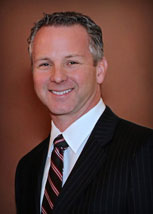
Ask Maddy about Anthony Cannella
Scope: california
Hi! I can help you understand Anthony Cannella's legislative record. What would you like to know?
Try one of these
i
Maddy answers using official bill text and legislative records. Always verify before sharing.
Sources cited inline