

Passed Feb 7, 2019
1 co-sponsor
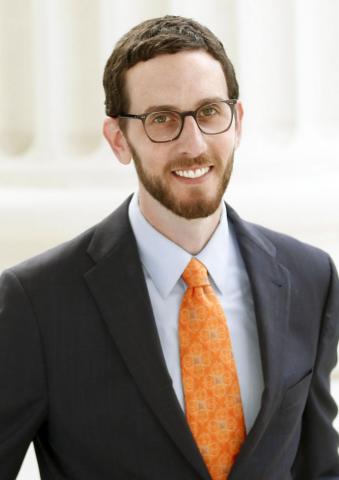
Total votes
26,628
all sessions
Attendance
99%
98 missed
Near the chamber average
With party
99%
of cast votes
Near the chamber average
Bipartisan score
0%
crosses aisle rarely
Near the chamber average
Sponsored
1,193
bills & resolutions
Higher than 97% of chamber peers
Committees
9
assignments
1,193 bills and resolutions
Sponsored bills
Total
1,193
Primary
244
Co-sponsor
949
This page
1,193
matching current filters
Cannabis convictions: resentencing.
Existing law, the Control, Regulate and Tax Adult Use of Marijuana Act (AUMA) , enacted by the voters at the November 8, 2016, statewide general election, regulates the cultivation, distribution, and use of cannabis for nonmedical purposes by individuals 21 years of age and older. Under AUMA, a person 21 years of age or older may, among other things, possess, process, transport, purchase, obtain, or give away, as specified, up to 28.5 grams of cannabis and up to 8 grams of concentrated cannabis. Existing law authorizes a person to petition for the recall or dismissal of a sentence, dismissal and sealing of a conviction, or redesignation of a conviction of an offense for which a lesser offense or no offense would be imposed under AUMA. This bill would require the Department of Justice, before July 1, 2019, to review the records in the state summary criminal history information database and to identify past convictions that are potentially eligible for recall or dismissal of sentence, dismissal and sealing, or redesignation pursuant to AUMA. The bill would require the department to notify the prosecution of all cases in their jurisdiction that are eligible for recall or dismissal of a sentence, dismissal and sealing, or redesignation. The bill would require the prosecution to, on or before July 1, 2020, review all cases and determine whether to challenge the resentencing, dismissal and sealing, or redesignation. The bill would authorize the prosecution to challenge the resentencing, dismissal and sealing, or redesignation if the person does not meet the eligibility requirements or presents an unreasonable risk to public safety. The bill would require the prosecution to notify the public defender and the court when they are challenging a particular resentencing, dismissal and sealing, or redesignation, and would require the prosecution to notify the court if they are not challenging a particular resentencing, dismissal and sealing, or redesignation. By imposing additional duties on local entities, this bill would create a state-mandated local program. The bill would require the court to automatically reduce or dismiss the conviction pursuant to AUMA if there is no challenge by July 1, 2020. The bill would require the department to modify the state summary criminal history information database in conformance with the recall or dismissal of sentence, dismissal and sealing, or redesignation within 30 days and to post specified information on its Internet Web site. The California Constitution requires the state to reimburse local agencies and school districts for certain costs mandated by the state. Statutory provisions establish procedures for making that reimbursement. This bill would provide that, if the Commission on State Mandates determines that the bill contains costs mandated by the state, reimbursement for those costs shall be made pursuant to the statutory provisions noted above.
Signed into law Sep 30, 2018
1 co-sponsor
Criminal investigations: eyewitness identification.
Existing law generally regulates the collection and admissibility of evidence for purposes of criminal prosecutions. This bill would, commencing January 1, 2020, require all law enforcement agencies and prosecutorial entities to adopt regulations for conducting photo lineups and live lineups with eyewitnesses, as those terms would be defined by the bill, to ensure reliable and accurate suspect identifications. The bill would require the regulations to comply with specified requirements, including that prior to conducting the identification procedure, and as close in time to the incident as possible, the eyewitness provide the description of the perpetrator of the offense. By imposing a higher level of service on local law enforcement and prosecutorial entities, the bill would impose a state-mandated local program. The bill would also include a statement of legislative findings and declarations. The California Constitution requires the state to reimburse local agencies and school districts for certain costs mandated by the state. Statutory provisions establish procedures for making that reimbursement. This bill would provide that, if the Commission on State Mandates determines that the bill contains costs mandated by the state, reimbursement for those costs shall be made pursuant to the statutory provisions noted above.
Signed into law Sep 30, 2018
0 co-sponsors
Employment: lactation accommodation.
Existing law requires every employer to provide a reasonable amount of break time to accommodate an employee desiring to express breast milk for the employee's infant child and requires an employer to make reasonable efforts to provide the employee with the use of a room or other location, other than a toilet stall, in close proximity to the employee's work area for the employee to express milk in private. Existing law makes a violation of these provisions subject to a civil penalty and makes the Labor Commissioner responsible for enforcement. This bill would instead require an employer to make reasonable efforts to provide an employee with use of a room or other location, other than a bathroom, for these purposes. The bill would deem an employer to be in compliance with the requirement of providing a lactation location if the employer makes available a temporary lactation location that meets specified conditions, including that the temporary lactation location be used only for lactation purposes while an employee expresses milk. The bill would deem an agricultural employer to be in compliance with the requirement of providing a lactation location if the agricultural employer provides an employee with a private, enclosed, and shaded space, as specified. If the employer can demonstrate to the Department of Industrial Relations that this requirement would impose an undue hardship, the bill would require that employer to make reasonable efforts to provide a room or location for expressing milk that is not a toilet stall.
Signed into law Sep 30, 2018
1 co-sponsor
Accomplice liability for felony murder.
Existing law defines murder as the unlawful killing of a human being, or a fetus, with malice aforethought. Existing law defines malice for this purpose as either express or implied and defines those terms. This bill would require a principal in a crime to act with malice aforethought to be convicted of murder except when the person was a participant in the perpetration or attempted perpetration of a specified felony in which a death occurred and the person was the actual killer, was not the actual killer but, with the intent to kill, aided, abetted, counseled, commanded, induced, solicited, requested, or assisted the actual killer in the commission of murder in the first degree, or the person was a major participant in the underlying felony and acted with reckless indifference to human life. Existing law defines first degree murder, in part, as all murder that is committed in the perpetration of, or attempt to perpetrate, specified felonies, including arson, rape, carjacking, robbery, burglary, mayhem, and kidnapping. Existing law, as enacted by Proposition 7, approved by the voters at the November 7, 1978, statewide general election, prescribes a penalty for that crime of death, imprisonment in the state prison for life without the possibility of parole, or imprisonment in the state prison for a term of 25 years to life. Existing law defines 2nd degree murder as all murder that is not in the first degree and imposes a penalty of imprisonment in the state prison for a term of 15 years to life. This bill would prohibit a participant in the perpetration or attempted perpetration of one of the specified first degree murder felonies in which a death occurs from being liable for murder, unless the person was the actual killer or the person was not the actual killer but, with the intent to kill, aided, abetted, counseled, commanded, induced, solicited, requested, or assisted the actual killer, or the person was a major participant in the underlying felony and acted with reckless indifference to human life, unless the victim was a peace officer who was killed in the course of performing his or her duties where the defendant knew or should reasonably have known the victim was a peace officer engaged in the performance of his or her duties. This bill would provide a means of vacating the conviction and resentencing a defendant when a complaint, information, or indictment was filed against the defendant that allowed the prosecution to proceed under a theory of first degree felony murder or murder under the natural and probable consequences doctrine, the defendant was sentenced for first degree or 2nd degree murder or accepted a plea offer in lieu of a trial at which the defendant could be convicted for first degree or 2nd degree murder, and the defendant could not be charged with murder after the enactment of this bill. By requiring the participation of district attorneys and public defenders in the resentencing process, this bill would impose a state-mandated local program. The California Constitution requires the state to reimburse local agencies and school districts for certain costs mandated by the state. Statutory provisions establish procedures for making that reimbursement. This bill would provide that, if the Commission on State Mandates determines that the bill contains costs mandated by the state, reimbursement for those costs shall be made pursuant to the statutory provisions noted above.
Signed into law Sep 30, 2018
1 co-sponsor
Lactation accommodation.
Existing law requires employers to provide a reasonable amount of break time to employees desiring to express milk for the employee's infant child. Existing law also requires an employer to make reasonable efforts to provide the employee with the use of a room, or other location, other than a toilet stall, in close proximity to the employees' work area, for the employee to express milk in private. Existing law exempts an employer from the break time requirement if the employer's operations would be seriously disrupted by providing that time to employees desiring to express milk. Existing law subjects employers who violate these provisions to a civil penalty of $100 per violation and authorizes the Labor Commissioner to issue citations for those violations. Existing law prohibits an employer, who is required by law to give an employee a rest period during a workday, from requiring the employee to work during the rest period. Existing law requires an employer to pay the employee one additional hour of pay, at the employee's regular rate of compensation, for each rest period not provided. This bill would require an employer to provide a lactation room or location that includes prescribed features and would require an employer, among other things, to provide access to a sink and refrigerator in close proximity to the employee's workspace, as specified. The bill would require an employer to develop and implement a policy regarding lactation accommodation and make it available to employees, as specified. The bill would also require an employer to maintain records of requests for lactation accommodation for 3 years and to give the Labor Commission access to those records. The bill would provide that specified employers could seek an exemption from any of the requirements of these provisions if the employer could show that the requirement posed an undue hardship based on specified criteria. The bill would deem denial of reasonable break time or adequate space to express milk a failure to provide a rest period in accordance with state law. The bill would prohibit an employer from discharging, or in any other manner discriminating or retaliating against, an employee for exercising or attempting to exercise rights under these provisions and would establish specific additional remedies. The bill would require the Division of Labor Standards Enforcement to create a model lactation accommodation request form and to make it available for download from its Internet Web site by employees and employers. The bill would authorize the division to establish a model lactation accommodation policy and lactation accommodation best practices to provide guidance to employers.
Vetoed Sep 30, 2018
0 co-sponsors
Cannabis: donations.
(1) The Control, Regulate and Tax Adult Use of Marijuana Act (AUMA) , an initiative measure approved as Proposition 64 at the November 8, 2016, statewide general election, authorizes a person who obtains a state license under AUMA to engage in commercial adult-use cannabis activity pursuant to that license and applicable local ordinances. The Medicinal and Adult-Use Cannabis Regulation and Safety Act (MAUCRSA) , among other things, consolidates the licensure and regulation of commercial medicinal and adult-use cannabis activities. Existing administrative law prohibits a retailer licensee from providing free cannabis goods to any person or allowing individuals who are not employed by the retailer to provide free cannabis goods to any person on the licensed premises. Existing administrative law provides an exception to this prohibition for specified medicinal retailer and microbusiness licensees to provide access to medicinal cannabis patients who have difficulty accessing medicinal cannabis goods, as specified. This bill would similarly authorize those specified licensees to provide free cannabis or cannabis products to a medical cannabis patient if specified requirements are met, including that the cannabis or cannabis products otherwise meet specified requirements of MAUCRSA. The bill would authorize those specified licensees to contract with an individual or organization to coordinate the provision of free medicinal cannabis and medicinal cannabis products on the retailer's premises. (2) Existing sales and use tax laws impose use taxes on the storage, use, or other consumption in this state of tangible personal property purchased from a retailer for storage, use, or other consumption in this state, presumes tangible personal property purchased outside the state that is stored, used, or consumed in this state is purchased for use in this state, and excludes from use taxes, specified tangible personal property purchased and used for specified purposes. This bill, on or after January 1, 2019, and until January 1, 2024, would exempt from the use tax the storage, use, or other consumption in this state of medicinal cannabis or medicinal cannabis products that are donated, for no consideration, under specified circumstances. The bill would require the exemption to apply only if the donee certifies in writing, as specified, that the medicinal cannabis or medicinal cannabis product will be used as specified. The bill would make a licensee that uses the donated medicinal cannabis or medicinal cannabis product in some other manner, or for some other purpose, liable for the payment of use tax and would make the measure of tax the licensee's purchase price for similar product. The Bradley-Burns Uniform Local Sales and Use Tax Law authorizes counties and cities to impose local sales and use taxes in conformity with the Sales and Use Tax Law, and existing laws authorize districts, as specified, to impose transactions and use taxes in accordance with the Transactions and Use Tax Law, which generally conforms to the Sales and Use Tax Law. Amendments to the Sales and Use Tax Law are automatically incorporated into the local tax laws. Existing law requires the state to reimburse counties and cities for revenue losses caused by the enactment of sales and use tax exemptions. This bill would provide that, notwithstanding Section 2230 of the Revenue and Taxation Code, no appropriation is made and the state shall not reimburse any local agencies for sales and use tax revenues lost by them pursuant to this bill. (3) AUMA imposes an excise tax on the purchase of cannabis and cannabis products, as defined, at the rate of 15% of the average market price of any retail sale by a cannabis retailer. The bill would require that these provisions not be construed to impose an excise tax upon medicinal cannabis, or medicinal cannabis products, donated for no consideration to a medicinal cannabis patient, as specified. (4) AUMA imposes a cultivation tax on all harvested cannabis that enters the commercial market upon all cultivators. Existing law defines entering the commercial market to mean cannabis or cannabis products, except for immature cannabis plants and seeds, that complete and comply with specified quality assurance review and testing. This bill would prohibit the cultivation tax from being imposed on medicinal cannabis designated for donation. The bill would make a licensee that certifies in writing that medicinal cannabis or a medicinal cannabis product will be donated to a medicinal cannabis patient and sells or uses the medicinal cannabis or medicinal cannabis product in some manner, or for some purpose other than donation, liable for the cultivation tax. The bill would specify that the certification in writing relieves the cultivator that donates the medicinal cannabis from liability for the cultivation tax and the distributor from liability for collecting the cultivation only if the certification is taken in good faith. The bill would prohibit a distributor or a manufacturer from collecting or remitting the cultivation tax for medicinal cannabis or medicinal cannabis products designated for donation. The bill would require a cultivator to keep records of any medicinal cannabis or medicinal cannabis products designated for donation. The bill would require that the cannabis tax provisions not be construed to impose a cultivation tax upon medicinal cannabis or medicinal cannabis products designated for donation. (5) This bill would provide that the provisions of the act are severable. (6) This bill would incorporate additional changes to Section 26001 of the Business and Professions Code proposed by AB 2980 to be operative only if this bill and AB 2980 are enacted and this bill is enacted last. (7) The Control, Regulate and Tax Adult Use of Marijuana Act, an initiative measure, authorizes the Legislature to amend the act to further the purposes and intent of the act with a 23 vote of the membership of both houses of the Legislature, except as provided. This bill would declare that its provisions further specified purposes and intent of the Control, Regulate and Tax Adult Use of Marijuana Act. (8) This bill would declare that it is to take effect immediately as an urgency statute.
Vetoed Sep 30, 2018
0 co-sponsors
Housing discrimination: affirmatively further fair housing.
Existing federal law, the federal Fair Housing Act, requires, among other things, certain federal executive departments and agencies to administer their programs relating to housing and urban development in a manner affirmatively to further the purposes of the federal act. Existing federal law requires specified state and local agencies that contract with, or receive funding from, specified federal agencies to certify that they will affirmatively further fair housing by completing an assessment of fair housing and submitting that assessment to the United States Department of Housing and Urban Development. Existing law, the California Fair Employment and Housing Act, generally prohibits housing discrimination with respect to the personal characteristics of race, color, religion, sex, gender, gender identity, gender expression, sexual orientation, marital status, national origin, ancestry, familial status, source of income, disability, or genetic information. Existing law also prohibits the discrimination through public or private land use practices, decisions, and authorizations because of one of those personal characteristics. Existing law establishes the Department of Fair Employment and Housing in the Business, Consumer Services, and Housing Agency, with the powers and duties to, among other things, receive, investigate, and conciliate complaints relating to housing discrimination. Existing law requires the Director of Fair Employment and Housing to investigate verified complaints that allege a violation of the act, subject to certain procedures and requirements, and requires the director, if attempts at mediation or other forms of dispute resolution do not eliminate a violation of the act, to file a civil action on behalf of the aggrieved person, as provided. This bill would require a public agency, as defined, to administer its programs and activities relating to housing and community development in a manner to affirmatively further fair housing, and to not take any action that is materially inconsistent with this obligation, as provided. The Planning and Zoning Law requires each city, county, and city and county to prepare and adopt a general plan that contains certain mandatory elements, including a housing element that is required to contain specified information and analysis, including a program setting forth a schedule of actions during the planning period that the local government is undertaking or intends to undertake to implement the policies and achieve the goals and objectives of the housing element, as provided. The bill would require the above-described program for achieving the goals and objectives of the housing element to affirmatively further fair housing pursuant to provisions added by this bill, and for revisions to the housing element that occur on and after January 1, 2021, would require the program to include an assessment of fair housing within the jurisdiction, as specified. Existing law requires the housing element to include an inventory of land suitable and available for development and requires that inventory to be used to identify sites that can be developed for housing within the planning period and that are sufficient to provide for the jurisdiction's share of the regional housing need for all income levels. This bill would require the inventory to be used to identify sites throughout the community, consistent with the provisions requiring the above-described program, within the housing element to affirmatively further fair housing. By increasing the duties of local officials, this bill would impose a state-mandated local program. This bill would incorporate additional changes to Section 65583 of the Government Code proposed by AB 2162 to be operative only if this bill and AB 2162 are enacted and this bill is enacted last. This bill would incorporate additional changes to Section 65583.2 of the Government Code proposed by SB 1078 to be operative only if this bill and SB 1078 are enacted and this bill is enacted last. The California Constitution requires the state to reimburse local agencies and school districts for certain costs mandated by the state. Statutory provisions establish procedures for making that reimbursement. This bill would provide that with regard to certain mandates no reimbursement is required by this act for a specified reason. With regard to any other mandates, this bill would provide that, if the Commission on State Mandates determines that the bill contains costs so mandated by the state, reimbursement for those costs shall be made pursuant to the statutory provisions noted above.
Signed into law Sep 30, 2018
1 co-sponsor
Communications: broadband Internet access service.
Existing law imposes certain obligations in the context of particular transactions, and provides mechanisms to enforce those obligations. This bill would enact the California Internet Consumer Protection and Net Neutrality Act of 2018. This act would prohibit fixed and mobile Internet service providers, as defined, that provide broadband Internet access service, as defined, from engaging in specified actions concerning the treatment of Internet traffic. The act would prohibit, among other things, blocking lawful content, applications, services, or nonharmful devices, impairing or degrading lawful Internet traffic on the basis of Internet content, application, or service, or use of a nonharmful device, and specified practices relating to zero-rating, as defined. It would also prohibit fixed and mobile Internet service providers from offering or providing services other than broadband Internet access service that are delivered over the same last-mile connection as the broadband Internet access service, if those services have the purpose or effect of evading the above-described prohibitions or negatively affect the performance of broadband Internet access service.
Signed into law Sep 30, 2018
0 co-sponsors
Industrial hemp.
(1) Existing law governs the growth of industrial hemp and imposes specified procedures and requirements on a person who grows industrial hemp, not including an established agricultural research institution, as defined. Existing law defines "industrial hemp" to be the same as that term is defined in the California Uniform Controlled Substances Act, which defines that term as a fiber or oilseed crop, or both, that is limited to types of the plant Cannabis sativa L. with a tetrahydrocannabinol (THC) content that does not exceed a specified THC limit, the plant's seeds or resin, and specified substances and mixtures of the plant or its seeds or resin. Existing law requires that industrial hemp only be grown if it is on the list of approved hemp seed cultivars, which includes industrial hemp seed cultivars certified on or before January 1, 2013, by specific organizations, except as specified. Existing law requires industrial hemp to be grown only as a densely planted fiber or oilseed crop, or both. Existing law, the Control, Regulate and Tax Adult Use of Marijuana Act (AUMA) , added by Proposition 64 at the November 8, 2016, statewide general election, requires this crop to be grown in minimum acreages of 110 of an acre, except as specified. Existing law prohibits the ornamental and clandestine cultivation of industrial hemp plants, and, except under specified circumstances, pruning and tending of individual industrial hemp plants and culling of industrial hemp. Existing law requires sampling and laboratory testing of industrial hemp, as provided, to determine compliance with THC limits and destruction of industrial hemp that exceeds those limits. Existing law establishes timeframes for sampling of industrial hemp and, if applicable, destruction of industrial hemp that exceeds THC limits. Existing law requires a grower of industrial hemp for commercial purposes and a seed breeder, as defined, to register with the county agricultural commissioner and to pay a registration or renewal fee, as specified. Existing law exempts established agricultural institutions from these registration requirements. Existing law requires that registration fees be deposited into the Department of Food and Agriculture Fund and continuously appropriated for use in the administration and enforcement of these provisions. Existing law requires that an application for registration include information about the approved seed cultivar to be grown and whether the seed cultivar will be grown for its grain or fiber, or as a dual purpose crop, or, in the case of a seed breeder, for seed production. Under existing law, a registration issued pursuant to these provisions is valid for 2 years. This bill would delete the requirement that industrial hemp seed cultivars be certified on or before January 1, 2013, in order to be included on the list of approved hemp seed cultivars. The bill would authorize industrial hemp to be produced by clonal propagation, as provided, of industrial hemp that is on the list of approved seed cultivars. The bill would also delete the prohibitions on ornamental cultivation of industrial hemp plants, pruning and tending of individual industrial hemp plants, and culling of industrial hemp. By removing limitations on the types of industrial hemp seed cultivars that may be cultivated, the means by which industrial hemp may be produced, and the purposes for which industrial hemp may be cultivated, with payment of a registration or renewal fee, the bill would establish new sources of revenue for a continuously appropriated fund, thereby making an appropriation. The bill would authorize a county agricultural commissioner or a county, as appropriate, to retain the amount of a registration or renewal fee necessary to reimburse direct costs incurred by the commissioner in the collection of the fee. The bill would also authorize the board of supervisors of a county to establish a registration or renewal fee to cover other costs of the county agricultural commissioner and the county of implementing, administering, and enforcing these provisions, as provided. Under the bill, "industrial hemp" would no longer be defined in the California Uniform Controlled Substances Act as a fiber or oilseed crop. The bill would delete the requirement that industrial hemp be grown as a densely planted fiber or oilseed crop. By modifying the characterization of a crop for which AUMA sets a minimum acreage, the bill would amend AUMA. The bill would also delete the requirement that an application for registration include information about whether a seed cultivar is being grown for its grain or fiber, or as a dual purpose crop. However, the bill would require that an application include the seed cultivar's state or county of origin. Under the bill, a registration issued pursuant to these provisions would be valid for one year instead of 2 years. The bill would require a sample of industrial hemp collected for THC testing to be taken with the grower or seed breeder present, and would require the Department of Food and Agriculture to establish, by regulation, procedures for sampling of industrial hemp, as provided. The bill would require a laboratory test report on the sample to be issued by a department-approved laboratory, and would require the sample to be tested using a department-approved testing method. The bill would require THC content to be measured on a dry-weight basis for purposes of determining whether a sample exceeds THC limits. The bill would establish new timeframes for sampling of industrial hemp and, if applicable, destruction of industrial hemp that exceeds THC limits. The bill would require established agricultural research institutions, before cultivating industrial hemp, to provide the Global Positioning System coordinates of the planned cultivation site to the county agricultural commissioner of the county in which the site is located. (2) Existing federal law, the Agricultural Act of 2014, authorizes an institution of higher education, as defined, or a state department of agriculture, as defined, to grow or cultivate industrial hemp under an agricultural pilot program, as defined, under certain conditions, including the condition that a state department of agriculture is authorized to promulgate regulations to carry out the pilot program in accordance with specified purposes. This bill would also authorize the Department of Food and Agriculture, as part of the industrial hemp registration program, to establish and carry out, by regulation, an agricultural pilot program pursuant to the federal Agricultural Act of 2014 in accordance with those specified purposes. (3) The Control, Regulate and Tax Adult Use of Marijuana Act, an initiative measure, authorizes the Legislature to amend the act to further the purposes and intent of the act with a 23 vote of the membership of both houses of the Legislature, except as provided. This bill would declare that its provisions further specified purposes and intent of the Control, Regulate and Tax Adult Use of Marijuana Act.
Signed into law Sep 30, 2018
1 co-sponsor
Ask Maddy
·
AI policy assistant
Ask Maddy about Scott Wiener
Scope: california
Hi! I can help you understand Scott Wiener's legislative record. What would you like to know?
Try one of these
i
Maddy answers using official bill text and legislative records. Always verify before sharing.
Sources cited inline