

Existing law categorizes certain drugs and other substances as controlled substances and prohibits various actions related to those substances, including their manufacture, transportation, sale, possession, and ingestion. Existing law creates a Research Advisory Panel, as specified, to conduct hearings on, and in other ways study, research projects concerning cannabis or hallucinogenic drugs. This bill would require the State Department of Public Health to convene a working group, as specified, to research and make recommendations to the Legislature regarding, among other things, the regulation and use of psilocybin, psilocyn, dimethyltryptamine (DMT) , ibogaine, mescaline, lysergic acid diethylamide (LSD) , and 3,4-methylenedioxymethamphetamine (MDMA) .
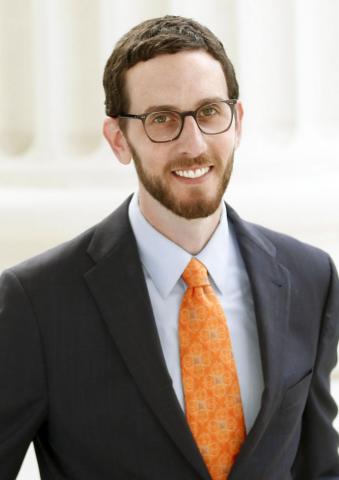
Sponsored bills
The Alcoholic Beverage Control Act provides that any on- or off-sale licensee, or agent or employee of the licensee, who sells, gives, or delivers to any person any alcoholic beverage between the hours of 2 a.m. and 6 a.m. of the same day, and any person who knowingly purchases any alcoholic beverages between those hours, is guilty of a misdemeanor. Existing law provides for moneys collected as fees pursuant to the act to be deposited in the Alcohol Beverage Control Fund, with those moneys generally allocated to the Department of Alcoholic Beverage Control upon appropriation by the Legislature. This bill, beginning January 1, 2025, and before January 2, 2028, would require the Department of Alcoholic Beverage Control to conduct a pilot program that would authorize the department to issue an additional hours license to an on-sale licensee located in a qualified city that would authorize, with or without conditions, the selling, giving, or purchasing of alcoholic beverages at the licensed premises between the hours of 2 a.m. and 4 a.m. on weekends and specified holidays, and between the hours of 2 a.m. and 3 a.m. on all other days upon completion of specified requirements by the qualified city in which the licensee is located. The bill would impose specified fees related to the license to be deposited in the Alcohol Beverage Control Fund. The bill would require the applicant to notify specified persons of the application for an additional hours license and would provide a procedure for protest and hearing regarding the application. The bill would require the Department of the California Highway Patrol and each qualified city that has elected to participate in the program to submit reports to the Legislature and specified committees regarding the regional impact of the additional hours licenses, as specified. The bill would provide that any person under 21 years of age who enters and remains in the licensed public premises during the additional serving hour without lawful business therein is guilty of a misdemeanor, as provided. The pilot program would apply to the Cities of Palm Springs and West Hollywood and the City and County of San Francisco. This bill would impose a state-mandated local program by creating new crimes. The California Constitution requires the state to reimburse local agencies and school districts for certain costs mandated by the state. Statutory provisions establish procedures for making that reimbursement. This bill would provide that no reimbursement is required by this act for a specified reason. This bill would make legislative findings and declarations as to the necessity of a special statute for the qualified cities.
Existing law provides that all relevant evidence is admissible in an action before the court, including evidence relevant to the credibility of a witness or hearsay declaring, subject to specified exceptions. Existing law also provides that, in civil actions for personal injury or wrongful death, evidence of a person's immigration status is not admissible and discovery of a person's immigration status is not permitted. Prior law, which was repealed on January 1, 2022, prohibited, in civil actions other than those specified above, the disclosure of a person's immigration status in open court by a party unless that party requested an in camera hearing and the presiding judge determined that the evidence was admissible. Prior law, which was repealed on January 1, 2022, applied that prohibition to criminal actions. This bill would reenact those repealed provisions. The California Constitution provides for the Right to Truth-in-Evidence, which requires a 2 /3 vote of the Legislature to exclude any relevant evidence from any criminal proceeding, as specified. Because this bill may exclude from a criminal action information about a person's immigration status that would otherwise be admissible, it requires a 2 /3 vote of the Legislature. This bill would declare that it is to take effect immediately as an urgency statute.
Existing law makes it a crime to possess specified controlled substances or paraphernalia. Existing law makes it a crime to use or be under the influence of specified controlled substances. Existing law additionally makes it a crime to visit or be in any room where specified controlled substances are being unlawfully used with knowledge that the activity is occurring, or to open or maintain a place for the purpose of giving away or using specified controlled substances. Existing law makes it a crime for a person to rent, lease, or make available for use any building or room for the purpose of storing or distributing any controlled substance. Existing law authorizes forfeiture of property used for specified crimes involving controlled substances. Existing law regulates specified medical practitioners under the Medical Practice Act and requires the Medical Board of California and the Osteopathic Medical Board of California to enforce those provisions. This bill would, until January 1, 2028, authorize the City and County of San Francisco, the County of Los Angeles, the City of Los Angeles, and the City of Oakland to approve entities to operate overdose prevention programs for persons that satisfy specified requirements, including, among other things, providing a hygienic space supervised by trained staff where people who use drugs can consume preobtained drugs, providing sterile consumption supplies, providing access or referrals to substance use disorder treatment, and that program staff be authorized and trained to provide emergency administration of an opioid antagonist, as defined by existing law. The bill would require the City and County of San Francisco, the County of Los Angeles, the City of Los Angeles, and the City of Oakland, prior to authorizing an overdose prevention program in its jurisdiction, to provide local law enforcement officials, local public health officials, and the public with an opportunity to comment in a public meeting. The bill would require an entity operating a program to provide an annual report to the city or the city and county, as specified. The bill would require all local jurisdictions that choose to participate in the overdose prevention program to confer and choose a single independent entity, as specified, to conduct a peer-reviewed study, funded by the participating jurisdictions, of the statewide efficacy of the overdose prevention programs and the community impacts of the programs, to be submitted to the Legislature and the Governor's office on or before January 15, 2027. The bill would exempt a person from, among other things, civil liability, professional discipline, or existing criminal sanctions, solely for good faith actions, conduct, or omissions in compliance with an overdose prevention program authorized by the city or the city and county. The bill would clarify that the Medical Board of California or the Osteopathic Medical Board of California is authorized to take disciplinary action against a licensee related to the operation of an overdose prevention program that violates the Medical Practice Act. This bill would make legislative findings and declarations as to the necessity of a special statute for the City and County of San Francisco, the County of Los Angeles, the City of Los Angeles, and the City of Oakland.
This measure would declare that a climate emergency threatens the state, the nation, the planet, the natural world, and all of humanity.
This measure would, among other things, proclaim the month of July 2022 as California Firefighter Appreciation Month and July 30, 2022, as California Firefighters Memorial Day.
The California Integrated Waste Management Act of 1989, administered by the Department of Resources Recycling and Recovery, generally regulates the disposal, management, and recycling of solid waste, including, among other solid waste, plastic packaging containers. This bill would require an e-commerce shipper, as defined, that ships purchased products in or into the state to reduce from its 2023 calendar year levels the total weight and number of units of single-use plastic shipping envelopes, cushioning, and void fill, and expanded and extruded polystyrene, it uses to ship or transport the products, by no less than unspecified percentages on or before January 1, 2030. The bill would establish exemptions from these prohibitions. The bill would make a violation of the foregoing requirements subject to civil penalties and would require penalties collected by the Attorney General to be deposited into the Plastic Packaging Reduction Penalty Account, which the bill would create, for expenditure by the Attorney General, upon appropriation by the Legislature, to enforce those requirements.
Existing law creates the Metropolitan Transportation Commission, as a local area planning agency and not as a part of the executive branch of the state government, to provide comprehensive regional transportation planning for the region comprised of the City and County of San Francisco and the Counties of Alameda, Contra Costa, Marin, Napa, San Mateo, Santa Clara, Solano, and Sonoma. This bill would require the commission to develop and adopt a Connected Network Plan, develop a comprehensive, standardized regional transit mapping and wayfinding system, develop an implementation and maintenance strategy and funding plan, and establish open data standards, as specified. The bill would require the region's transit agencies, as defined, to comply with those established regional transit mapping and wayfinding system, implementation and maintenance strategy and funding plan, and open data standards, as provided. This bill would require the transit agencies in the region to establish a regional transit coordinating council and would require the council to, among other things, develop and adopt an integrated transit fare structure. The bill would require the council to submit the integrated transit fare structure to the commission for approval and, after approval, would require each transit agency in the region to present the structure to its board for consideration. Under existing law, moneys in the Public Transportation Account are continuously appropriated to the Controller for allocation to transportation planning agencies, county transportation commissions, and the San Diego Metropolitan Transit Development Board for purposes of the State Transit Assistance Program. Existing law requires the Controller to allocate those moneys to those entities based on population and qualifying revenue, as specified. This bill would require the Metropolitan Transportation Commission to notify a transit agency if the commission determines that the transit agency is out of compliance with the integrated transit fare structure, regional transit mapping and wayfinding system, implementation and maintenance strategy and funding plan, or open data standards described above, and would require the commission to indicate what steps are needed to comply. If a transit agency does not comply with the compliance parameters set by the commission or if the commission rejects the transit agency's request for additional funding or for an exemption, the bill would make that transit agency ineligible to receive a portion of those moneys in an amount to be determined by the commission. The bill would require a transit agency to regain access to any withheld funds upon demonstration of compliance. To the extent that this bill would mandate that a transit agency establish a new program or provide a higher level of service as part of an existing program, and by imposing additional duties on the Metropolitan Transportation Commission, the bill would impose a state-mandated local program. The California Constitution requires the state to reimburse local agencies and school districts for certain costs mandated by the state. Statutory provisions establish procedures for making that reimbursement. This bill would provide that, if the Commission on State Mandates determines that the bill contains costs mandated by the state, reimbursement for those costs shall be made pursuant to the statutory provisions noted above.
Under existing law, a state agency is authorized to apply to the Department of Motor Vehicles (DMV) to sponsor a specialized license plate program, and the DMV is required to issue those license plates if the agency meets certain requirements. Existing law also requires the DMV to charge specified fees for certain services related to the issuance of those plates. This bill would require the State Department of Education to apply to the DMV to sponsor a mental health awareness license plate program, and would require the DMV to issue the license plates if the State Department of Education meets certain requirements. The bill would also establish the Mental Health Awareness Fund in the State Treasury and would require the revenue generated from the license plates to be deposited in the fund for use, upon appropriation by the Legislature to the State Department of Education, for mental health services in public schools.
Existing law, the Knox-Keene Health Care Service Plan Act of 1975, provides for the licensure and regulation of health care service plans by the Department of Managed Health Care, and makes a willful violation of the act a crime. Existing law provides for the regulation of disability insurers, including health insurers, by the Department of Insurance. Existing law generally authorizes a health care service plan or health insurer to use utilization review, under which a licensed physician or a licensed health care professional who is competent to evaluate specific clinical issues may approve, modify, delay, or deny requests for health care services based on medical necessity. Existing law prohibits a health care service plan contract that covers prescription drug benefits or a specified health insurance policy from limiting or excluding coverage for a drug on the basis that the drug is prescribed for a use that is different from the use for which it was approved by the federal Food and Drug Administration if specified conditions are met. Existing law also prohibits a health care service plan that covers prescription drug benefits from limiting or excluding coverage for a drug that was previously approved for coverage if an enrollee continues to be prescribed that drug, as specified. This bill would expand the above-described prohibitions to prohibit limiting or excluding coverage of a drug, dose, or dosage form, and would apply the prohibition to blanket disability insurance policies and certificates. The bill would prohibit a health care service plan or disability insurer that provides coverage for prescription drugs from limiting or declining to cover a drug or dose of a drug as prescribed, or imposing additional cost sharing for covering a drug as prescribed, if specified criteria apply. The bill would provide that a reduction or termination of an ongoing and approved course of treatment before the end of the treatment or the end or amendment of the policy is an adverse benefit determination, and would require a health care service plan or disability insurer to notify an enrollee or insured, or their representative, and the enrollee's or insured's provider in writing of the adverse benefit determination no fewer than 7 calendar days before the effective date. The bill would require a plan or insurer that has approved an ongoing course of treatment to provide continuing coverage pending appeal or review. Because a willful violation of the bill's requirements relative to health care service plans would be a crime, the bill would impose a state-mandated local program. The California Constitution requires the state to reimburse local agencies and school districts for certain costs mandated by the state. Statutory provisions establish procedures for making that reimbursement. This bill would provide that no reimbursement is required by this act for a specified reason.