

Passed Jun 19, 2017
1 co-sponsor
Total votes
26,628
all sessions
Attendance
99%
98 missed
Near the chamber average
With party
99%
of cast votes
Near the chamber average
Bipartisan score
0%
crosses aisle rarely
Near the chamber average
Sponsored
1,193
bills & resolutions
Higher than 96% of chamber peers
Committees
9
assignments
1,193 bills and resolutions
Sponsored bills
Total
1,193
Primary
244
Co-sponsor
949
This page
1,193
matching current filters
Passed Jun 19, 2017
1 co-sponsor
Postsecondary education: student hunger.
Under existing law, the 3 segments of public postsecondary education in this state are the University of California, under the administration of the Regents of the University of California, the California State University, under the administration of the Trustees of the California State University, and the California Community Colleges, under the administration of the Board of Governors of the California Community Colleges. Existing law, known as the Donahoe Higher Education Act, establishes the missions and functions of these segments. The provisions of the Donahoe Higher Education Act apply to the University of California only to the extent that the Regents of the University of California, by resolution, make them applicable. This bill would require the trustees and the governing board of participating community college districts, and would encourage the regents, to designate as a "hunger free campus" each of its respective campuses that meet specified criteria. Upon appropriation by the Legislature, the bill would, commencing with the 2018–19 academic year, provide that each campus that receives the designation shall receive a funding incentive. The bill would repeal its provisions on January 1, 2022.
Passed Jun 14, 2017
1 co-sponsor
The Healthy California Act.
Existing federal law, the federal Patient Protection and Affordable Care Act (PPACA) , enacted various health care coverage market reforms that took effect January 1, 2014. PPACA required each state, by January 1, 2014, to establish an American Health Benefit Exchange to facilitate the purchase of qualified health benefit plans by qualified individuals and qualified small employers. PPACA defines a "qualified health plan" as a plan that, among other requirements, provides an essential health benefits package. Existing state law creates the California Health Benefit Exchange, also known as Covered California, to facilitate the purchase of qualified health plans by qualified individuals and qualified small employers. Existing law, the Knox-Keene Health Care Service Plan Act of 1975 (Knox-Keene) , provides for the licensure and regulation of health care service plans by the Department of Managed Health Care. Existing law provides for the regulation of health insurers by the Department of Insurance. Existing law provides for the Medi-Cal program, which is administered by the State Department of Health Care Services, under which qualified low-income individuals receive health care services. The Medi-Cal program is, in part, governed and funded by federal Medicaid program provisions. This bill, the Healthy California Act, would create the Healthy California program to provide comprehensive universal single-payer health care coverage and a health care cost control system for the benefit of all residents of the state. The bill, among other things, would provide that the program cover a wide range of medical benefits and other services and would incorporate the health care benefits and standards of other existing federal and state provisions, including, but not limited to, the state's Children's Health Insurance Program (CHIP) , Medi-Cal, ancillary health care or social services covered by regional centers for persons with developmental disabilities, Knox-Keene, and the federal Medicare program. The bill would require the board to seek all necessary waivers, approvals, and agreements to allow various existing federal health care payments to be paid to the Healthy California program, which would then assume responsibility for all benefits and services previously paid for with those funds. This bill would also provide for the participation of health care providers in the program, require care coordination for members, provide for payment for health care services and care coordination, and specify program standards. The bill would state the intent of the Legislature to enact legislation that would develop a revenue plan, taking into consideration anticipated federal revenue available for the Healthy California program. The bill would create the Healthy California Trust Fund in the State Treasury, as a continuously appropriated fund, consisting of any federal and state moneys received for the purposes of the act. Because the bill would create a continuously appropriated fund, it would make an appropriation. This bill would create the Healthy California Board to govern the program, made up of 9 members with demonstrated and acknowledged expertise in health care, and appointed as provided. The bill would provide the board with all the powers and duties necessary to establish the Healthy California program, including, but not limited to, determining when individuals may start enrolling into the program, employing necessary staff, and negotiating and entering into any necessary contracts. The bill would also require the Secretary of California Health and Human Services to establish a public advisory committee to advise the board on all matters of policy for the Healthy California program. This bill would prohibit health care service plans and health insurers from offering health benefits or covering any service for which coverage is offered to individuals under the program, except as provided. The bill would authorize health care providers, as defined, to collectively negotiate rates of payment for health care services, rates of payment for prescription and nonprescription drugs, and payment methodologies using a 3rd-party representative, as provided. This bill would prohibit this act from becoming operative until the Secretary of California Health and Human Services gives written notice to the Secretary of the Senate and the Chief Clerk of the Assembly that the Healthy California Trust Fund has the revenues to fund the costs of implementing the act. The California Health and Human Services Agency would be required to publish a copy of the notice on its Internet Web site. Existing constitutional provisions require that a statute that limits the right of access to the meetings of public bodies or the writings of public officials and agencies be adopted with findings demonstrating the interest protected by the limitation and the need for protecting that interest. This bill would make legislative findings to that effect.
Passed Jun 1, 2017
1 co-sponsor
A resolution to propose to the people of the State of California an amendment to the Constitution of the State, by amending Section 4 of Article XIIIA thereof, and by amending Section 2 of Article XIIIC thereof, relating to transportation.
The California Constitution conditions the imposition of a special tax by a city, county, or special district upon the approval of 23 of the voters of the city, county, or special district voting on that tax, except that certain school entities may levy an ad valorem property tax for specified purposes with the approval of 55% of the voters within the jurisdiction of these entities. This measure would require that the imposition, extension, or increase by a local government of a special tax as may otherwise be authorized by law, whether a sales or transactions and use tax, parcel tax, or other tax for the purpose of providing funding for transportation purposes be submitted to the electorate by ordinance and approved by 55% of the voters voting on the proposition. The measure would authorize an ordinance submitted to the voters for approval under these provisions to provide, as otherwise authorized by law, for the issuance of bonds payable from the revenues from the special tax. The measure would require an ordinance submitted to the voters under these provisions to include an expenditure plan specifying the transportation programs and projects to be funded by the revenues from the special tax and a requirement for an annual independent audit to ensure that the revenues are expended only for authorized purposes. The measure would also make conforming and technical, nonsubstantive changes. The California Constitution provides that a proposed amendment of the Constitution, upon submission to, and approval by, the voters takes effect the day after the election unless the measure provides otherwise. This measure would provide that the amendments in this measure shall take effect on the date of the election.
In committee May 25, 2017
0 co-sponsors
Relative to California Holocaust Memorial Day.
This measure would proclaim April 24, 2017, as California Holocaust Memorial Day and would urge all Californians to observe this day of remembrance for the victims of the Holocaust in an appropriate manner.
Signed into law May 19, 2017
1 co-sponsor
Passed May 4, 2017
1 co-sponsor
Transportation funding.
(1) Existing law provides various sources of funding for transportation purposes, including funding for the state highway system and the local street and road system. These funding sources include, among others, fuel excise taxes, commercial vehicle weight fees, local transactions and use taxes, and federal funds. Existing law imposes certain registration fees on vehicles, with revenues from these fees deposited in the Motor Vehicle Account and used to fund the Department of Motor Vehicles and the Department of the California Highway Patrol. Existing law provides for the monthly transfer of excess balances in the Motor Vehicle Account to the State Highway Account. This bill would create the Road Maintenance and Rehabilitation Program to address deferred maintenance on the state highway system and the local street and road system. The bill would require the California Transportation Commission to adopt performance criteria, consistent with a specified asset management plan, to ensure efficient use of certain funds available for the program. The bill would provide for the deposit of various funds for the program in the Road Maintenance and Rehabilitation Account, which the bill would create in the State Transportation Fund, including revenues attributable to a $0.12 per gallon increase in the motor vehicle fuel (gasoline) tax imposed by the bill with an inflation adjustment, as provided, 50% of a $0.20 per gallon increase in the diesel excise tax, with an inflation adjustment, as provided, a portion of a new transportation improvement fee imposed under the Vehicle License Fee Law with a varying fee between $25 and $175 based on vehicle value and with an inflation adjustment, as provided, and a new $100 annual vehicle registration fee applicable only to zero-emission vehicles model year 2020 and later, with an inflation adjustment, as provided. The bill would provide that the fuel excise tax increases take effect on November 1, 2017, the transportation improvement fee takes effect on January 1, 2018, and the zero-emission vehicle registration fee takes effect on July 1, 2020. This bill would annually set aside $200,000,000 of the funds available for the program to fund road maintenance and rehabilitation purposes in counties that have sought and received voter approval of taxes or that have imposed fees, including uniform developer fees, as defined, which taxes or fees are dedicated solely to transportation improvements. These funds would be continuously appropriated for allocation pursuant to guidelines to be developed by the California Transportation Commission in consultation with local agencies. The bill would require $100,000,000 of the funds available for the program to be available annually for expenditure, upon appropriation by the Legislature, on the Active Transportation Program. The bill would require $400,000,000 of the funds available for the program to be available annually for expenditure, upon appropriation by the Legislature, on state highway bridge and culvert maintenance and rehabilitation. The bill would require $5,000,000 of the funds available for the program that are not restricted by Article XIX of the California Constitution to be appropriated each fiscal year to the California Workforce Development Board to assist local agencies to implement policies to promote preapprenticeship training programs to carry out specified projects funded by the account. The bill would require $25,000,000 of the funds available for the program to be annually transferred to the State Highway Account for expenditure on the freeway service patrol program. The bill would require $25,000,000 of the funds available for the program to be available annually for expenditure, upon appropriation by the Legislature, on local planning grants. The bill would authorize annual appropriations of $5,000,000 and $2,000,000 of the funds available for the program to the University of California and the California State University, respectively, for the purpose of conducting transportation research and transportation-related workforce education, training, and development, as specified. The bill would require the remaining funds available for the program to be allocated 50% for maintenance of the state highway system or to the state highway operation and protection program and 50% to cities and counties pursuant to a specified formula. The bill would impose various requirements on the department and agencies receiving these funds. The bill would authorize a city or county to spend its apportionment of funds under the program on transportation priorities other than those allowable pursuant to the program if the city's or county's average Pavement Condition Index meets or exceeds 80. (2) Existing law creates the Department of Transportation within the Transportation Agency. This bill would create the Independent Office of Audits and Investigations within the department, with specified powers and duties. The bill would provide for the Governor to appoint the director of the office for a 6-year term, subject to confirmation by the Senate, and would provide that the director, who would be known as the Inspector General, may not be removed from office during the term except for good cause. The bill would specify the duties and responsibilities of the Inspector General with respect to the department and local agencies receiving state and federal transportation funds through the department, and would require an annual report to the Legislature and Governor. This bill would require the department to update the Highway Design Manual to incorporate the "complete streets" design concept by January 1, 2018. The bill would require the department to develop a plan by January 1, 2020, to increase by up to 100% the dollar value of contracts awarded to small businesses, disadvantaged business enterprises, and disabled veteran business enterprises, as specified. (3) Existing law provides for loans of revenues from various transportation funds and accounts to the General Fund, with various repayment dates specified. This bill would identify the amount of outstanding loans from certain transportation funds as $706,000,000. The bill would require the Department of Finance to prepare a loan repayment schedule and would require the outstanding loans to be repaid pursuant to that schedule, as prescribed. The bill would appropriate funds for that purpose from the Budget Stabilization Account. The bill would require the repaid funds to be transferred, pursuant to a specified formula, to various state and local transportation purposes. (4) The Highway Safety, Traffic Reduction, Air Quality, and Port Security Bond Act of 2006 (Proposition 1B) created the Trade Corridors Improvement Fund and provided for allocation by the California Transportation Commission of $2 billion in bond funds for infrastructure improvements on highway and rail corridors that have a high volume of freight movement and for specified categories of projects eligible to receive these funds. This bill would deposit the revenues attributable to 50% of the $0.20 per gallon increase in the diesel fuel excise tax imposed by the bill into the Trade Corridor Enhancement Account, to be expended on corridor-based freight projects nominated by local agencies and the state. (5) Article XIX of the California Constitution requires gasoline excise tax revenues from motor vehicles traveling upon public streets and highways to be deposited in the Highway Users Tax Account, for allocation to city, county, and state transportation purposes. Existing law generally provides for statutory allocation of gasoline excise tax revenues attributable to other modes of transportation, including aviation, boats, agricultural vehicles, and off-highway vehicles, to particular accounts and funds for expenditure on purposes associated with those other modes, except that a specified portion of these gasoline excise tax revenues is deposited in the General Fund. Expenditure of the gasoline excise tax revenues attributable to those other modes is not restricted by Article XIX of the California Constitution. This bill, commencing November 1, 2017, would transfer the gasoline excise tax revenues attributable to boats and off-highway vehicles from the new $0.12 per gallon increase, and future inflation adjustments from that increase, to the State Parks and Recreation Fund, to be used for state parks, off-highway vehicle programs, or boating programs. The bill would allocate revenues from future inflation adjustments of the existing gasoline excise tax rate attributable to the nonhighway modes pursuant to existing law. (6) Existing law, as of July 1, 2011, increases the sales and use tax on diesel and decreases the excise tax, as provided. Existing law requires the State Board of Equalization to annually modify both the gasoline and diesel excise tax rates on a going-forward basis so that the various changes in the taxes imposed on gasoline and diesel are revenue neutral. This bill would eliminate, effective July 1, 2019, the annual rate adjustment to maintain revenue neutrality for the gasoline and diesel excise tax rates and would reimpose on that date the higher gasoline excise tax rate that was in effect on July 1, 2010, in addition to the increase in the rate described in (1) above that becomes effective on November 1, 2017. Existing law, beyond the sales and use tax rate generally applicable, imposes an additional sales and use tax on diesel fuel at the rate of 1.75%, subject to certain exemptions, and provides for the net revenues collected from the additional tax to be transferred to the Public Transportation Account. Existing law continuously appropriates these and other revenues in the account to the Controller for allocation by formula to transportation agencies for public transit purposes under the State Transit Assistance Program. Existing law provides for appropriation of other revenues in the account to the Department of Transportation for various other transportation purposes, including intercity rail purposes. This bill would increase the additional sales and use tax rate on diesel fuel by an additional 4%. The bill would continuously appropriate revenues attributable to the 3.5% rate increase to the Controller for allocation to transportation agencies for public transit purposes under the State Transit Assistance Program. The bill would require the revenues attributable to the remaining 0.5% rate increase to be continuously appropriated to the Transportation Agency for intercity rail and commuter rail purposes. The bill would also allocate portions of the revenue from the new transportation improvement fee to the State Transit Assistance Program and to the Transit and Intercity Rail Capital Program. The bill would restrict expenditures of the fee revenues made available to the State Transit Assistance Program to transit capital purposes and certain transit services, and would require a recipient transit agency to comply with various requirements, as specified. (7) Existing law provides for the state to receive certain compact assets, as defined, from designated tribal compacts relative to Indian gaming, and authorized the compact assets to be sold by the Infrastructure and Economic Development Bank to a special purpose trust in order to generate state revenues. Existing law designated certain of these revenues to be used to repay certain loans of transportation funds that were made to the General Fund. This bill would delete the references to the special purpose trust and revise payments to various transportation accounts to be made from compact assets. The bill would repeal various other related provisions. (8) Existing law creates the Traffic Congestion Relief Program and identifies various specific projects eligible to receive funding. This bill would deem the Traffic Congestion Relief Program to be complete and final as of June 30, 2017, and would provide that projects without approved applications are no longer eligible for funding. (9) Existing law requires the Department of Transportation to prepare a state highway operation and protection program every other year for the expenditure of transportation capital improvement funds for projects that are necessary to preserve and protect the state highway system, excluding projects that add new traffic lanes. The program is required to be based on an asset management plan, as specified. Existing law requires the department to specify, for each project in the program the capital and support budget and projected delivery date for various components of the project. Existing law provides for the California Transportation Commission to review and adopt the program, and authorizes the commission to decline and adopt the program if it determines that the program is not sufficiently consistent with the asset management plan. This bill would require the commission, as part of its review of the program, to hold at least one hearing in northern California and one hearing in southern California regarding the proposed program. The bill would require the department to submit any change to a programmed project as an amendment to the commission for its approval. This bill, on and after July 1, 2017, would also require the commission to make an allocation of capital outlay support resources by project phase for each project in the program, and would require the department to submit a supplemental project allocation request to the commission for each project that experiences cost increases above the amounts in its allocation. The bill would require the commission to establish guidelines to provide exceptions to the requirement for a supplemental project allocation requirement that the commission determines are necessary to ensure that projects are not unnecessarily delayed. (10) Existing law generally provides for transportation capital improvement projects to be nominated and programmed through the state highway operation and protection program, relative to state highway rehabilitation and similar projects, or through the state transportation improvement program, relative to capacity enhancements and other capital projects. This bill would create the Solutions for Congested Corridors Program, with funding appropriated for the program from a portion of the new transportation improvement fee to be allocated by the California Transportation Commission to projects designed to achieve a balanced set of transportation, environmental, and community access improvements within highly congested travel corridors throughout the state and that are part of a comprehensive corridor plan. The bill would provide for regional transportation agencies and the Department of Transportation to nominate projects, with preference to be given to projects that demonstrate collaboration between the regional agencies and the department. (11) The California Environmental Quality Act (CEQA) requires a lead agency, as defined, to prepare, or cause to be prepared, and certify the completion of, an environmental impact report on a project that it proposes to carry out or approve that may have a significant effect on the environment or to adopt a negative declaration if it finds that the project will not have that effect. CEQA also requires a lead agency to prepare a mitigated negative declaration for a project that may have a significant effect on the environment if revisions in the project would avoid or mitigate that effect and there is no substantial evidence that the project, as revised, would have a significant effect on the environment. This bill would establish the Advance Mitigation Program in the Department of Transportation to enhance communications between the department and stakeholders to, among other things, protect natural resources and accelerate project delivery. The bill would require the department to set aside not less than $30,000,000 annually for 4 years for the program from capital outlay revenues. (12) Existing law imposes various limitations on emissions of air contaminants for the control of air pollution from vehicular and nonvehicular sources. Existing law generally designates the State Air Resources Board as the state agency with the primary responsibility for the control of vehicular air pollution. This bill would prohibit, except as specified, the requiring of the retirement, replacement, retrofit, or repower of a self-propelled commercial motor vehicle during a specified period. The bill would require the state board to, by January 1, 2025, evaluate the impact of these provisions on state and local clean air efforts to meet state and local clean air goals, as provided. (13) Existing law prohibits a person from driving, moving, or leaving standing upon a highway any motor vehicle, as defined, that has been registered in violation of provisions regulating vehicle emissions. This bill, effective January 1, 2020, would require the Department of Motor Vehicles to confirm, prior to the initial registration or the transfer of ownership and registration of a diesel-fueled vehicle with a gross vehicle weight rating of more than 14,000 pounds, that the vehicle is compliant with, or exempt from, applicable air pollution control technology requirements, pursuant to specified provisions. The bill would require the department to refuse registration, or renewal or transfer of registration, for certain diesel-fueled vehicles, based on weight and model year, that are subject to specified provisions relating to the reduction of emissions of diesel particulate matter, oxides of nitrogen, and other criteria pollutants from in-use diesel-fueled vehicles. The bill would authorize the department to allow registration, or renewal or transfer of registration, for any diesel-fueled vehicle that has been reported to the State Air Resources Board, and is using an approved exemption, or is compliant with applicable air pollution control technology requirements, pursuant to specified provisions. Existing law authorizes the department, in its discretion, to issue a temporary permit to operate a vehicle when a payment of fees has been accepted in an amount to be determined by the department and paid to the department by the owner or other person in lawful possession of the vehicle. This bill would additionally authorize the department to issue a temporary permit to operate a vehicle for which registration is otherwise required to be refused under the provisions of the bill, as prescribed. (14) The bill would enact other related provisions. (15) This bill would declare that it is to take effect immediately as an urgency statute.
Signed into law Apr 28, 2017
1 co-sponsor
Passed Mar 23, 2017
0 co-sponsors
Passed Mar 20, 2017
1 co-sponsor
Ask Maddy
·
AI policy assistant
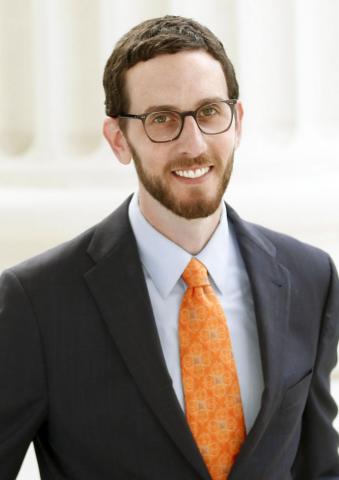
Ask Maddy about Scott Wiener
Scope: california
Hi! I can help you understand Scott Wiener's legislative record. What would you like to know?
Try one of these
i
Maddy answers using official bill text and legislative records. Always verify before sharing.
Sources cited inline