

Passed Feb 6, 2023
1 co-sponsor
Total votes
20,897
all sessions
Attendance
82%
2,257 missed
Lower than 93% of chamber peers
With party
99%
of cast votes
Lower than 90% of chamber peers
Bipartisan score
1%
crosses aisle rarely
Higher than 90% of chamber peers
Sponsored
936
bills & resolutions
Lower than 83% of chamber peers
Committees
10
assignments
936 bills and resolutions
Sponsored bills
Total
936
Primary
79
Co-sponsor
857
This page
936
matching current filters
Passed Feb 6, 2023
1 co-sponsor
Passed Feb 2, 2023
1 co-sponsor
Passed Feb 2, 2023
0 co-sponsors
Passed Jan 30, 2023
1 co-sponsor
Proposition 47: repeal.
The Safe Neighborhoods and Schools Act, enacted as an initiative statute by Proposition 47, as approved by the electors at the November 4, 2014, statewide general election, made various changes relating to theft and the possession of controlled substances, including by, among other things, generally reducing the penalty for those crimes, including reducing the penalty for possession of concentrated cannabis, establishing a procedure by which individuals convicted of those crimes prior to the passage of the act may petition for resentencing under the act, and creating the crime of shoplifting. The act also requires the Director of Finance to calculate the savings accruing to the state as a result of the implementation of the act and requires the Controller to transfer that sum from the General Fund to the Safe Neighborhoods and Schools Fund, which was created by the act. The act specifies the manner of distribution of those funds and the purposes for which they may be used. This bill would repeal the changes and additions made by Proposition 47, except those related to reducing the penalty for possession of concentrated cannabis. Existing law makes it a crime for a caretaker of an elder or a dependent adult, or a person who is not a caretaker and who knows or reasonably should know that the victim is an elder or a dependent adult, to violate specified laws proscribing theft, embezzlement, forgery, fraud, or identity theft with respect to the property or personal identifying information of that elder or dependent adult. Existing law makes a violation of those provisions punishable as a misdemeanor or a felony when the moneys, labor, goods, services, or real or personal property taken or obtained is of a value exceeding $950. This bill would reduce the value threshold for a violation of those provisions to be punishable as a felony from $950 to $400. Existing law defines grand theft as the wrongful taking of money, labor, or property of a value exceeding $950, except as specified. Existing law also makes it grand theft where the money, labor, or real or personal property is taken by a servant, agent, or employee from their principal or employer and aggregates $950 or more in any consecutive 12-month period. This bill would reduce the value threshold for committing grand theft under those provisions from $950 to $400. This bill would provide that it would become effective only upon approval of the voters, and would provide for the submission of this measure to the voters for approval at the next statewide general election.
Failed Oct 24, 2022
1 co-sponsor
Advisory Commission on Special Education.
Existing law establishes the Advisory Commission on Special Education as an entity in state government consisting of 17 members to, among other things, study and provide assistance and advice to the State Board of Education, the Superintendent of Public Instruction, the Legislature, and the Governor in new or continuing areas of research, program development, and evaluation in special education. This bill would increase the number of members on the commission to 19 and would require the commission to appoint 2 pupils with exceptional needs, 16 to 22 years of age, inclusive, to the commission for a term of one year, as provided.
Signed into law Sep 30, 2022
1 co-sponsor
Income taxes: gross income exclusions: wildfires.
(1) The Personal Income Tax Law and the Corporation Tax Law, in conformity with federal income tax law, generally defines "gross income" as income from whatever source derived, except as specifically excluded, and provides various exclusions from gross income. Until January 1, 2028, this bill would provide an exclusion from gross income for any qualified taxpayer, as defined, for amounts received for costs and losses associated with one or more specified fires from a settlement, as provided. (2) Existing law establishes the continuously appropriated Tax Relief and Refund Account and provides that payments required to be made to taxpayers or other persons from the Personal Income Tax Fund are to be paid from that account. This bill would authorize the refund of overpayments of tax as a result of the above-described exclusion, in prior tax years, payable out of the Tax Relief and Refund Account. By authorizing new payments from a continuously appropriated fund, this bill would make an appropriation. (3) Existing law requires that any bill introduced on or after January 1, 2020, that would authorize certain tax expenditures, as defined, or tax exemptions contain, among other things, specific goals, purposes, and objectives that the tax expenditure or exemption will achieve, detailed performance indicators, and data collection requirements. This bill would include additional information required for any bill authorizing a new tax expenditure. (4) This bill would apply its provisions to taxable years beginning before, on, and after the effective date of this bill. The bill would make legislative findings and declarations regarding the public purpose served by this bill. (5) This bill would declare that it is to take effect immediately as an urgency statute.
Signed into law Sep 29, 2022
1 co-sponsor
Special education: inclusive education: universal design for learning.
Existing law finds and declares that all individuals with exceptional needs have a right to participate in free appropriate public education and special educational instruction and services for these persons are needed in order to ensure the right to an appropriate educational opportunity to meet their unique needs. Existing law provides that it is the intent of the Legislature that education programs are provided under an approved local plan for special education, as provided. Existing law further provides that it is the intent of the Legislature that appropriate qualified staff are employed, consistent with credential requirements, to fulfill the responsibilities of the local plan. Existing law establishes in state government the Commission on Teacher Credentialing and requires it to adopt standards for the issuance of teaching credentials, as provided. This bill would require the commission, on or before January 1, 2024, to revise its administrative services credential standards and performance expectations to include and strengthen preparation for inclusion, with a focus on, among other things, universal design for learning (UDL) , as defined. The bill would require administrator preparation programs to ensure faculty are prepared in, among other things, UDL. Contingent upon an appropriation, the bill would require the State Department of Education, in consultation with the commission, on or before March 31, 2024, to develop and disseminate joint guidance clarifying the ways in which inclusive classrooms and placements may be staffed under current law, as provided. The bill would require the department, in consultation with the commission, on or before March 31, 2024, to submit a report to the Legislature on recommendations for statutory or regulatory changes necessary to eliminate barriers to the staffing of inclusive placements. Existing law establishes in state government the Instructional Quality Commission to study courses of study in the schools and make recommendations to the State Board of Education regarding the adoption of minimum standards for courses of study, as provided. This bill would require the department, on or before June 30, 2023, to train members of the commission on the principles and strategies of UDL. The bill would require the commission to assess the extent to which instructional materials submitted for state adoption use UDL principles and strategies.
Vetoed Sep 29, 2022
1 co-sponsor
Pupil health: food allergies: California Food Allergy Resource internet web page.
Existing law requires the governing board of a school district to give diligent care to the health and physical development of pupils and authorizes the governing board of a school district to employ properly certified persons for that work. Existing law requires school districts, county offices of education, and charter schools to provide emergency epinephrine auto-injectors to school nurses or trained volunteer personnel, and authorizes school nurses and trained personnel to use epinephrine auto-injectors to provide emergency medical aid to persons suffering, or reasonably believed to be suffering, from an anaphylactic reaction, as provided. This bill would require the State Department of Education to create the California Food Allergy Resource internet web page to provide voluntary guidance to school districts, county offices of education, and charter schools to help protect pupils with food allergies. The bill would require the department to ensure that the internet web page provides practical information, planning steps, and strategies for reducing allergic reactions to food within schools and early education centers. The bill would require the internet web page to include specified content, including state and federal resources available to pupils with food allergies, methods for pupils, or their parents and guardians, to initiate individualized food allergy management and prevention plans and to obtain food ingredient lists from school food providers, and strategies to minimize the risk of food anaphylaxis in school. The bill would encourage local educational agencies to consult the internet web page and use it as an equitable resource to ensure the inclusiveness of pupils with food allergies at school and to make it available to pupils, parents, and guardians annually.
Signed into law Sep 29, 2022
1 co-sponsor
Ask Maddy
·
AI policy assistant
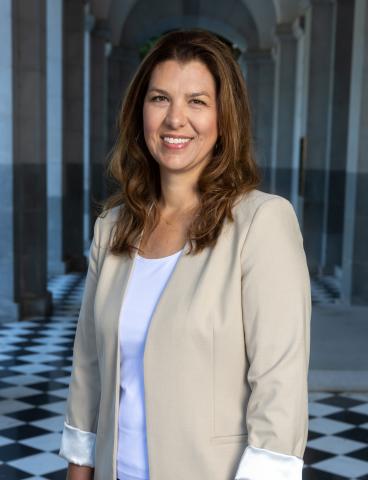
Ask Maddy about Megan Dahle
Scope: CA
Hi! I can help you understand Megan Dahle's legislative record. What would you like to know?
Try one of these
i
Maddy answers using official bill text and legislative records. Always verify before sharing.
Sources cited inline