

Relative to Korean American Day.
This measure would proclaim January 13, 2019, as Korean American Day.
Signed into law Feb 11, 2019
1 co-sponsor
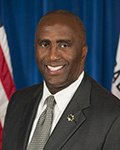
This measure would proclaim January 13, 2019, as Korean American Day.
This measure would honor the late Reverend Dr. Martin Luther King, Jr. and commemorate Dr. Martin Luther King, Jr. Day.
Existing law, the Child Abuse and Neglect Reporting Act, makes certain persons, including teachers and social workers, mandated reporters. Under existing law, mandated reporters are required to report whenever the mandated reporter, in his or her professional capacity or within the scope of his or her employment, has knowledge of or observes a child whom the mandated reporter knows or reasonably suspects has been the victim of child abuse or neglect. Failure by a mandated reporter to report an incident of known or reasonably suspected child abuse or neglect is a misdemeanor. Existing law generally requires prosecution of a misdemeanor to commence within one year after commission of the offense. Under existing law, if the mandated reporter intentionally conceals his or her failure to report an incident known by the mandated reporter to be abuse or severe neglect, it is a continuing offense until discovered by the appropriate law enforcement agency. This bill would allow a case involving the failure to report an incident known or reasonably suspected by the mandated reporter to be sexual assault, as defined, to be filed at any time within 5 years from the date of occurrence of the offense.
(1) Existing law authorizes a minor who is 12 years of age or older and is alleged to have been raped, or a minor who is alleged to have been sexually assaulted, to consent to medical care related to the diagnosis and treatment of the condition and the collection of medical evidence with regard to the alleged rape or sexual assault. This bill would authorize a minor who is 12 years of age or older and who states he or she is injured as a result of intimate partner violence, as defined, to consent to medical care related to the diagnosis or treatment of the injury and the collection of medical evidence with regard to the alleged intimate partner violence. The bill would specify that this provision would not apply to a case in which a minor is an alleged victim of rape or is alleged to have been sexually assaulted, in which case the above-described provisions would apply. (2) Existing law requires a health practitioner who works in a certain type of health facility and provides medical services for a patient he or she knows or reasonably suspects is suffering from an injury caused by a firearm or assaultive or abusive conduct to make a report to a local law enforcement agency about the patient and the extent of the injuries. This bill would require a health practitioner that believes a report is required pursuant to these provisions, when providing treatment to an above-described minor injured as a result of alleged intimate partner violence, to inform the minor that the report will be made and attempt to contact the minor's parent or guardian and inform him or her of the report, except as specified.
Existing law, the State Civil Service Act, provides for filling certain state positions through the process of examinations and the establishment of eligible lists and promotional lists. Existing law requires the Department of Human Resources to administer the Personnel Classification Plan for state civil service positions, including the allocation of every position to the appropriate class in the classification plan. This bill would require the Department of Human Resources to, by December 13, 2019, and every 2 years thereafter, evaluate all civil service classifications and prepare a detailed report on gender and ethnicity pay equity in each classification where there is an underrepresentation of women and minorities. The bill would require each state agency to submit specified information to the department about each state civil service certification within the agency. The bill would require the department to prepare a plan for each state agency to attain pay equity if a discrepancy is found and a specified plan to recruit, attract, and retain women and minorities into positions where there is an underrepresentation of those subgroups. The bill would, until January 1, 2030, require the department to submit the report to the Legislature, not later than January 1 of each year, as specified.
Existing law provides that in a civil action for recovery of damages suffered as a result of domestic violence, the time for commencement of the action shall be the later of within 3 years from the date of the last act of domestic violence by the defendant against the plaintiff or within 3 years from the date the plaintiff discovers or reasonably should have discovered that an injury or illness resulted from an act of domestic violence by the defendant against the plaintiff. This bill would set the time for commencement of any civil action for recovery of damages suffered as a result of sexual assault, as defined, where the assault occurred on or after the plaintiff's 18th birthday, to the later of within 10 years from the date of the last act, attempted act, or assault with intent to commit an act, of sexual assault by the defendant against the plaintiff or within 3 years from the date the plaintiff discovers or reasonably should have discovered that an injury or illness resulted from an act, attempted act, or assault with intent to commit an act, of sexual assault by the defendant against the plaintiff.
(1) Existing law, the California Financing Law, generally provides for the licensure and regulation of finance lenders, brokers, and, beginning on January 1, 2019, program administrators, by the Commissioner of Business Oversight. The CFL makes a willful violation of specified provisions a crime. The CFL, until January 1, 2023, establishes the Pilot Program for Increased Access to Responsible Small Dollar Loans (pilot program) , which requires licensees and other entities that wish to participate in the pilot program to file an application and pay a specified fee to the commissioner to participate in the pilot program. The pilot program authorizes a licensee approved by the commissioner to participate in the pilot program to impose specified alternative interest rates and charges, including an administrative fee and delinquency fees, on unsecured loans of at least $300 and less than $2,500, subject to certain requirements. This bill would increase the upper limit on the amount of a permissible loan under the pilot program from $2,500 to $7,500 and make corresponding changes. (2) Under the pilot program, a licensee is prohibited from making a loan if that licensee determines, through its underwriting, that the borrower's total monthly debt service payments exceed 50% of the borrower's monthly gross income. This bill would instead prohibit a licensee from making a loan under these circumstances if the borrower's total monthly debt service payments exceed 50% of the borrower's gross monthly income for a loan of no more than $2,500, or exceed 36% of the borrower's gross monthly income for a loan in excess of $2,500. (3) The pilot program establishes that a loan with a principal balance, upon origination, of at least $1,500 is required to have a term of not less than 180 days. As an alternative to other authorized charges, a licensee approved by the commissioner to participate in the pilot program may contract for and receive charges at an annual simple interest rate not exceeding specified amounts. This bill would additionally require a loan under the pilot program that has a principal balance exceeding $2,500 to have a minimum term of one year and a maximum term of 5 years. The bill would also require licensees to reduce the interest rates on each subsequent loan to the same borrower by a minimum of one percentage point and subject to additional reductions, if specified conditions are satisfied. (4) Under the pilot program, licensees are required to develop and implement policies and procedures designed to respond to questions raised by applicants and borrowers regarding their loans, including those involving finders. Existing law describes a finder as an entity that brings a licensee and a prospective borrower together for the purpose of negotiating a loan contract. This bill would also require licensees to perform reasonable background checks on any finders associated with a licensee's participation in the pilot program. (5) The pilot program authorizes a licensee who is approved to participate in the program to use the services of one or more finders. Existing law defines a "finder" for these purposes as an entity that, at the finder's physical location for business, brings a licensee and a prospective borrower together for the purpose of negotiating a loan contract. This bill would authorize the commissioner to charge a licensee participating in the program an additional fee to offset the commissioner's costs to oversee and examine the activities of that licensee's finder or finders. (6) Existing law requires the Commissioner of Business Oversight to examine each licensee that is accepted into the program at least once every 24 months. This bill would require the commissioner also to examine each finder whose services were used by the licensee at least once every 24 months. (7) Existing law requires the Commissioner of Business Oversight to post reports containing specified information on his or her Internet Web site that summarize utilization of the Pilot Program for Increased Access to Responsible Small Dollar Loans. If more than one licensee is approved to participate in the program, existing law requires that information in the report to be stated in aggregate to avoid identifying data by specific licensee. This bill would require that these reports also contain specified information for each finder whose services were used by a licensee in connection with the loans or loan applications, along with the finder's identity. By increasing the scope of the program, the bill would expand the definition of a crime, thereby imposing a state-mandated local program. (8) The California Constitution requires the state to reimburse local agencies and school districts for certain costs mandated by the state. Statutory provisions establish procedures for making that reimbursement. This bill would provide that no reimbursement is required by this act for a specified reason.