

Passed Mar 6, 2014
1 co-sponsor
Total votes
20,914
all sessions
Attendance
92%
1,471 missed
Near the chamber average
With party
97%
of cast votes
Lower than 95% of chamber peers
Bipartisan score
1%
crosses aisle rarely
Higher than 89% of chamber peers
Sponsored
1,581
bills & resolutions
Near the chamber average
Committees
0
assignments
1,581 bills and resolutions
Sponsored bills
Total
1,581
Primary
190
Co-sponsor
1,391
This page
1,581
matching current filters
Passed Feb 10, 2014
1 co-sponsor
Public education governance: regional P-20 councils: advisory committee.
Existing law establishes a system of public elementary and secondary schools in this state, and authorizes local educational agencies throughout the state to operate schools and provide instruction to pupils in kindergarten and grades 1 to 12, inclusive (K–12) . Existing law also establishes a system of public postsecondary education in the state that consists of 3 segments: the University of California, the California State University, and the California Community Colleges. This bill would express the intent of the Legislature to affirm the employer-education partnership model of a regional P-20 council, as defined, as a desired structure in California to help align preschool, K–12, community college, 4-year college, and graduate and professional education programs and funding to advance strategic educational and economic outcomes. Contingent upon the enactment of an appropriation for this purpose in the annual Budget Act or another statute, this bill would require the State Department of Education, in consultation with specified entities, including, but not limited to, the Governor's Office of Business and Economic Development, to study best practices of state and regional P-20 councils in California and across the nation to identify key statewide policies and goals that P-20 councils may seek to further, and to report its findings and recommendations to the Legislature on or before July 1, 2015. These provisions would be repealed on July 1, 2020.
Failed Feb 3, 2014
0 co-sponsors
Class size reduction.
Existing law establishes the Class Size Reduction Program under which a participating school district or county office of education establishes a program to reduce class size in kindergarten and grades 1 to 3, inclusive, to 20 or fewer pupils. Existing law, provides that, if a school district receives funding pursuant to those provisions but has not implemented its class size reduction program for all grades and classes for which it received funding, then an amount equal to the amount received by the school district shall pursuant to those provisions be deducted by the Controller from the next principal apportionment to the district. Existing law, for the 2008–09, 2009–10, 2010–11, 2012–13, and 2013–14 fiscal years, provides for an adjustment to the amount of the deduction pursuant to a certain schedule based on the annual average enrollment for each class. This bill, for the 2014–15, 2015–16, 2016–17, and 2017–18 fiscal years, would provide for an adjustment to the deduction pursuant to a certain schedule based on the annual average enrollment for each class.
Failed Feb 3, 2014
0 co-sponsors
Parole.
Existing law requires that persons released after serving a term in state prison for specified felonies be subject to parole supervision by the Department of Corrections and Rehabilitation. Under existing law, if the supervising parole agency has determined that other sanctions are inappropriate, the agency may petition the court to revoke parole for specified violations. The court may respond to this petition by returning the person to parole supervision with a modification of conditions, revoke parole and order confinement in county jail, or refer the person to a reentry court. This bill would authorize the court, upon petition, to revoke parole and return the person to state prison for a period not to exceed one year. The bill would require the Legislative Analyst's Office, on or before January 1, 2015, to produce a report, to be delivered to the Assembly, the Senate, and the Governor's office, evaluating the criminal justice realignment, specifically with regard to offenders under state supervision, as specified.
Failed Feb 3, 2014
1 co-sponsor
Vehicles: driver's licenses.
The Brady-Jared Teen Driver Safety Act of 1997 requires, with a specified exception, that a driver's license issued to a person at least 16 years of age but under 18 years of age be issued pursuant to the provisional licensing program and consist of specified components, including, but not limited to, that the person complete 50 hours of supervised driving practice, as specified, prior to the issuance of a provisional license. Existing law requires that, upon application for a provisional license, the person submit to the Department of Motor Vehicles the certification of a parent, spouse, guardian, or licensed or certified driving instructor that the applicant has completed the required amount of driving practice and is prepared to take the department's driving test. Existing law permits a person without a parent, spouse, guardian, or who is an emancipated minor, to have a licensed driver 25 years of age or older or a licensed or certified driving instructor complete the certification. This bill would expand the scope of the provisional licensing program by extending the applicable age range for the program to 16 to 20 years of age. By expanding the scope of the provisional licensing program, a violation of which constitutes an infraction, the bill would impose a state-mandated local program. The bill would additionally permit a provisional licensee 18 or 19 years of age to have a licensed driver 25 years of age or older or a licensed or certified driving instructor complete the certification described above. Existing law, with a specified exception, subjects the provisional driver's license to various restrictions, including that during the first 12 months after issuance of a provisional license, the licensee generally may not drive between the hours of 11 p.m. and 5 a.m. or transport passengers who are under 20 years of age unless, in either case, he or she is accompanied and supervised by a licensed driver, as specified, or a licensed or certified driving instructor. Existing law authorizes limited exceptions to these restrictions that permit a licensee to drive in specified circumstances, including, but not limited to, a schooling or school-authorized activity, an employment necessity, or a necessity of the licensee or the licensee's immediate family member. This bill would permit a provisional licensee 18 or 19 years of age to keep in his or her possession a copy of his or her class schedule as documentation to satisfy the exception for schooling or school-authorized activities. The bill would also permit a provisional licensee 18 or 19 years of age to keep in his or her possession a copy of his or her work schedule as documentation to satisfy the exception for employment necessity. The bill would provide that a signed statement by a parent or legal guardian is not required if reasonable transportation facilities are inadequate and operation of a vehicle by a provisional licensee 18 or 19 years of age is necessary to transport the licensee or the licensee's immediate family member. Existing law also requires that any term of restriction or suspension of the driving privilege imposed on a provisional licensee remain in effect until the end of the term even though the provisional licensee becomes 18 years of age before the term ends. This bill would require that any term of restriction or suspension of the driving privilege imposed on a provisional licensee remain in effect until the end of the term even though the person becomes 20 years of age, rather than 18 years of age, before the term ends. This bill would make other technical and conforming changes. The California Constitution requires the state to reimburse local agencies and school districts for certain costs mandated by the state. Statutory provisions establish procedures for making that reimbursement. This bill would provide that no reimbursement is required by this act for a specified reason.
Failed Feb 3, 2014
0 co-sponsors
The California Public Records Act: applications for licenses and licenses to carry firearms.
Existing law, the California Public Records Act, provides that public records are open to inspection at all times during the office hours of the state or local agency that retains those records, and every person has a right to inspect any public record, except as provided. However, existing law provides that nothing in the act shall be construed to require disclosure of information contained in an application for a license to carry a firearm that indicates when or where the applicant is vulnerable to attack or that concerns the applicant's medical or psychological history or that of members of his or her family. Existing law also provides that the provisions shall not be construed to require disclosure of the home address and telephone number of prosecutors, public defenders, peace officers, judges, court commissioners, and magistrates that are set forth in applications for licenses or in licenses to carry firearms, as specified. This bill would instead provide that the California Public Records Act shall not be construed to require the disclosure of the home addresses and telephone numbers of applicants that are set forth in applications to carry firearms or of licensees that are set forth in licenses to carry firearms, as specified. This bill would also prohibit this provision from being construed as prohibiting the disclosure of public records relating to the reason an application for a license to carry a firearm was granted or denied, as specified. Because this bill would increase the duties of county sheriffs and the chiefs or other heads of police departments that issue firearms license applications, this bill would impose a state-mandated local program. This bill would also make technical, nonsubstantive changes to these provisions. Existing constitutional provisions require that a statute that limits the right of access to public bodies or the writings of public officials and agencies be adopted with findings demonstrating the interest protected by the limitation and the need for protecting that interest. This bill would make legislative findings to that effect. The California Constitution requires the state to reimburse local agencies and school districts for certain costs mandated by the state. Statutory provisions establish procedures for making that reimbursement. This bill would provide that, if the Commission on State Mandates determines that the bill contains costs mandated by the state, reimbursement for those costs shall be made pursuant to these statutory provisions.
Failed Feb 3, 2014
1 co-sponsor
Shaken baby syndrome.
Existing law requires that information and instructional materials regarding shaken baby syndrome be provided free of charge by each health facility to parents or guardians of each newborn, upon discharge from the health facility and by the State Department of Social Services to child care providers upon licensure. This bill would require the department, in consultation with the State Department of Public Health, the Department of Justice, and First 5 California, to develop and implement the Shaken Baby Syndrome Education Program, which would provide new parents and other adult caregivers of newborns and young infants with information and education relating to the prevention of shaken baby syndrome. The bill would also require these agencies to develop a process for the selection of eligible counties to voluntarily participate in the program. The bill would require the department, by January 1, 2020, to evaluate and submit to the Legislature a report on the effectiveness of the program in reducing the number of injuries and infant deaths in the state resulting from shaken baby syndrome, including a review of benchmarks, feedback about the program, and improvement opportunities, as applicable. The bill would provide that the activities required by its provisions shall be funded with available moneys from the Children's Trust Fund. The bill would also authorize the department to accept and expend other private funds received by the department from donations for the purposes of the program. The bill would make its provisions inoperative on July 1, 2020, and repeal them by January 1, 2021.
Failed Feb 3, 2014
0 co-sponsors
Crimes: enhancements: punishment: state prison.
Existing law generally requires that felonies punishable by imprisonment in a county jail be punished either by the term described in the underlying offense or by a term of 16 months, or 2 or 3 years if the term is not specified. Existing law requires an executed sentence for these felonies to be punished in state prison if the defendant has a prior or current felony conviction for a serious or violent felony, is required to register as a sex offender, or is convicted of a crime for which the white collar crime enhancement is imposed as part of the sentence. Existing law imposes an additional term for a conviction of a violation of, or of a conspiracy to violate, specified provisions of law with respect to a substance containing heroin, cocaine base, cocaine, methamphetamine, amphetamine, or phencyclidine and its analogs, if the substance exceeds a specified weight. Existing law imposes a greater additional term under these provisions depending on the weight of the substance. This bill would additionally require an executed sentence to be punished in state prison if the defendant is convicted of a crime for which an enhancement is imposed pursuant to the above provision regarding those specified substances.
Failed Feb 3, 2014
0 co-sponsors
Public contracts: design-build: Capitol Southeast Connector Project.
Existing law, until January 1, 2014, authorizes certain state and local transportation entities, if authorized by the California Transportation Commission, to use a design‑build process for contracts on transportation projects, as specified. Existing law establishes a procedure for submitting bids that includes a requirement that design-build entities provide a statement of qualifications submitted to the transportation entity that is verified under oath, subject to penalty of perjury. This bill would authorize the Capitol Southeast Connector Joint Powers Authority to utilize design-build procurement for the Southeast Connector Project in Sacramento County, subject to authorization by the commission. The bill would require a transportation entity, as defined, awarding a contract for a public works project pursuant to these provisions, to reimburse the Department of Industrial Relations for costs of performing prevailing wage monitoring and enforcement of the public works project and would require moneys collected to be deposited into the State Public Works Enforcement Fund, a continuously appropriated fund. By depositing money in a continuously appropriated fund, the bill would make an appropriation. This bill would make legislative findings and declarations as to the necessity of a special statute for Sacramento County. Because the bill would extend the use of design-build procurement to the authority, subject to existing procedures, the bill would, by extension, impose the statement of qualifications requirement upon the authority, subject to penalty of perjury, thereby creating a new crime and imposing a state-mandated local program. The California Constitution requires the state to reimburse local agencies and school districts for certain costs mandated by the state. Statutory provisions establish procedures for making that reimbursement. This bill would provide that no reimbursement is required by this act for a specified reason.
Failed Feb 3, 2014
0 co-sponsors
Ask Maddy
·
AI policy assistant
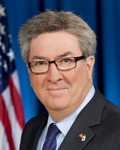
Ask Maddy about Ken Cooley
Scope: california
Hi! I can help you understand Ken Cooley's legislative record. What would you like to know?
Try one of these
i
Maddy answers using official bill text and legislative records. Always verify before sharing.
Sources cited inline