

Passed Jan 17, 2017
1 co-sponsor
Total votes
20,914
all sessions
Attendance
92%
1,471 missed
Near the chamber average
With party
97%
of cast votes
Lower than 95% of chamber peers
Bipartisan score
1%
crosses aisle rarely
Higher than 89% of chamber peers
Sponsored
1,581
bills & resolutions
Near the chamber average
Committees
0
assignments
1,581 bills and resolutions
Sponsored bills
Total
1,581
Primary
190
Co-sponsor
1,391
This page
1,581
matching current filters
Passed Dec 5, 2016
0 co-sponsors
Passed Dec 5, 2016
1 co-sponsor
Child abuse reporting.
Existing law requires the Department of Justice to maintain an index of all reports of child abuse and severe neglect submitted by agencies mandated to make those reports. Existing law requires the Department of Justice to make relevant information contained in the index available to specified law enforcement agencies, county welfare departments, and other agencies that are conducting a child abuse investigation. Existing law authorizes a designated Court Appointed Special Advocate (CASA) program to submit to the department fingerprint images and related information of employment and volunteer candidates for the purpose of obtaining information as to the existence and nature of any record of child abuse investigations contained in the Child Abuse Central Index, state- or federal-level convictions, or state- or federal-level arrests for which the department establishes that the applicant was released on bail or on his or her own recognizance pending trial. Existing law requires the department to charge a fee sufficient to cover the cost of processing the requests for state- and federal-level criminal offender record information. This bill would instead prohibit the department from charging a fee for state-level criminal offender record information.
Signed into law Sep 30, 2016
0 co-sponsors
Child abuse: reporting: foster family agencies.
(1) The Child Abuse and Neglect Reporting Act requires a mandated reporter, as defined and including an administrator or employee of a public or private organization whose duties require direct contact and supervision of children, to make a report to a specified agency whenever the mandated reporter, in his or her professional capacity or within the scope of his or her employment, has knowledge of or observes a child whom the mandated reporter knows or reasonably suspects has been the victim of child abuse or neglect. Under existing law, the failure to make this report is a crime. Existing law also prohibits a supervisor or administrator from impeding or inhibiting the reporting duties, provides that a person making the report shall not be subject to any sanctions for making the report, and prohibits internal procedures to facilitate reporting from requiring any employee required to make reports to disclose his or her identity to the employer. Existing law, the California Community Care Facilities Act (the act) , governs the licensing and regulation of community care facilities, as defined, including foster family agencies for children. Existing law vests responsibility for administering and enforcing laws and regulations governing those facilities in the State Department of Social Services. Existing law authorizes the department to prohibit a person from being a member of the board of directors, an executive director, or an officer of a licensee, or a licensee from employing, or continuing the employment of, or allowing in a licensed facility or certified family home, or allowing contact with clients of a licensed facility or certified family home by, any employee, prospective employee, or person who is not a client who has committed various acts or has been denied an exemption to work or to be present in a facility or certified family home, as specified. This bill would expand the definition of mandated reporter to include a board member of a public or private organization whose duties require direct contact and supervision of children, including a foster family agency. By imposing the reporting requirements on a new class of persons, for whom failure to report specified conduct is a crime, this bill would impose a state-mandated local program. The bill would also require the department to develop a notice regarding the reporting of complaints and would require the posting of that notice in all foster family agencies, as specified. The bill would require that if the department, as a condition of licensure, requires the chief executive officer or other authorized member of the board of directors and the administrator of a foster family agency to attend an orientation given by the licensing agency that outlines the applicable rules and regulations for operation of a foster family agency, that orientation shall include a description of policies, procedures, or practices that violate the provisions described above governing mandated reporters. The bill would require the department to take reasonable action, including, among other things, prohibiting a person from being a member of the board of directors, upon a finding of a violation of the provisions described above governing mandated reporters. (2) This bill would incorporate additional changes to Section 11165.7 of the Penal Code proposed by AB 1997 that would become operative if this bill and AB 1997 are chaptered and this bill is chaptered last. (3) The California Constitution requires the state to reimburse local agencies and school districts for certain costs mandated by the state. Statutory provisions establish procedures for making that reimbursement. This bill would provide that no reimbursement is required by this act for a specified reason.
Signed into law Sep 30, 2016
1 co-sponsor
Workers' compensation: neuropsychologists.
Existing workers' compensation law generally requires employers to secure the payment of workers' compensation, including medical treatment, for injuries incurred by their employees that arise out of, or in the course of, employment. Existing law requires the Administrative Director of the Division of Workers' Compensation to appoint qualified medical evaluators in each of the respective specialties as required for the evaluation of medical-legal issues, including medical doctors and osteopaths who meet specified requirements, including, among others, that the evaluator is board certified in a specialty by a board recognized by the administrative director and the appropriate regulatory board, or the evaluator has successfully completed a residency training program accredited by the Accreditation Council for Graduate Medical Education. Existing law also provides that the requirements for a psychologist to be appointed as an evaluator include either being board certified in clinical psychology by a board recognized by the administrative director, holding a doctoral degree in psychology or a doctoral degree sufficient for licensure, and having at least 5 years of specified experience, or having at least 5 years of postdoctoral experience and having previously served as a medical evaluator. This bill would provide that a medical doctor or osteopath who has successfully completed a residency or fellowship program accredited by a predecessor to the Accreditation Council for Graduate Medical Education would satisfy the residency training requirement. The bill would provide that a person who is certified in neuropsychology by specified boards or organizations, or who is a clinical psychologist licensed to practice in the state, holds a doctoral degree in psychology, and has at least 2 years of specified experience and training, and has served as an agreed medical evaluator in neuropsychology on 5 or more occasions may be appointed by the administrative director as a qualified medical evaluator in neuropsychology. The bill would state findings and declarations of the Legislature relative to the need for neuropsychologists in the workers' compensation system. The bill would make additional technical, nonsubstantive changes. This bill would declare that it is to take effect immediately as an urgency statute.
Vetoed Sep 30, 2016
0 co-sponsors
Workers' compensation.
Under existing law, the Director of Health Care Services is authorized, for purposes of administering the Medi-Cal program, to suspend a provider of service from further participation under the program for specified reasons, including conviction of any felony or any misdemeanor involving fraud, abuse of the Medi-Cal program or any patient, or otherwise substantially related to the qualifications, functions, or duties of a provider of service. Existing law requires the director, upon receipt of written notification from the Secretary of the United States Department of Health and Human Services that a physician or other individual practitioner has been suspended from participation in the Medicare or Medicaid programs, to promptly suspend the practitioner from participation in the Medi-Cal program. Existing law establishes a workers' compensation system, administered by the Administrative Director of the Division of Workers' Compensation, that generally requires employers to secure the payment of workers' compensation for injuries incurred by their employees that arise out of, or in the course of, employment. Existing law requires an employer to provide all medical services reasonably required to cure or relieve the injured worker from the effects of the injury. Existing law authorizes an insurer, employer, or entity that provides physician network services to establish or modify a medical provider network for the provision of medical treatment to injured employees and requires the administrative director to contract with individual physicians or an independent medical review organization to perform medical provider network independent medical reviews. This bill would require the administrative director to promptly suspend any physician, practitioner, or provider from participating in the workers' compensation system if as a physician, practitioner, or provider the individual or entity meets specified criteria, including if that individual has been convicted of any felony or misdemeanor involving fraud or abuse of the Medi-Cal program, Medicare program, or workers' compensation system, if that individual's license, certificate, or approval to provide health care has been surrendered or revoked, or if that individual or entity has been suspended, due to fraud or abuse, from participation in the Medicare or Medicaid programs. The bill would require the administrative director to adopt regulations for suspending a physician, practitioner, or provider from participating in the workers' compensation system pursuant to these provisions, as specified, and would require the administrative director to furnish to the physician, practitioner, or provider written notice of the right to a hearing regarding the suspension and the procedure to follow to request that hearing. The bill would also require the administrative director to promptly notify the appropriate state licensing, certifying, or registering authority of a physician's, practitioner's, or provider's suspension and to update the division's databases of qualified medical evaluators and medical provider networks. The bill would require the administrative director to notify the chief judge of the division of a suspension under these provisions, as specified, and post a notice on the department's Internet Web site. The bill would enact special lien proceedings for the adjudication of any liens of a physician, practitioner, or provider who has been suspended pursuant to these provisions because he or she has been convicted of a felony or misdemeanor that meets specified criteria. The bill would also require the Director of Health Care Services to notify the administrative director of a suspension of a physician from participation in the Medi-Cal program imposed pursuant to the provisions described above authorizing the director to suspend a provider of service from participation. Existing law establishes the Workers' Compensation Appeals Board to exercise all judicial powers vested in it, as specified, including workers' compensation proceedings for the recovery of compensation, or concerning any right or liability arising out of or incidental to the recovery of compensation. Existing law vests the appeals board with full power, authority, and jurisdiction to try and determine finally those matters, subject only to the review by the courts, as specified. Existing law authorizes the appeals board to determine, and allow as liens against any sum to be paid as compensation, as specified, a reasonable attorney's fee for legal services and disbursements in connection with those legal services. Existing law provides that a charge, claim, or agreement for those legal services or disbursements is not enforceable, valid, or binding in excess of a reasonable amount. Existing law also requires an attorney to furnish to the employee a written disclosure form describing the procedures available to the injured employee or his or her dependents and specified information regarding attorney's fees. Existing law requires that a copy of the disclosure form be signed by the employee and the attorney and sent to the employer, or insurer or 3rd-party administrator, if either is known, by the attorney within 15 days of the employee's and attorney's execution of the form. Existing law also requires the employee, the insurer, the employer, and the attorneys for each party to sign and file with the board a statement, signed under penalty of perjury, attesting that the signatories have not violated specified laws prohibiting conflicts of interest. Existing law authorizes the appeals board, a workers' compensation judge, or any party to the action or proceeding, as specified, to cause the deposition of witnesses in any investigation or hearing before the appeals board, and provides that the deponent is entitled to receive specified benefits, such as reasonable expenses of transportation, meals, and lodging, as specified. This bill would prohibit payment for legal services or disbursements in connection with those legal services, or expenses relating to the deposition of witnesses, incurred under the provisions described above, as specified, prior to the filing of the disclosure form with the appeals board and the sending of that form to the employer, or to the insurer or 3rd-party administrator, if either is known, by the attorney. The bill would require the disclosure form described above to contain a paragraph setting forth the exact location of the district office of the appeals board at which the employee's case will be filed and to include a specified statement. The bill would impose other requirements regarding the signing and content of the form, including that the form be signed under penalty of perjury by the attorney representing the employee, and would require the form to be filed with the appeals board. The bill would also require an attorney who subsequently assumes the representation of the employee in the same action or proceeding to complete and sign under penalty of perjury a disclosure form that meets the above-described requirements and the statement attesting that the signatories have not violated specified laws prohibiting conflicts of interest. The bill would require the attorney to file the form and statement with the appeals board, and send them to the employer, or insurer or 3rd-party administrator, if either is known, within 15 days of the employee's and attorney's execution of the form and statement. By expanding the scope of the crime of perjury under these provisions, this bill would impose a state-mandated local program. The California Constitution requires the state to reimburse local agencies and school districts for certain costs mandated by the state. Statutory provisions establish procedures for making that reimbursement. This bill would provide that no reimbursement is required by this act for a specified reason.
Signed into law Sep 30, 2016
1 co-sponsor
The California Residential Mortgage Lending Act: lenders: licensees.
Existing law defines specified terms for purposes of the California Residential Mortgage Lending Act, which generally prohibits a person from engaging in the business of making residential mortgage loans or servicing residential mortgage loans without first obtaining a license from the Commissioner of Business Oversight in accordance with the act. Existing law defines a lender as a person who is an approved lender for the Federal Housing Administration, the Veterans Administration, the Farmers Home Administration, the Government National Mortgage Association, the Federal National Mortgage Association, or the Federal Home Loan Mortgage Corporation, who directly makes residential mortgage loans, and who makes the credit decision in the loan transactions. Existing law requires a licensee issued a license for purposes of making or servicing residential mortgage loans to continuously maintain a minimum tangible net worth of $250,000. This bill would specify that the term "lender" includes a person, other than a natural person, and a natural person who is also an independent contractor, who engages in the activities of a loan processor or underwriter for residential mortgage loans, but does not solicit loan applicants, originate mortgage loans, or fund mortgage loans, as specified. The bill would authorize the commissioner to require a licensee who is engaged in the processing or underwriting of residential mortgage loans to continuously maintain a minimum tangible net worth in an amount that is greater than $250,000, but that does not exceed the net worth required of an approved lender under the Federal Housing Administration.
Signed into law Sep 29, 2016
1 co-sponsor
Unmanned aircraft systems.
(1) Existing law provides certain individuals with immunity from civil liability under specific circumstances, including, among others, limiting the civil liability of a person who in good faith, and not for compensation, renders emergency medical or nonmedical care at the scene of an emergency, as specified. This bill would further limit the exposure to civil liability of an emergency responder, defined as a paid or an unpaid volunteer or private entity acting within the scope of authority implicitly or expressly provided by a local public entity or a public employee of a local public entity to provide emergency services, for damage to an unmanned aircraft or unmanned aircraft system, if the damage was caused while the emergency responder was performing specific emergency services and the unmanned aircraft or unmanned aircraft system was interfering with the provision of those emergency services. (2) The Government Claims Act sets forth the general procedure for the presentation of a claim as a prerequisite to the commencement of an action for money or damages against a "public entity," "local public entity," or a "public employee," and defines those terms for its purposes. The act prohibits liability against a public entity or public employee for, among other things, certain acts relating to the provision of fire protection and police and correctional activities, as specified. This bill would further limit the exposure to civil liability of a local public entity or public employee of a local public entity for damage to an unmanned aircraft or unmanned aircraft system, if the damage was caused while the local public entity or public employee of a local public entity was performing specific emergency services and the unmanned aircraft or unmanned aircraft system was interfering with the provision of those emergency services. The bill would specify that this immunity is in addition to any other immunity provided to a local public entity or public employee of a local public entity under law.
Signed into law Sep 29, 2016
1 co-sponsor
Medical marijuana: regulation: research.
(1) Existing law, the Medical Marijuana Regulation and Safety Act (MMRSA) , provides for the licensure of persons engaged in specified activities relating to medical marijuana and establishes other regulatory provisions. That act also requires each licensing authority to prepare and submit to the Legislature an annual report on the authority's activities and post the report on the authority's Internet Web site. This bill would require the report to also include the number of appeals from the denial of state licenses or other disciplinary actions taken by the licensing authority, the average time spent on these appeals, and the number of complaints submitted by citizens or representatives of cities or counties regarding licensees, as specified. (2) Existing law authorizes the creation by the University of California of the California Marijuana Research Program, the purpose of which is to develop and conduct studies intended to ascertain the general medical safety and efficacy of marijuana, and if found valuable, to develop medical guidelines for the appropriate administration and use of marijuana. This bill would specify that the studies may include studies to ascertain the effect of marijuana on motor skills. (3) Existing law, until one year after the Bureau of Medical Cannabis Regulation posts a notice on its Internet Web site that licensing authorities have commenced issuing licenses pursuant to the MMRSA, exempts cooperatives and collectives who cultivate medical cannabis for qualified patients from criminal sanctions for specified activities related to the growing, sale, and distribution of marijuana. This bill, during that same period, would exempt collectives and cooperatives that manufacture medical cannabis products from criminal sanctions for manufacturing medical cannabis if the cooperative or collective meets specified requirements, including using specified manufacturing processes and possessing a valid local license, permit, or other authorization.
Signed into law Sep 29, 2016
0 co-sponsors
Ask Maddy
·
AI policy assistant
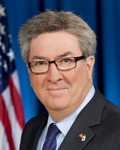
Ask Maddy about Ken Cooley
Scope: california
Hi! I can help you understand Ken Cooley's legislative record. What would you like to know?
Try one of these
i
Maddy answers using official bill text and legislative records. Always verify before sharing.
Sources cited inline