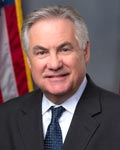
Photo of Jim Patterson
R California Assembly · District 8

Asm. Jim Patterson

Contact Email
Compare
Total votes
26,106
all sessions
Attendance
88%
2,698 missed
Near the chamber average
With party
98%
of cast votes
Lower than 92% of chamber peers
Bipartisan score
1%
crosses aisle rarely
Higher than 90% of chamber peers
Sponsored
1,951
bills & resolutions
Higher than 76% of chamber peers
Committees
0
assignments
1,951 bills and resolutions

Sponsored bills

Total
1,951
Primary
260
Co-sponsor
1,691
This page
1,951
matching current filters
Co-sponsor ACR 90
Signed into law · California Assembly · Co-sponsor
Relative to India's Independence Day.

This measure would recognize August 15, 2023, as India's Independence Day and urge all Californians to join in celebrating India's independence.

Signed into law Sep 8, 2023 1 co-sponsor
Co-sponsor SCR 86
Signed into law · California Senate · Co-sponsor
Relative to Breastfeeding Awareness Month of 2023.

This measure would proclaim August 2023 as Breastfeeding Awareness Month of 2023 in California. The measure would recognize the unique benefits that breastfeeding provides, as specified, and would affirm that Californians should work to ensure that barriers to initiation and continuation of breastfeeding are removed. The measure would encourage Californians to work together to explore ways to, among other things, improve women's access to breastfeeding support services in medical, social, and employment settings.

Signed into law Sep 8, 2023 1 co-sponsor
Primary AB 283
Passed · California Assembly · Lead sponsor
Mental Health Services Oversight and Accountability Commission.

Existing law, the Mental Health Services Act (MHSA) , an initiative measure enacted by the voters as Proposition 63 at the November 2, 2004, statewide general election, establishes the Mental Health Oversight and Accountability Commission to oversee the implementation of the MHSA. Existing law specifies the composition of the 16-member commission, including the Attorney General or their designee, the Superintendent of Public Instruction or their designee, specified members of the Legislature, and 12 members appointed by the Governor, as prescribed. Existing law authorizes the MHSA to be amended by a 23 vote of the Legislature if the amendments are consistent with, and further the purposes of, the MHSA, or by a majority vote to clarify procedures and terms. This bill would urge the Governor, in making appointments, to consider ensuring geographic representation among the 10 regions of California defined by the 2020 census.

Passed Sep 7, 2023 0 co-sponsors
Co-sponsor SCR 81
Signed into law · California Senate · Co-sponsor
Relative to the 50th anniversary of hip hop.

This measure would recognize the 50th anniversary of hip hop on August 11, 2023, as a time of celebration, pride, and nostalgia for the citizens of California.

Signed into law Sep 5, 2023 1 co-sponsor
Co-sponsor SB 318
Passed · California Senate · Co-sponsor
"2-1-1" information and referral network.

Existing law vests the Public Utilities Commission with regulatory authority over public utilities, including telephone corporations. Pursuant to authority delegated by the Federal Communications Commission to state regulatory bodies and its existing statutory authority, the Public Utilities Commission has established procedures for implementing 2-1-1 dialing in California. Existing law, until January 1, 2023, authorized the commission, if it determined that doing so was an appropriate use of funds collected from ratepayers, to expend up to $1,500,000 from the California Teleconnect Fund Administrative Committee Fund to help close 2-1-1 service gaps in counties lacking access to disaster preparedness, response, and recovery information and referral services, where technically feasible, through available 2-1-1 service. Existing law establishes various public social services programs, administered by the State Department of Social services. This bill would, upon appropriation, require the department to establish, develop, implement, and administer the 2-1-1 Support Services Grant Program. The bill would require the department to allocate 85% of funds for grants to fund core activities of 2-1-1 agencies, including, among others, contact handling, as specified, and improving the statewide ability to manage resource and user needs data to support data sharing and delivery to health systems, government agencies and other key partners, and shared capacity for analytics and systems. The bill would also require the department to allocate 15% of funds to create a Statewide Innovation Program for the purpose of collective 2-1-1 statewide network coordination with a focus on, among others, building shared strategies and project management of state and regional initiatives and related information and services, and scaling up and assisting with the operations of 2-1-1 services in specified rural counties. This bill would require a grant recipient to adhere to the principles of Alliance of Information and Referral Systems (AIRS) standards and guidelines for information and referral services. The bill would also require a grant recipient to prepare and submit an annual report to the department, which would include the activities or services funded by the grant, the number of individuals served, and specified measures of system performance. This bill would make related findings and declarations.

Passed Sep 1, 2023 1 co-sponsor
Co-sponsor SB 282
Passed · California Senate · Co-sponsor
Medi-Cal: federally qualified health centers and rural health clinics.

Existing law establishes the Medi-Cal program, which is administered by the State Department of Health Care Services and under which qualified low-income individuals receive health care services, including federally qualified health center (FQHC) services and rural health clinic (RHC) services. The Medi-Cal program is, in part, governed and funded by federal Medicaid program provisions. Under existing law, to the extent that federal financial participation is available, FQHC and RHC services are reimbursed on a per-visit basis, as specified. "Visit" is defined as a face-to-face encounter between a patient of an FQHC or RHC and a physician or other specified health care professionals. Under existing law, "visit" also includes an encounter using video or audio-only synchronous interaction or an asynchronous store and forward modality, as specified. This bill would authorize reimbursement for a maximum of 2 visits that take place on the same day at a single site, whether through a face-to-face or telehealth-based encounter, if after the first visit the patient suffers illness or injury that requires additional diagnosis or treatment, or if the patient has a medical visit and either a mental health visit or a dental visit, as defined. The bill would require the department, by July 1, 2024, to submit a state plan amendment to the federal Centers for Medicare and Medicaid Services reflecting those provisions. The bill would include a licensed acupuncturist within those health care professionals covered under the definition of a "visit." The bill would also make a change to the provision relating to physicians and would make other technical changes.

Passed Sep 1, 2023 1 co-sponsor
Primary AB 1093
Passed · California Assembly · Lead sponsor
Property taxation: manufactured homes: tax collection.

(1) Existing law, the Manufactured Home Property Tax Law, establishes a process governing the taxation of manufactured homes, including mobilehomes, as defined. Existing law requires the county tax collector, upon application, to issue a tax clearance certificate or a conditional tax clearance certificate if specified requirements are met. Existing law requires a tax clearance certificate issued to be used to permit registration of used manufactured homes and for other purposes prescribed by the Controller. The tax clearance certificate may indicate that the county tax collector finds that no local property tax is due or is likely to become due or that any applicable local property taxes have been paid or are to be paid in a manner not requiring the withholding of registration or the transfer of registration. Existing law requires a conditional tax clearance certificate issued to indicate that the county tax collector finds that a tax liability exists, the amount due, and the final date that amount may be paid before a further tax liability is incurred. This bill would revise the above-described procedures for issuing a tax clearance certificate or a conditional tax clearance certificate and for the collection of unpaid, estimated taxes. With respect to the collection of taxes that are not yet payable, the bill would require those taxes to be computed by a certificate or statement prepared by the tax collector, upon request by an escrow officer, as provided, giving their estimate of those taxes or assessments for the current fiscal year and one succeeding fiscal year. The bill would require the tax collector to issue a tax clearance certificate or a conditional tax clearance certificate upon payment of the estimate of taxes or assessments, as provided. The bill would make conforming changes with respect to the provision governing conditional tax clearance certificates issued, requiring the certificate to indicate the final date for payment of a tax liability. The bill would also make conforming changes with respect to the procedure for an escrow agent to receive and satisfy an estimate of those taxes or assessments for the current fiscal year and the first succeeding fiscal year. By placing new duties on local government officials with respect to these property tax collection procedures, the bill would impose a state-mandated local program. (2) Existing law authorizes the conditional tax clearance to be in any form as prescribed by the Controller. Existing law also makes the issuance, alteration, forgery, or use of any tax clearance certificate or conditional certificate in a manner contrary to the requirements of the Controller a misdemeanor. By changing the procedures for issuing tax clearance certificates, the bill would expand the scope of an existing crime, thereby imposing a state-mandated local program. (3) The California Constitution requires the state to reimburse local agencies and school districts for certain costs mandated by the state. Statutory provisions establish procedures for making that reimbursement. This bill would provide that with regard to certain mandates no reimbursement is required by this act for a specified reason. With regard to any other mandates, this bill would provide that, if the Commission on State Mandates determines that the bill contains costs so mandated by the state, reimbursement for those costs shall be made pursuant to the statutory provisions noted above.

Passed Sep 1, 2023 0 co-sponsors
Co-sponsor AB 377
Passed · California Assembly · Co-sponsor
Career technical education: California Career Technical Education Incentive Grant Program: Strong Workforce Program.

(1) Existing law establishes the California Career Technical Education Incentive Grant Program, administered by the State Department of Education, with the purpose of encouraging, maintaining, and strengthening the delivery of high-quality career technical education programs. Existing law provides, for the 2021–22 fiscal year and each fiscal year thereafter, that $300,000,000 shall be available to the department, upon appropriation by the Legislature, for the program. Existing law prohibits an applicant from being awarded an amount higher than the amount that the allocation formula determines them to be eligible to receive under the program. This bill instead would provide, for the 2024–25 fiscal year, and each fiscal year thereafter, that $450,000,000 shall be made available to the department upon appropriation by the Legislature, for the program. The bill would delete the prohibition against an applicant being awarded more than the amount determined by the allocation formula. (2) Existing law requires grant applicants to meet minimum requirements, including, among other things, reporting to the Superintendent of Public Instruction data on the number of pupils completing career technical education coursework. This bill would require applicants to additionally report data on the number of pupils completing a career technical education pathway consisting of a sequence of 2 or more career technical education courses in the same career technical education subject matter discipline. (3) Existing law requires the Superintendent to take specified actions for purposes of administering the California Career Technical Education Incentive Grant Program. This bill would require the Superintendent to establish, in collaboration with the executive director of the State Board of Education, a stakeholder workgroup, as specified, on or before June 30, 2024, to consider and provide recommendations on maximizing career technical education opportunities for pupils, as provided, and to report those recommendations to the policy and fiscal committees of the Legislature, the Department of Finance, and the Governor by January 31, 2025. The bill would require the Superintendent to ensure a level of professional staffing within the department that is dedicated to career technical education, sufficient to effectively administer the program and other federal and state career technical education programs, as specified. (4) Existing law requires the K–12 Workforce Pathway Coordinators and the K–14 Technical Assistance Providers to provide technical assistance and support to grant recipients, as provided. This bill would, commencing with the 2024–25 fiscal year, and each fiscal year thereafter, instead require $12,000,000 to be made available to the department, subject to an appropriation in the annual Budget Act or another statute, to provide regional career technical education coordinators for the provision of technical assistance and support to local educational agencies in implementing all of their career technical education courses, programs, and pathways, as provided. (5) Existing law establishes the California Community Colleges, under the administration of the Board of Governors of the California Community Colleges, as one of the segments of public postsecondary education in this state. Existing law establishes the Strong Workforce Program to provide funding to career technical education regional consortia made up of community college districts, as specified. Existing law also establishes a K–12 component of the Strong Workforce Program. Existing law provides that, commencing with the 2018–19 fiscal year, the amount appropriated in the annual Budget Act for the K–12 component of the program is used to create, support, or expand high-quality career technical education programs at the K–12 level that are aligned with the workforce development efforts occurring through the program. This bill would, as of July 1, 2024, repeal the K–12 component of the Strong Workforce Program and would require the administration of any outstanding allocations for the K–12 component of the Strong Workforce Program to be administered by the department pursuant to the California Career Technical Education Incentive Grant Program.


Passed Sep 1, 2023 1 co-sponsor
Co-sponsor AB 19
Passed · California Assembly · Co-sponsor
Pupil health: opioid antagonists.

Existing law authorizes school districts, county offices of education, and charter schools to provide emergency naloxone hydrochloride or another opioid antagonist to school nurses or voluntary trained personnel, and authorizes those nurses and voluntary trained personnel to use naloxone hydrochloride or another opioid antagonist to provide emergency medical aid to persons suffering, or reasonably believed to be suffering, from an opioid overdose, as provided. This bill would require each individual public school operated by a school district, county office of education, or charter school that has elected to make a school nurse or trained personnel available at the school pursuant to those provisions to maintain at least two units of naloxone hydrochloride or another opioid antagonist for purposes of those authorizations.

Passed Sep 1, 2023 1 co-sponsor
Showing 251 to 260 of 1,951 bills
Previous 1 … 25 26 27 … 196 Next