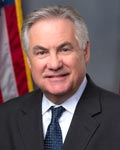
Photo of Jim Patterson
R California Assembly · District 8

Asm. Jim Patterson

Contact Email
Compare
Total votes
26,106
all sessions
Attendance
88%
2,698 missed
Near the chamber average
With party
98%
of cast votes
Lower than 92% of chamber peers
Bipartisan score
1%
crosses aisle rarely
Higher than 90% of chamber peers
Sponsored
1,951
bills & resolutions
Higher than 76% of chamber peers
Committees
0
assignments
1,951 bills and resolutions

Sponsored bills

Total
1,951
Primary
260
Co-sponsor
1,691
This page
1,951
matching current filters
Primary AB 2519
Failed · California Assembly · Lead sponsor
Personal income taxes: credit: education expenses.

The Personal Income Tax Law allows various credits against the taxes imposed by that law. This bill would, for taxable years beginning on or after January 1, 2015, and before January 1, 2020, allow a credit in an amount equal to 15% of the tuition paid or incurred during the taxable year by a taxpayer for education and training obtained by the taxpayer or a dependent of the taxpayer at a vocational institution, as defined, not to exceed $2,500 per taxable year. This bill would take effect immediately as a tax levy.

Failed Nov 30, 2014 0 co-sponsors
Co-sponsor AB 2033
Failed · California Assembly · Co-sponsor
Agricultural career technical education: grant funding.

(1) Existing law establishes the Agricultural Career Technical Education Incentive Program, which requires the Superintendent of Public Instruction to award a grant, for the purpose of purchasing or leasing agricultural career technical education equipment, to an applicant school district that operates an agricultural career technical education program and that meets specified requirements. Existing law requires the governing board of each school district to annually adopt or update a local control and accountability plan that contains specified information. This bill would continuously appropriate the sum of $4,134,000 in each fiscal year beginning with the 2015–16 fiscal year from the General Fund to the State Department of Education for purposes of funding the Agricultural Career Technical Education Incentive Program. The bill would require the Superintendent to award a grant to a school district that, in addition to meeting the existing requirements, demonstrates how the expenditure of the grant funds will be consistent with its adopted local control and accountability plan. The bill would also express various findings and declarations of the Legislature relating to agricultural career technical education. (2) Funds appropriated by this bill would be applied toward the minimum funding requirements for school districts and community college districts imposed by Section 8 of Article XVI of the California Constitution.

Failed Nov 30, 2014 1 co-sponsor
Co-sponsor AB 1956
Failed · California Assembly · Co-sponsor
Personal income tax: credit: qualified tuition program.

The Personal Income Tax Law and the Corporation Tax Law allow various credits against the taxes imposed by those laws. This bill would, for taxable years beginning on or after January 1, 2015, and before January 1, 2020, allow a credit in the amount of 20% of the monetary contributions made to a qualified tuition program, as defined, by a qualified taxpayer, as defined, not to exceed $500. This bill would provide for the payment of a credit amount in excess of tax liability upon an appropriation by the Legislature for that purpose. This bill would take effect immediately as a tax levy.

Failed Nov 30, 2014 1 co-sponsor
Primary AB 1701
Signed into law · California Assembly · Lead sponsor
Family law: adoption.

(1) Existing law authorizes, among others, a child's natural parent to bring an action to declare the existence or nonexistence of a presumed parent and child relationship. Existing law requires the court to join to that action specified parties, including prospective adoptive parents who have physical custody of the child, who have not been joined as parties, without the necessity of a motion for joinder. This bill would instead authorize a child's natural mother to bring that action. The bill would also require the court to join to that action additional specified parties who have not been joined as parties, including a licensed California adoption agency to which the mother proposes to relinquish the child for adoption. (2) Existing law provides for the adoption of unmarried minors. Existing law prohibits a married person, not lawfully separated from the person's spouse, from adopting a child without the consent of the spouse if the spouse is capable of giving that consent. This bill would additionally provide that the consent of the spouse shall not establish any parental rights or responsibilities on the part of the consenting spouse unless he or she has consented to adopt the child in a writing filed with the court and is named in the final decree as an adoptive parent of the child. The bill would authorize the court to dispense with a spouse's consent in certain circumstances and, if consent has been dispensed, prohibit the spouse from being named as an adoptive parent in the final decree. (3) Existing law generally provides that a child having a presumed father, as specified, shall not be adopted without the consent of the child's birth parents, if living. However, if one birth parent has been awarded custody by judicial order, or has custody by agreement of both parents, and the other birth parent for a period of one year willfully fails to communicate with, and to pay for, the care, support, and education of the child when able to do so, then the birth parent having sole custody may consent to the adoption, after the birth parent who does not have custody has been served with a specified citation. Under existing law, the failure of a birth parent to pay for the care, support, and education of the child for the one-year period or the failure of a birth parent to communicate with the child for the one-year period is prima facie evidence that the failure was willful and without lawful excuse. This bill would authorize the court to issue a temporary custody order, as specified, if the birth mother of a child for whom there is not a presumed father leaves the child in certain circumstances, including in the physical care of a licensed private adoption agency, and fails to sign a placement agreement, consent, or relinquishment for adoption. The bill would authorize the temporary custody order to be voided upon the birth mother's request to have the child returned to her care and custody. (4) Existing law requires, if a mother relinquishes for or consents to, or proposes to relinquish for or consent to, the adoption of a child, or if a child otherwise becomes the subject of an adoption proceeding, one of several specified persons to file a petition to terminate the parental rights of the alleged father, except as specified. Existing law permits an interested person to file a petition for an order or judgment declaring a child free from the custody and control of either or both parents. This bill would permit a single petition to be filed to terminate the parental rights of the alleged father or fathers of 2 or more biological siblings or to terminate the parental rights of 2 or more alleged fathers of the same child. The bill would also permit a single petition to be filed to free a child, or more than one child if the children are biological siblings, from the custody and control of both parents. The bill would authorize a court to grant one of these joint petitions, in whole or in part, and would specify that the court retains the discretion to bifurcate a case in which a joint petition was filed. The bill would require a court to bifurcate a case in which a joint petition was filed whenever it is necessary to protect the interests of a party or a child who is the subject of the proceeding. (5) Existing law authorizes the court to waive the personal appearance of a prospective adoptive parent and permit him or her to appear at an adoption proceeding through an attorney if there is clear and convincing evidence that it is impossible or impracticable for the prospective adoptive parent to appear at the adoption proceeding. This bill would authorize the court to permit a prospective adoptive parent to appear by telephone, videoconference, or other remote electronic means that the court deems reasonable, prudent, and reliable. (6) Existing law governs independent adoptions, which are defined to mean adoptions in which neither the State Department of Social Services nor an agency licensed by that department is a party to or joins in the adoption petition, and sets forth the procedures for completing an independent adoption. Existing law requires, as a part of the independent adoption procedures, the department or the delegated county adoption agency to investigate the proposed independent adoption and submit a report to the court of the facts disclosed by its inquiry with a recommendation regarding the granting of the adoption petition. This bill would provide that when the department or a delegated county adoption agency is investigating a proposed adoption, it is not required to reinvestigate matters addressed in a valid preplacement evaluation or a valid private agency adoption home study, if no new information has been discovered and no new event has occurred subsequent to the approval of the evaluation or home study that creates a reasonable belief that further investigation is necessary, except that the department must complete all background clearances required by law. Existing law also requires the department or a delegated county adoption agency to interview the petitioners within 45 working days after the filing of the adoption petition and to interview all persons from whom consent is required and whose addresses are known, as soon as 50% of the fee has been paid. Existing law requires the agency, at the interview, to give the placing parent an opportunity to sign either a statement revoking consent, or a waiver of the right to revoke consent. In order to facilitate the interview, existing law requires the petitioner, at the time the petition is filed, to file, among other things, a copy of the petition and 50% of the fee, with the department or with the delegated county adoption agency responsible for the investigation of the adoption. This bill would instead require the department or delegated county adoption agency to interview the petitioners within 45 working days after receiving 50% of the fee together with a stamped file copy of the adoption petition, and to interview all persons from whom consent is required and whose addresses are known. The bill would provide that the department is not required to provide the placing parent an opportunity to sign a statement revoking consent, or a waiver of the right to revoke consent, if the parent has already signed a waiver of the right to revoke consent, or if the time period allowed to revoke consent has expired. The bill would require the petitioner, within 5 days of filing the petition, to provide the department or delegated county adoption agency, among other things, a stamped file copy of the petition together with 50% of the fee and a copy of any valid preplacement evaluation or any valid private agency adoption home study. Existing law requires the court, in an independent adoption, if a birth parent who did not place a child for adoption has refused to give the required consent, or a birth parent revokes consent, or, before the time when a revocable consent becomes permanent, a birth parent requests the return of the child, to order the child restored to the care and custody of the birth parent. This bill would instead require, in these circumstances, the child to be restored to the care and custody of his or her birth parent, unless the court orders otherwise. By imposing additional duties on delegated county adoption agencies, this bill would impose a state-mandated local program. (7) Existing law authorizes a parent who is a minor to relinquish his or her child to the department, county adoption agency, or licensed adoption agency and sign a consent for the adoption. Existing law provides that the relinquishment and consent are not subject to revocation by reason of minority. This bill would also provide that the relinquishment and consent are not subject to revocation because the parent or guardian of the minor parent was not served with notice of the relinquishment or consent, unless the minor parent previously provided written authorization to serve his or her parent or guardian with those notices. (8) Existing law establishes the jurisdiction of the juvenile court, which may adjudge certain children to be dependents of the juvenile court under certain circumstances. In all cases in which a minor is adjudged a dependent child of the juvenile court under those circumstances, existing law authorizes the court to limit the control to be exercised over the dependent child by any parent or guardian. Existing law provides that those provisions do not limit the ability of a parent to voluntarily relinquish his or her child to the State Department of Social Services or to a county adoption agency at any time while the child is a dependent child of the juvenile court, if the department or county adoption agency is willing to accept the relinquishment. This bill would make those provisions applicable to a child who is the subject of a petition to declare him or her a dependent child of the juvenile court, and would specify that those provisions do not limit the ability of the parent of a child who is the subject of a petition to declare him or her a dependent child of the juvenile court or a dependent child to voluntarily relinquish that child to a licensed private adoption agency. The bill would require the juvenile court, when a child who is the subject of a petition to declare him or her a dependent child of the juvenile court, or a child who has been adjudged a dependent child of the juvenile court, has been relinquished to a licensed private adoption agency, after notice and a hearing, to determine whether the relinquishment should be approved or denied. The bill would authorize the court to dispense with notice and a hearing and issue an ex parte order approving the relinquishment if the relinquishment is accompanied by the written agreement of all parties. The bill would require notification of a parent relinquishing a child to a licensed private adoption agency that the relinquishment is subject to court approval. This bill would also require, when a child who is the subject of a petition to declare him or her a dependent child of the juvenile court, or a child who has been adjudged a dependent child of the juvenile court, has been relinquished to the department or a county adoption agency, the department or the county adoption agency to file notice of the relinquishment with the court and all parties and their counsel. (9) This bill would incorporate additional changes to Section 361 of the Welfare and Institutions Code proposed by Senate Bill 977 that would become operative if this bill and Senate Bill 977 are both enacted and this bill is enacted last. (10) The California Constitution requires the state to reimburse local agencies and school districts for certain costs mandated by the state. Statutory provisions establish procedures for making that reimbursement. This bill would provide that, if the Commission on State Mandates determines that the bill contains costs mandated by the state, reimbursement for those costs shall be made pursuant to these statutory provisions.


Signed into law Sep 29, 2014 0 co-sponsors
Primary AB 1867
Signed into law · California Assembly · Lead sponsor
Timber harvest plans: exemption: reducing flammable materials.

The Z'berg-Nejedly Forest Practices Act of 1973 prohibits a person from conducting timber operations, as defined, unless a timber harvesting plan prepared by a registered professional forester has been submitted to the Department of Forestry and Fire Protection. The act authorizes the State Board of Forestry and Fire Protection to exempt from some or all of those provisions of the act a person engaging in specified forest management activities including the cutting or removal of trees in compliance with existing law relating to defensible space that eliminates the vertical continuity of vegetative fuels and the horizontal continuity of tree crowns for the purpose of reducing flammable materials and maintaining a fuel break for a distance of no more than 150 feet on each side from an approved and legally permitted structure, as provided. This bill would, until no later than January 1, 2019, also authorize the board to exempt from some or all of those provisions of the act a person engaged in forest management whose activities are limited to the cutting or removal of trees on the person's property in compliance with existing law relating to defensible space that eliminates the vertical continuity of vegetative fuels and the horizontal continuity of tree crowns for the purpose of reducing flammable materials and maintaining a fuel break for a distance of no more than 300 feet on each side from an approved and legally permitted habitable structure, as provided. The bill would require the board to adopt regulations to implement the above provisions no later than January 1, 2016. The bill would require the department to evaluate the effects of these provisions and to report its recommendations, no later than January 1, 2019, to the Legislature based on that evaluation.

Signed into law Sep 29, 2014 0 co-sponsors
Co-sponsor AB 2721
Vetoed · California Assembly · Co-sponsor
Trustees of the California State University: nonfaculty employees.

Existing law establishes the various campuses of the California State University under the administration of the Trustees of the California State University. Existing law provides for the membership of the Trustees of the California State University to include 5 specified ex officio members, 16 members appointed by the Governor and subject to confirmation by the Senate, one representative of the alumni associations, 2 student members appointed by the Governor, and a faculty member appointed by the Governor. This bill would revise the membership of the board of trustees by requiring the Governor also to appoint a permanent nonfaculty employee of the university for a 2-year term, as specified. The bill would require a systemwide staff council, as specified, to provide to the Governor a list of 2 nominees for the Governor's consideration, and would require the Governor to appoint one of the nominees. The bill would provide that the permanent nonfaculty employee member of the board shall receive actual and necessary travel expenses and $100 for each day he or she is attending to official business of the trustees. This bill would incorporate changes to Section 66602 of the Education Code proposed by AB 2324, to become operative if AB 2324 and this bill are chaptered and become effective on or before January 1, 2015, and this bill is chaptered last.

Vetoed Sep 29, 2014 1 co-sponsor
Co-sponsor AB 1791
Signed into law · California Assembly · Co-sponsor
Prostitution: minors.

Existing law makes it a crime to engage in specified forms of disorderly conduct, including soliciting or agreeing to engage in, or engaging in, any act of prostitution and makes that crime a misdemeanor punishable by imprisonment in a county jail not exceeding 6 months, or by a fine not exceeding $1,000, or by both that fine and imprisonment. This bill would make that crime punishable by imprisonment in a county jail not exceeding one year, or by a fine not exceeding $2,000, or by both that fine and imprisonment, if the person who was solicited by, or who agreed to engage in or engaged in any act of prostitution with, the person who committed that crime was a minor at the time of the offense. By increasing the penalty for an existing crime, the bill would impose a state-mandated local program. The California Constitution requires the state to reimburse local agencies and school districts for certain costs mandated by the state. Statutory provisions establish procedures for making that reimbursement. This bill would provide that no reimbursement is required by this act for a specified reason.

Signed into law Sep 28, 2014 1 co-sponsor
Co-sponsor AB 2231
Signed into law · California Assembly · Co-sponsor
State Controller: property tax postponement.

The Senior Citizens and Disabled Citizens Property Tax Postponement Law, until February 20, 2009, authorized a claimant, as defined, to file a claim with the Controller to postpone the payment of ad valorem property taxes, if household income, as defined, did not exceed specified amounts. That law authorized the Controller, upon approval of the claim, to either make a payment directly to specified entities, or to issue the claimant a certificate of eligibility that constituted a written promise of the state to pay the amount specified on the certificate, as provided. That law required these payments to be made out of specified funds appropriated to the Controller, and also required certain repaid property tax postponement payments to be paid into an impound account and transferred, as specified, to the General Fund. That law also required all sums paid by the Controller for postponed property taxes to be secured by a lien in favor of the State of California. Existing law, on and after February 20, 2009, prohibits a person from filing a claim for postponement, and prohibits the Controller from accepting applications for postponement, under the Senior Citizens and Disabled Citizens Property Tax Postponement Law. This bill would make inoperative the prohibition against a person filing a claim for postponement and the Controller from accepting applications for postponement under the program as of July 1, 2016, and would repeal this prohibition on January 1, 2017. This bill would authorize a claim for postponement to be filed after September 1 of the fiscal year in which the postponement is claimed and on or before April 10 of that fiscal year, as specified. This bill would limit the household income amount of a claimant to $35,000 and would exclude losses and nonexpenses from "income" for purposes of these provisions. This bill would also exclude mobilehomes and houseboats from the scope of these provisions, and make conforming changes to related provisions. The Senior Citizens Mobilehome Property Tax Postponement Law provides for all amounts postponed in the case of a mobilehome to be due if the claimant dies, unless the surviving spouse or other person eligible to postpone continues to occupy the mobilehome. This bill would limit this exception to the circumstance in which the surviving spouse who was previously approved continues to occupy the mobilehome. This bill would create in the State Treasury a Senior Citizens and Disabled Citizens Property Tax Postponement Fund and would require the fund to be interest-bearing at a specified rate. This bill would delete the requirement that funds be placed in an impound account and would, instead, require that repaid property tax postponement payments be directly deposited into the newly created fund. The bill would require the Controller to transfer any moneys in the fund in excess of specified amounts to the General Fund each year. The bill would require any impound account funds remaining upon the enactment of this bill to be transferred to the fund. The bill would continuously appropriate these funds to the Controller for purposes of administering the property tax postponement program, as specified. Existing law authorizes the Controller to establish a fee to implement these provisions, not to exceed $10. This bill would authorize the Controller to charge a fee not exceeding $30. Existing law authorizes the Controller to subordinate the lien for postponed property taxes if the Controller determines subordination is appropriate. This bill would eliminate that authorization and make other conforming changes. Existing law requires that the owner's equity interest in the residential dwelling be at least 20% of the full value of the property at the time the claimant files an initial postponement claim in order to be eligible to participate in the postponement program. This bill would increase the equity requirement to at least 40% for each postponement claim. Existing law requires the repayment of postponed taxes in specified circumstances. This bill would, in addition, require repayment if the claimant refinances the dwelling or has elected to participate in a revenue mortgage program for the dwelling. The bill would require the tax collector or the assessor to notify the Controller if assessment records applicable to property for which taxes have been postponed reveal a change in ownership within 60 days of processing that change, and require that the county tax collector or assessor notify the Controller within 60 days of all property subject to a "Notice of Lien for Postponed Property Taxes" and processed for notice of becoming tax defaulted or of the claimant for that property, if residential, transferring ownership or changing his or her mailing address, or having been determined to be deceased. Existing law requires a claim for postponement to be filed after May 15 of the calendar year in which the fiscal year for which postponement is claimed begins, and on or before December 10 of that fiscal year. This bill would instead require a claim for postponement to be filed after September 1 of the calendar year in which the fiscal year for which postponement is claimed begins, and on or before April 10 of that fiscal year. Existing law makes optional certain duties of local agencies related to recordation of the tax lien. This bill would delete that provision, thereby imposing a state-mandated local program. The bill would require the notice of lien to be recorded within 14 days of the transfer of funds and notice of lien to the county by the Controller. The bill would impose additional requirements in the case of liens upon mobilehome loans established prior to February 20, 2009, and specify procedures to be followed by the Controller if the obligation secured by the lien is paid in full or otherwise discharged. Existing law requires, if a postponement claim, as specified, is filed timely but before the delinquency date of the first or 2nd installment of property taxes, that any delinquent penalties and interest for the fiscal year be canceled unless the failure to perfect the claim was due to willful neglect on the part of the claimant or representative, in which case the certificates of eligibility for the fiscal year can be used to pay delinquent taxes only if accompanied by sufficient amounts to pay the delinquent interest and penalties. This bill would instead require, if a postponement claim is filed timely before the delinquency date of the 2nd installment of property taxes on the secured roll, that any delinquent penalties, costs, fees, and interest accrued for the fiscal year be canceled. This bill would instead require, in the event of willful neglect to perfect the claim, that an electronic funds transfer for that current fiscal year be used to pay only the delinquent taxes. This bill would authorize the tax collector, if the payment amount sufficient to pay all of the delinquent penalties, costs, fees, and interest is not received by the tax collector within 30 days from the date of the electronic funds transfer, to return the electronic funds transfer to the Controller to deny the postponement claim. This bill would require the Controller to provide a specified notification to the claimant and a copy of the notification to the tax collector. This bill would also require the Controller, upon written request of the tax collector, to provide the tax collector with information that is required for the preparation and enforcement of the sale of tax-defaulted property. The bill would require the tax collector or assessor, in the case of a tax-defaulted property sale, to include the outstanding balance of the property tax postponement loan in the minimum bid. The bill would require that, in the event that the property fails to receive the minimum bid and the minimum bid is reduced, all moneys paid to the Controller's office and county tax collector be a proportionate allocation of the total moneys owed. The bill would also require the tax collector or his or her designee to certify, under penalty of perjury, that the information is requested for these purposes. This bill would also provide that any information provided to the tax collector is not a public record and is not open to public inspection. By requiring the tax collector to make a certification under penalty of perjury, this bill would expand the crime of perjury thereby imposing a state-mandated local program. Existing law authorizes a tax collector, 5 years or more after a nonresidential commercial property has become tax defaulted, to sell the property, as specified. This bill would authorize a county to adopt conditions and procedures to delay the sale of property that it deems may be eligible to file a property tax postponement claim, as specified, and to cancel any delinquent penalties, costs, fees, and interest associated with these properties. Existing law requires the price at which certain tax-defaulted property may be offered for sale to be the total amount necessary to redeem the property, plus costs. This bill would require the outstanding balance, as defined, of any property tax postponement loan to also be included in the price described above. Existing law requires, after certain other amounts have been satisfied, the proceeds from the sale of tax-defaulted property to be distributed to taxing agencies in specified proportions to each assessment fund with the remaining balance to each tax fund. This bill would require the proceeds remaining after the distributions described above to be distributed to the State Controller for the outstanding balance of any property tax postponement loan. Existing constitutional provisions require that a statute that limits the right of access to the meetings of public bodies or the writings of public officials and agencies be adopted with findings demonstrating the interest protected by the limitation and the need for protecting that interest. This bill would make legislative findings to that effect. The California Constitution requires the state to reimburse local agencies and school districts for certain costs mandated by the state. Statutory provisions establish procedures for making that reimbursement. This bill would provide that with regard to certain mandates no reimbursement is required by this act for a specified reason. With regard to any other mandates, this bill would provide that, if the Commission on State Mandates determines that the bill contains costs so mandated by the state, reimbursement for those costs shall be made pursuant to the statutory provisions noted above. This bill would declare that it is to take effect immediately as an urgency statute.

Signed into law Sep 28, 2014 1 co-sponsor
Co-sponsor AB 186
Signed into law · California Assembly · Co-sponsor
Professions and vocations: military spouses: temporary licenses.

Existing law provides for the licensure and regulation of various professions and vocations by boards within the Department of Consumer Affairs. Existing law provides for the issuance of reciprocal licenses in certain fields where the applicant, among other requirements, has a license to practice within that field in another jurisdiction, as specified. Existing law requires that the licensing fees imposed by certain boards within the department be deposited in funds that are continuously appropriated. Existing law requires a board within the department to expedite the licensure process for an applicant who holds a current license in another jurisdiction in the same profession or vocation and who supplies satisfactory evidence of being married to, or in a domestic partnership or other legal union with, an active duty member of the Armed Forces of the United States who is assigned to a duty station in California under official active duty military orders. This bill would, in addition to the expedited licensure provisions described above, establish a temporary licensure process for specified licensed professions for an applicant who holds a current, active, and unrestricted license in another jurisdiction, as specified, and who supplies satisfactory evidence of being married to, or in a domestic partnership or other legal union with, an active duty member of the Armed Forces of the United States who is assigned to a duty station in California under official active duty military orders. The bill would require a temporary license issued pursuant to these provisions to expire 12 months after issuance, upon issuance of an expedited license, or upon denial of the application for expedited licensure by the board, whichever occurs first. This bill would also require an applicant seeking a temporary license as a civil engineer, geotechnical engineer, structural engineer, land surveyor, professional geologist, professional geophysicist, certified engineering geologist, or certified hydrogeologist to successfully pass the appropriate California-specific examination or examinations required for licensure in those respective professions by the Board for Professional Engineers, Land Surveyors, and Geologists. Because the bill would authorize the expenditure of continuously appropriated funds for a new purpose, the bill would make an appropriation.

Signed into law Sep 27, 2014 1 co-sponsor
Co-sponsor SB 1226
Signed into law · California Senate · Co-sponsor
Veterans: professional licensing.

Under existing law, boards within the Department of Consumer Affairs license and regulate persons practicing various healing arts, professions, vocations, and businesses, including accountants, dentists, proprietary security services, and real estate brokers. Existing law requires a board to expedite the licensure process for an applicant who holds a current license in another state, district, or territory of the United States in the profession or vocation for which he or she seeks a license from the board, if the applicant is married to, or in a domestic partnership or other legal union with, an active duty member of the Armed Forces of the United States who is assigned to a duty station in California under official active duty military orders. This bill, on and after July 1, 2016, would require a board to expedite, or when applicable assist, the initial licensure process for an applicant who supplies satisfactory evidence to the board that he or she has served as an active duty member of the Armed Forces of the United States and was honorably discharged. Existing law requires a person registered and hired as a proprietary private security officer to complete training in security officer skills within 6 months of registration being issued or being employed, except as specified. This bill would authorize submission of Verification of Military Experience and Training (VMET) records showing the person has completed equivalent military training in lieu of completing a course of training in security officer skills. The bill would require the department to determine the type of equivalent military training that qualifies to serve as a substitute.

Signed into law Sep 27, 2014 1 co-sponsor
Showing 1,751 to 1,760 of 1,951 bills