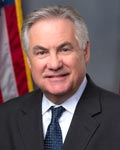
Photo of Jim Patterson
R California Assembly · District 8 · Former member

Asm. Jim Patterson

Contact Email
Compare
Total votes
26,106
all sessions
Attendance
88%
2,698 missed
Lower than 87% of chamber peers
With party
98%
of cast votes
Lower than 83% of chamber peers
Bipartisan score
1%
crosses aisle rarely
Higher than 78% of chamber peers
Sponsored
1,951
bills & resolutions
Lower than 89% of chamber peers
Committees
0
assignments
1,951 bills and resolutions

Sponsored bills

Total
1,951
Primary
260
Co-sponsor
1,691
This page
1,951
matching current filters
Co-sponsor ACR 150
Signed into law · California Assembly · Co-sponsor
Relative to Dual Enrollment Week.

This measure would recognize the week of March 18, 2018, to March 24, 2018, inclusive, as Dual Enrollment Week in California and would encourage colleges and universities to visit high schools and take action to help pupils register in dual enrollment courses.

Signed into law May 1, 2018 1 co-sponsor
Co-sponsor ACR 206
Signed into law · California Assembly · Co-sponsor
Relative to California Diversity in STEM and Tech Week.

This measure would designate April 1, 2018, to April 7, 2018, inclusive, as California Diversity in STEM and Tech Week and would encourage all citizens and community organizations to support the observance of California Diversity in STEM and Tech Week by encouraging and celebrating diversity in the STEM fields and in California's technology and innovation economy.

Signed into law May 1, 2018 1 co-sponsor
Primary AB 2467
Failed · California Assembly · Lead sponsor
Controlled substances: fentanyl.

Existing law classifies controlled substances into 5 schedules and places the greatest restrictions and penalties on the use of those substances placed in Schedule I. Opiates, including fentanyl, are classified in Schedule II. Existing law prohibits a person from possessing for sale or purchasing for purposes of sale specified controlled substances, including fentanyl, and punishes a violation of that prohibition by imprisonment in a county jail for 2, 3, or 4 years. Existing law also prohibits transporting, importing into this state, selling, furnishing, administering, or giving away specified controlled substances, including fentanyl, and punishes a violation of that prohibition by imprisonment in a county jail for 3, 4, or 5 years. Existing law also prohibits the trafficking of specified controlled substances, including fentanyl, and punishes a violation of that prohibition by imprisonment in a county jail for 3, 6, or 9 years. The bill would punish the possession, sale, or purchase for sale of fentanyl by imprisonment in a county jail for 4, 5, or 6 years, the transportation, importation, sale, furnishing, administering, or giving away of fentanyl by imprisonment in a county jail for 7, 8, or 9 years, and the trafficking of fentanyl by imprisonment in a county jail for 7, 10, or 13 years. By increasing the penalty for a crime, this bill would impose a state-mandated local program. The California Constitution requires the state to reimburse local agencies and school districts for certain costs mandated by the state. Statutory provisions establish procedures for making that reimbursement. This bill would provide that no reimbursement is required by this act for a specified reason.


Failed Apr 26, 2018 0 co-sponsors
Primary AB 2931
Failed · California Assembly · Lead sponsor
Law enforcement: cooperation with immigration officials.

Existing law authorizes a local law enforcement agency to cooperate with federal immigration authorities regarding an individual under certain circumstances, including if the individual has been previously convicted of certain crimes or if the individual is arrested and brought before a magistrate on a charge involving a serious or violent felony, as defined, or a felony that is punishable by imprisonment in the state prison, and a magistrate makes a specified finding of probable cause to a complaint based on that charge. This bill would add additional qualifying convictions that would authorize local law enforcement to cooperate with federal immigration authorities regarding the individual. The bill would additionally authorize local law enforcement to cooperate with federal immigration authorities regarding an individual arrested on a charge involving a serious or violent felony, as defined, or a felony that is punishable by imprisonment in the state prison, if a magistrate makes any finding of probable cause to that charge. The bill would also authorize that cooperation with regard to arrests on charges involving additional crimes, including, among other things, domestic violence, sexual assault, and driving under the influence, or to an individual who is a member of a criminal street gang, as defined. The bill would require the Department of Justice to develop a process to provide a notification to a local law enforcement agency that books, or is holding in custody upon booking, an individual for which cooperation with federal immigration authorities is authorized, as specified. The bill would provide that a law enforcement agency not so notified by the department, or that substantially relies on information provided by the department, or information that is otherwise lawfully known, observed, or obtained, would not be liable for any act or omission related to cooperation or noncooperation with immigration officials that was undertaken or occurred in good faith and in substantial compliance with state law.

Failed Apr 26, 2018 0 co-sponsors
Primary AB 2405
Failed · California Assembly · Lead sponsor
Controlled substances: carfentanil.

Existing law classifies controlled substances into 5 schedules and places the greatest restrictions and penalties on the use of those substances placed in Schedule I. Opiates are classified in Schedule II. Existing law prohibits a person from possessing for sale or purchasing for purposes of sale specified controlled substances, including opiates, and punishes a violation of that prohibition by imprisonment in a county jail for 2, 3, or 4 years. Existing law also prohibits transporting, importing into this state, selling, furnishing, administering, or giving away specified controlled substances, including opiates, and punishes a violation of that prohibition by imprisonment in a county jail for 3, 4, or 5 years. Existing law also prohibits the trafficking of specified controlled substances and punishes a violation of that prohibition by imprisonment in a county jail for 3, 6, or 9 years. This bill would classify carfentanil, an opiate, in Schedule II. The bill would punish the possession, sale, or purchase for sale of carfentanil by imprisonment in a county jail for 6, 7, or 8 years, the transportation, importation, sale, furnishing, administering, or giving away of carfentanil by imprisonment in a county jail for 9, 10, or 11 years, and the trafficking of carfentanil by imprisonment in a county jail for 9, 12, or 15 years. This bill would make conforming changes. By creating a new crime, this bill would impose a state-mandated local program. The California Constitution requires the state to reimburse local agencies and school districts for certain costs mandated by the state. Statutory provisions establish procedures for making that reimbursement. This bill would provide that no reimbursement is required by this act for a specified reason.
Failed Apr 26, 2018 0 co-sponsors
Primary AB 2987
In committee · California Assembly · Lead sponsor
Public contracts: bidding: Business Enterprises Program for the Blind.

Existing law, with regard to certain state contracts, requires the awarding department to award the contract to the lowest responsible bidder meeting or making a good faith effort to meet specified statewide participation goals for disabled veteran business enterprises, except as specified. Existing law requires the Director of Rehabilitation to establish and promote the Business Enterprises Program for the Blind, for the purpose of providing blind persons with remunerative employment, enlarging their economic opportunities, and stimulating them to greater efforts in striving to make themselves self-supporting. A blind person licensed under the program is authorized to operate vending facilities on any property within the state, as specified. This bill, notwithstanding any other law, would require the department to open any subsequent solicitations for bids on contracts relating to the Business Enterprises Program for the Blind to all prospective bidders if, after the initial solicitation, the department is unable to award a contract consistent with the statewide participation goals described above, as specified.

In committee Apr 25, 2018 0 co-sponsors
Showing 1,211 to 1,220 of 1,951 bills