

Existing law establishes the Department of Housing and Community Development and requires it to administer various programs intended to promote the development of housing and to provide housing assistance and home loans. Existing law sets forth various general powers of the department in implementing these programs, including authorizing the department to enter into long-term contracts or agreements of up to 30 years for the purpose of servicing loans or grants or enforcing regulatory agreements or other security documents. Existing law authorizes the Department of Housing and Community Development to approve an extension of a department loan, the reinstatement of a qualifying unpaid matured loan, the subordination of a department loan to new debt, or an investment of tax credit equity pursuant to specified rental housing finance programs, as specified, unless it would result in a rent increase for tenants of a development. Existing law authorizes the department to charge a monitoring fee to cover the aggregate monitoring costs in years the loan is extended and a transaction fee to cover its costs for processing restructuring transactions, and requires developer fee limitations to be consistent with specified laws and regulations, including regulations by the California Tax Credit Allocation Committee. This bill would revise and recast these provisions, including additionally authorizing the department to approve the payoff of a department loan in whole or part prior to the end of its term and the extraction of equity from a development for purposes approved by the department. The bill would prohibit the extension, reinstatement, subordination, payoff, extraction, or investment, as described above, if it would result in a rent increase for tenants of a development over and above the annual adjustment to the tenants' rents under the department's regulatory agreement. The bill would authorize the department to waive specified requirements in the regulatory agreement if the loan is paid off, including requiring occupancy and financial reports and governing the use of operating income and reserves for the development. The bill would authorize the department to charge additional fees as necessary to cover its costs for processing restructuring transactions, and would provide that the monitoring fees continue until the end of the term of the department's regulatory agreement, as specified. The bill would limit developer fees to the amount allowed by the California Tax Credit Allocation Committee or to 25% of actual rehabilitation costs, as applicable.
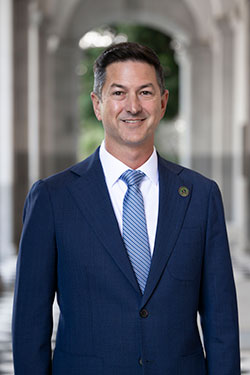
Asm. Chris Ward
Sponsored bills
The Electronic Waste Recycling Act of 2003 (act) requires a retailer selling a covered electronic device in this state to collect from a consumer at the time of retail sale a covered electronic waste recycling fee or a covered battery-embedded waste recycling fee, as specified. The act defines "covered electronic device" to include certain video display devices and battery-embedded products. The act requires all charges collected pursuant to the act to be deposited into specified subaccounts within the Electronic Waste Recovery and Recycling Account, and outlines certain other requirements related to the establishment, adjustment, and administration of the charge. Moneys in the subaccounts are continuously appropriated for specified purposes, including, but not limited to, paying covered electronic waste recycling fee refunds and making electronic waste recovery and recycling payments. Moneys in the account may be expended, upon appropriation by the Legislature in the annual Budget Act, for other specified purposes, including the administration of the act by the Department of Resources Recycling and Recovery (CalRecycle) and the Department of Toxic Substances Control (DTSC) and to provide funding to DTSC to implement and enforce the hazardous waste control laws as they relate to covered electronic devices. Existing law incorporates the requirements and other provisions of the act by reference as requirements and provisions of the hazardous waste control laws. The act also expressly authorizes DTSC to enforce the act, and all regulations adopted pursuant to the act, through the hazardous waste control laws. A violation of the hazardous waste control laws is a crime. This bill would, among other things, expand the definition of "covered electronic device" to include a "customer-owned solar PV module," as defined, thereby expanding the scope of the act to include covered solar photovoltaic (PV) module products, for limited purposes, as provided. The bill would also require, on or before October 1, 2026, and on or before October 1 each year thereafter, CalRecycle to establish a covered solar PV recycling fee based on the reasonable regulatory costs to administer covered electronic waste recycling. The bill would require the charge to be imposed upon a consumer or a service provider serving the consumer for the purchase of a new or refurbished covered solar PV module product. The bill would also require the charge to be adjusted annually based on the California Consumer Price Index. The bill would create the Covered Solar PV Module Recycling Fee Subaccount as a continuously appropriated fund in the Electronic Waste Recovery and Recycling Account. Because the funds deposited to the Covered Solar PV Module Recycling Fee Subaccount would be a new source of funds in the continuously appropriated subaccount within the continuously appropriated Electronic Waste Recovery and Recycling Account, the bill would make an appropriation. By expanding the scope of the act to make it applicable to covered solar PV module products, the bill would expand the scope of a crime, thereby imposing a state-mandated local program. Beginning January 1, 2028, the bill would require a solar photovoltaic module, that is not a customer-owned solar PV module, to be included in a plan that describes how the module will be managed at the end of its useful life, who is responsible for managing it, and how it will be recycled, refurbished, or reused. The California Constitution requires the state to reimburse local agencies and school districts for certain costs mandated by the state. Statutory provisions establish procedures for making that reimbursement. This bill would provide that no reimbursement is required by this act for a specified reason.
Existing law prohibits a pupil from being suspended from school or recommended for expulsion, unless the superintendent of the school district or the principal of the school in which the pupil is enrolled determines that the pupil has committed a specified act, including, among other acts, that the pupil possessed or used tobacco, or products containing tobacco or nicotine products, including, but not limited to, cigarettes, cigars, miniature cigars, clove cigarettes, smokeless tobacco, snuff, chew packets, vaping products, and betel. This bill would, commencing July 1, 2025, remove having possessed or used tobacco, or products containing tobacco or nicotine products, including, but not limited to, cigarettes, cigars, miniature cigars, clove cigarettes, smokeless tobacco, snuff, chew packets, vaping products, and betel from the list of acts for which a pupil, regardless of their grade of enrollment, may be suspended or recommended for expulsion for. The bill would, commencing July 1, 2025, prohibit a charter school pupil in kindergarten or any of grades 1 to 12, inclusive, from being suspended or recommended for expulsion solely on the basis of those acts. Existing law requires the principal or superintendent of schools to recommend the expulsion of a pupil for certain acts committed at school or at a school activity off school grounds, including, among others, the unlawful possession of certain controlled substances, unless the principal or superintendent determines that expulsion should not be recommended under the circumstances or that an alternative means of correction would address the conduct. This bill, commencing July 1, 2025, would instead no longer require the principal or superintendent of schools to recommend the expulsion of a pupil for the unlawful possession of certain controlled substances under any circumstance. This bill would require the State Department of Education, on or before July 1, 2025, to develop and make available a model policy for a public health approach to addressing pupil possession and use of illicit drugs on school property, as specified. The bill would require the department to collaborate with stakeholders, including treatment providers, local educational agencies, and community-based organizations in the development of the model policy. The bill would require local educational agencies, as defined, to adopt, on or before July 1, 2025, a plan to address pupils who possess or use drugs on school property. The bill would require the plan to be youth-informed, reduce criminalization, and to include specific information on where on campus and in the community pupils can receive education, treatment, or support for substance abuse. By imposing additional duties on local educational agencies, the bill would impose a state-mandated local program. This bill would also make Legislative findings and declarations relating to these provisions, make conforming changes, and delete obsolete provisions. The California Constitution requires the state to reimburse local agencies and school districts for certain costs mandated by the state. Statutory provisions establish procedures for making that reimbursement. This bill would provide that, if the Commission on State Mandates determines that the bill contains costs mandated by the state, reimbursement for those costs shall be made pursuant to the statutory provisions noted above.
Existing law establishes the Atmospheric Rivers: Research, Mitigation, and Climate Forecasting Program in the Department of Water Resources. Existing law requires the department, upon an appropriation for purposes of the program, to research climate forecasting and the causes and impacts that climate change has on atmospheric rivers, to operate reservoirs in a manner that improves flood protection, and to reoperate flood control and water storage facilities to capture water generated by atmospheric rivers. This bill would rename that program the Atmospheric Rivers Research and Forecast Improvement Program: Enabling Climate Adaptation Through Forecast-Informed Reservoir Operations and Hazard Resiliency (AR/FIRO) Program. The bill would require the department to research, develop, and implement new observations, prediction models, novel forecasting methods, and tailored decision support systems to improve predictions of atmospheric rivers and their impacts on water supply, flooding, post-wildfire debris flows, and environmental conditions. The bill would also require the department to utilize relevant information to operate reservoirs in a manner that improves flood protection in the state and to reoperate flood control and water storage facilities to capture water generated by atmospheric rivers and other storms.
This measure would declare that the Legislature should pass laws that halt the importation of cobalt or any product using cobalt mined in Africa using child slave labor and encourage the production of cobalt and other critical minerals ethically sourced from within the United States.
This measure would recognize July 17, 2023, to July 23, 2023, as Outdoor Worker Appreciation Week.
This measure would declare the month of October 2023 as Sudden Infant Death Syndrome (SIDS) Awareness Month.
This measure would designate the month of November 2023 to be California's Sikh American Awareness and Appreciation Month. The measure would recognize and acknowledge the significant contributions made by Californians of Sikh heritage to our state and would seek to afford all Californians the opportunity to better understand, recognize, and appreciate the rich history and shared principles of Sikh Americans. The measure would condemn all hate crimes and bias incidents against Sikh Americans and would encourage all Sikhs to practice their faith freely and fearlessly.
This measure would designate the month of October 2023 as California Hindu American Awareness and Appreciation Month. The measure would also recognize and acknowledge the significant contributions made by Californians of Hindu heritage to the state and seek to increase awareness and understanding of the Hindu American community.