

Existing law, the Ralph C. Dills Act (Dills Act) , governs collective bargaining between the state and recognized state public employee organizations. Existing law excludes certain employees from coverage under the Dills Act, including, among others, managerial employees, supervisory employees, and confidential employees, as defined. Existing law creates the Public Employment Relations Board and authorizes it, among other things, to determine appropriate state employee bargaining units, as specified. This bill would enact the Legislature Employer-Employee Relations Act, to provide employees of the Legislature, including some supervisory and managerial employees, the right to form, join, and participate in the activities of employee organizations of their own choosing for the purpose of representation on all matters of employer-employee relations. The bill would prescribe rights, duties, and prohibitions in this context that parallel those in the Dills Act. The bill would prohibit the Public Employment Relations Board from including employees of the Legislature in a bargaining unit that includes employees other than those of the Legislature. The bill would make it a misdemeanor for any person to willfully resist, prevent, impede, or interfere with any member of the board, or any of its agents, in the performance of duties pursuant to its provisions. By expanding the definition of a crime, this bill would impose a state-mandated local program. The bill would provide that the provisions of the Legislature Employer-Employee Relations Act are severable. The California Constitution requires the state to reimburse local agencies and school districts for certain costs mandated by the state. Statutory provisions establish procedures for making that reimbursement. This bill would provide that no reimbursement is required by this act for a specified reason.
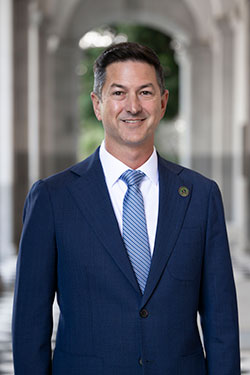
Asm. Chris Ward
Sponsored bills
Existing law establishes a workers' compensation system, administered by the Administrative Director of the Division of Workers' Compensation, to compensate an employee for injuries sustained in the course of employment. Existing law creates a rebuttable presumption that specified injuries, such as meningitis, tuberculosis, or hernia, sustained in the course of employment of a specified member of law enforcement or a specified first responder arose out of and in the course of employment. Existing law creates a rebuttable presumption that skin cancer that develops or manifests in the course of employment of a lifeguard, as specified, arose out of and in the course of employment. Existing law authorizes a lifeguard to file a claim for skin cancer after employment has terminated for a specified period based on years of employment, not to exceed 60 months. This bill would expand presumptions for hernia, pneumonia, heart trouble, cancer, tuberculosis, bloodborne infectious disease, methicillin-resistant Staphylococcus aureus skin infection, and meningitis-related illnesses and injuries to a lifeguard employed on a year-round, full-time basis in the Boating Safety Unit by the City of San Diego Fire-Rescue Department. The bill would increase the period of time after termination of employment that a lifeguard employed on a year-round, full-time basis in the Boating Safety Unit by the City of San Diego Fire-Rescue Department can file a claim for skin cancer. The bill would expand the presumptions for illness or injury related to post-traumatic stress disorder or exposure to biochemical substances, as defined, to a lifeguard employed in the Boating Safety Unit by the City of San Diego Fire-Rescue Department. This bill would make legislative findings and declarations as to the necessity of a special statute for the City of San Diego.
Existing law requires the Strategic Growth Council, until October 1, 2029, to establish and administer a regional climate collaborative program to assist underresourced communities, as defined, in a region to access statewide public and other grant moneys, as specified, for climate change mitigation and adaptation projects. This bill would require the council, by January 1, 2023, to establish up to 12 regional climate change authorities to coordinate climate adaptation and mitigation activities in their regions and coordinate with other regional climate adaptation authorities, state agencies, and other relevant stakeholders. The bill would authorize the regional climate change authorities to engage in certain activities to address climate change. The bill would require the regional climate change authorities to annually submit to the council a report on their activities.
Existing law establishes various programs, including, among others, the Emergency Housing and Assistance Program, to provide assistance to homeless persons. Existing law requires a state agency or department that funds, implements, or administers a state program that provides housing or housing-related services to people experiencing homelessness or at risk of homelessness to revise or adopt guidelines and regulations to include enumerated Housing First policies. Existing law establishes the Multifamily Housing Program administered by the Department of Housing and Community Development. Existing law authorizes specified funds that are appropriated to provide housing for individuals and families who are experiencing homelessness or who are at risk of homelessness, and who are impacted by the COVID-19 pandemic, to be disbursed in accordance with the Multifamily Housing Program, including as grants to cities, counties, and other local public entities, for enumerated uses, including acquisition or rehabilitation of motels, hotels, or hostels, and conversion of units from nonresidential to residential. This bill would require specified state entities to, not later than January 1, 2023, develop a streamlined funding program that meets specified criteria, to support the state's policy goal of reducing homelessness statewide by providing funding opportunities for local governments, as defined, to increase their capacity to respond to local homelessness needs through providing housing, emergency shelters, or other assistance to homeless individuals and families, or those at risk for homelessness, as defined, designed to reduce homelessness in their local areas. The bill would require, not later than January 1, 2023, the state entities to prepare and submit to the Legislature a report on their proposed programs, as provided.
Existing law establishes various programs to provide assistance to homeless persons. Existing law requires a state agency or department that funds, implements, or administers a state program that provides housing or housing-related services to people experiencing homelessness or at risk of homelessness, except as specified, to adopt guidelines and regulations to include enumerated Housing First policies. This bill would require that all state programs created on or after January 1, 2022, providing interim housing, as defined, follow specified low barrier practices. The bill would also establish requirements for the adoption and implementation of these practices for programs existing prior to January 1, 2022, as specified.
Existing law, the Personal Income Tax Law and Corporation Tax Law, in modified conformity with federal income tax laws, generally allow various deductions in computing the income that is subject to taxes imposed by those laws, including a deduction for a net operating loss as specified. Existing law suspends the deduction for a net operating loss, as specified, for taxable years beginning on or after January 1, 2020, and before January 1, 2023. The Personal Income Tax Law and Corporation Tax Law generally authorize various credits against the taxes imposed by those laws. Existing law provides that, except as specified, the total credits allowable under those laws may not reduce the taxes imposed by those laws by more than $5,000,000, as provided, for taxable years beginning on or after January 1, 2020, and before January 1, 2023. This bill, the Golden State Innovation Act of 2021, would, for taxable years beginning on or after January 1, 2021, and before January 1, 2023, exclude a taxpayer that performs research and development in biotechnology, as described, from the above-described suspension of the deduction for net operating losses and the above-described limitation on the total credits allowable. Existing law requires any bill authorizing a new tax expenditure to contain, among other things, specific goals, purposes, and objectives that the tax expenditure will achieve, detailed performance indicators, and data collection requirements. The bill also would include additional information required for any bill authorizing a new tax expenditure. This bill would take effect immediately as a tax levy.
Under existing law, the Public Utilities Commission (PUC) has regulatory authority over public utilities, including electrical corporations. Existing law requires the PUC, in consultation with the Independent System Operator (ISO) , to establish resource adequacy requirements for all load-serving entities, defined to include electrical corporations, community choice aggregators, and electric service providers. Existing law requires that the resource adequacy program achieve specified objectives, including to establish new or maintain existing demand response products and tariffs that facilitate the economic dispatch and use of demand response that can either meet or reduce an electrical corporation's resource adequacy requirements, as determined by the PUC. This bill would require the PUC, by July 1, 2022, to establish a capacity valuation methodology for customer-sited energy storage resources and customer-sited hybrid resources, as defined, in consultation with the ISO and the State Energy Resources Conservation and Development Commission, for the 2023 resource adequacy year.
Existing law, the Control, Regulate and Tax Adult Use of Marijuana Act (AUMA) , approved by the voters as Proposition 64 at the November 8, 2016, statewide general election, regulates the cultivation, distribution, transport, storage, manufacturing, testing, processing, sale, and use of marijuana for nonmedical purposes by people 21 years of age and older. The Medicinal and Adult-Use Cannabis Regulation and Safety Act (MAUCRSA) , among other things, consolidates the licensure and regulation of commercial medicinal and adult-use cannabis activities. AUMA imposes an excise tax on the purchase of cannabis and cannabis products at the rate of 15% of the average market price of any retail sale by a cannabis retailer, as specified. AUMA, and as additionally amended by statute, also imposes a cultivation tax upon all cultivators on all harvested cannabis that enters the commercial market, at specified rates per dry-weight ounce of cannabis flowers and leaves. AUMA imposes a monetary penalty, among other things, on a licensee who fails to pay the excise or cultivation tax of at least 12 of the amount of taxes not paid. AUMA requires these taxes and penalties, among other amounts collected, to be deposited in the California Cannabis Tax Fund, a continuously appropriated fund, for specified purposes required under AUMA. This bill would remove the monetary penalty imposed on a licensee who fails to pay the excise or cultivation tax enacted by AUMA, but would retain the monetary penalty on a person who is required to be licensed under AUMA but who is not licensed, and who fails to pay the excise or cultivation taxes, as specified. AUMA authorizes the Legislature to amend its provisions with a23vote of both houses to further its purposes and intent. This bill would declare that its provisions further specified purposes and intent of the act.
Existing law, the California Fair Employment and Housing Act (FEHA) , protects the right to seek, obtain, and hold employment without discrimination because of prescribed characteristics. FEHA also makes unlawful various practices connected to obtaining and financing housing accommodations, among other things, if those practices discriminate based on specified characteristics. Existing law creates the Department of Fair Employment and Housing to administer and enforce these provisions. This bill would add housing status as a protected characteristic under the employment and housing provisions of FEHA. Existing law prescribes a variety of consumer privacy protections, including those arising from particular business transactions, and regulates specified business transactions between parties. This bill would prohibit a background check service provider, as defined, from including specified information in a background check, including any fine, penalty, or charge related to camping, sleeping, sitting, or lying down in public spaces, or living in vehicles.
(1) The Child Care and Developmental Services Act, administered by the State Department of Education, provides for a comprehensive, coordinated, and cost-effective system of childcare and development services for children from infancy to 13 years of age and their parents, including a full range of supervision, health, and support services through full- and part-time programs, which includes general childcare programs, family childcare home education network programs, and the California state preschool program. Existing law, commencing July 1, 2021, transfers responsibility for the administration of specified childcare and development services programs from the State Department of Education to the State Department of Social Services. Existing law requires statutory references to the Superintendent of Public Instruction, for purposes of the programs transferred to the State Department of Social Services on July 1, 2021, to instead be construed to mean the State Department of Social Services. The act prohibits a contracting agency, as part of the state preschool program, from expelling or unenrolling a child because of a child's behavior, except as provided. Existing law requires the State Department of Social Services to consider, in determining whether to issue a citation or impose a civil penalty to a state preschool program, whether the program is in the process of complying with the above law relating to expulsion or unenrollment. This bill would revise and recast the above provisions relating to the expulsion or unenrollment of a child from the state preschool program and would include a general childcare and development program and family childcare home education network program as part of those provisions, as provided. The bill would also establish requirements for the use of suspensions in the programs described above. The bill would require these programs to maintain records on expulsion and suspension, as provided. The bill would require, no later than January 1, 2024, and annually thereafter, the State Department of Education and the State Department of Social Services to collect and publish aggregate data on this information, as provided. The bill would require those departments, on or before July 1, 2022, to issue guidance for programs, within their respective jurisdictions, on implementing these requirements. The bill would also require those departments to collaborate to create guidelines for offering additional support and additional staff training for programs with exceptionally high numbers of suspension and expulsion, as specified. The bill would also prohibit the State Department of Social Services from issuing a citation or imposing a civil penalty to a child daycare facility if the facility is complying with specified standards. (2) The California Child Day Care Facilities Act generally requires the State Department of Social Services to license, inspect, and regulate various types of child daycare facilities, defined to include, among others, family daycare homes and daycare centers. A person who willfully or repeatedly violates any provision of the act or any rule or regulation promulgated under the act is guilty of a crime. The bill would also require a licensed child daycare facility, as specified, to utilize positive, age-appropriate behavior management strategies, as specified, and would require those licensed child daycare facilities to develop guidelines for expulsion and suspension. The bill would require, on or before July 1, 2022, the State Department of Social Services to issue guidance to implement those requirements. By expanding the scope of an existing crime, the bill would impose a state-mandated local program. (3) Existing law requires the cost to a childcare provider agency of providing an early childhood mental health consultation service, as defined, to be reimbursable if certain requirements are met, including that the consultation service is provided on a schedule of sufficient and consistent frequency and that is supervised and provided by specified mental health professionals. This bill would update the definition of mental health consultation service, revise the requirements relating to the nature and frequency of the consultation service provided, and expand the types of mental health care professionals who can provide the consultation service, as specified. The bill would require, among other things relating to the consultants, the contracting agency to ensure, within the first 30 days upon hire or start of consultation service, that a consultant have specified training. Existing law requires, in order to reflect the additional expense of serving children who meet specified criteria, the provider agency's reported child days of enrollment for these children be multiplied by specified adjustment factors. Existing law requires the adjustment factor for specified children who are served in the state preschool program, in general childcare and development programs, or in a family childcare home education network setting funded by a general childcare and development program, where early childhood mental health consultation services are provided, to be 1.05. This bill would increase that adjustment factor to 1.1. (4) The California Constitution requires the state to reimburse local agencies and school districts for certain costs mandated by the state. Statutory provisions establish procedures for making that reimbursement. This bill would provide that no reimbursement is required by this act for a specified reason.