

Existing law generally designates the State Air Resources Board as the state agency with the primary responsibility for the control of vehicular air pollution, and designates air pollution control districts and air quality management districts with the primary responsibility for the control of air pollution from all sources other than vehicular sources. Existing law requires the state board to inventory sources of air pollution within the air basins of the state, determine the kinds and quantity of air pollutants, and monitor air pollutants in cooperation with districts and other agencies. Existing law requires the state board to adopt standards of ambient air quality for each air basin in consideration of the public health, safety, and welfare, including, but not limited to, health, illness, irritation to the senses, aesthetic value, interference with visibility, and effects on the economy. Existing law authorizes these standards to vary from one air basin to another. This bill would require the state board, in consultation with specified entities, to develop, as provided, a response framework that establishes best practices and guidance for addressing fugitive and natural sources of hydrogen sulfide gas and for community preparation and response to hydrogen sulfide exposure events originating from these sources. The bill would require the state board, in developing the response framework, to conduct at least 3 public workshops, including at least one located in the Tijuana River Valley region, at least one located in the Salton Sea region, and at least one selected in consultation with a community that has experienced significant hydrogen sulfide exposure. The bill would require the Office of Environmental Health Hazard Assessment to update the acute and chronic reference exposure levels for hydrogen sulfide and to develop additional health guidance values for hydrogen sulfide, if the need is identified by the state board, in consultation with the office, during development of the response framework.
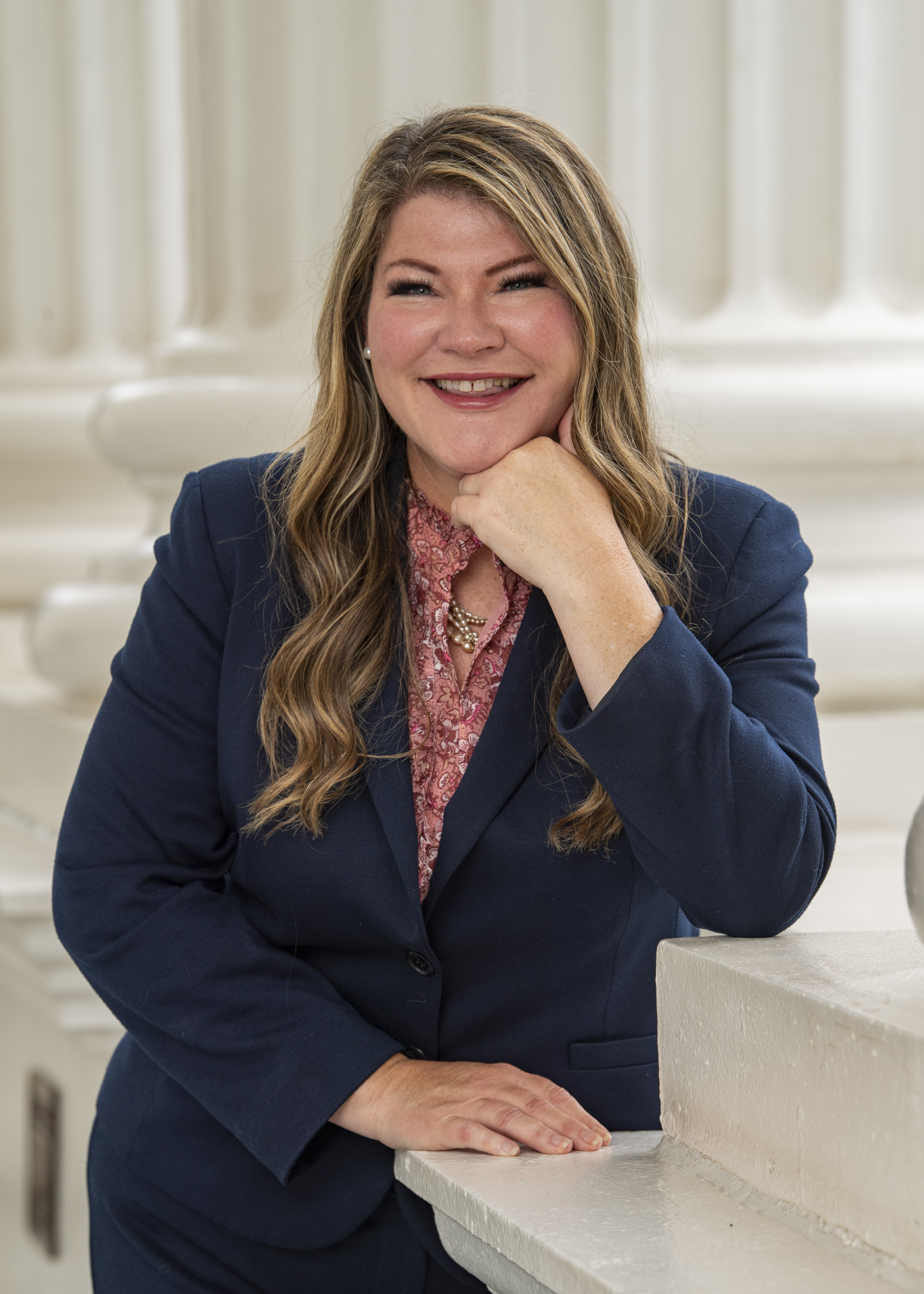
Rep. Tasha Boerner
Sponsored bills
Maddy summaryThis bill designates September 2026 as Childhood Cancer Awareness Month. It directly affects state agencies and organizations by encouraging them to recognize this specific month for awareness activities. The measure does not change laws or allocate funding but serves as a formal commemorative resolution.
This measure would recognize and affirm the important role of artists, arts organizations, creative arts therapists, and arts for health initiatives in supporting behavioral health, promoting recovery, strengthening community resilience, and contributing to public safety. The measure would encourage and recognize exploration, support, and integration of arts and behavioral health within California's health care, behavioral health, and community-based systems.
Existing law requires every state agency to develop and implement a telecommuting plan as part of its telecommuting program in work areas where telecommuting is identified as being both practical and beneficial to the organization. Existing law requires the Department of General Services to establish a unit for purposes of overseeing telecommuting programs that is required to, among other things, develop and update policy, procedures, and guidelines to assist agencies in the planning and implementation of telecommuting programs. Existing law requires the department to establish criteria for evaluating the state's telecommuting program. Existing law defines "telecommuting" for purposes of those provisions. This bill would revise and recast those provisions. The bill would replace the term "telecommuting" with "telework," as defined. The bill would also require the Department of General Services to establish a telework dashboard that displays the cost-effectiveness and efficiency benefits of state telework programs, including documenting annual savings to the state of reduced office space and operating costs. The bill would additionally require each state agency, every 10 years, to evaluate its telework program to ensure that it aligns with the state agency's unique operational needs to carry out its programmatic missions and to help recruit and retain a qualified workforce. This bill would declare that it is to take effect immediately as an urgency statute.
Existing law, the Healthy Workplaces, Healthy Families Act of 2014, entitles an employee who works in California for the same employer for 30 or more days within a year from the commencement of employment to paid sick days. Under existing law, an employee accrues paid sick days at a rate of not less than one hour per every 30 hours worked, subject to certain use, accrual, and yearly carryover limitations. This bill would require specified fire departments to provide a paid leave of absence of up to 26 weeks to an active firefighting member who requests leave because the firefighter is disabled by pregnancy, childbirth, or a related medical condition, as provided. The bill would apply to an active firefighting member who has at least 1,250 hours of service with the fire department in the 12-month period before the date on which the paid leave begins and would require the leave to be with full pay, except as specified, at the firefighter's regular rate of pay set forth in a collective bargaining agreement and in accordance with their normal pay schedule. The bill would require all benefits to continue to accrue during the paid leave, as specified, and would require a firefighter returning from the paid leave to be restored to their prior position, as provided. The bill would request a fire department of the University of California to comply with these provisions.
This measure would proclaim the month of October 2026 as California Firefighter Appreciation Month and October 3, 2026, as California Firefighters Memorial Day.
Existing law vests the Public Utilities Commission (PUC) with regulatory authority over public utilities, including electrical corporations. Existing law requires the PUC, in consultation with the Independent System Operator, to establish resource adequacy requirements for all electrical corporations, electric service providers, and community choice aggregators. Existing law requires that the resource adequacy program achieve specified objectives, including that it establish new or maintain existing demand response products and tariffs, as specified. This bill would require the PUC, in coordination with the State Energy Resources Conservation and Development Commission and the Independent System Operator, on or before June 30, 2028, to enhance existing market-integrated pathways for aggregated distributed energy resources, as defined, to qualify as resource adequacy capacity, as specified. The bill would require the commission to establish conditions for the use of aggregated distributed energy resources while ensuring net energy metering customers and net billing tariff customers do not receive duplicate compensation, as provided. The bill would require the PUC to allow electrical corporations, electric service providers, and community choice aggregators to include aggregated distributed energy resources in resource adequacy filings and PUC-ordered procurement, as specified. The bill would require the PUC, on or before June 30, 2028, to develop recommendations for changes to the Independent System Operator's proxy demand resource and distributed energy resource aggregation participation models to be consistent with the PUC's requirements for aggregated distributed energy resources pursuant to these provisions, and to communicate the recommendations to the Independent System Operator for consideration in a new or existing initiative. Under existing law, a violation of the Public Utilities Act or any order, decision, rule, direction, demand, or requirement of the PUC is a crime. Because the provisions of this bill would be part of the act and a violation of a PUC action implementing the bill's requirements would be a crime, the bill would impose a state-mandated local program. The California Constitution requires the state to reimburse local agencies and school districts for certain costs mandated by the state. Statutory provisions establish procedures for making that reimbursement. This bill would provide that no reimbursement is required by this act for a specified reason.
Under existing law, the Tom Bane Civil Rights Act (act) , if a person or persons, whether or not acting under color of law, interferes or attempts to interfere, by threats, intimidation, or coercion, with the exercise or enjoyment by any individual or individuals of rights secured by the Constitution or laws of the United States, or of the rights secured by the Constitution or laws of this state, the Attorney General, or any district attorney or city attorney, is authorized to bring a civil action for injunctive and other appropriate equitable relief in the name of the people of the State of California, in order to protect the exercise or enjoyment of the right or rights secured. Under that act, an individual may also institute and prosecute in their own name and on their own behalf a civil action for damages, as described, for any resulting interference or attempt at interference of the individual's exercise or enjoyment of rights secured by the Constitution or laws of the United States or this state. The act authorizes the court to award the petitioner or plaintiff reasonable attorney's fees in addition to any damages, injunction, or other equitable relief awarded in these civil actions (attorney's fees authorization) . Existing federal law provides that every person who, under color of any statute, ordinance, regulation, custom, or usage, of any state, territory, or the District of Columbia, subjects or causes to be subjected any United States citizen or other person within the jurisdiction to the deprivation of any rights, privileges, or immunities secured by the Constitution and laws, is liable to the party injured in an action at law, suit in equity, or other proper proceeding for redress, except as provided. This bill would also provide that every natural person, as defined, who, under color of any law, statute, ordinance, regulation, custom, or usage, as defined, subjects or causes to be subjected any citizen of this state or any person within the jurisdiction thereof to the deprivation of any rights, privileges, or immunities secured by the United States Constitution, shall be liable to the party injured in an action at law, suit in equity, or other proper proceeding for redress, except as specified. The bill would apply the aforementioned attorney's fees authorization, except as specified, to any action brought under these provisions. The bill would authorize a court, in its discretion, to also award costs, except as specified, to the prevailing plaintiff in any action brought under these provisions. This bill would authorize a defendant in an action brought under these provisions to assert and receive the benefit of a defense of absolute or qualified immunity only to the same extent as a person sued under certain federal provisions under like circumstances, as specified, and would specify that nothing in these provisions is to be construed to waive or abrogate any defense of sovereign immunity otherwise available to a party, as specified. The bill would prohibit any civil action brought under these provisions from being commenced later than 2 years after the date that the cause of action accrues. The bill would make its provisions severable. The bill would specify that these provisions apply retroactively to March 1, 2025, as provided. This bill would declare the intent of the Legislature in enacting these provisions. This bill would declare that it is to take effect immediately as an urgency statute.
Existing law establishes the Medi-Cal program, which is administered by the State Department of Health Care Services and under which qualified low-income individuals receive health care services. The Medi-Cal program is in part governed by, and funded pursuant to, federal Medicaid program provisions. Existing federal law generally requires, commencing in 2027, Medicaid beneficiaries between 19 and 64 years of age, inclusive, with income up to 138% of the federal poverty level, commonly known as Medicaid expansion adults, to demonstrate community engagement as a condition of Medicaid eligibility. Existing state law sets forth various provisions to conform to that federal requirement. Existing law requires, no sooner than January 1, 2027, as specified, an applicable individual to demonstrate work or community engagement. Existing law sets forth the mechanisms for an applicable individual to comply with that requirement on a monthly basis, including, among others, a minimum of 80 hours of work, community service, or participation in a work program, or a minimum of half-time enrollment in an educational program. This bill would make changes to the definitions of "applicable individual," "work program," and "educational program," and to some of the compliance mechanisms regarding monthly income, for purposes of the above-described provisions. When there is a conflict in reliable data sources that adversely impacts the eligibility of an applicant or beneficiary, the bill would require the county to request the applicant or beneficiary to confirm information before taking any adverse action on the application or renewal. Existing law requires a county, if it is unable to verify that an applicable individual either has met the requirement to demonstrate work or community engagement or was deemed to have demonstrated work or community engagement, to provide the individual with a notice of noncompliance, as specified, and to continue to provide the individual with Medi-Cal services during a 30-calendar-day period if the individual is enrolled in the Medi-Cal program. This bill would require the county to notify applicable individuals enrolled in the Medi-Cal program of the requirement to demonstrate work or community engagement based on certain delivery formats. For an applicable individual renewing their Medi-Cal enrollment during a 6-month redetermination period and who otherwise meets all other eligibility criteria, the bill would require the county to maintain active eligibility pending verification of work or community engagement until at least the last day of the month of the 30-calendar-day period. Under the bill, an applicable individual would be deemed to have received the notice of noncompliance 5 days after the date on the notice. Under the bill, self-attestation that the individual did not receive a timely notice would constitute good cause for not providing a satisfactory showing within the 30-calendar-day period. If no satisfactory showing is made after the 30-calendar-day period, the bill would require the department to consider all other bases of eligibility for medical assistance under the Medi-Cal state plan prior to denying coverage at application or determining that an individual is ineligible. The bill would authorize the department to defer implementation of any of the above-described changes if the change would result in a fiscal impact that would require an additional appropriation and that additional appropriation has not been made, as specified. By creating new duties for counties relating to Medi-Cal eligibility determinations with regard to work or community engagement, the bill would impose a state-mandated local program. The California Constitution requires the state to reimburse local agencies and school districts for certain costs mandated by the state. Statutory provisions establish procedures for making that reimbursement. This bill would provide that, if the Commission on State Mandates determines that the bill contains costs mandated by the state, reimbursement for those costs shall be made pursuant to the statutory provisions noted above.
Existing law vests the Public Utilities Commission with regulatory authority over public utilities, including electrical corporations. Existing law authorizes the commission to fix the rates and charges for every public utility and requires that those rates and charges be just and reasonable. This bill would require the commission to ensure that all data serving as a basis for any decision or ruling issued by the commission, or in any proposal or analysis provided by commission staff, for the determination or application of a calculation methodology for any nonbypassable charge imposed on customers of a load-serving entity to recover costs associated with contracts, electrical corporation-owned generation, or any other resource or value included in that charge and any other charge derived from those costs, is made available to load-serving entities and ratepayer advocates on behalf of customers. The bill would require the commission to require an electrical corporation, member association, load-serving entity, or other party, in submitting a proposal or analysis for the determination or application of a calculation methodology for any nonbypasssable charge imposed on customers of a load-serving entity to recover costs associated with contracts, electrical corporation-owned generation, or any other resource or value included in that charge and any other charge derived from those costs, to make all data serving as a basis for that proposal or analysis available to load-serving entities and ratepayer advocates on behalf of customers. The bill would require that the data exclude any information that can reasonably be used to identify an individual, family, household, residence, or nonresidential customer. The bill would require that the data meet specified requirements, including that it is made available through a public disclosure, except for market-sensitive data, as provided. Under existing law, a violation of the Public Utilities Act or any order, decision, rule, direction, demand, or requirement of the commission is a crime. Because the above provisions would be a part of the act, and because a violation of a commission action implementing the above provisions would be a crime, the bill would impose a state-mandated local program. The California Constitution requires the state to reimburse local agencies and school districts for certain costs mandated by the state. Statutory provisions establish procedures for making that reimbursement. This bill would provide that no reimbursement is required by this act for a specified reason.