

Relative to Robotics Technology Day.
This measure would declare June 27, 2016, as Robotics Technology Day.
Signed into law Aug 16, 2016
1 co-sponsor
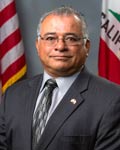
This measure would declare June 27, 2016, as Robotics Technology Day.
This measure would declare that the American flag is an inseparable part of California's rich history, tradition, and culture, that it represents the values of freedom and liberty, and would call upon the state and local governments to prohibit any government entity in the state from banning the American flag from public property.
This measure would thank the State Air Resources Board for its exemplary work and tenacity in uncovering the emissions control defeat devices on certain diesel-fueled Volkswagen motor vehicles and would express the Legislature's support for specified future emissions test-related actions by the board.
Existing law establishes the jurisdiction of the juvenile court, which may adjudge certain children to be dependents of the court under certain circumstances, including when the child is abused, a parent or guardian fails to adequately supervise or protect the child, as specified, or a parent or guardian fails to provide the child with adequate food, clothing, shelter, or medical treatment. Existing law declares that a child is within the dependency jurisdiction of the juvenile court if the child is a victim of sexual trafficking, or receives food, shelter, or money in exchange for specified sexual acts, as a result of the failure or inability of his or her parent or guardian to protect the child, and declares that this is declaratory of existing law. This bill would additionally include a child within the dependency jurisdiction of the juvenile court if the child solicits or engages in any act of prostitution or loiters in a public place with the intent to commit prostitution, and the child's parent or guardian has failed to protect the child. The bill would state that these provisions are declaratory of existing law.
Existing law establishes, within the Government Operations Agency, the California Victim Compensation Board, composed of the Secretary of Government Operations, or his or her designee, the Controller, and a 3rd member who is appointed by, and serves at the pleasure of, the Governor. Existing law requires specific compensation for the member who is appointed by the Governor, unless that member is a state officer. Administrative costs of the board are paid from the Restitution Fund, a continuously appropriated fund, except for specific costs that include, among others, the administrative costs of the board, which are subject to annual review through the state budget process. This bill would add 2 members to the board who would be appointed by, and serve at the pleasure of, the Governor. One new member would be an expert, as defined, in the rights of crime victims and the other new member would be a physician, psychiatrist, or psychologist with expertise in treating or providing services to crime victims. The bill would provide specific compensation for any member who is not a state officer, would specify that the Controller may designate an individual to serve on the board as his or her designee, and would make nonsubstantive changes to these provisions. Existing law provides that a person who has been convicted of a felony and imprisoned in the state prison or county jail, but who is innocent or granted a pardon by the Governor for specified reasons, may present a claim against the state to the California Victim Compensation Board for the pecuniary injury sustained by him or her through the erroneous conviction and imprisonment, as specified. Existing law requires the board to hold a hearing for these claims and to be bound by specified factual findings and credibility determinations. Existing law requires the board to make certain determinations and recommendations to the Legislature regarding payment of compensation based on the facts and its conclusions from the case. This bill would create a Special Master who is appointed by and serves at the pleasure of the Governor and would require the Special Master, instead of the board, to hold a hearing for specified claims and to be bound by specified factual findings and credibility determinations.
Existing law provides for the Medi-Cal program, which is administered by the State Department of Health Care Services, under which qualified low-income individuals receive health care services. The Medi-Cal program is, in part, governed and funded by federal Medicaid program provisions. Existing law provides for a schedule of benefits provided under the Medi-Cal program, which includes certain dental services that are referred to as Denti-Cal. This bill would require the State Department of Health Care Services to increase Denti-Cal provider reimbursement rates for the 15 most common prevention, treatment, and oral evaluation services to the regional average commercial rates, effective January 1, 2017.
Existing law creates the Adult Education Block Grant Program under the administration of the Chancellor of the California Community Colleges and the Superintendent of Public Instruction. Under this program, the chancellor and Superintendent, with the advice of the executive director of the State Board of Education, are required to divide the state into adult education regions and approve one adult education consortium in each adult education region. Existing law also requires, as a condition of receipt of an apportionment of funds from this program for a fiscal year, that members of a consortium approve an adult education plan, as specified. Existing law requires the chancellor and the Superintendent to submit to the Director of Finance, the State Board of Education, and the Legislature, by September 30 following any year for which funds are appropriated for the program, a report about the use of specified funds and outcomes for adults statewide and in each adult education region. This bill would require that report to also include a summary, based upon a review of the annual adult education plan for each consortium, of the extent to which funds from the program provided to each consortium, in combination with other funds available to the consortium and other entities that provide education and workforce services for adults in the region, were insufficient to address the adult education demands within the service area of the consortium.
Existing law provides for the compensation of victims and derivative victims of specified types of crimes by the California Victim Compensation and Government Claims Board from the Restitution Fund, a continuously appropriated fund, for specified losses suffered as a result of those crimes. Existing law sets forth eligibility requirements and specified limits on the amount of compensation the board may award, and requires applications for compensation to be verified under penalty of perjury. This bill would create the San Diego County Elder or Dependent Adult Financial Abuse Crime Victim Compensation Pilot Program and would authorize the board, upon appropriation by the Legislature before January 1, 2019, to provide victims of elder or dependent adult financial abuse compensation to reimburse costs for financial counseling, mental health counseling, or supportive services, as specified, if the crime occurred in the County of San Diego. The bill would limit compensation pursuant to this authorization to $3,000 per person and an aggregate total of $1,000,000. The bill would exclude a derivative victim from eligibility for compensation if the only crime the victim suffered was elder or dependent adult financial abuse. The bill would authorize the pilot program to operate until January 1, 2020. The bill would require the board to report specified information related to the pilot program to the Legislature and Governor on or before July 1, 2020. By expanding the scope of the crime of perjury, this bill would impose a state-mandated local program. The bill would repeal these provisions on January 1, 2021. This bill would make related legislative findings and declarations, including findings and declarations as to the necessity of a special statute enacting a pilot program in the County of San Diego. The California Constitution requires the state to reimburse local agencies and school districts for certain costs mandated by the state. Statutory provisions establish procedures for making that reimbursement. This bill would provide that no reimbursement is required by this act for a specified reason.
Existing law establishes the Labor and Workforce Development Agency and provides that the agency consists of, among other entities, the California Workforce Investment Board, the Employment Development Department, and the Employment Training Panel. Existing law establishes within state government a Department of Veterans Affairs and a Department of Food and Agriculture. Existing law provides for a variety of state benefits to veterans, including those relating to educational assistance and farm and home purchases, as specified. This bill would require state departments, including, but not limited to, the Department of Food and Agriculture, the Labor and Workforce Development Agency, and the Department of Veterans Affairs, to develop, by July 1, 2017, a New Veteran Farmer and Rancher Outreach and Assistance Plan to disseminate information to veterans in California about, among other things, federal and state veteran agricultural education, training, and other assistance programs, as provided. The bill would authorize other public or private sector resources to be included in that dissemination. The bill would also make findings and declarations in this regard.