

Existing law establishes the Department of Rehabilitation in the California Health and Human Services Agency to provide vocational rehabilitation services to individuals with disabilities. This bill would require the department, upon appropriation by the Legislature, to establish a comprehensive 3-year device reutilization pilot program in the Counties of Contra Costa, Napa, Solano, and Yolo to facilitate the reuse and redistribution of assistive technology, including durable medical equipment. The bill would require the department to contract with one or more nonprofit agencies to oversee the program and would require a contracting nonprofit agency to use a computerized system to track the inventory of equipment and supplies available for reuse and redistribution and organize pickup and delivery of equipment and supplies. The bill would require the department, on or before January 1, 2027, to submit a report to the appropriate Senate and Assembly policy committees of the Legislature that includes an evaluation of the success of the pilot program and challenges in implementation, among other things. The bill would repeal its provisions on January 1, 2030.
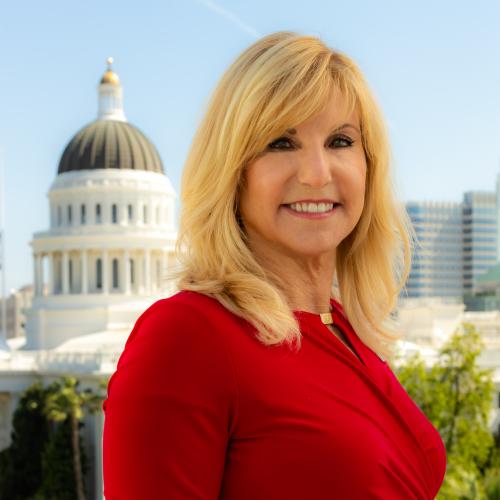
Asm. Laurie Davies
Sponsored bills
Existing law requires every motor vehicle subject to registration to be equipped with an adequate muffler in constant operation and properly maintained to prevent any excessive or unusual noise and prohibits a muffler or exhaust system from being equipped with a cutout, bypass, or similar device. Existing law further prohibits the modification of an exhaust system of a motor vehicle in a manner that will amplify or increase the noise emitted by the motor of the vehicle so that the vehicle exceeds existing noise limits when tested in accordance with specified standards. Existing law establishes the motor vehicle inspection program, which provides for privately operated stations that are referred to as smog check stations and are authorized to issue certificates of compliance or noncompliance to vehicles that meet certain requirements. Existing law requires a certain number of stations providing referee functions available to consumers, which ensures uniform and consistent tests and repairs by all qualified smog check technicians and licensed smog check stations throughout the state. Existing law requires stations providing referee functions to provide for the testing of vehicular exhaust systems and the issuance of certificates of compliance for those vehicles that have received a citation for the noise limit violations described above. Under existing law, it is unlawful for an owner to request, cause, or permit the operation of any vehicle that is, among other things, not equipped as required by law. Under existing law, if there is a violation, an owner or any other person who was not driving the vehicle involved in the violation may be mailed a written notice to appear by the court. Existing law authorizes a court to dismiss any action in which a person is prosecuted for operating a vehicle in violation of the noise limit requirements mentioned above if a certificate of compliance has been issued or if the defendant had reasonable grounds to believe that the exhaust system was in good working order and had reasonable grounds to believe that the vehicle was not operated in violation of those requirements. Existing law also prohibits a person from modifying the exhaust system of a vehicle with a whistle-tip, operating a vehicle that has been so modified, or engaging in the business of installing a whistle-tip onto the vehicle's exhaust system. This bill would require a court to require a certificate of compliance for a violation of the noise limit requirements mentioned above for specified vehicles. The bill would require the court to utilize the notification procedures mentioned above and if a certificate of compliance is not provided to the court within 3 months of the violation date, the bill would require the court to treat this failure as noncompliance and inform the Department of Motor Vehicles by following specified procedures. The bill would require the department, before renewing the registration of any vehicle, to check whether the court has issued a hold on the vehicle registration for a violation of the requirements mentioned above and to refuse to renew the registration until it has received a notification from the court that a certificate of compliance has been issued. This bill would also require stations providing referee functions to provide for the testing of exhaust systems of motor vehicles and the issuance of certificates of compliance for vehicles that have received a citation for installing, operating, or engaging in the business of installing a whistle-tip onto a vehicle's exhaust system and for motorcycles that have received a citation for the violations mentioned above. Existing law requires an officer, if, after an arrest, accident investigation, or other law enforcement action, it appears that a violation, including, among other things, a mechanical requirement by law, has occurred, to prepare, and the violator to sign, a written notice containing the violator's promise to correct the alleged violation, and to deliver proof of correction of the violation to the issuing agency except if the officer finds that the violation cited was for a motorcycle that has a modification of the exhaust system in a manner that amplifies or increases the noise emitted by the motor so that the motorcycle is not in compliance with the law. This bill would eliminate that exemption. These requirements would become operative on January 1, 2027.
Existing law requires the Department of Veterans Affairs to acquire, study, design, develop, construct, and equip a state-owned and state-operated Southern California Veterans Cemetery in the County of Orange at one of 2 possible sites, as specified. Existing law requires the department to, after completing acquisition studies on both sites, consult with the Department of General Services to determine which site to pursue based on the economic feasibility, benefits to veterans and City of Irvine residents, and availability of each location. Existing law makes honorably discharged veterans, their spouses, and dependent children eligible for interment in the cemetery, as specified. This bill would delete those site selection requirements and would instead require the department to acquire, study, design, develop, construct, and equip a state-owned and state-operated Southern California Veterans Cemetery in the County of Orange. The bill would require the department to conduct an acquisition study, in consultation with the Department of General Services, to assess the feasibility and costs of construction of the cemetery. The bill would additionally create the Southern California Veterans Cemetery Study Donation Fund, and would authorize any local governmental entity or private organization in the County of Orange to donate to the fund. The bill would authorize the department, upon receipt of sufficient moneys, to conduct a study of the feasibility of a site formally proposed by a local government in the County of Orange for the purpose of establishing a Southern California Veterans Cemetery, as specified. The bill would continuously appropriate moneys in the fund to the department for these purposes. The bill would require any excess funds to be returned to the donor if requested, and to otherwise be used for the design, development, construction, and equipment of the cemetery. This bill would declare that it is to take effect immediately as an urgency statute.
Existing law provides for the Medi-Cal program, which is administered by the State Department of Health Care Services, under which qualified low-income individuals receive health care services. The Medi-Cal program is, in part, governed and funded by federal Medicaid program provisions. Under existing law, Medi-Cal services may be provided pursuant to contracts with various types of managed care health plans, including through a county organized health system. Under existing law, in-person contact between a health care provider and a patient is not required under the Medi-Cal program for services appropriately provided through telehealth. Existing law provides that neither face-to-face contact nor a patient's physical presence on the premises of an enrolled community clinic is required for services provided by the clinic to a Medi-Cal beneficiary during or immediately following a proclamation declaring a state of emergency. Existing law defines "immediately following" for this purpose to mean up to 90 days following the termination of the proclaimed state of emergency, unless there are extraordinary circumstances. Under existing law, federally qualified health center (FQHC) services and rural health clinic (RHC) services are covered benefits under the Medi-Cal program, to be reimbursed, to the extent that federal financial participation is available, to providers on a per-visit basis. "Visit" is defined as a face-to-face encounter between an FQHC or RHC patient and any of specified health care professionals. Under existing law, "visit" also includes an encounter between an FQHC or RHC patient and specified medical professionals when services delivered through that interaction meet the applicable standard of care. Existing law prohibits an FQHC or RHC from establishing a new patient relationship using an audio-only synchronous interaction and authorizes the department to provide specific exceptions to that prohibition, developed in consultation with affected stakeholders and published in departmental guidance. This bill would authorize the department to authorize an FQHC or RHC to establish a new patient relationship using an audio-only synchronous interaction when the visit is related to sensitive services, as defined, and authorize an FQHC or RHC to establish a new patient relationship using an audio-only synchronous interaction when the patient requests an audio-only modality or attests they do not have access to video. Existing law provides that face-to-face contact is not required when covered health care services are provided by video synchronous interaction, audio-only synchronous interaction, remote patient monitoring, or other permissible virtual communication modalities when those services and settings meet certain criteria. Existing law, effective as specified, requires a provider furnishing services via audio-only synchronous interaction to also offer those same health care services via video synchronous interaction to preserve beneficiary choice. Existing law authorizes the department to provide specific exceptions to that requirement based on a Medi-Cal provider's access to requisite technologies, as specified. Existing law also prohibits a health care provider from establishing a new patient relationship with a Medi-Cal beneficiary via, among other interactions, telephonic (audio-only) synchronous interaction. Existing law authorizes the department to provide specific exceptions to that prohibition, as specified. This bill would authorize the department to take into consideration the availability of broadband access when providing those specific exceptions. The bill would authorize the department to authorize a health care provider to establish a new patient relationship using an audio-only synchronous interaction when the visit is related to sensitive services, as defined, and authorize a health care provider to establish a new patient relationship using an audio-only synchronous interaction when the patient requests an audio-only modality or attests they do not have access to video. This bill would incorporate additional changes to Section 14132.100 of the Welfare and Institutions Code proposed by SB 966 to be operative only if this bill and SB 966 are enacted and this bill is enacted last.
Existing federal law establishes the Supplemental Nutrition Assistance Program (SNAP) , known in California as CalFresh, under which supplemental nutrition assistance benefits allocated to the state by the federal government are distributed to eligible individuals by each county. Existing federal law limits a participant who is an able-bodied adult without dependents (ABAWD) to 3 months of CalFresh benefits in a 3-year period unless that participant has met work participation requirements or is otherwise exempt. Existing federal law authorizes a waiver of that time limit upon the request of a state if it is determined that the area in which the individuals reside has an unemployment rate of over 10% or does not have a sufficient number of jobs to provide employment for the individuals. Existing state law requires the State Department of Social Services, to the extent permitted by federal law, to annually seek a federal waiver of the time limit. Existing federal law also authorizes a state to provide, in each fiscal year, a discretionary exemption from the 3-month time limit for covered individuals, to the extent that the average monthly number of exemptions in effect during a fiscal year does not exceed 12% of the number of covered individuals in the state. Existing law requires the State Department of Social Services to establish the California Food Assistance Program (CFAP) , and, operative on the date that the department notifies the Legislature that the Statewide Automated Welfare System (SAWS) has been updated to perform the necessary automation, requires the department to use state funds appropriated for the program to provide nutritional benefits to households and to individuals 55 years of age or older, as specified, that are ineligible for CalFresh benefits solely due to their immigration status. This bill would require the department, with appropriated state funds, to establish the California Antihunger Response (CARE) to provide food assistance benefits to a person who has been determined ineligible for CalFresh benefits, or for whom CalFresh benefits have been discontinued as a result of the ABAWD time limit, and who also is ineligible for the discretionary exemption described above. The bill would require the person to receive CARE benefits in the same amount that they would have received under the CalFresh program if the ABAWD time limit did not make them ineligible. The bill would require the issuance of CARE benefits through the state-administered and state-funded electronic benefits transfer system, as specified. Under the bill, the CARE benefit would only be available during a period of time in which a statewide time limit waiver is not granted by the federal government, and in that case, the CARE benefit would only be applicable in those areas that are not granted an area time limit waiver by the federal government. The bill would require the CARE benefit to be operable one year after the above-mentioned CFAP provisions become operative. The bill would require the department to develop, in consultation with specified entities, and to issue, guidance to maximize the use of discretionary exemptions from the 3-month time limit available under federal law and guidance relating to SNAP and CalFresh. The bill would authorize the guidance to include redistribution of the discretionary exemptions between counties, as specified. The bill would require the guidance to be issued no later than April 1, 2023, and to remain operative until the CARE benefit is operative, by which date the bill would require the department to issue new guidance to maximize the use of discretionary exemptions available under federal law, as well as the CARE benefit. To the extent that the bill would expand eligibility for county-administered benefits through the establishment of the CARE program, the bill would impose a state-mandated local program. The California Constitution requires the state to reimburse local agencies and school districts for certain costs mandated by the state. Statutory provisions establish procedures for making that reimbursement. This bill would provide that, if the Commission on State Mandates determines that the bill contains costs mandated by the state, reimbursement for those costs shall be made pursuant to the statutory provisions noted above.
Existing law establishes the Medi-Cal program, administered by the State Department of Health Care Services, under which health care services are provided to qualified, low-income persons. The Medi-Cal program is, in part, governed and funded by federal Medicaid program provisions. Existing law authorizes a county board of supervisors, by ordinance, to establish a commission to negotiate an exclusive contract with the department and to arrange for the provision of health care services under the Medi-Cal program. This system of services provided by or through a county under these provisions is known as a county organized health system. Pursuant to this authority, the County of Orange, by ordinance, established a commission, known as the Orange County Health Authority, or CalOptima, to provide health care services under the Medi-Cal program. Existing law codifies the establishment of the Orange County Health Authority and vests governance of the authority in a 10-member governing body. Existing law prescribes the membership of the governing body, which includes, among others, 2 members of the Board of Supervisors of the County of Orange, one member who is a current or former hospital administrator, and one member who is a representative of a community clinic. Existing law requires a member of the governing body to serve a 4-year term, except for a member who is a member of the Board of Supervisors of the County of Orange, who is required to serve a one-year term. Existing law prohibits a member of the governing body, except for a member of the Board of Supervisors of the County of Orange, from serving more than 2 consecutive terms. This bill would prohibit an individual who served a one-year term on the governing body as a member of the board of supervisors from being appointed to serve a 4-year term under any of the other categories within 12 months of the expiration of their one-year term. Under existing law, the voting members are nominated by the Orange County Health Care Agency and are appointed by a majority vote of the board of supervisors. This bill would require the board of supervisors to consult with stakeholders in the County of Orange, as specified, for purposes of identifying qualified individuals to be considered as members of the governing body. Existing law requires members of the governing body to, among other things, strive to improve health care quality, promote prevention and wellness, ensure the provision of cost-effective health and mental health care services, and reduce health disparities. This bill would require the members of the governing body to ensure the provision of cost-effective behavioral health care services, rather than mental health care services, and would additionally require the members to address the needs of Medi-Cal members who are affected by homelessness and housing instability, improve quality outcomes, and manage the risk and needs of Medi-Cal beneficiaries through whole-person care approaches and addressing social determinants of health. This bill would require a member of the governing body who has a financial interest in a decision of the governing body to, upon identifying a conflict of interest or a potential conflict of interest, take certain actions, including publicly identifying the financial interest that gives rise to the conflict of interest or potential conflict of interest, recusing the member's own self from discussing and voting on the matter, and leaving the room until after the discussion, vote, and any other disposition of the matter is concluded. This bill would prohibit members of the governing body, for a period of one year after leaving office, from acting as an agent or attorney for, or otherwise representing, for compensation, any other person, by making any appearance before, or by making any communication to, the commission, as specified, if the appearance or communication is made for the purpose of influencing the commission to take certain actions. The bill would also prohibit specified members of the governing body, for a period of one year after leaving office, from serving as an employee, agent, or attorney for, or otherwise representing, for compensation, the Orange County Health Authority or any other entity that received an expenditure of Medi-Cal funds from the Orange County Health Authority during the prior 5 years, with exceptions, including if the member is returning to or continuing a role they held when appointed to the governing body. This bill would eliminate the January 1, 2023, repeal date for the authority, thereby extending the authorization for the authority indefinitely. The bill would make other clarifying changes. This bill would make legislative findings and declarations as to the necessity of a special statute for the County of Orange.
Existing law establishes the California Work Opportunity and Responsibility to Kids (CalWORKs) program, under which each county provides cash assistance and other benefits to qualified low-income families using federal, state, and county funds. Under the CalWORKs program, recipients are required to participate in specified welfare-to-work activities, except for specified persons. Existing law requires that specified CalWORKs eligible individuals who are participating either full time in an educational activity or part time in an educational activity and meeting the hourly participation rates based on the number of academic units, as specified, at a publicly funded postsecondary educational institution and making satisfactory progress, as specified, receive a standard payment of $175 to $500 per semester or quarter, which may be provided, in whole or in part, in the form of a book voucher, or reimbursement for verified actual expenses for the purpose of paying costs associated with attending the postsecondary educational institution. Existing law prohibits those participants from being required to participate in job club, a required welfare-to-work activity. Existing law requires an individual who meets certain requirements and who wishes to receive supportive services to sign a welfare-to-work plan, as specified. This bill would prohibit those educational activity participants from being required to participate in orientation and appraisal more than once, except as specified, or to participate in welfare-to-work activities to satisfy instructional hours during semester or quarter breaks. The bill would also additionally authorize the CalWORKs eligible individuals who participate in a full-time or part-time educational activity at a nonprofit postsecondary educational institution to receive those standard payments. The bill would include summer session as a quarter for these purposes. The bill would instead base the hourly participation rates described above on instructional hours, as defined. The bill would also make other changes to provisions relating to an individual who wishes to receive supportive services and signs a welfare-to-work plan. By imposing a higher level of service on county employees, the bill would impose a state-mandated local program. Existing law requires a recipient of CalWORKs to participate in welfare-to-work activities as a condition of eligibility, but permits a student who is enrolled in an undergraduate degree or certificate program that leads to employment to continue in that program under specified conditions. This bill would specify that this provision does not apply to students who are receiving the standard payments described above. The bill would authorize the State Department of Social Services to implement these provisions by means of all-county letters or similar written instructions until regulations are adopted. The California Constitution requires the state to reimburse local agencies and school districts for certain costs mandated by the state. Statutory provisions establish procedures for making that reimbursement. This bill would provide that, if the Commission on State Mandates determines that the bill contains costs mandated by the state, reimbursement for those costs shall be made pursuant to the statutory provisions noted above. Existing law continuously appropriates moneys from the General Fund to defray a portion of county costs under the CalWORKs program. This bill would instead provide that the continuous appropriation would not be made for purposes of implementing the bill.
Existing law establishes the Title 38 award program, which provides student financial aid to military veterans under the administration of the California State Approving Agency for Veterans Education (CSAAVE) . Existing law requires an institution headquartered or operating in California desiring to enroll students eligible for federal Title 38 awards to apply for approval of its courses to CSAAVE, and authorizes CSAAVE to approve the application of the school when the school and its courses satisfy specified criteria and any additional reasonable criteria established by CSAAVE. This bill would require, on or before January 1, 2024, CSAAVE to establish regulations requiring postsecondary educational institutions to provide specified information to CSAAVE as part of an application for approval or renewal. This bill would state that its provisions are severable.
This measure would proclaim the month of September 2022 as Prostate Cancer Awareness Month.
This measure would designate a specified portion of State Highway Route 44, near Oak Run in the County of Shasta, as the Stan Statham Memorial Highway. This measure would request the Department of Transportation to determine the cost of appropriate signs showing this special designation and, upon receiving donations from nonstate sources covering that cost, to erect those signs.