This measure would designate the month of June 2023 as Healthy Homes Awareness Month.
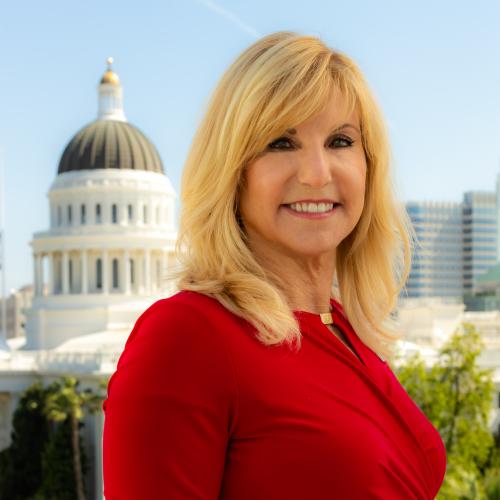
Asm. Laurie Davies
Sponsored bills
This measure would recognize July 28 as World Hepatitis Day and would urge all California institutions, nonprofit organizations, health care organizations, businesses, community leaders, and residents to ensure screenings for hepatitis B and C, vaccinations for hepatitis B, and treatment become the standard of care.
This measure would designate October 23, 2023, as Aromatic L-Amino Acid Decarboxylase (AADC) Deficiency Awareness Day in the state.
This measure would recognize August 15, 2023, as India's Independence Day and urge all Californians to join in celebrating India's independence.
This measure would proclaim August 2023 as Breastfeeding Awareness Month of 2023 in California. The measure would recognize the unique benefits that breastfeeding provides, as specified, and would affirm that Californians should work to ensure that barriers to initiation and continuation of breastfeeding are removed. The measure would encourage Californians to work together to explore ways to, among other things, improve women's access to breastfeeding support services in medical, social, and employment settings.
This measure would recognize the 50th anniversary of hip hop on August 11, 2023, as a time of celebration, pride, and nostalgia for the citizens of California.
Existing law establishes the Ocean Protection Council in state government to, among other things, establish policies to coordinate the collection, evaluation, and sharing of scientific data related to coastal and ocean resources among agencies. Existing law requires the council to develop and implement a voluntary sustainable seafood promotion program for the state, to consist of specified components, including a competitive grant and loan program for eligible entities, including, but not limited to, fishery groups and associations, for the purpose of assisting California fisheries in qualifying for certification to internationally accepted standards for sustainable seafood. This bill would require the council, on or before January 1, 2026, in coordination and in consultation with various entities, including the State Air Resources Board, to implement a statewide voluntary vessel speed reduction and sustainable shipping program for the California coast in order to reduce air pollution, the risk of fatal vessel strikes on whales, and harmful underwater acoustic impacts. The bill would require the program to expand a certain existing program and would authorize the program to include specified components, including incentives to program participants based on a percentage of distance traveled by a participating vessel at a reduced speed, as provided. The bill would limit application of the program to vessels that are 300 gross tons or greater. The bill would require the council, on or before December 31, 2026, to submit a report to the Legislature regarding the implementation of the program.

Existing law establishes various grant programs. Existing law, the Grant Information Act of 2018, requires the California State Library to create an internet web portal to provide a centralized location for grant seekers to find state grant opportunities and requires the California State Library to report to the Legislature on the effectiveness of the portal, including, among other things, the utilization rate by state agencies. This bill would impose minimum requirements for the administration of covered grants that meet maximum size and duration requirements and are available to nonprofit organizations, as defined. The bill would require administrators, as defined, to post eligibility, application, and other information for covered grants on their internet website and the above-described grant portal created by the California State Library. The bill would require administrators to provide eligible recipients with the ability to apply for a covered grant online. The bill would require administrators for grant programs totaling $200,000 or more to conduct outreach to nonprofit organizations eligible for covered grants, as specified. The bill would impose minimum requirements on the distribution of grant funds. The bill would impose limitations on specified reporting requirements for covered grant recipients and would prohibit an administrator from requiring a grant recipient to carry insurance coverage limits in excess of the risk associated with the covered grant activity.
Existing law establishes the Air Quality Improvement Program that is administered by the State Air Resources Board for the purposes of funding projects related to, among other things, the reduction of criteria air pollutants and improvement of air quality. Pursuant to its existing statutory authority, the state board has established the Clean Vehicle Rebate Project, as a part of the Air Quality Improvement Program, to promote the production and use of zero-emission vehicles by providing rebates for the purchase of new zero-emission vehicles. The bill would require the state board, as a part of the Clean Vehicle Rebate Project, to provide rebates for zero-emission electric pickup trucks, as defined, so that fuel cell electric pickup trucks and battery electric pickup trucks receive rebates that are $2,500 more than the rebates that are provided for other fuel cell electric vehicles and battery electric vehicles, respectively.