

Existing law consolidates within the State Department of Health Care Services all substance use disorder functions and programs from the former State Department of Alcohol and Drug Programs. Under existing law, the State Department of Health Care Services is responsible for administering prevention, treatment, and recovery services for alcohol and drug abuse. Existing law authorizes each county to establish a drug court program. If a county elects to provide that program, existing law requires the county to develop a plan for the operation of a drug court program that, among other things, provides a local action plan for implementing cost-effective drug court systems. This bill would, upon appropriation by the Legislature, authorize the superior courts in the Counties of Sacramento, San Diego, and Solano to conduct a pilot program to provide specific supportive services to adult defendants who participate in the county's drug court, as specified. The bill would require the Judicial Council to administer the program and would authorize the council to establish guidelines and reporting requirements for the participating drug courts. This bill would require a participating drug court to enroll eligible defendants in specific supportive services unless a defendant refuses or is already enrolled in those services. The bill would require a county probation department, or another county department designated by the court, to administer the supportive services payments and reimbursements. By increasing the duties of county agencies, this bill would impose a state-mandated local program. This bill would require participating drug courts to collect and submit specific data to the Judicial Council. The bill would also require the Judicial Council to prepare and submit a report to the Legislature and the Governor on or before January 1, 2028, that compares the data gathered by the participating drug courts to other similar, nonparticipating drug courts, as specified. The bill would repeal these provisions on January 1, 2029. The California Constitution requires the state to reimburse local agencies and school districts for certain costs mandated by the state. Statutory provisions establish procedures for making that reimbursement. This bill would provide that, if the Commission on State Mandates determines that the bill contains costs mandated by the state, reimbursement for those costs shall be made pursuant to the statutory provisions noted above.
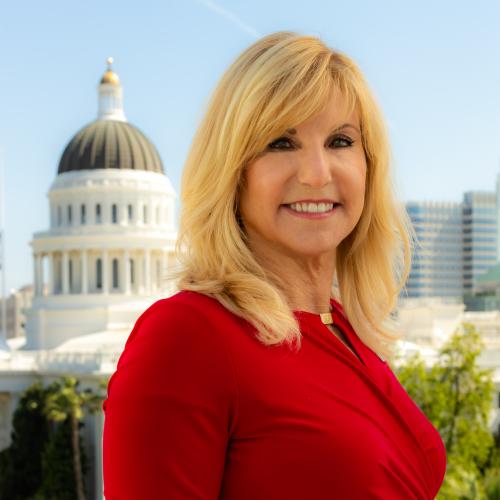
Asm. Laurie Davies
Sponsored bills
Existing law requires a landlord of a residential dwelling to give notice at least a specified number of days, either 30 or 90, before the effective date of the change based upon the percentage increase in the amount of rent charged to the tenant at any time during the 12 months before the effective date of the increase, either in and of itself or when combined with any other rent increases for the 12 months before the effective date of the increase. Existing law authorizes a landlord of a residential dwelling to give notice either by personal service or mail, as specified. This bill would additionally authorize a landlord of a residential dwelling to give notice by electronic mail, as defined.
Existing law makes possession of a firearm by certain classes of persons, including a convicted felon, a person convicted of specified misdemeanors, a person has been found mentally incompetent to stand trial, a person has been found not guilty of specified crimes by reason of insanity, or a person has been placed under conservatorship, a crime. Existing law additionally makes it a crime to sell or give possession of a firearm to these classes of persons prohibited from owning a firearm. Existing law requires the Department of Justice, upon submission of firearm purchaser information by a licensed firearm dealer, to examine its records to determine whether a potential firearm purchaser is prohibited by state of federal law from possessing, receiving, owning, or purchasing a firearm. Existing law requires the department to participate in the National Instant Criminal Background Check System. This bill would require the Department of Justice to develop and launch a secure Internet-based platform to allow a person who resides in California to voluntarily add their own name to the California Do Not Sell List. The bill would require the department to ensure that information on the list is uploaded and reflected in the National Instant Criminal Background Check System. The bill would make it a crime, punishable as a misdemeanor, to transfer a firearm to a person who is validly registered on the California Do Not Sell List. By creating a new crime, this bill would impose a state-mandated local program. This bill would allow a person, after a specified period of time, to request removal from the list. The bill would require the State Department of Public Health to create and distribute informational materials about the California Do Not Sell List to general acute care hospitals and acute psychiatric hospitals. The bill would specify that a person presenting in a general acute care hospital or acute psychiatric hospital who is at a substantially elevated risk of suicide should be presented with these informational materials. The bill would specify that any suicide hotline maintained or operated by an entity funded in whole or in part by the state should generally inform callers on how to access the California Do Not Sell List Internet-based platform. The bill would provide that its provisions are severable. The California Constitution requires the state to reimburse local agencies and school districts for certain costs mandated by the state. Statutory provisions establish procedures for making that reimbursement. This bill would provide that no reimbursement is required by this act for a specified reason.
Existing law classifies controlled substances into 5 schedules and places the greatest restrictions and penalties on the use of those substances placed in Schedule I. Opiates, including fentanyl, are classified in Schedule II. Existing law prohibits a person from possessing for sale or purchasing for purposes of sale specified controlled substances, including fentanyl, and punishes a violation of that prohibition by imprisonment in a county jail for 2, 3, or 4 years. Existing law also prohibits transporting, importing into this state, selling, furnishing, administering, or giving away specified controlled substances, including fentanyl, and punishes a violation of that prohibition by imprisonment in a county jail for 3, 4, or 5 years. Existing law also prohibits the trafficking of specified controlled substances, including fentanyl, and punishes a violation of that prohibition by imprisonment in a county jail for 3, 6, or 9 years. This bill would impose an additional punishment of 3, 4, or 5 years to a person who is convicted of the crimes mentioned above involving fentanyl or a fentanyl analog that was designed, shaped, colored, advertised, or packaged in such a way as to resemble food or candy. By imposing a new enhancement to the penalty of a crime, this bill would impose a state-mandated local program. The California Constitution requires the state to reimburse local agencies and school districts for certain costs mandated by the state. Statutory provisions establish procedures for making that reimbursement. This bill would provide that no reimbursement is required by this act for a specified reason.
Existing law establishes the Department of Parks and Recreation in the Natural Resources Agency, and specifies that the department shall be conducted under the control of an executive officer known as the Director of Parks and Recreation. Existing law requires the director to establish the Outdoor Equity Grants Program to increase the ability of underserved and at-risk populations to participate in outdoor environmental educational experiences at state parks and other public lands where outdoor environmental education programs take place, among other requirements placed on the department and the director. This bill would require the department to establish and administer the California Youth Water Safety State Grant. The bill would require the department to make funding available to nonprofit organizations, special districts, and city or county parks and recreation departments to provide free swimming lessons for low-income and at-risk youth. The bill would authorize an applicant to apply on an annual basis, and would prohibit the department from awarding a grant larger than $25,000 per application. The bill would authorize the department to use up to 5% of amounts appropriated for these purposes for costs that result from administering the grant program. The bill would provide for implementation of all of these provisions only upon an appropriation by the Legislature for these purposes.
Existing law prohibits an act of sexual intercourse accomplished against a person's will by means of force, violence, duress, menace, or fear of immediate and unlawful bodily injury on the person or another. Existing law provides a greater punishment for this offense if the victim is a minor, as specified. Existing law also prohibits an act of sexual intercourse with a person who is incapable, because of a mental disorder or developmental or physical disability, of giving legal consent, and this is known or reasonably should be known to the person committing the act. This bill would impose a greater punishment for prohibited acts of sexual intercourse, as defined, if the victim is a developmentally disabled minor, as specified and defined, and the person committing the prohibited acts knows or should have known that the person is developmentally disabled. The bill would specifically require a person who commits these offenses upon a person who is 10 years of age or younger to be prosecuted pursuant to another statute providing even greater punishment. By increasing the punishment for crime, this bill would create a state-mandated local program. The California Constitution requires the state to reimburse local agencies and school districts for certain costs mandated by the state. Statutory provisions establish procedures for making that reimbursement. This bill would provide that no reimbursement is required by this act for a specified reason.
Existing law establishes the California State University, under the administration of the Trustees of the California State University, as one of the segments of public postsecondary education in the state. This bill would establish the Legislative Internship Program under the administration of the California State University's Center for California Studies to provide paid internship opportunities at offices of the Legislature, to qualified applicants, as provided. The bill would establish the Legislative Internship Program Fund as the initial depository of all moneys appropriated, donated, or otherwise received for the program, and upon appropriation by the Legislature, would require the Center for California Studies to distribute moneys in the fund to program participants, as specified. Existing law requires all appropriations for contingent expenses of the Senate and the Assembly and legislative committees thereof to be available and disbursed, as provided. This bill would prohibit these funds from being used to provide a paid internship position pursuant to the Legislative Internship Program.
Existing law requires the Department of Parks and Recreation to issue a park pass for free use of all park facilities in the state park system to a veteran of war in which the United States has been, or may be, engaged, who is a resident of this state, who presents to the department proof of a disability, proof of being held captive as a prisoner of war, or proof of being a recipient of a Congressional Medal of Honor, and proof of an honorable discharge from service. This bill would require a pass for free day use of any unit of the state park system that is operated by the state to be issued to Gold Star Family members, as provided.
Existing law establishes the State Department of Public Health to implement various programs throughout the state relating to public health. This bill would require the State Department of Public Health and the Office of Emergency Services, in coordination with other state agencies as appropriate, to, upon appropriation and as necessary, establish an infant formula stockpile. The bill would require the department to establish guidelines for the procurement, management, and distribution of infant formula, taking into account, among other things, the amount of each type of infant formula that would be required to meet shortages, as specified. The bill would also establish the Infant Formula Advisory Committee to, among other things, make recommendations for the development of guidelines for the procurement, management, and distribution of infant formula, as specified, and advise the development and implementation of the program. The bill would require the committee to provide an annual report to the Legislature with feedback regarding the implementation of the program and updates regarding policy changes and public comments.
Existing law requires the State Energy Resources Conservation and Development Commission (Energy Commission) to undertake various actions in furtherance of meeting the state's clean energy and pollution reduction objectives, including actions related to electric vehicles. Existing law requires the Energy Commission, in consultation with the State Air Resources Board (state board) and the Public Utilities Commission (PUC) , to prepare a statewide assessment of fuel cell electric vehicle fueling infrastructure and fuel production needed to support the adoption of zero-emission trucks, buses, and off-road vehicles at levels necessary for the state to meet the goals and requirements of Executive Order No. N-79-20 and any state board regulatory action that requires or allows zero-emission vehicles in the heavy-duty vehicle and off-road sectors. Existing law also requires the Energy Commission, working with the state board and the PUC, to prepare a statewide assessment of the electric vehicle charging infrastructure needed to support the levels of electric vehicle adoption required for the state to meet its goals of putting at least 5,000,000 zero-emission vehicles on California roads by 2030, and of reducing emissions of greenhouse gases to 40% below 1990 levels by 2030. This bill would require the assessment of the fuel cell electric vehicle fueling infrastructure and fuel production to additionally include an assessment of storage and transport facilities, and the assessment of the electric vehicle charging infrastructure to additionally include electric system infrastructure and electric generation. The bill would expand the scope of the latter assessment to include the electric vehicle charging infrastructure, electric system infrastructure, and electric generation needed for the state to meet the goals of Executive Order No. N-79-20 and any state board regulatory action that requires or allows zero-emission vehicles in the heavy-duty vehicle and off-road sectors. The bill would require both assessments to identify any barriers to the deployment of hydrogen infrastructure and any barriers to the deployment of electric infrastructure, respectively, for medium- and heavy-duty fleets and recommendations for addressing those barriers. The bill would require the Energy Commission to publish a determination regarding the adequacy of completed or planned charging or fueling sites for the 5 years following the completion of the initial statewide assessment and the findings of the electric vehicle charging infrastructure assessment, as provided. The bill would also require the Energy Commission to identify any charging or fueling site deficiencies and categorize those deficiencies by refueling speed and by type of facility, as either a public facility or a private facility. The bill would require the Energy Commission to update the electric vehicle charging infrastructure assessment and the determination at least once every 2 years. The California Global Warming Solutions Act of 2006 designates the state board as the state agency charged with monitoring and regulating sources of emissions of greenhouse gases. Existing law requires the state board, at least every 5 years, as provided, in consultation with the Department of Transportation, the Energy Commission, and the Governor's Office of Business and Economic Development and in collaboration with relevant stakeholders, to update the state board's 2016 mobile source strategy to include a comprehensive strategy for the deployment of medium-duty and heavy-duty vehicles in the state for the purpose of bringing the state into compliance with federal ambient air quality standards and reducing motor vehicle greenhouse gas emissions from the medium-duty and heavy-duty vehicle sector. Existing law requires the state board to recommend reasonable and achievable goals for reducing emissions from medium-duty and heavy-duty vehicles by 2030 and 2050, respectively, as part of the comprehensive strategy based on factors that include specified goals. This bill would require those goals to include the goals established in Executive Order No. N-79-20 for the transition of medium- and heavy-duty fleets to zero-emission vehicles. The bill would also require the state board's updates to the mobile source strategy to include a strategic plan to meet the deadlines in Executive Order No. N-79-20 and would also require the state board, in developing the comprehensive strategy, to incorporate the findings of the above-described assessments.