

Existing federal law provides for allocation of federal funds through the federal Temporary Assistance for Needy Families (TANF) block grant program to eligible states. Existing law provides for the California Work Opportunity and Responsibility to Kids (CalWORKs) program, under which, through a combination of state and county funds and federal funds received through the TANF program, each county provides cash assistance and other benefits to qualified low-income families. Existing law provides for state-subsidized childcare programs and childcare for recipients of benefits under the CalWORKs program and establishes 3 stages of childcare services managed by county welfare departments and agencies contracting with the State Department of Social Services. Existing law requires an applicant for, or a recipient of, CalWORKs benefits to be provided written notice, both at the time of application and when they sign an original or amended welfare-to-work plan, informing them of, among other things, the availability of paid childcare to allow them to be employed or participate in welfare-to-work activities. Existing law requires an applicant for, or recipient of, CalWORKs benefits to be asked to sign a copy of the written notice acknowledging that they have been informed of and received the notice, as specified. This bill would instead require an applicant for, or a recipient of, CalWORKs benefits to be provided written notice, and verbally informed, of the availability of paid childcare, as described above, at the time of application, approval, and when they sign an original or amended welfare-to-work plan, annual certificate of eligibility, or a semiannual report form. The bill would specify that a "written notice," for purposes of these provisions, includes a CalWORKs childcare request form. Upon receipt of a CalWORKs childcare request form and eligibility information, the bill would require a county to approve or deny the request for childcare within 10 calendar days. The bill would require the department to implement these provisions through an all-county letter or similar instruction on or before June 1, 2027, until regulations are adopted. By imposing additional duties on counties, the bill would impose a state-mandated local program. Existing law, commencing January 1, 2021, or the date that the Statewide Automated Welfare System can perform the necessary automation, whichever date is later, requires the written notice described above to additionally be provided to a recipient at the time of orientation, when they are assigned to a program activity, when they report new or increased participation in a program activity, and when they report new earned income or employment. This bill would extend that commencement date from January 1, 2021, to January 1, 2028. The California Constitution requires the state to reimburse local agencies and school districts for certain costs mandated by the state. Statutory provisions establish procedures for making that reimbursement. This bill would provide that, if the Commission on State Mandates determines that the bill contains costs mandated by the state, reimbursement for those costs shall be made pursuant to the statutory provisions noted above.
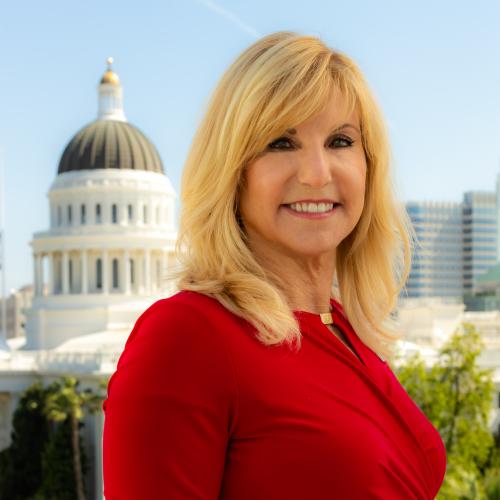
Asm. Laurie Davies
Sponsored bills
Existing federal law establishes the Supplemental Nutrition Assistance Program (SNAP) , known in California as CalFresh, under which supplemental nutrition assistance benefits allocated to the state by the federal government are distributed to eligible individuals by each county. Existing federal law limits a participant who is an able-bodied adult without dependents (ABAWD) to 3 months of CalFresh benefits in a 3-year period unless that participant has met work participation requirements or is otherwise exempt. Existing federal law authorizes a waiver of that time limit upon the request of a state if it is determined that the area in which the individuals reside has an unemployment rate of over 10% or does not have a sufficient number of jobs to provide employment for the individuals. Existing state law requires the State Department of Social Services, to the extent permitted by federal law, to annually seek a federal waiver of the time limit. Existing federal law also authorizes a state to provide, in each fiscal year, an exemption from the 3-month time limit for covered individuals, to the extent that the average monthly number of exemptions in effect during a fiscal year does not exceed 8% of the number of covered individuals in the state. Existing law requires the department to also establish the California Food Assistance Program (CFAP) to provide nutrition benefits to households that are ineligible for CalFresh benefits solely due to their immigration status, as specified. Existing law requires CFAP benefits to be equivalent to SNAP benefits. Under existing law, operative on the date the department notifies the Legislature that the Statewide Automated Welfare System can perform the necessary automation for this purpose, an individual 55 years of age or older is eligible for CFAP benefits, subject to an appropriation. Existing law requires these provisions only be implemented during any period that specified federal benefits are provided. This bill, the California Antihunger Response and Employment Training Act of 2026, would expand CFAP eligibility to include individuals ineligible for CalFresh benefits due to the federal time limits placed on ABAWDs regardless of if they are a citizen or noncitizen and individuals ineligible solely due to their humanitarian immigration status. The bill would also repeal the provisions requiring certain federal benefits be provided in order for CFAP to be implemented. The bill would make related findings and declarations. To the extent the bill would expand eligibility for county-administered benefits through expansion of the CFAP program, the bill would impose a state-mandated local program. The California Constitution requires the state to reimburse local agencies and school districts for certain costs mandated by the state. Statutory provisions establish procedures for making that reimbursement. This bill would provide that, if the Commission on State Mandates determines that the bill contains costs mandated by the state, reimbursement for those costs shall be made pursuant to the statutory provisions noted above.
Under existing law, a court is authorized to suspend the driving privilege of a licensed driver convicted of a violation relating to the speed of vehicles or reckless driving for a period not to exceed 30 days for a first conviction, for a period not to exceed 60 days upon a 2nd conviction, and for a period not to exceed 6 months upon a 3rd or any subsequent conviction. This bill would, commencing on January 1, 2028, authorize a court, for a conviction of reckless driving, to suspend the driving privilege for a period not to exceed 60 days, and for a period of not less than 30 days and not to exceed 6 months when the offense occurred within 10 years of a separate reckless driving violation. The bill would require a court to suspend the driving privilege for a period of not less than 90 days and not to exceed one year if the offense occurred within 10 years of 2 or more separate reckless driving violations. Existing law authorizes a peace officer to arrest a person and seize the motor vehicle of the person if a peace officer determines that the person was engaged in a motor vehicle speed contest, reckless driving, or an exhibition of speed on a highway or in an offstreet parking facility. Existing law allows a vehicle seized under this provision to be impounded for up to 30 days. Existing law requires an impounding agency to release a motor vehicle to the registered owner or their agent prior to the conclusion of the impoundment period if, among other reasons, the person alleged to have been engaged in the motor vehicle speed contest was not authorized by the registered owner to operate the motor vehicle at the time of the commission of the offense, or if the registered owner was neither the driver nor a passenger of the motor vehicle or was unaware that the driver was using the motor vehicle to engage in the prohibited activities. If an impounding agency releases a motor vehicle to the registered owner or agent prior to the conclusion of the impoundment period, this bill would require the registered owner to provide evidence that the driver did not have authorization from the registered owner to operate the motor vehicle, as specified, or require the registered owner to submit a written, signed statement attesting that the registered owner was unaware that the driver was using the vehicle to engage in reckless driving. The bill would allow a registered owner or their agent to obtain their vehicle prior to the conclusion of the impoundment period based on the reason that the registered owner was not the driver or passenger of the motor vehicle or was unaware that the driver was engaging in reckless driving 3 times. The bill would prohibit a registered owner from using this reason to obtain the motor vehicle prior to the conclusion of the impoundment period for a 4th or any subsequent arrest that involves the same driver and vehicle. Existing law requires an impounding agency to release an impounded vehicle before the conclusion of the impound period if the charges against the driver are dismissed. This bill would prohibit the registered owner or driver of the vehicle from being charged any towing or storage fees if the vehicle is released for this reason.
Existing law, the California Uniform Controlled Substances Act, classifies controlled substances into 5 schedules and places the greatest restrictions and penalties on the use of substances placed in Schedule I. Existing law classifies, among others, psilocybin, ibogaine, and dimethyltryptamine as Schedule I substances, classifies ketamine as a Schedule III substance, and prohibits various actions related to those substances, including their sale, possession, transportation, manufacture, or cultivation. Existing law authorizes a person who is lawfully entitled to use specified controlled substances under applicable federal laws or regulations to obtain and use those substances for approved purposes in bona fide research, instruction, or analysis. This bill, the California Emerging Therapies Research Partnership Act, would establish the California Emerging Therapies Research Partnership Fund, a continuously appropriated fund, within the State Treasury, to be administered by the State Department of Health Care Services (department) and the Department of Veterans Affairs, to, among other things, issue grants to a University of California campus to serve as an anchor institution for a federally registered emerging therapies clinical trial. The bill would define "emerging therapies" for these purposes to mean psilocybin, ibogaine, 3,4-methylenedioxymethamphetamine, dimethyltryptamine, and ketamine when used in the context of a federally registered clinical trial, as specified. The bill would prohibit General Fund moneys from being deposited into the fund and would authorize the fund to receive federal grants, awards, and partnership payments and gifts, bequests, and philanthropic contributions made to the state, upon appropriation by the Legislature. The bill would prohibit the use of fund moneys for, among other things, purchasing, distributing, or administering a controlled substance. By creating a continuously appropriated fund, this bill would make an appropriation. This bill would require the California Health and Human Services Agency (agency) , in coordination with the department, the Department of Veterans Affairs, and the office of the President of the University of California, to submit a complete application for partnership designation to the federal Advanced Research Projects Agency for Health (ARPA-H) , as specified. The bill would require the department, within 90 days of receiving ARPA-H partnership designation, to execute a data-sharing memorandum of understanding with specified federal agencies to establish protocols for the sharing of deidentified, aggregated clinical trial outcome data. The bill would authorize specified legislative committees to request interim briefings from the agency on the status of the ARPA-H partnership application and would require the agency to respond to a request for briefing within 30 days. The bill would require the department to request that the University of California participate in specific activities. This bill would require the office of the President of the University of California to submit a readiness certification to the agency, the Department of Finance, and the Legislature, as specified. The bill would require the Department of Veterans Affairs to convene the California Veteran Emerging Therapies Research Advisory Council, with specified membership, to, among other things, serve as the primary advisory body to the department, the Department of Veterans Affairs, and the agency on matters relating to emerging therapies research for veterans and other priority populations. The bill would require the council to submit a needs assessment to the Department of Veterans Affairs, the agency, and the Legislature, as specified. The bill would require the agency to submit a federal readiness report to the Legislature and the Department of Finance, no later than January 1, 2028, that addresses, among other things, the status of California's ARPA-H partnership designation and the total amount of federal moneys received, as specified. This bill would provide that its provisions are severable.
The Personal Income Tax Law, in conformity with federal income tax laws, defines "gross income" as income from whatever source derived, except as specifically excluded, and provides various exclusions from gross income, including, for taxable years beginning on or after January 1, 2025, and before January 1, 2030, an exclusion from gross income for retirement pay received by a qualified taxpayer, as defined, during the taxable year, not to exceed $20,000, from the federal government for service performed in the uniformed services, as defined, and an exclusion for income annuity payments received by a qualified taxpayer, as defined, not to exceed $20,000, pursuant to a United States Department of Defense Survivor Benefit Plan, as specified. Existing law defines "qualified taxpayer" for the purpose of these exclusions to mean taxpayers that satisfy specified income limitations. This bill would amend the above-described exclusions to annually adjust the income limitations for taxpayers for inflation, as provided, and to increase the limitation on income eligible for exclusion to $40,000. The bill would also extend the exclusions until taxable years beginning before January 1, 2037. Existing law requires any bill authorizing a new tax expenditure to contain, among other things, specific goals that the tax expenditure will achieve, detailed performance indicators, and data collection requirements. This bill also would include additional information required for any bill authorizing a new tax expenditure. This bill would take effect immediately as a tax levy.
The California Constitution provides that all property is taxable and requires that it be assessed at the same percentage of fair market value, unless otherwise provided by the California Constitution or federal law. The California Constitution and existing property tax law provide various exemptions from taxation, including, among others, a disabled veterans' exemption. Under existing law, the disabled veterans' exemption exempts from taxation part of the full value of property that constitutes the principal place of residence of a veteran, the veteran's spouse, or the veteran and veteran's spouse jointly, and the unmarried surviving spouse of a veteran, as provided, if the veteran incurred specified injuries or died while on active duty in military service, as described. Existing law exempts that part of the full value of the residence that does not exceed $100,000, or $150,000 if the household income of the claimant does not exceed $40,000, as adjusted for inflation, as specified. This bill would, until January 1, 2037, exclude service-connected disability payments from the definition of "household income" for purposes of the disabled veterans' exemption. The bill would also correct an erroneous cross-reference in the above-described provisions. By imposing additional duties on local tax officials, the bill would impose a state-mandated local program. Existing law requires any bill authorizing a new tax expenditure to contain, among other things, specific goals, purposes, and objectives that the tax expenditure will achieve, detailed performance indicators, and data collection requirements. This bill would include additional information required for any bill authorizing a new tax expenditure. The California Constitution requires the state to reimburse local agencies and school districts for certain costs mandated by the state. Statutory provisions establish procedures for making that reimbursement. This bill would provide that, if the Commission on State Mandates determines that the bill contains costs mandated by the state, reimbursement for those costs shall be made pursuant to the statutory provisions noted above. Existing law requires the state to reimburse local agencies annually for certain property tax revenues lost as a result of any exemption or classification of property for purposes of ad valorem property taxation. This bill would provide that, notwithstanding those provisions, no appropriation is made and the state shall not reimburse local agencies for property tax revenues lost by them pursuant to the bill. This bill would take effect immediately as a tax levy.
Existing law authorizes a judge in a case where a misdemeanor is being prosecuted, over the objection of the prosecuting attorney, to offer diversion to the defendant. Existing law prohibits this type of diversion when, among other things, the current charged offense is willfully, maliciously, and repeatedly following or willfully and maliciously harassing another person while making a credible threat toward that person, as specified. Existing law requires the clerk of a court, in which a person was convicted of a violation of the Vehicle Code or other specified provisions, to prepare within 5 days after conviction and immediately forward to the Department of Motor Vehicles an abstract of the record of the court covering the case in which the person was convicted. This bill would require the court, if the court grants diversion to a defendant who, if they had been convicted, would have had an abstract of record forwarded to the department pursuant to the above provisions, to instead direct that the prosecuting attorney ensure notice of the arrest or incident is provided to the department, as specified. By increasing the duties on local officials, this bill would impose a state-mandated local program. The California Constitution requires the state to reimburse local agencies and school districts for certain costs mandated by the state. Statutory provisions establish procedures for making that reimbursement. This bill would provide that, if the Commission on State Mandates determines that the bill contains costs mandated by the state, reimbursement for those costs shall be made pursuant to the statutory provisions noted above.
Maddy summaryThis bill serves as a commemorative resolution to mark the 50th anniversary of the Surface Mining and Reclamation Act of 1975. It does not create new laws or alter existing regulations but instead formally acknowledges the milestone achievement of the original legislation. The measure is intended to honor the history of mining and land reclamation efforts established by the 1975 act.
This measure would acknowledge and celebrate 50 years of coastal protection and affirm the state's longstanding commitment to protecting its coastal waters, as specified.
Maddy summaryThis bill designates June 2026 as Men's Mental Health Month to raise awareness about mental health issues affecting men. The measure is a formal proclamation that does not change laws or allocate funding, but rather encourages public recognition of the topic. Once passed, it serves as an official declaration without imposing new requirements on individuals or organizations.