

Existing law prohibits a person who has been taken into custody, assessed, and admitted to a designated facility, or who has been certified for intensive treatment after having been admitted to a designated facility, because the person is a danger to themselves or others as a result of a mental health disorder, from owning a firearm, as specified. Existing law also prohibits a person who has been adjudicated to be a danger to others as a result of a mental disorder or mental illness, or who has been adjudicated to be a mentally disordered sex offender, a person who has been found not guilty by reason of insanity of committing specified crimes, a person found by a court to be mentally incompetent to stand trial, or a person who has been placed under conservatorship by a court because the person is gravely disabled as a result of a mental disorder or impairment by chronic alcoholism from purchasing or receiving, or attempting to purchase or receive, or having possession, custody, or control of a firearm or any other deadly weapon. A violation of these prohibitions is a crime. This bill would, among other things, expand those prohibitions to also prohibit the ownership, possession, custody, or control of ammunition. The bill would require a person subject to the prohibition because they are a danger to themselves or others as a result of a mental health disorder to relinquish a firearm, other deadly weapon, or ammunition they own, possess, or control within 72 hours of discharge from a facility, as specified, and would require a person subject to the prohibition because they are a person who has been adjudicated to be a danger to others as a result of a mental disorder or mental illness, or who has been adjudicated to be a mentally disordered sex offender, or a person who has been found not guilty by reason of insanity of committing specified crimes, to relinquish to law enforcement a firearm, other deadly weapon, or ammunition in their custody or control within 14 days of the court order finding the person to be a person as described. By expanding the application of an existing crime, this bill would impose a state-mandated local program. Existing law allows a search warrant to be issued upon probable cause, supported by affidavit, naming or describing the person to be searched or searched for, and particularly describing the property, thing, or things and the place to be searched. Existing law also specifies the grounds upon which a search warrant may be issued, including, among other grounds, when the property or things to be seized include a firearm or other deadly weapon that is owned by, in the possession of, or in the custody or control of specified individuals. This bill would additionally authorize a search warrant to be issued on the grounds that the property to be seized includes ammunition and is owned by, in the possession of, or in the custody or control of specified individuals. This bill would incorporate additional changes to Section 1524 of the Penal Code proposed by SB 899 to be operative only if this bill and SB 899 are enacted and this bill is enacted last. The bill would incorporate additional changes to Section 8103 of the Welfare and Institutions Code proposed by AB 2629 and SB 1025 to be operative only if this bill and one or both of those bills are enacted and this bill is enacted last. The California Constitution requires the state to reimburse local agencies and school districts for certain costs mandated by the state. Statutory provisions establish procedures for making that reimbursement. This bill would provide that no reimbursement is required by this act for a specified reason.
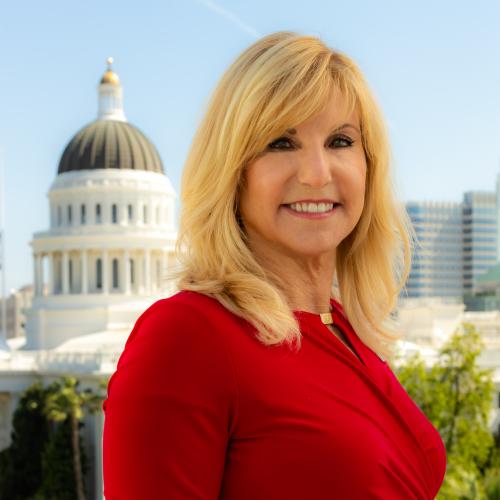
Asm. Laurie Davies
Sponsored bills
Existing law grants the sole authority in state government to the State Department of Health Care Services to certify alcohol or other drug programs and to license adult alcoholism or drug abuse recovery or treatment facilities. Existing law requires certified programs and licensed facilities to disclose specified information to the department, including ownership or a financial interest in a recovery residence, as defined, and contractual relationships with entities that provide recovery services to clients of certified programs or licensed facilities if the entity is not a part of a certified program or a licensed facility. This bill would require a program or a licensed facility to disclose to the department if any of its agents, partners, directors, officers, or owners own or have a financial interest in a recovery residence and whether it has contractual relationships with entities that provide recovery services to clients of certified programs or licensed facilities if the entity is not a part of a certified program or a licensed facility. This bill would incorporate additional changes to Section 11833.05 of the Health and Safety Code proposed by AB 2995 to be operative only if this bill and AB 2995 are enacted and this bill is enacted last.
Existing law, the Child Care and Development Services Act, administered by the State Department of Social Services, requires the department to administer childcare and development programs that offer a full range of services to eligible children from infancy to 13 years of age, inclusive. Under the act, upon establishing initial eligibility or ongoing eligibility for services, a family is considered to meet all eligibility and need requirements for those services, is required to receive those services before having their eligibility or need recertified, and shall not be required to report changes to income or other changes, for at least 24 months, except as specified. Among other exceptions, a family receiving services under a CalWORKs Stage 1, Stage 2, or Stage 3 program is considered to meet all eligibility and need requirements for those services, is required to receive those services before having their eligibility or need recertified, and shall not be required to report changes to income or other changes, for at least 12 months. This bill would delete that 12-month exception for CalWORKs Stage 1, Stage 2, or Stage 3 programs, and make technical, conforming changes.
Existing law prohibits driving a vehicle upon a highway at a speed greater than is reasonable or prudent. Existing law also prohibits driving a vehicle in excess of an established speed limit. Existing law requires that specified convictions, violations, and traffic-related incidents count as points against a driver's record for purposes of suspension or revocation of the privilege to drive. This bill, the Negligent Operator Treatment (NOT) in California Act, would, commencing on January 1, 2027, prohibit excessively speeding, defined as driving a vehicle at a speed that exceeds the posted speed limit by 26 miles per hour or more on a highway with a posted speed limit for passenger vehicles of 55 miles per hour or less. The bill would provide that a conviction for excessively speeding is punishable as an infraction and one point shall be assessed against a driver's record for a first violation and 2 points for any subsequent violation that occurs within 3 years after a previous violation for which the driver was convicted. By creating a new infraction, this bill would impose a state-mandated local program. The California Constitution requires the state to reimburse local agencies and school districts for certain costs mandated by the state. Statutory provisions establish procedures for making that reimbursement. This bill would provide that no reimbursement is required by this act for a specified reason.
Existing law establishes the Clean Cars 4 All Program, which is administered by the State Air Resources Board, to focus on achieving reductions in the emissions of greenhouse gases, improvements in air quality, and benefits to low-income state residents through the replacement of high-polluter motor vehicles with cleaner and more efficient motor vehicles or a mobility option. Existing law requires the implementing regulations to ensure that the program complies with certain requirements. This bill would require the implementing regulations for the Clean Cars 4 All Program to additionally ensure that, among other things, incentives provided under the program are available in all areas of the state and that, in those areas where a local air district has not elected to participate in the program, to manage the distribution of incentives within its jurisdiction, the state board manages the distribution of incentives to eligible residents of those areas. The bill would make certain conforming changes in that regard. The bill would require, as one of the program goals for replacement of passenger vehicles and trucks, the state board to prioritize vehicle retirement in areas of the state that meet specified criteria, including those areas with the highest percentage of people residing in disadvantaged and low-income communities. The bill would also require the state board to update the guidelines for the program no later than July 1, 2026, as specified. Existing law requires the state board to annually post on its internet website a performance analysis of the replacement and mobility options component of the Clean Cars 4 All Program that includes an evaluation of the funding for targeted outreach in low-income or disadvantaged communities, as specified. This bill would require that analysis to additionally include an evaluation of the funding for targeted outreach in low-income or disadvantaged communities with the highest number of vehicles manufactured before 2004 or that are at least 20 years old that are driven most and have the poorest fuel economy, as specified. Existing law requires the state board to consider certain metrics in allocating funding under the program to local air districts participating in the program, and to the statewide program, including the number of vouchers deployed and the population in eligible program ZIP Codes. This bill would require the state board, in allocating funding to local air districts participating in the program and to the portion of the program managed by the state board, to consider additional metrics, including the total value of vouchers deployed and certain metrics for retired vehicles, and would delete the requirement to consider the population in eligible ZIP Codes. The bill would also require the state board, in coordination with local air districts and specified organizations, to establish a means-based strategy to identify potential recipients of incentives under the Clean Cars 4 All Program that meet certain criteria and, as part of that strategy, require an increased incentive to be provided under the program to those individuals.
Existing law, the Alcoholic Beverage Control Act, which is administered by the Department of Alcoholic Beverage Control, regulates the application, issuance, and suspension of alcoholic beverage licenses. Existing law, known as tied-house restrictions, generally prohibits specified licensees, or their officers, directors, or agents, from giving or lending money or a thing of value to a person operating, owning, or maintaining any on-sale premises where alcoholic beverages are sold. In this regard, existing law specifically prohibits paying a retailer for advertising. Existing law creates a variety of exceptions to this prohibition, including permitting specified licensees to purchase advertising space and time from, or on behalf of, an on-sale licensee that is the owner, manager, agent or assignee of the owner, or major tenant of the owner of certain venues. Existing law makes specified violations of these advertising provisions punishable as a misdemeanor. This bill would expand the above-described exception to tied-house restrictions that allows for the purchase of advertising by extending it to a fully enclosed arena with a fixed seating capacity in excess of 5,000 seats located in the City of Oceanside. This bill would make legislative findings and declarations as to the necessity of a special statute for the City of Oceanside. This bill would declare that it is to take effect immediately as an urgency statute.
Existing law grants the State Department of Health Care Services the sole authority in state government to license adult alcoholism or drug abuse recovery or treatment facilities. The department is authorized to issue a license to specified types of facilities if certain criteria are met. Existing law requires licensees to report specified events and incidents to the department, including, among others, the death of a resident at a licensed facility. Existing law authorizes the department to investigate allegations of violations of governing law and take action upon a finding of a violation, as specified. This bill would require an operator of a licensed alcoholism or drug abuse recovery or treatment facility or certified alcohol or other drug program to include on its internet website and intake form paperwork a disclosure that an individual may check the internet website of the State Department of Health Care Services to confirm whether the facility's license or program's certification has been placed in probationary status, been subject to a temporary suspension order, been revoked, or the operator has been given a notice of operation in violation of law. The bill would require the disclosure to include a link to the department's internet website that contains the Probationary Status, Temporary Suspension Order, Revoked and Notice of Operation in Violation of Law Program List. The bill would authorize a violation of this requirement to be subject to penalty imposed by the department.
Existing law, the Alcoholic Beverage Control Act, which is administered by the Department of Alcoholic Beverage Control, regulates the application, issuance, and suspension of alcoholic beverage licenses. Existing law provides for the licensure and regulation of craft distillers and prohibits issuance of a craft distiller's license to any person, or any officer, director, employee, or agent of a person, among others, who manufactures more than 150,000 gallons of distilled spirits per year within or without the state, as specified. Existing law, until January 1, 2025, authorizes a licensed craft distiller to directly ship distilled spirits manufactured or produced by the licensee at its premises to a consumer pursuant to specified requirements. This bill would extend the authorization for a craft distiller to directly ship distilled spirits until January 1, 2026.
This measure would, among other things, urge the United States Congress and President Joseph R. Biden to fully fund the United States Environmental Protection Agency's Comprehensive Infrastructure Solution for the Tijuana River due to the ongoing impacts to public health, the environment, and the local economy caused by cross-border pollution and would urge President Joseph R. Biden to declare a national emergency due to those ongoing impacts.
This measure would urge the Congress of the United States to repeal the state and local tax deduction limitation so that residents of California and married taxpayers are no longer penalized by the federal tax code.