

Existing law imposes an annual minimum franchise tax of $800, except as provided, on every corporation incorporated in this state, qualified to transact intrastate business in this state, or doing business in this state. Existing law also imposes an annual tax in an amount equal to the minimum franchise tax on every limited partnership, limited liability partnership, and limited liability company doing business in this state, as specified. Existing law requires any bill authorizing a new tax expenditure to contain, among other things, specific goals, purposes, and objectives the tax expenditure will achieve, detailed performance indicators, and data collection requirements. This bill would suspend the minimum franchise tax and the annual tax for taxable years beginning on or after January 1, 2020, and before January 1, 2023. This bill would also include additional information required for any bill authorizing a new tax expenditure. This bill would take effect immediately as a tax levy.
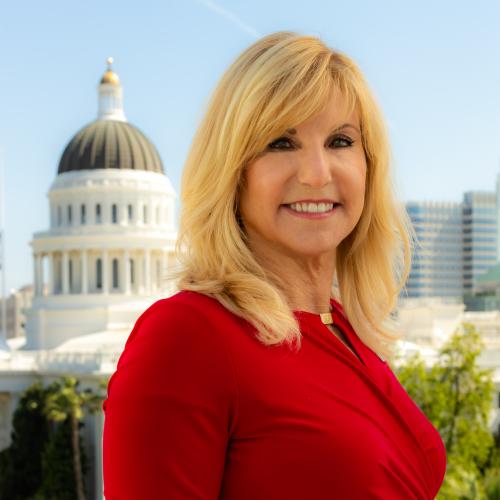
Asm. Laurie Davies
Sponsored bills
Existing law establishes the jurisdiction of the juvenile court, which may adjudge a child to be a dependent of the court under certain circumstances, including when the child is abused, a parent or guardian fails to adequately supervise or protect the child, as specified, or a parent or guardian fails to provide the child with adequate food, clothing, shelter, or medical treatment. Existing law requires the juvenile court, after finding that a child is within the dependency jurisdiction of the juvenile court, to hear evidence on the question of the proper disposition to be made of the child. Existing law also requires, for youth who were found to be within the jurisdiction of the juvenile court prior to attaining 18 years of age and who were continuously detained, but who attained 18 years of age prior to the juvenile court holding a dispositional hearing, the court to hold a dispositional hearing if the youth provides informed consent. Existing law requires, for certain youth subject to these provisions who choose not to remain in foster care, the court to set a hearing to terminate jurisdiction. This bill would make youth eligible for a dispositional hearing pursuant to these provisions if, instead of being continuously detained, the youth was continuously subject to a detention order. The bill would also clarify that, for youth subject to those provisions who choose not to remain in foster care, the court is required to set a hearing to terminate dependency jurisdiction and, if the court terminates dependency jurisdiction, the court is required to retain general jurisdiction. This bill would also authorize the court, until January 1, 2023, to hold a dispositional hearing for a youth if, as a result of court closures or delays due to the COVID-19 pandemic, the court was unable to hold a jurisdictional hearing for the youth prior to the youth turning 18 years of age, but the youth has continuously been subject to a detention order and placement and care of the youth has been vested with the county child welfare department. This bill would require the Judicial Council, on or before March 30, 2023, to submit a report related to above-described provisions to the chairs of the Human Services and Judiciary Committees in the Senate and the Assembly. By imposing additional duties on county employees, the bill would impose a state-mandated local program. The California Constitution requires the state to reimburse local agencies and school districts for certain costs mandated by the state. Statutory provisions establish procedures for making that reimbursement. This bill would provide that no reimbursement is required by this act for a specified reason.
Existing law authorizes the Department of Motor Vehicles to issue an instruction permit, as specified. Under existing law, an instruction permit authorizes the permittee to operate a vehicle, as specified, under the immediate supervision of a California-licensed driver who is over the age of 18. Existing law also requires the accompanying licensed driver to occupy a position in the passenger compartment of the vehicle that enables them to provide guidance and assist in controlling the vehicle if necessary. This bill would prohibit the accompanying licensed driver from being under the influence of alcohol or drugs and would make a violation punishable as an infraction. This bill would clarify that the permittee is not subject to any adverse action for the accompanying licensed driver's violation of this provision. The bill would also clarify that an accompanying driver who is in actual physical control of the vehicle is subject to laws prohibiting driving under the influence. The bill also would require the accompanying licensed driver to be seated in the front passenger seat. By creating a new crime, the bill would impose a state-mandated local program. The California Constitution requires the state to reimburse local agencies and school districts for certain costs mandated by the state. Statutory provisions establish procedures for making that reimbursement. This bill would provide that no reimbursement is required by this act for a specified reason.
The Personal Income Tax Law and the Corporation Tax Law, in modified conformity with federal law, generally define "gross income" as income from whatever source derived, except as specifically excluded, and provides various exclusions from gross income for purposes of computing tax liability. Existing law requires any bill authorizing a new tax expenditure to contain, among other things, specific goals, purposes, and objectives that the tax expenditure will achieve, detailed performance indicators, and data collection requirements. This bill, for taxable years beginning on or after January 1, 2021, and before January 1, 2026, would exclude, under both laws, from gross income the amount of a grant awarded pursuant to the California Small Business COVID-19 Relief Grant Program. This bill would take effect immediately as a tax levy.
The California Global Warming Solutions Act of 2006 designates the State Air Resources Board as the state agency charged with monitoring and regulating sources of emissions of greenhouse gases. The act authorizes the state board to include in its regulation of those emissions the use of market-based compliance mechanisms. Existing law requires all moneys, except for fines and penalties, collected by the state board from the auction or sale of allowances as part of a market-based compliance mechanism to be deposited in the Greenhouse Gas Reduction Fund. Existing law continuously appropriates 25% of the annual proceeds of the fund to the High-Speed Rail Authority for certain purposes. This bill would suspend the appropriation to the High-Speed Rail Authority for the 2023–24 and 2024–25 fiscal years and would require the transfer of those amounts from moneys collected by the state board to the General Fund. The bill would specify that the transferred amounts shall be available, upon appropriation, to augment funding for K–12 education and to support full-time in-person instruction for all students.
Existing law generally provides that everyone is responsible, not only for the result of their willful acts, but also for an injury occasioned to another by that person's want of ordinary care or skill in the management of their property or person, except as specified. This bill would exempt a business, as defined, from liability for an injury or illness to a person due to coronavirus (COVID-19) based on a claim that the person contracted COVID-19 while at that business, or due to the actions of that business, if the business has substantially complied with all applicable state and local health laws, regulations, and protocols. The bill would define a business to include a sole proprietorship, partnership, corporation, association, or other group, including a nonprofit organization, as specified. The bill would not permit this exception to apply if the injury or illness resulted from a grossly negligent act or omission, willful or wanton misconduct, or unlawful discrimination by the business or an employee of the business. The bill would include related legislative findings. This bill would declare that it is to take effect immediately as an urgency statute.
Existing law establishes the Office of Small Business Advocate within the Governor's Office of Business and Economic Development for the purpose of advocating for the causes of small business and to provide small businesses with the information they need to survive in the marketplace. This bill, the Keep California Working Act, would establish the Keep California Working Grant Program. The act would require the Small Business Advocate to administer the program and award grants, as specified, to small businesses and nonprofit entities that meet specified criteria, including that the entity has experienced economic hardship resulting from the COVID-19 pandemic. The act would specify that grant money awarded pursuant to the program may be used only for specified purposes, including payroll costs, health care benefits, paid sick, medical, or family leave, and insurance premiums. The act would appropriate $2.6 billion dollars to the Office of Small Business Advocate for those purposes. The Personal Income Tax Law and the Corporation Tax Law, in conformity with federal income tax law, generally define "gross income" as income from whatever source derived, except as specifically excluded, and provide various exclusions from gross income. This bill would exclude from gross income, for state income tax purposes, the amount of a grant awarded pursuant to the Keep California Working Grant Program. Existing law requires a bill authorizing a new tax expenditure to contain, among other things, specific goals, purposes, and objectives that the tax expenditure will achieve, detailed performance indicators, and data collection requirements. The bill also would include additional information required for a bill authorizing a new tax expenditure. This bill would declare that it is to take effect immediately as an urgency statute.
Existing law provides for the Medi-Cal program, which is administered by the State Department of Health Care Services, and under which qualified low-income individuals receive health care services, including substance use disorder services that are delivered through the Drug Medi-Cal Treatment Program and the Drug Medi-Cal organized delivery system, subject to utilization controls. For purposes of the Drug Medi-Cal Treatment Program, existing law prescribes the maximum allowable rates for services, including individual and group rates for extensive counseling for outpatient drug-free treatment. The Medi-Cal program is, in part, governed and funded by federal Medicaid program provisions. This bill would expand substance use disorder services to include contingency management services as an optional benefit under the Drug Medi-Cal organized delivery system, as specified, subject to utilization controls. The bill would require counties that administer the Drug Medi-Cal organized delivery system to submit a plan to the department that demonstrates readiness to implement contingency management services that are provided to eligible Medi-Cal beneficiaries through electronic or in-person means and to consult with stakeholders for purposes of developing that plan. The bill would require the department to review and approve the plan. The bill would require the department to issue guidance on the use of contingency management services for Medi-Cal beneficiaries who access substance use disorder services under the Drug Medi-Cal organized delivery system. The bill would provide that contingency management services are not a rebate, refund, commission preference, patronage dividend, discount, or any other gratuitous consideration. The bill would authorize the department to establish limits on the number and value of incentives available to Medi-Cal beneficiaries who receive contingency management services, and to implement these provisions by various means, including provider bulletin, without taking regulatory action. The bill would condition the implementation of these provisions to the extent permitted by federal law, the availability of federal financial participation, and the department securing federal approval. The bill would require the department to determine maximum allowable rates for contingency management services, as specified.
Existing law permits a petitioner to seek a restraining order to protect against domestic violence or gun violence. Existing law requires the court to hold a hearing before issuing the restraining order, but the court may, in specified circumstances, issue an ex parte restraining order that is effective until the hearing. Existing law prescribes additional procedures for granting or denying a domestic violence restraining order or gun violence restraining order. Existing law prohibits a filing fee for an application, a responsive pleading, or an order to show cause that seeks to obtain, modify, or enforce a domestic violence protective order or a gun violence restraining order, as specified. This bill would require, by July 1, 2023, a court or court facility that receives petitions for domestic violence restraining orders or gun violence restraining orders to permit those petitions to be filed electronically. The bill would also permit parties and witnesses to appear remotely at a hearing on a petition for a gun violence restraining order or domestic violence restraining order. The bill would require the superior court of each county to provide telephone numbers for the public to call to obtain information regarding electronic filing and remote appearances, respectively. The bill would require the superior court of each county to develop, and to post on its internet website, local rules and instructions for electronic filing and remote appearances, respectively. The bill would prohibit fees for any filings related to a domestic violence restraining order or a gun violence restraining order.
(1) Existing law, the Alcoholic Beverage Control Act, is administered by the Department of Alcoholic Beverage Control and regulates the granting of licenses for the manufacture, distribution, and sale of alcoholic beverages within the state. The act requires the department to make and prescribe rules to carry out the purposes and intent of existing state constitutional provisions on the regulation of alcoholic beverages, and to enable the department to exercise the powers and perform the duties conferred upon it by the state constitution and the act, not inconsistent with any statute of this state. The act makes it unlawful for any person other than a licensee of the department to sell, manufacture, or import alcoholic beverages in this state, with exceptions. The department, pursuant to its powers and in furtherance of emergency declarations and orders of the Governor under the California Emergency Services Act regarding the spread of the COVID-19 virus, has established prescribed temporary relief measures to suspend certain legal restrictions relating to, among other things, the expansion of a licensed footprint, sales of alcoholic beverages to-go, and delivery privileges. This bill would authorize the department, for a period of 365 days following the end of the state of emergency proclaimed by the Governor on March 4, 2020, in response to the COVID-19 pandemic, to permit licensees to exercise license privileges in an expanded license area authorized pursuant to a COVID-19 Temporary Catering Authorization approved in accordance with the Fourth Notice of Regulatory Relief issued by the department, as specified. The bill would also authorize the department to extend the period of time during which the COVID-19 Temporary Catering Authorization is valid beyond 365 days if the licensee has filed a pending application with the department for the permanent expansion of their premises before the 365-day time period expires. The bill would make these provisions effective only until July 1, 2024, and repeal them as of that date. (2) The Planning and Zoning Law authorizes the legislative body of any city or county to adopt ordinances that regulate zoning within its jurisdiction, as specified. Under that law, variances and conditional use permits may be granted if provided for by the zoning ordinance. This bill would, to the extent that an outdoor expansion of a business to mitigate COVID-19 pandemic restrictions on indoor dining interferes with, reduces, eliminates, or impacts required parking for existing uses, require a local jurisdiction that has not adopted an ordinance that provides relief from parking restrictions for expanded outdoor dining areas to reduce the number of required parking spaces for existing uses by the number of spaces that the local jurisdiction determines are needed to accommodate an expanded outdoor dining area. Because the bill would require local officials to perform additional duties, the bill would impose a state-mandated local program. The bill would make these provisions operative on January 1, 2022, and repeal them on July 1, 2024. (3) Existing law, the California Retail Food Code, establishes uniform health and sanitation standards for, and provides for regulation by the State Department of Public Health of, retail food facilities. Existing law restricts satellite food service to limited food preparation in a fully enclosed permanent food facility that meets specified requirements. Existing law requires a permanent food facility, prior to conducting satellite food service, to submit to the enforcement agency written operating standards. This bill would, for a period of one year after the end of the state of emergency proclaimed by the Governor on March 4, 2020, related to the COVID-19 pandemic, or until January 1, 2024, whichever occurs first, authorize a permitted food facility within any local jurisdiction that is subject to retail food operation restrictions related to a COVID-19 public health response to prepare and serve food as a temporary satellite food service without obtaining a separate satellite food service permit or submitting written operating procedures. This bill would require the written operating procedures to be maintained onsite for review, upon request, by the local jurisdiction. (4) The California Constitution requires the state to reimburse local agencies and school districts for certain costs mandated by the state. Statutory provisions establish procedures for making that reimbursement. This bill would provide that no reimbursement is required by this act for a specified reason. (5) This bill would declare that it is to take effect immediately as an urgency statute.