

Passed Feb 3, 2022
1 co-sponsor
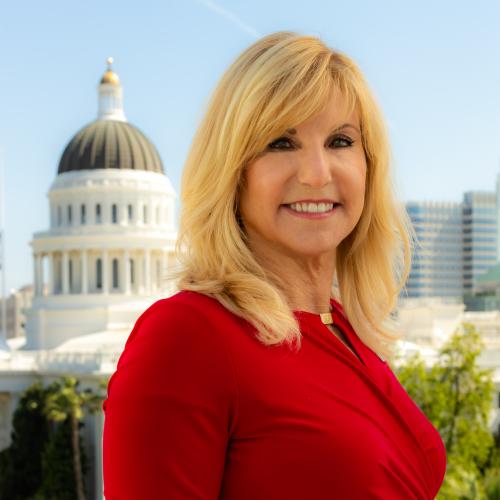
Asm. Laurie Davies
Total votes
15,899
all sessions
Attendance
92%
934 missed
Near the chamber average
With party
97%
of cast votes
Lower than 99% of chamber peers
Bipartisan score
2%
crosses aisle rarely
Higher than 96% of chamber peers
Sponsored
1,401
bills & resolutions
Higher than 95% of chamber peers
Committees
10
assignments
1,401 bills and resolutions
Sponsored bills
Total
1,401
Primary
107
Co-sponsor
1,294
This page
1,401
matching current filters
Passed Feb 3, 2022
1 co-sponsor
California Tourism Recovery Act.
Existing law, the California Tourism and Marketing Act, establishes a nonprofit mutual benefit corporation named the California Travel and Tourism Commission under the direction of a board of commissioners composed of 37 members, including the Director of the Governor's Office of Business and Economic Development. This bill, the California Tourism Recovery Act, would require the commission to, upon a determination by the State Department of Public Health that it is safe to resume travel in California, implement a strategic media and jobs recovery campaign known as the "Calling All Californians" program for the purpose of reversing the impact of the COVID-19 pandemic on the travel and tourism industry in California, as specified. The bill would require the commission to report to the Legislature, on or before January 1, 2024, regarding the cost of the program and the impact of the program on the tourism industry in California. The bill would require, only upon appropriation by the Legislature, the Controller to transfer $45,000,000 to the commission for the purpose of implementing the "Calling All Californians" program.
died Feb 1, 2022
1 co-sponsor
Community care facilities: exceptions.
Existing law, the California Community Care Facilities Act, provides for the licensing and regulation of community care facilities by the State Department of Social Services. Under existing law, community care facilities include facilities that provide nonmedical residential care, day treatment, adult daycare, or foster family agency services. Existing law exempts certain entities from regulation as community care facilities. This bill would make technical, nonsubstantive changes to that provision.
died Feb 1, 2022
0 co-sponsors
Controlled substances.
Existing law makes it a crime to possess for sale or purchase for purpose of sale, transport, sell, furnish, administer, give away, manufacture, compound, convert, produce, derive, process, or prepare various controlled substances, including, among others, fentanyl, peyote, and various other opiates and narcotics. This bill would require a person who is convicted of, or who pleads guilty or no contest to, the above crimes to receive a written advisory of the danger of manufacturing or distribution of controlled substances and that, if a person dies as a result of that action, the manufacturer or distributor can be charged with voluntary manslaughter or murder. The bill would require that the fact the advisory was given be on the record and recorded on the abstract of conviction.
died Feb 1, 2022
1 co-sponsor
Unemployment insurance: benefit determination deadlines.
Existing law authorizes the Employment Development Department (department) to administer the federal-state unemployment insurance program and provides for the payment of unemployment compensation benefits to eligible individuals who are unemployed through no fault of their own. Existing law establishes procedures for the filing, determination, and payment of benefit claims, and those benefits are payable from the Unemployment Fund. Existing law requires the department to promptly pay benefits if it finds the claimant is eligible and to promptly deny benefits if it finds the claimant is ineligible for benefits. Existing law requires the department to consider facts submitted by an employer in making this determination and also provides for the department to audit claims, as specified. Existing law provides a procedure for a claimant or a base employer to challenge a determination of the computation or recomputation of the benefits. This bill would require the department to provide a claimant with a notification of the computation used to determine their benefits within 30 days of the receipt of the claim and to respond to a challenge by the claimant or the base employer based on the computation or recomputation of benefits within 15 days of the receipt of the protest, except as specified. This bill would also make technical changes to these provisions. This bill would declare that it is to take effect immediately as an urgency statute.
Failed Feb 1, 2022
1 co-sponsor
Unemployment benefits: chip-enabled cards.
Existing law provides for unemployment compensation benefits to eligible persons who are unemployed through no fault of their own. Under existing law, these provisions are generally administered by the Employment Development Department. Existing law requires unemployment compensation benefits that are directly deposited to an account of the recipient's choice to be deposited to a qualifying account, which includes a prepaid card account that meets certain requirements. Existing law includes in the definition of prepaid card or prepaid card account a card, code, or other means of access to funds of a recipient that is usable at multiple, unaffiliated merchants for goods or services, or usable at automated teller machines. This bill would revise the definition of prepaid card or prepaid card account by requiring cards to be chip-enabled, as defined. This bill would declare that it is to take effect immediately as an urgency statute.
Failed Feb 1, 2022
0 co-sponsors
Protecting Our Restaurants Tax Credit.
The Personal Income Tax Law and the Corporation Tax Law allow various credits against the tax imposed by that law. Existing law requires any bill authorizing a new tax credit to contain, among other things, specific goals, purposes, and objectives that the tax credit will achieve, detailed performance indicators, and data collection requirements. This bill would allow a credit under the Personal Income Tax Law for taxable years beginning on or after January 1, 2020, and before January 1, 2021, to a qualified taxpayer, as defined, in an amount equal to 50% of the annual fee paid or incurred by the qualified taxpayer for an alcohol license for a qualified establishment during that taxable year. The bill would also allow a credit under the Corporation Tax Law for taxable years beginning on or after January 1, 2020, and before January 1, 2021, to a qualified taxpayer, as defined, in an amount equal to 50% of the annual fee paid or incurred by an owner or operator of the qualified taxpayer for an alcohol license, as defined, during that taxable year. The bill would include additional information required for any bill authorizing a new tax credit. The bill would also make related findings and declarations. This bill would take effect immediately as a tax levy.
Failed Feb 1, 2022
0 co-sponsors
Private employment: COVID-19: positive test or diagnosis: documentation.
Existing law provides for the regulation and supervision of employment, including compensation, working hours, and various privileges and immunities relating to employment. Existing law authorizes the Division of Labor Standards Enforcement to enforce the Labor Code and all labor laws of the state the enforcement of which is not specifically vested in any other officer, board, or commission. This bill would authorize a private employer to request prescribed documentation of a positive COVID-19 test or diagnosis if an employee reports that the employee has been diagnosed or tested positive for COVID-19 and is unable to work and the employer determines that an employee may be subject to a 14-day exclusion from the workplace as required under certain law or regulations. The bill would require an employer, in requesting documentation pursuant to the bill and in receiving information in response to that request, to comply with existing privacy protections. This bill would declare that it is to take effect immediately as an urgency statute.
Failed Feb 1, 2022
0 co-sponsors
Driver's licenses: veteran designation.
Existing law requires the Department of Motor Vehicles to issue a driver's license to an applicant when the department determines that the applicant is lawfully entitled to a license. Existing law allows an in-person applicant for a driver's license or identification card to request the word "VETERAN" be printed on the face of the driver's license or identification card, subject to certain requirements, including, among others, verification of veteran status, as specified, and payment of a $5 fee, which the department is authorized to increase by regulation in an amount not to exceed $15, as specified. Existing law prohibits a fee from being charged for that request if made by (1) a person who has been determined to have a current income level that meets the eligibility requirements for specified assistance programs, or (2) a person who can verify their status as a homeless person, in accordance with specified provisions. This bill would direct the department to discontinue the fee for printing the word "VETERAN" on the face of a driver's licence or identification card by July 1, 2022, and would repeal that fee provision on January 1, 2023. The bill would also make technical and conforming changes.
Failed Feb 1, 2022
1 co-sponsor
Ask Maddy
·
AI policy assistant
Ask Maddy about Laurie Davies
Scope: california
Hi! I can help you understand Laurie Davies's legislative record. What would you like to know?
Try one of these
i
Maddy answers using official bill text and legislative records. Always verify before sharing.
Sources cited inline