

Passed Aug 15, 2022
1 co-sponsor
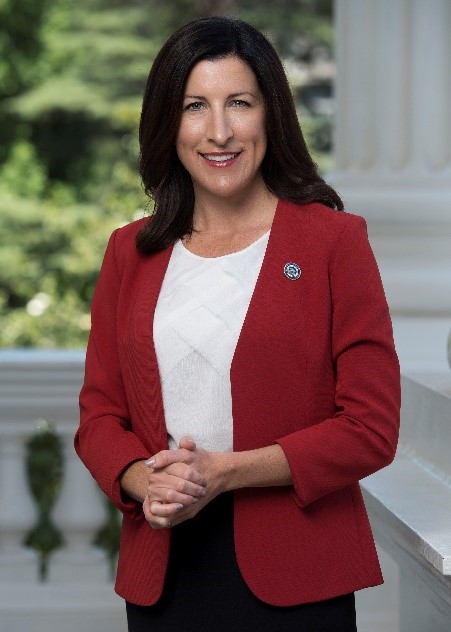
Asm. Cottie Petrie-Norris
Total votes
18,085
all sessions
Attendance
94%
891 missed
Near the chamber average
With party
98%
of cast votes
Near the chamber average
Bipartisan score
1%
crosses aisle rarely
Near the chamber average
Sponsored
1,605
bills & resolutions
Near the chamber average
Committees
10
assignments
1,605 bills and resolutions
Sponsored bills
Total
1,605
Primary
169
Co-sponsor
1,436
This page
1,605
matching current filters
Relative to Valley Fever Awareness Month.
This measure would declare August 2022 as Valley Fever Awareness Month.
Passed Aug 15, 2022
1 co-sponsor
Passed Aug 15, 2022
1 co-sponsor
Relative to California Emergency Preparedness Month.
This measure would declare the month of September 2022 as California Emergency Preparedness Month.
Passed Aug 15, 2022
1 co-sponsor
Pupil instruction: financial literacy: instructional materials: professional development.
Existing law requires the State Board of Education to adopt basic instructional materials for use in kindergarten and grades 1 to 8, inclusive, for governing boards of school districts in specified subjects and any other subject, discipline, or interdisciplinary area for which the state board determines the adoption of instructional materials to be necessary or desirable, and requires the governing board of each school district maintaining one or more high schools to adopt instructional materials for use in the high schools under its control, consistent with specified conditions. Existing law requires the adopted course of study for grades 1 to 6, inclusive, and for grades 7 to 12, inclusive, to offer instruction in specified areas of study, including social sciences. Existing law establishes the Instructional Quality Commission and requires the commission to, among other things, recommend curriculum frameworks to the state board. Existing law requires the state board, concurrently with, but not before, the next revision of textbooks or curriculum frameworks in the social sciences, health, and mathematics curricula, to ensure that these academic areas integrate components of, among other things, financial literacy. Notwithstanding that requirement on the state board, existing law requires the commission, when the history-social science curriculum framework is revised after January 1, 2017, to consider including age-appropriate information for kindergarten and grades 1 to 12, inclusive, regarding certain topics on financial literacy. This bill would require the Superintendent of Public Instruction, subject to an appropriation of one-time funds for this purpose in the annual Budget Act or another statute, to allocate funding for the purchase of standards-aligned instructional materials in financial literacy for kindergarten and grades 1 to 12, inclusive, and for professional development in that content, as provided. The bill would require the Superintendent to allocate these funds to school districts, county offices of education, charter schools, and the state special schools on the basis of an equal amount per unit of average daily attendance, as those numbers were reported at the time of the first principal apportionment for the 2019–20 fiscal year. The bill would require a school district, county office of education, charter school, or state special school to expend allocated funds for professional development or instructional materials in financial literacy that is aligned to the history-social science curriculum framework adopted by the state board and the financial literacy subject matter recommended considered by the commission, as provided.
Passed Aug 11, 2022
1 co-sponsor
Opioid overdose prevention.
Existing law requires the State Department of Public Health, subject to an appropriation in the Budget Act of 2016, to award funding to local health departments, local government agencies, or on a competitive basis to other organizations, as specified, to support or establish programs that provide naloxone to first responders and to at-risk opioid users through programs that serve at-risk drug users. This bill would require the Department of Health Care Services to, upon appropriation by the Legislature and until January 1, 2027, establish a pilot program to provide grants to the Counties of San Bernardino, Riverside, and Orange, for public awareness campaigns to spread awareness of existing programs by the department to distribute opioid antagonists approved by the United States Food and Drug Administration. The bill would require counties participating in the program to perform targeted public awareness campaigns, and would require the pilot program to collect specified information and send yearly reports to the Legislature, as specified.
Passed Aug 11, 2022
1 co-sponsor
Small businesses: funds: task force: report.
Existing law establishes, under the Bergeson-Peace Infrastructure and Economic Development Bank Act, the California Infrastructure and Economic Development Bank within the Governor's Office of Business and Economic Development. Under the Small Business Financial Assistance Act of 2013, the bank administers, either directly or under contract with small business financial development corporations, specific programs relating to small businesses. Existing law creates the California Infrastructure and Economic Development Bank Fund, a continuously appropriated fund, for the support of the bank and makes the moneys available for expenditure for the purposes stated in the act. Existing law establishes the Capital Access Loan Program for Small Businesses, which is administered by the California Pollution Control Financing Authority, to assist qualifying small businesses in the state to access capital. Existing law authorizes the authority to enter into contracts with participating financial institutions and authorizes a participating financial institution that experiences a default on a qualified loan enrolled in the Capital Access Loan Program to obtain reimbursement from the authority, as specified. Existing law defines a "qualified loan" for the purposes of the program. This bill would require the bank to work in collaboration with the authority to establish a task force that examines the regulations, statutes, directives, and other requirements related to the Small Business Expansion Fund and California Capital Access Fund for purposes of determining whether the administration of those funds allows for the full participation of financial institutions and financial products that support small businesses, while preventing financial institutions and financial products from utilizing these funds if their practices or features do not support the long-term health of small businesses. The bill would set forth the composition and duties of the task force. The bill would require the task force to submit, by June 15, 2024, a report with findings relating to loans and programs made from the funds. By expanding the purposes of a continuously appropriated fund, the bill would make an appropriation. This bill would make related findings and declarations.
Passed Aug 11, 2022
0 co-sponsors
Elections: Orange County Board of Education.
Existing law authorizes, and in some circumstances requires, a political subdivision to consolidate its elections with statewide elections. This bill would require an election for Orange County Board of Education that is determined by the plurality of the votes cast for that office, with no possibility of a runoff, and is consolidated with a statewide election to be consolidated with the statewide general election in November. This bill would make legislative findings and declarations as to the necessity of a special statute for the Orange County Board of Education. By adding to the duties of local elections officials, this bill would impose a state-mandated local program. The California Constitution requires the state to reimburse local agencies and school districts for certain costs mandated by the state. Statutory provisions establish procedures for making that reimbursement. This bill would provide that, if the Commission on State Mandates determines that the bill contains costs mandated by the state, reimbursement for those costs shall be made pursuant to the statutory provisions noted above.
Passed Aug 11, 2022
1 co-sponsor
California Techquity Innovation Program.
Existing law establishes the Office of Small Business Advocate (CalOSBA) within the Governor's Office of Business and Economic Development to advocate for causes of small business and to provide small businesses with the information they need to survive in the marketplace. Existing law prescribes the duties and functions of the Small Business Advocate, who is also the Director of CalOSBA. This bill would, upon appropriation by the Legislature for the purposes of these provisions, establish the California Techquity Innovation Program, to be administered by CalOSBA, to provide grants to advance equity in technology-based business and finance sectors in California. The bill would specify that grants would be awarded for expansion or operation of technology incubators, technical assistance, professional coaching, mentoring, workforce training initiatives, and research, as specified. The bill would establish the California Techquity Innovation Program Fund for purposes of supporting the program. The bill would require CalOSBA to establish guidelines in order to maintain oversight of the California Techquity Innovation Program, including, but not limited to, guidelines for grant approval, program operations, and reporting by grant recipients, as specified. The bill would require the office to annually report to the Legislature on programs and activities undertaken pursuant to these provisions and to post that report on its internet website.
Passed Aug 11, 2022
1 co-sponsor
Publicly available hydrogen-fueling stations: electric vehicle charging stations.
Existing law requires the State Air Resources Board, on or before June 30, 2014, and until January 1, 2024, to annually aggregate and make available specified information regarding hydrogen-fueled vehicles and, based on that information, evaluate the need for additional publicly available hydrogen-fueling stations, as specified, and report those findings to the State Energy Resources Conservation and Development Commission. Existing law requires the commission to allocate $20,000,000 annually to fund the number of publicly available hydrogen-fueling stations identified by the state board, not to exceed 20% of the moneys appropriated by the Legislature from the Alternative and Renewable Fuel and Vehicle Technology Fund, until there are at least 100 publicly available hydrogen-fueling stations in operation in the state. Existing law requires the commission and the state board, on an annual basis, to jointly review and report progress toward establishing a hydrogen-fueling network that provides the coverage and capacity to fuel vehicles requiring hydrogen fuel that are being placed into operation in the state. Existing law requires the commission and the state board to consider certain information while conducting this review and determine the remaining cost and timing to establish a network of 100 publicly available hydrogen-fueling stations in operation in the state and whether funding from the Clean Transportation Program remains necessary to achieve this goal. This bill would delete the requirement that the state board aggregate and make available specified information and report to the commission on or before June 30, 2014. The bill would instead require the state board, on or before June 30, 2023, and annually thereafter, to determine the number of publicly available hydrogen-fueling stations that are necessary to provide a publicly available hydrogen-fueling station network, taking into consideration the state board's 2020 Mobile Source Strategy and specified goals, recommendations, and data. The bill would delete the requirement that the commission allocate $20,000,000 annually to fund the number of publicly available hydrogen-fueling stations identified by the state board. The bill would instead require the commission to annually allocate from the moneys annually appropriated by the Legislature from the fund an amount determined appropriate by the commission to achieve the goal established by the state board of providing a publicly available hydrogen-fueling station network and to build the number of electric vehicle or "EV" charging stations estimated by the commission its biennial statewide assessment of electric vehicle charging infrastructure, as provided. The bill would require the commission to ensure that certain requirements are met regarding expenditures of the moneys allocated by the commission. The bill would require the commission and the state board, as part of their annual joint review and report, to determine the remaining cost and timing to establish a network of 200 statewide publicly available hydrogen-fueling stations, instead of 100 stations.
Passed Aug 11, 2022
1 co-sponsor
Ask Maddy
·
AI policy assistant
Ask Maddy about Cottie Petrie-Norris
Scope: CA
Hi! I can help you understand Cottie Petrie-Norris's legislative record. What would you like to know?
Try one of these
i
Maddy answers using official bill text and legislative records. Always verify before sharing.
Sources cited inline